

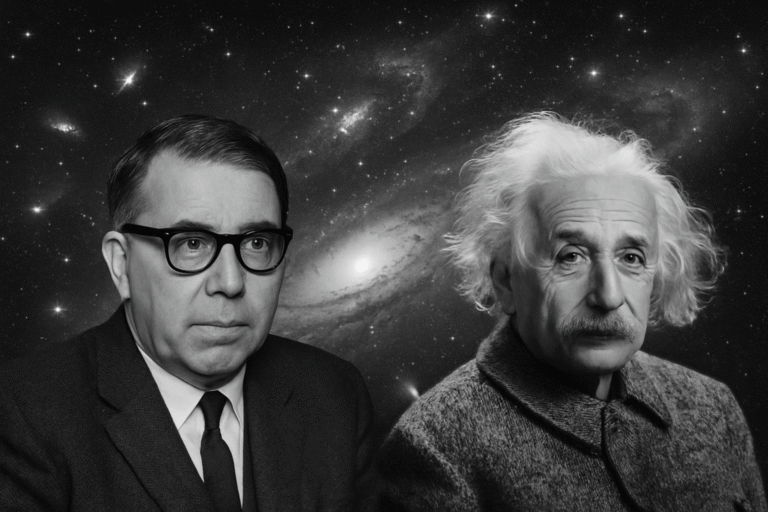
Did Fred Hoyle coin the term Big Bang as an insult?
Fred Hoyle gave the Big Bang its famous name while arguing against it. He later said it was more of a jab than an actual ...
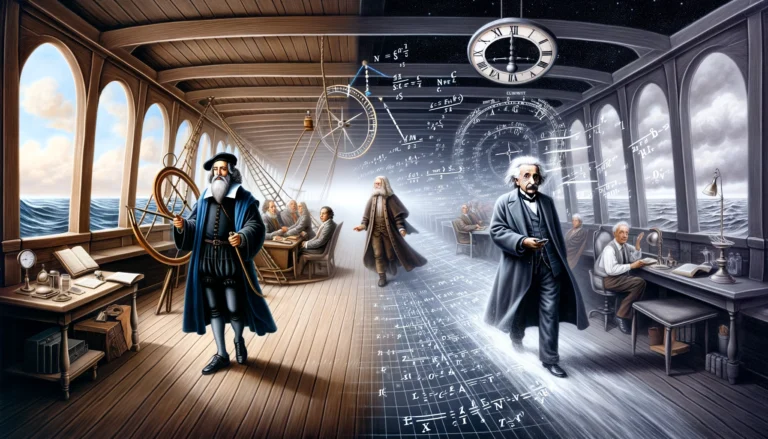
Trivia: Did Einstein or Galileo discover the Relativity Principle?
In shaping modern cosmology, Galileo articulated the relativity principle in 1632, Newton made gravity universal in 1687, and Einstein revealed gravity as the curvature of ...
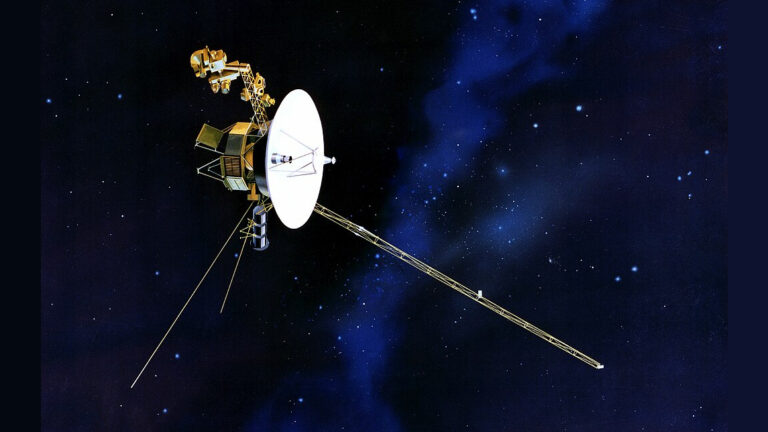
Why hasn’t Voyager been damaged by space dust?
Space feels dangerous, but its extreme emptiness makes collisions incredibly rare.

Will the night sky have stars nearly forever?
Our constellations feel permanent, yet aren't. The stars themselves, bound together in our galactic neighborhood, will light our night sky for nearly forever.

Are dogs and wolves the same species?
Yes. Dogs and wolves are the same species biologically, with dogs classified as a domesticated subspecies of the gray wolf.

When did play evolve in mammals?
Play evolved many times in evolution as a survival tool. Mammalian-like play emerged about 190 million years ago.

Is the 8.7-million-year-old Anadoluvius a human ancestor?
Anadoluvius turkae is a reminder of just how messy evolution is. The discovery highlights the diversity of great apes during the Miocene and how different ...

Do aliens enjoy playing like we do on Earth?
Embrace play in your life. It's not just human, it's life. Play evolve many times on Earth in various animals. If life elsewhere follows patterns ...

Is science tainted by bias?
Always remember that even science is touched by human bias. Its strength lies in being a self-correcting process. You too can self correct.
Is the Fermi Paradox still relevant?
It is a useful abductive reasoning model but challenges us to confront the limits of our technology, imagination, and perspective.

Are bonobos and chimpanzees separate species?
Bonobos and chimpanzees are separate species and cannot interbreed.

Did red algae descend from green algae?
Red algae did not descend from green algae. Both lineages split over a billion years ago, then adapted independently to different light environments.

What does Neanderthal rope indicate about our mental abilities?
Around 50,000 years ago, rope-making shows Neanderthal planning, technique, and shared cognition long before modern humans stood alone. Our cognitive abilities have been about what ...

What great apes have fur and which have hair?
All great apes share the same general hair-follicle pattern and follicle count—a primate pattern that likely goes back over 50 million years.

What’s the minimum change needed to breathe air on Mars?
We need to raise the atmospheric pressure, boost oxygen above Earth-levels, and strip out most of the carbon dioxide, but taking care of and fixing ...

What is the difference between volume and mass?
Physics < Science

Does sound change pitch in water?
Sound does not change pitch when it moves to a new medium. Frequency remains constant while speed and wavelength adjust, revealing the quiet coherence of ...

What’s the difference between common ions and ionization in physics?
None. Both describe the same process of atoms or molecules gaining or losing electrons.

When did we discover stars are mostly made of hydrogen and helium?
In 1925, Cecilia Payne showed that stars are composed primarily of hydrogen and helium, overturning Earth-centered assumptions about the universe.

What was the IQ of Homo habilis, and did they ask questions?
Homo habilis, living two million years ago, likely had an IQ of 50-60. Their early cooperation in hunting and childbirth may have sparked simple, abstract ...