
Phil • Cr. Think • Science • Hist • …
TST PRACTICE

The Philosophy Website

STORY

Bacterial Endosymbiosis: Origin of Eukaryotes

☐ Read
☑ Read
You’ve read this 0 times.
You’ve listened to this 0 times.

By Michael Alan Prestwood

Sun 22 Feb 2026
Published 7 months ago.
Updated 3 months ago.
Related Stories
Fungal Giants of the Devonian
Mesozoic Era: Age of Dinosaurs
Great Oxidation Event: Third Atmosphere
Toothed Birds Go Extinct
Snowball Earth: When Ice Reached the Equator
First Animal Teeth
Share :
About 2 billion years ago, bacteria are added to cells and that group leads to eukaryotes. You are a walking chimera ecosystem made of an Archaea host and trillions of Bacterial power-plants.

Bacterial Endosymbiosis: Origin of Eukaryotes

~1.9 Billion years ago (+/- 100 million)
Bacteria are added to eukaryote ancestor cells

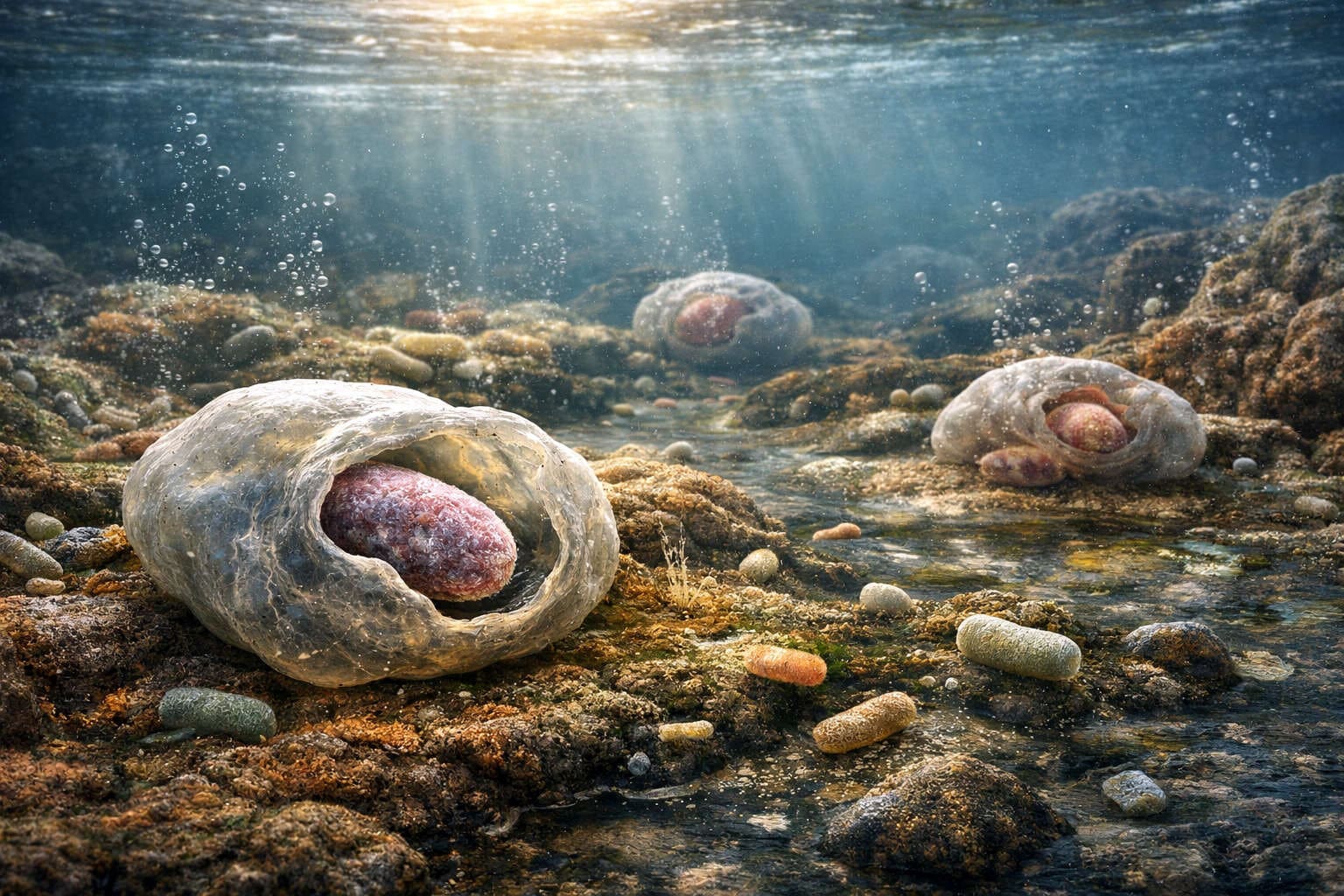
In early oxygen-rich environments, some archaeal cells occasionally engulfed bacteria. Most of these encounters failed. But in rare cases, an oxygen-using bacterium survived inside its host and produced energy in exchange for protection. Natural selection stabilized this partnership, and the bacterium evolved into the mitochondrion — a turning point that enabled complex eukaryotic life.

Imagine the crowded microbial ecosystems of early Earth. Countless bacteria and archaea lived, competed, and died in constantly shifting chemical conditions. Oxygen was rising, creating both danger and opportunity.

Some archaeal cells likely evolved flexible membranes and primitive internal scaffolding that allowed them to engulf other cells. Most engulfment events ended in digestion or death. But occasionally, an aerobic bacterium persisted inside its host. If it reduced oxygen toxicity while generating usable energy, both cells benefited. Over time, this temporary coexistence became permanent symbiosis. The internalized bacterium became the mitochondrion, and a new form of life — the eukaryotic cell — was born.

The mitochondria in your cells still divide like bacteria. They carry circular DNA. They use bacterial-style ribosomes. And they sit inside a double membrane — the scar of an ancient engulfment. Although some cells, like mature red blood cells, do not have mitochondria, nearly all your cells do. And some cells, like heart muscle cells that require enormous amounts of energy, contain thousands of them. Cardiac muscle cells (cardiomyocytes) can contain 5,000 to 8,000 mitochondria per cell. Your brain contains about 86 billion neurons — and many of them carry nearly 2,000 mitochondria each.

Every time one of your cells divides, it reenacts a 2.4 billion-year-old merger.

— map / TST —

TST Tracker
✓ Reading recorded.
Michael Alan Prestwood
Author & Natural Philosopher
Prestwood writes on science-first philosophy, with particular attention to the convergence of disciplines. Drawing on his TST Framework, his work emphasizes rational inquiry grounded in empirical observation while engaging questions at the edges of established knowledge. With TouchstoneTruth positioned as a living touchstone, this work aims to contribute reliable, evolving analysis in an emerging AI era where the credibility of information is increasingly contested.
Email
Print
The Prestwood Column
Menu
October 2026
Column Research….
1. Timeline Story
The Great Quaker Debates!
2. Linked Quote
“All men are prone to differ. It is no new thing in all former ages, in all parts. Each party is most right in his own eyes.”
3. Science FAQ »
Do facts actually change minds?
4. Philosophy FAQ »
When does persuasion become manipulation?
5. Critical Thinking FAQ »
How can you tell when a debate has stopped being productive?
6. History FAQ!
What is the history of debate?
Bonus Deep-Dive Article
Roger Williams Biography and Dedication to the Freedom of Conscience

Comments

Join the Conversation! Currently logged out.

Leave a Reply

NEW BOOK! NOW AVAILABLE!!

30 Philosophers: A New Look at Timeless Ideas

by Michael Alan Prestwood
The story of the history of our best ideas!
Scroll to Top