

Journalism
Public Truth System
Philosophy of Journalism
CRITICAL THINKING START
Think Well Path: 5-4-3
Start here if your first question is:
“How do I think more clearly?”
The Think Well Path begins with the tools of judgment. You’ll explore how ideas form, how reasoning works, how thinking goes wrong, and how public truth is tested through science, law, and journalism.
This is the 5-4-3 path: Five Thought Tools, Four Mind Traps, and Three Truth Hammers. It is TST’s practical path for sharpening your mind, testing claims, and building intellectual discipline.
CORE READING
A 5-4-3 structured model for disciplined thinking.
Recent Tidbits:
Stories, Quotes, and FAQs.
The wisdom builder tidbits that feed the columns, articles, and trainer.
Philosophy of Journalism
Featured Story
Critical Thinking
Story
Journalism
A healthy society, and your healthy thinking, needs more than opinions. Use journalism as part of your consumption of information. Learn to determine good journalism from bad. Start by look at bylines and good authorities. The bylines must say reporter, journalist, or anchor — host or entertainer is not valid. Good authorities do not lie regularly. Verify your sources are not lying to you.
Featured QUOTE
Critical Thinking
Quote
“The historian without his facts is rootless…the facts without their historian are…meaningless.”
- E. H. Carr
- 1961
Philosophy of History
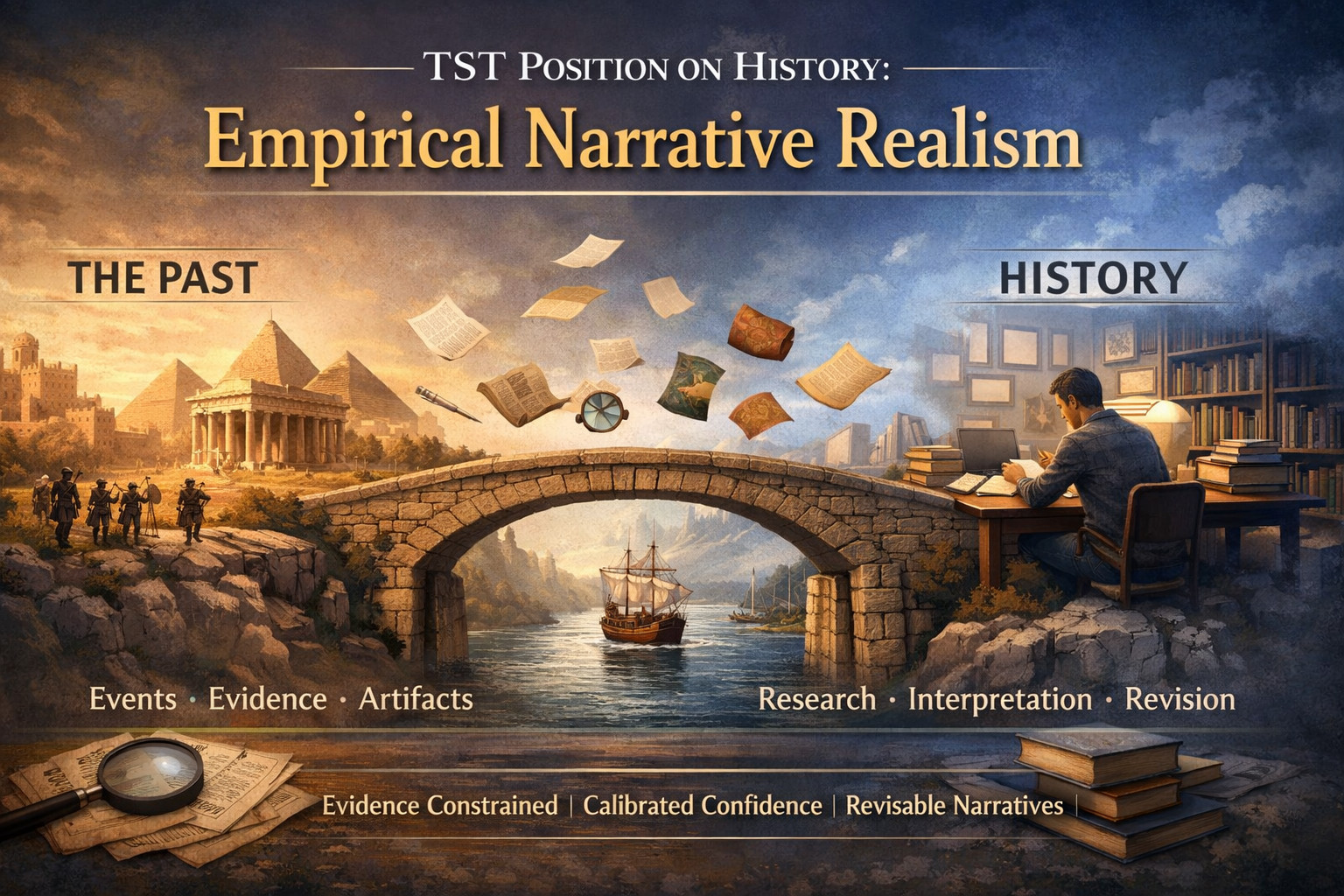
Carr supports the heart of empirical narrative realism: evidence anchors history, but reason shapes the retelling. The facts keep the historian grounded in reality; the historian gives those facts sequence, context, and meaning. Always ask how much confidence each reconstruction deserves.
Featured FAQ
Updated This Week
History
FAQ
Did Pythagoras coin the word philosophy?
Etymology of Philosophy
The mistake that Pythagoras coined philosophy is a good reminder. History often gets cleaned up after the fact. In his time, words around wisdom were still broader. Think well by checking the timeline. Cross-checking facts across disciplines is one of the most powerful tools in critical thinking.
Updated Tidbits
No more posts to show
Philosophy of Journalism
Test public events!
Journalism tests public events.
Journalism is the hammer for current affairs and public accountability. It asks: What is happening, who says so, and how do we know? Reporting, sourcing, verification, context, and correction help society track reality in real time.
Deep-Dive Articles
TST Philosophy of Fiction: Imaginative Realism
Michael Alan Prestwood
July 1, 2026
Fiction is not created from nothing; it is the recombination of real impressions into imagined things.
Irrational Ideas: The Subtypes
Michael Alan Prestwood
April 6, 2026
When you encounter an irrational idea, first ask whether it is speculative or disproven.
Irrational Ideas: The Subtypes
April 6, 2026
When you encounter an irrational idea, first ask whether it is speculative or disproven.
TST Philosophy of History
March 3, 2026
History is the empirical past. Historical writing is rational narrative that aligns with reality.
Holistic Paleolithic Framework: A New Look at Prehistory
August 1, 2024
A new look at dividing up the paleolithic era switches from lower, middle, and upper to Stone, Fire, Cultural, Symbolic, Cognitive, and prehistory ending specifically ...
New Ideas
Ancient Humans
Holistic Paleolithic Framework: A New Look at Prehistory
A new look at dividing up the paleolithic era switches from lower, middle, and upper to Stone, Fire, Cultural, Symbolic, Cognitive, and prehistory ending specifically ...
Philosophy of Journalism
The Living Touchstone
As part of critical thinking, the philosophy of journalism can help us enter the age of AI, where truth and untruth live on equal plain. ...
Updated Articles
No more posts to show


