

Explore Science-first Philosophy

Post-Medieval History

1500 to 1950
From the WWB: Subscribe Now
Post Medieval
Featured Story
Updated This Week
Science
Story
born 1564.
Galileo Galilei
Lived from 1564 to 1642, aged 77.
Observational Empiricism
By 1610, Galileo started transforming humanity’s view of the universe through observation and math. His 1638 work Two New Sciences laid foundations for physics and influenced later breakthroughs, including calculus.
Featured QUOTE
History
Quote
“It was an act of despair, to sacrifice physics for the sake of finding an explanation.”
Planck Constant
A later reflection by Planck about the year.
Planck didn’t advance physics by defending what he believed, but by surrendering it when the evidence refused to cooperate. His “act of despair” reminds us that truth doesn’t yield to confidence. It yields to honesty—especially at the moment when our most trusted explanations stop working.
Featured FAQ
Updated This Week
Critical Thinking
FAQ
Is cause and effect certain?
Causation versus Correlation
Reasoning asks you to question whether you’re seeing real causation, or just a misleading correlation. Always ask: What’s the evidence? Hume said, repeated observation shows habit, not logical necessity. If a cause exists, find it!
Post-Medieval History
Expansion and Acceleration
1500 to 1950

Post-Medieval History marks the era of exploration, scientific revolution, industrialization, and global interconnection. Political systems modernize, economies industrialize, and communication accelerates. The world becomes tightly linked, setting the stage for the modern global age.

Deep-Dive Articles
American CentricBook-30 PhilosophersEthics

No Kings Has Deep Historical Roots

Recent protests reflect the timeless struggle to limit power and oppression using checks and balances.
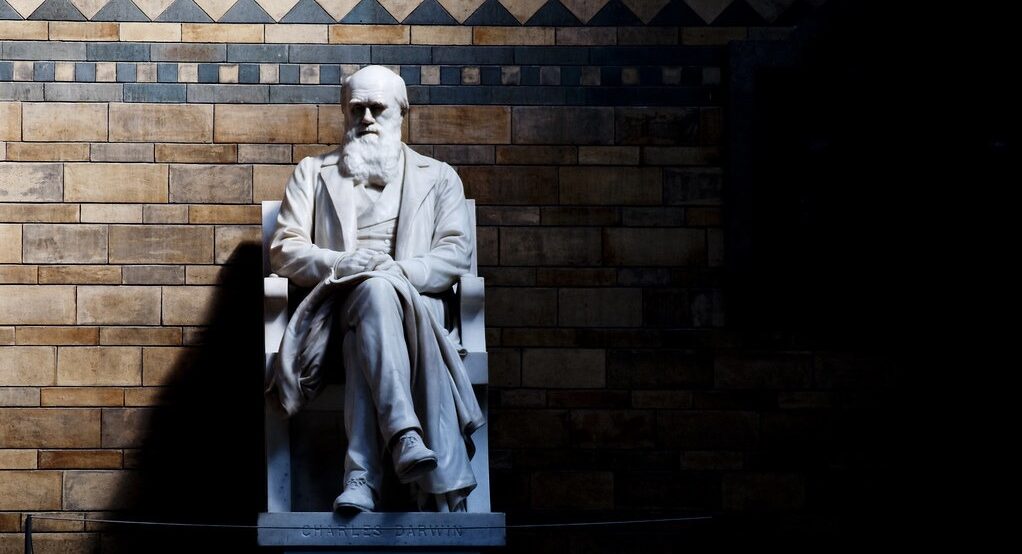
Evolution

The Family of Charles Darwin and His Scientific Community

The family man behind evolution.
Philosophy of Law

Roger Williams was a 17th Century Separatist

Explore the use of this term over the centuries.

Must-Reads
Vintage pirate compass on ancient map
Live well.

Parable of the Ship by Roger Williams, 1655

Roger Williams’ 1655 Parable of the Ship is used as an illustration of separation of church and state, liberty, and the common good. In this ...

American Centric

The First Religions of Colonial America

Discover the diverse religious tapestry of Colonial America with Mike Prestwood. He tells the story of early religion from Roger Williams' groundbreaking multi-faith colony to ...
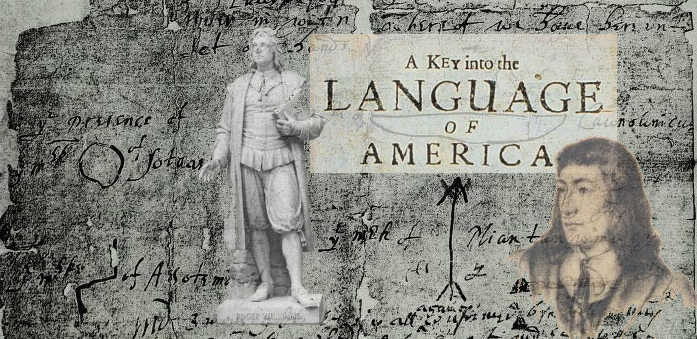
Live well.

Roger Williams Biography and Dedication to the Freedom of Conscience

My 10th great grandpa! There are plenty of articles and books on Roger Williams' accomplishments. In this article I went back and researched the earliest ...
New Ideas

Sorry, we couldn't find any posts. Please try a different search.

Updated Articles
H4-Post Medieval | Live well. | Metaphysics | Social Constructs | Think well.
Understanding Colonial America Dates, Holidays, and Calendar
Before 1752 the first day of the year was 25 March. So, days of the year that fell from Jan 1 – Mar 24 were notated using the previous year, or double dating.
Thu 7 Mar 2019
(7 years ago)
Updated 3 days ago.
Thu 21 Mar 2024
(2 years ago)
Updated 3 days ago.
Philosophy of Law | Roger Williams | Think well.
Roger Williams was a 17th Century Separatist
Separatist Term & Epistemology
Explore the use of this term over the centuries.
Fri 1 Mar 2024
(2 years ago)
Updated 3 days ago.
No more posts to show
Scroll to Top