
Explore Science-first Philosophy

FAQ

What is retrocausality?

Sun 1 Mar 2026
Published 3 months ago.
Updated 15 hours ago.
Related FAQs
What is Schrödinger’s Cat and why is it important?
How does Schrödinger’s Cat relate to wave-particle duality and the multiverse?
Is the idea of superposition multiple states irrational?
Does wave-particle duality imply a multiverse?
Can you explain the quantum measurement problem simply?
Can you explain quantum entanglement simply?
Share :
Email
Print

What is retrocausality?

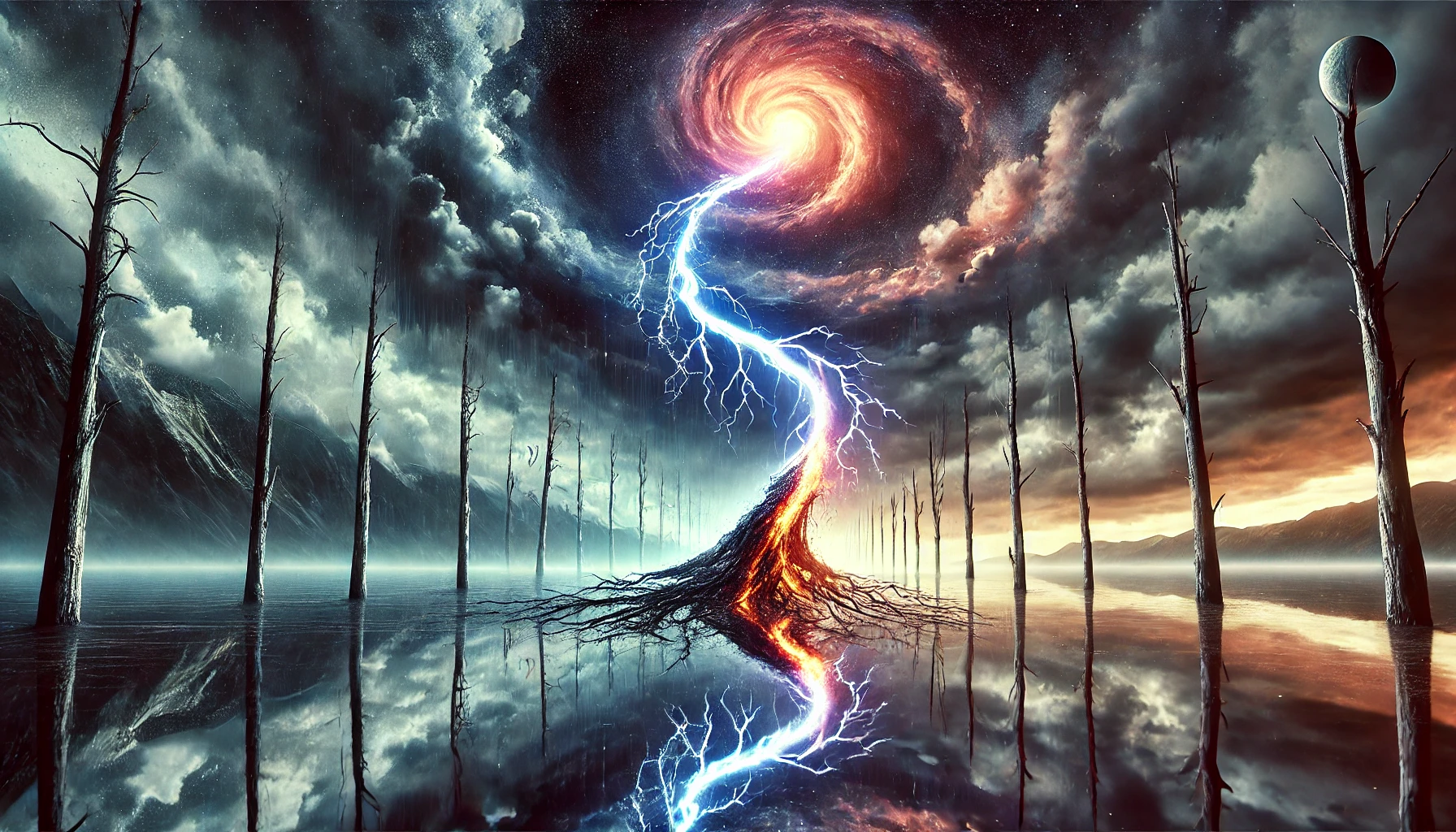
Retrocausality is the idea that a later event could help explain, constrain, or influence an earlier one. In everyday life, cause comes before effect: lightning strikes a tree, and then the tree burns. Cause first. Effect second. Nice and tidy.

Retrocausality asks a wonderfully strange question: at the quantum level, could time be messier than that?

Now, this does not mean trees burn before lightning strikes or broken cups leap back onto tables. That would be time reversal, not retrocausality. Retrocausality is subtler—and stranger in a quieter way. It shows up in some interpretations of quantum mechanics where a future measurement may help explain the earlier state of a quantum system.

As intriguing as that sounds, retrocausality is not established science in the everyday sense. It is a speculative interpretation physicists and philosophers explore while trying to make sense of quantum experiments. The results are real. The retrocausal meaning is debated.

For most of us, it is fine to keep retrocausality in the bucket labeled: interesting, possible, but not proven.

The nuance is this: delayed-choice experiments, entanglement, and related quantum puzzles can make it look as if later measurement choices reach backward into the past. But the same experimental results can often be explained without saying the future literally changes the past. And importantly, these effects do not let us send messages backward in time or faster than light. No texting yesterday. No fixing last Tuesday. Sorry.

So, what do we really know?

Quantum behavior is empirical. The mathematical models are rational. Retrocausality is speculative metaphysics unless it becomes publicly testable.

Reality might be stranger than everyday cause and effect. But strange does not automatically mean backward.
— map / TST —

While philosophers like Augustine, Kant, and even ancient thinkers laid the groundwork for discussions of causality and time, modern debates about retrocausality began with the Einstein-Podolsky-Rosen paper in 1935. Physicist Yakir Aharonov formalized the math in the 1960s, and today, scholars like Brian Greene, Sean Carroll, and Anton Zeilinger continue to explore this mind-bending idea.
Michael Alan Prestwood
Author & Natural Philosopher
Prestwood writes on science-first philosophy, with particular attention to the convergence of disciplines. Drawing on his TST Framework, his work emphasizes rational inquiry grounded in empirical observation while engaging questions at the edges of established knowledge. With TouchstoneTruth positioned as a living touchstone, this work aims to contribute reliable, evolving analysis in an emerging AI era where the credibility of information is increasingly contested.
This month @ TST
Column Menu
June 2026
»COLUMN ARCHIVE
Column Research….
1. Timeline Story
Secular Spirituality Settles
2. Linked Quote
“Extraordinary claims require extraordinary evidence.”
3. Science FAQ »
What is the difference between a spiritual and empirical belief?
4. Philosophy FAQ »
What is secular spirituality?
5. Critical Thinking FAQ »
How does spirituality relate to public belief?
6. History FAQ!
Is secular spirituality supported in history and science?
Bonus Deep-Dive Article
The Material-Spiritual Framework: A Philosophy of Spirituality

Comments

Join the Conversation! Currently logged out.
NEW BOOK! NOW AVAILABLE!!

30 Philosophers: A New Look at Timeless Ideas

by Michael Alan Prestwood
The story of the history of our best ideas!
Scroll to Top