Explore Natural Philosophy

Phil • Cr. Think • Science • Hist •

WWB Season 4: Consciousness -- East to West

Subscribe or follow new content on social media!
It’s free! No ads! No catches!
Exactly what the world needs RIGHT NOW!
Follow On Facebook and Youtube!
Reading Material: 
Videos: 

Member-Only Content!

Please login to view content. Don’t have an account? Join NowIt’s free! No ads! No catches!

S4: Consciousness -- East to West

20 Hot Topics/5 Quotes: In Season 4, your exploration of wisdom delves into the profound connection between ancient Eastern insights and modern Western thought. From the contemplative traditions of Buddhism and Daoism to existential ideas from Nietzsche, Zapffe, and Camus, you’ll explore consciousness, intelligence, and human awareness as both an ancient quest and modern puzzle. These concise lessons illuminate how different cultures and eras wrestle with the same essential questions, helping you appreciate consciousness not just as a philosophical curiosity, but as the very essence of human experience.

Season 4 Highlights

TikTok

138,000 views as of Mar 2025.

Hot Topics

History

Critical Thinking

Science

Philosophy

Mount Meru and the six realms were central to ancient Indian culture and remain highly regarded today, often understood more metaphorically by many. These concepts have long served as spiritual guides, helping followers navigate moral and existential questions.

What are the six realms of karma?

The six realms of karma are a moral map, showing how patterns of action and intention shape the conditions of existence.
If you're using Windows, rely on cloud services like OneDrive to keep your files backed up. Make good use of features like Quick Access and Favorites to streamline your workflow, and start forgetting about manually managing your C drive.

Will AI help with file management, organizing files, and backup?

By learning context, usage, and relationships, AI systems will organize, surface, and protect data automatically.
Knowledge frameworks are the mind’s filing system. They do not just store information—they shape how we sort ideas, test claims, and decide what deserves belief.

How do knowledge frameworks help transform information into wisdom?

Frameworks turn raw information into wisdom by organizing ideas into structured mental models. Use the familiar vocabulary and structure of your strongest subjects to accelerate ...
LUCA's form is unknown. Imagined image of various LUCA shapes.

What does LUCA tell us about our origins?

LUCA shows that all life on Earth shares a single, ancient origin—making life fundamentally connected, not divided.
The Appeal to Fear fallacy uses scare tactics to manipulate opinions, overriding critical thinking and logic.

Why are invalid fear-based arguments so effective?

When information causes you fear, remember, fear itself will cloud your judgement.
vertical-Plato and Aristotle-350bce-TouchstoneTruth

Were Plato and Aristotle friends?

Ancient history was long ago, much is cloudy, but yes, they were very close. Aristotle spent 20 years as a student-teacher under Plato, leaving only ...
Remember that nature gets the final say. Think well by letting observation, measurement, testing, and correction discipline your ideas before belief hardens into certainty.

How does science play in philosophy?

Let science anchor your worldview, and philosophy expand it.
In 1977, NASA's Voyager 1 and 2 spacecraft began their pioneering journey across the Solar System to visit the giant outer planets. Now, the Voyagers are hurtling through unexplored territory on their road trip beyond our Solar System. Along the way, they are measuring the interstellar medium, the mysterious environment between stars that is filled with the debris from long-dead stars. The NASA/ESA Hubble Space Telescope is providing the roadmap, by measuring the material along the probes' trajectories as they move through space. Hubble finds a rich, complex interstellar ecology, containing multiple clouds of hydrogen, laced with other elements. Hubble data, combined with the Voyagers, have also provided new insights into how our sun travels through interstellar space.

How far away is Voyager 1?

Voyager 1 is more than 160 AU from the Sun, the farthest yet, but still only at the edge of our cosmic neighborhood.
Inductive reasoning finds patterns to predict future outcomes, while abductive reasoning makes the best guess based on available evidence. The Earth clearly revolves around the Sun, but hooves outside might be horses or zebras.

How do I know what is true and what is just an opinion?

Evidence. Inductive reasoning is evidence based; abductive reasoning is a best guess from limited evidence.
Heraclitus

Does the philosophy of Heraclitus resonate with Eastern philosophy?

Heraclitus strongly resonates with Eastern thought, especially Daoist balance and Buddhist impermanence.
Ontology is the branch of metaphysics that studies being, existence, and what is real.

What is Ontology and why is it important?

What exists and what it means to be. The material world is our common footing. For the rest, your way of being is not fixed. ...
"Close Study" by reutC is licensed under CC BY-NC-ND 2.0

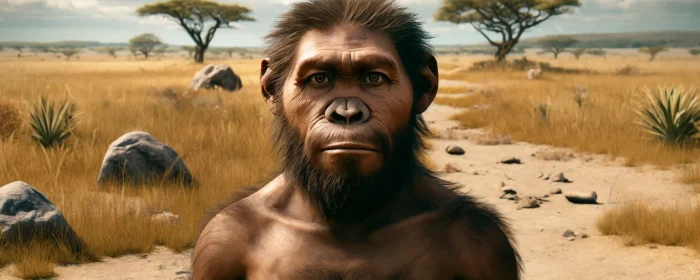
What is the IQ of a chimpanzee?

Comparing the EQ of chimps and humans gives chimps an equivalent IQ of about 35 to 40.
Slippery Slope-TouchstoneTruth

How do slippery slope arguments manipulate people?

Slippery slope arguments manipulate by replacing evidence with fear, implying inevitability without proving the steps in between.
Plato's Academy-325bce-TouchstoneTruth

Was Plato’s Academy the first university?

Plato’s Academy shaped higher learning, but it was not a university in the modern sense.
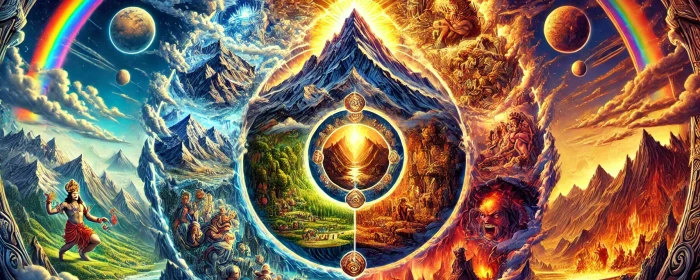
The Buddha used Mount Meru and the six realms as metaphors to guide followers toward enlightenment. His teachings focused on overcoming suffering in this life, suggesting that the essence of his message transcends the mythologies of his time, urging us to seek deeper meaning beyond the surface of beliefs.

Did the Buddha believe in Mount Meru and the six realms of existence?

The Buddha taught Mount Meru and the six realms likely as symbolic frameworks, not as literal cosmic geography.
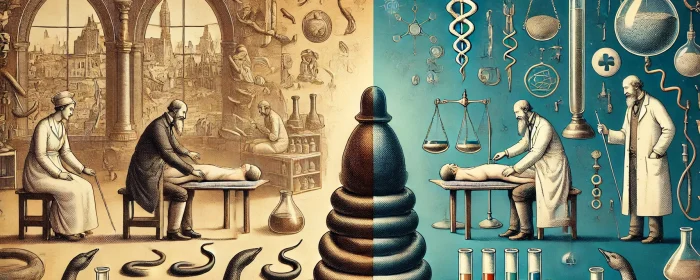
A false cause fallacy assumes that one event directly causes another without proof. It links two events improperly, ignoring other factors, often leading to flawed conclusions based on coincidence, not causality.

How do we know bloodletting doesn’t work?

Bloodletting survived for millennia not because it worked, but because humans mistook timing for causation.

Timbre is the unique "tone color" of an instrument or voice, resulting from its fundamental frequency (measured in hertz) and harmonic overtones. It's the distinctive blend of base tones and overtones that gives each instrument its recognizable voice, beyond just pitch (e.g., A4 at 440 Hz).

What is the nature of timbre?

Multiple sound waves including both harmonic and overtone waves, as well as the attack and decay which is the shape of the waves individually and ...
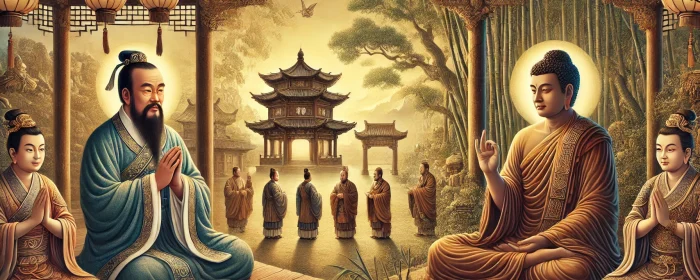
Confucius-Buddha-TouchstoneTruth

Are Buddhist or Confucian teachings closer to their original meaning?

Buddhist teachings are undoubtedly more precise in their language and structure. In contract, Confucius's disciples memorized his ideas during his lifetime.
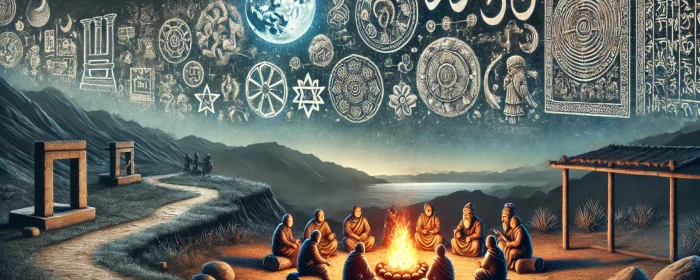
Oral traditions across ancient times preserved the stories of various cultures and their philosophies.

How far back do oral traditions date?

Oral traditions go back at least 50,000 years, and possibly a half million years, or more. It served as the primary system for preserving knowledge.

Quotes

"Head of Laozi marble Tang Dynasty (618-906 CE) Shaanxi Province China" by Mary Harrsch is licensed under CC BY-SA 4.0

“Being and non-being create each other.”

For Laozi's metaphysics, his reality is relational. Pairs rise and fall in unison defining and sustaining one another.

The Unknowable Dao reminds us that when we define something too tightly, we risk mistaking our description for the thing itself.

“The Dao that can be told is not the eternal Dao; The name that can be named is not the eternal name.”

Laozi opens the Dao De Jing by reminding us that ultimate reality cannot be captured by words, names, or ideas. He opens with the split.
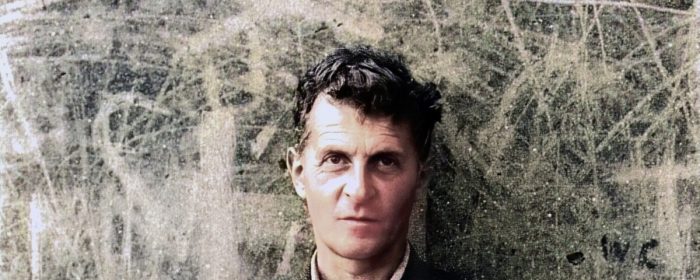
Ludwig Wittgenstein (1889-1951). Austrian philosopher and logician who made groundbreaking contributions in the areas of language, meaning, and the limits of knowledge. His influential works included "Tractatus Logico-Philosophicus" and "Philosophical Investigations."

“The limits of my language mean the limits of my world.”

Wittgenstein argued that language sets the boundaries of understanding. What we cannot express in words may still be experienced.
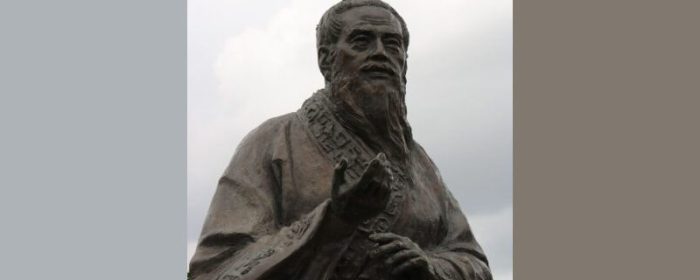
Make Goodness Normal: Confucius taught that a better life begins when respect, duty, kindness, and self-discipline become normal habits. Normalcy is powerful because it turns wisdom into daily behavior.

“In learning and straightway practicing, is there not pleasure also?”

Confucius opens the Analects by linking learning to lived practice, friendship, and humility. Embrace the joy and rhythm of practice.
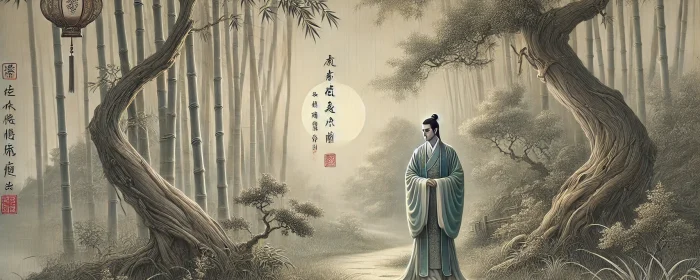
Junzi is the Confucian ideal of a morally cultivated person.

“The superior man is modest in his speech but exceeds in his actions.”

Confucius reminds us that true virtue lies in modesty and action.
Scroll to Top