

Arthropods began diversifying in the Cambrian more than 500 million years ago. Their major branches include trilobites, chelicerates, crustaceans, myriapods, and hexapods. Insects are hexapod arthropods that evolved later.
Insects began evolving about 480 million years ago, though the oldest clear fossils are closer to 400 million years old. They evolved from crustacean-like pancrustacean ancestors, not from spiders or centipedes. What makes an insect an insect is the classic body plan: three body regions—head, thorax, abdomen—plus six legs, one pair of antennae, and a chitinous exoskeleton.
Insect & Arthropod Evolution
Snowball Earth: When Ice Reached the Equator
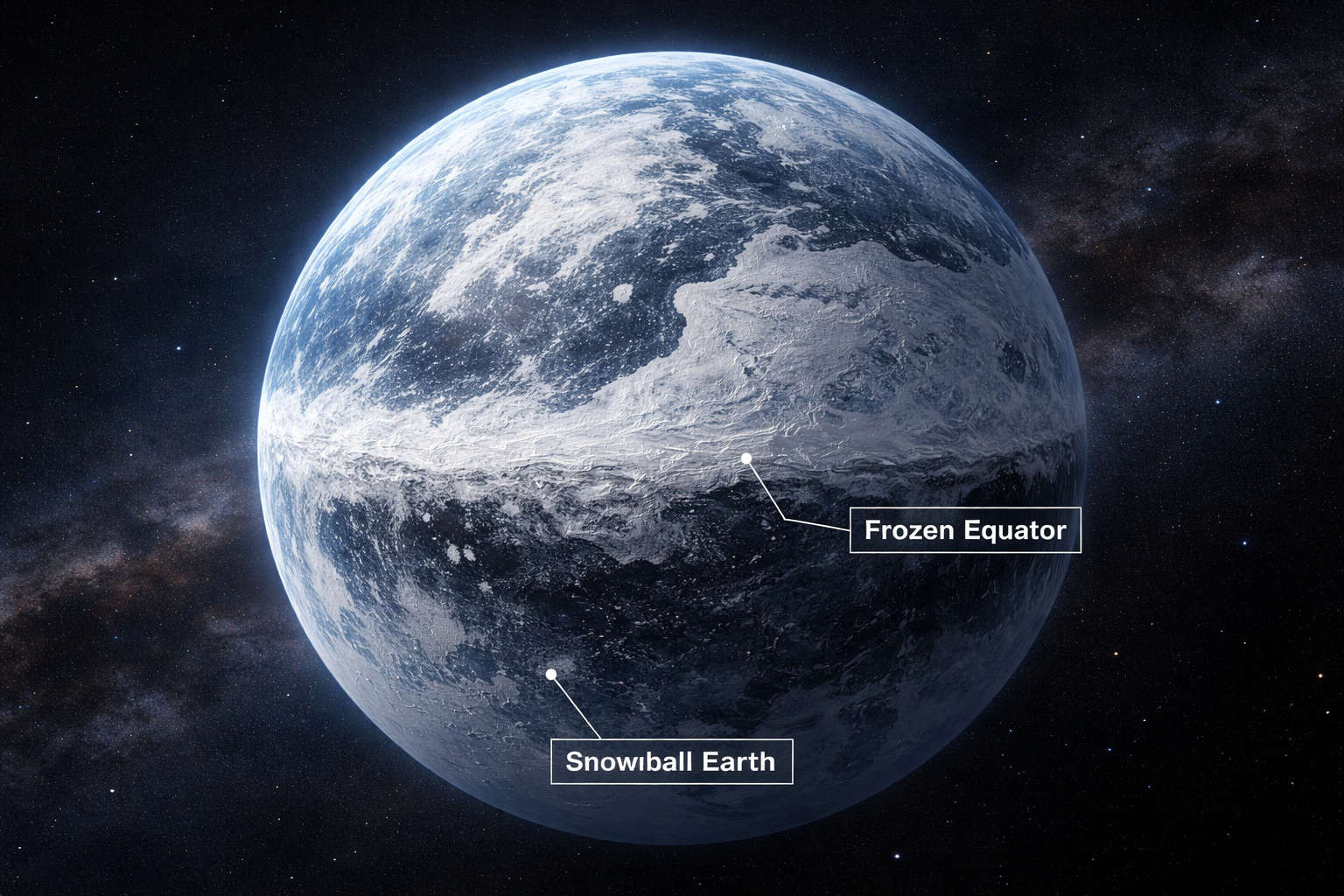
For tens of millions of years, Earth plunged into its deepest known freeze. Ice sheets reached sea level at low latitudes, perhaps even the equator, turning the planet into a near-global ice world and reshaping the path toward complex life.
From 717 million years ago through 635.
Cause: Continental Drift, Falling CO₂
Bilaterian Split: The Origin of Agency
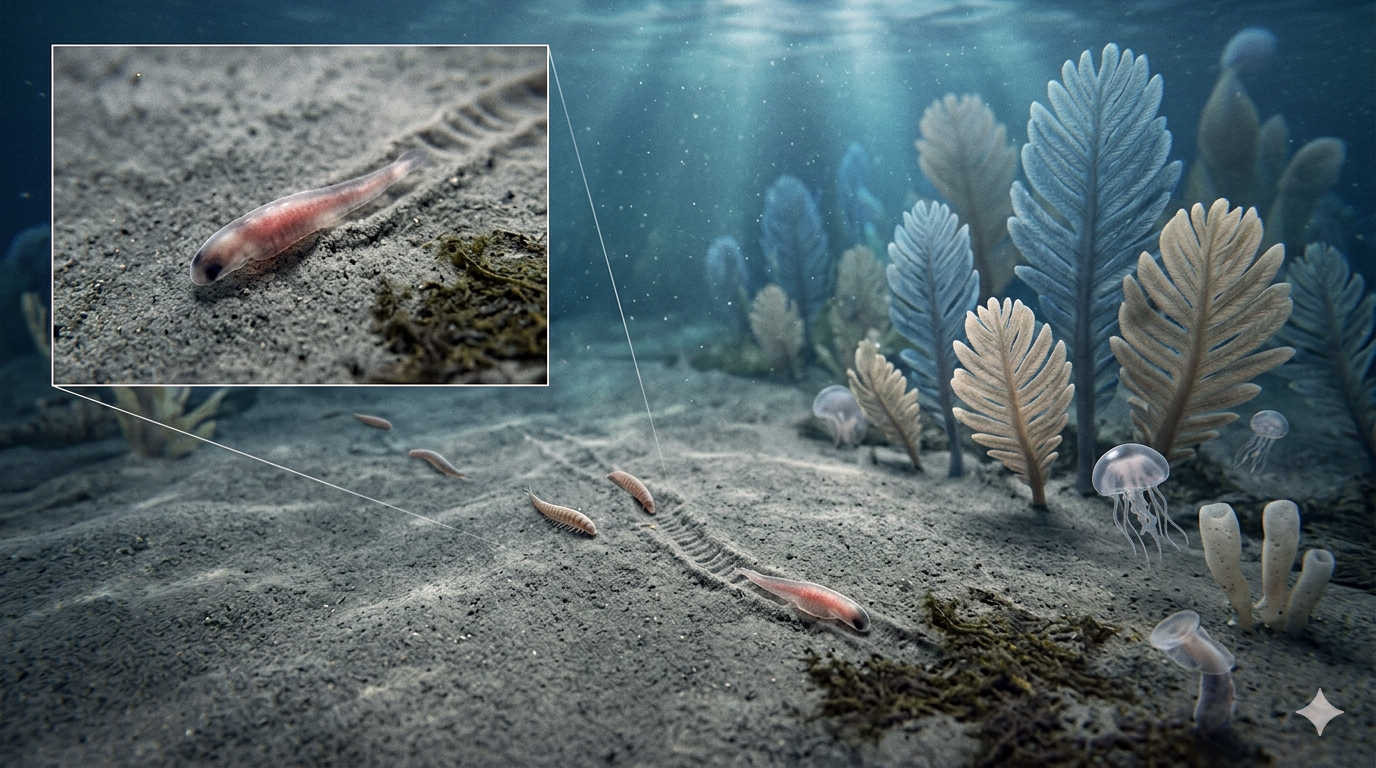
The bilaterian branch gave rise to today's arthropods, mollusks, fish, amphibians, reptiles, birds, and mammals. The significant idea is directionality. From a radial (circle) to a bilateral (line) symmetry, life transitioned from a passive "being" to an active "doing."
590 Million Years Ago (± 10 million)
Agency and directional action with intent.
Paleozoic Era: The Age of Synapsids
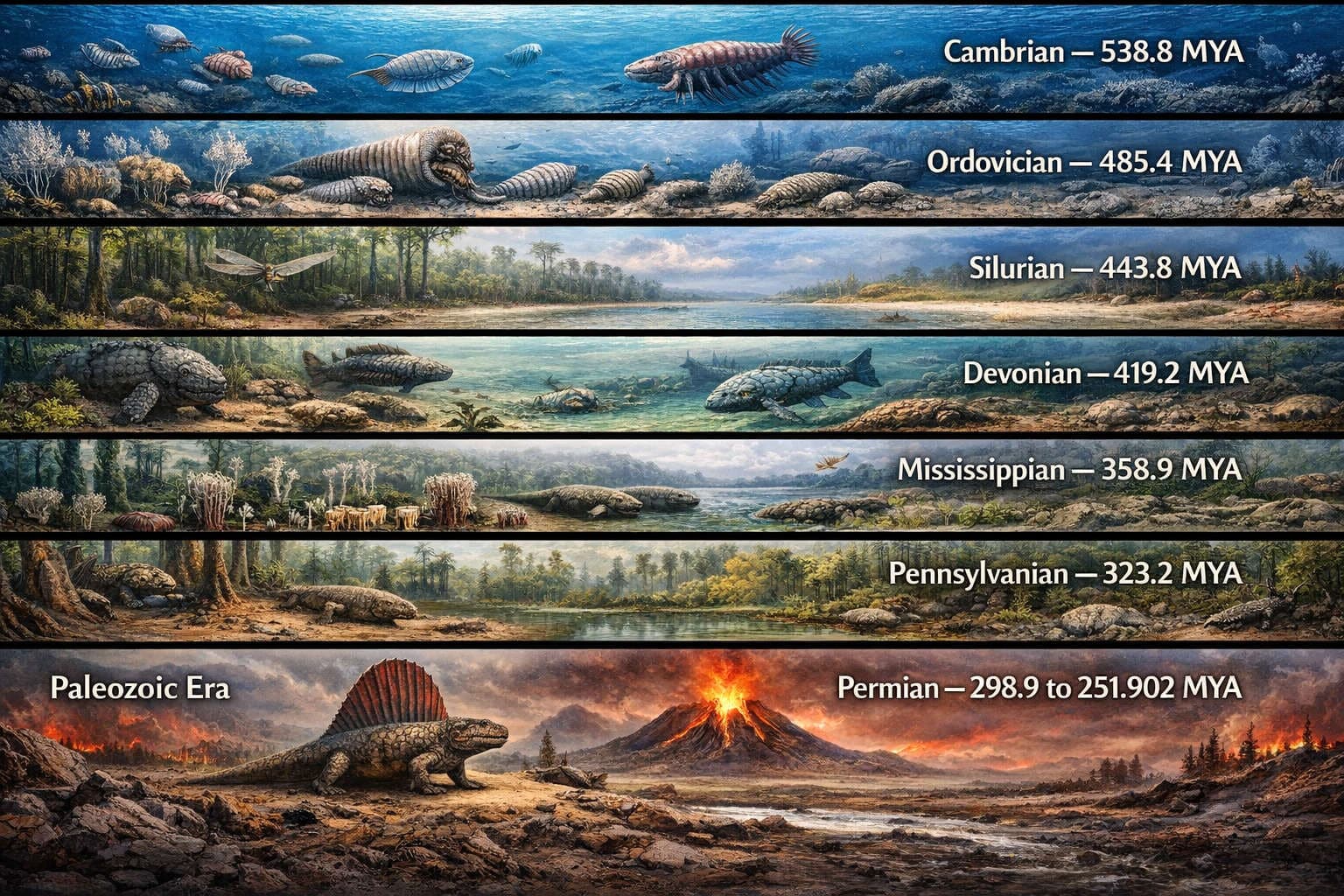
The Paleozoic era is marked by the rise of complex animal life 538.8 million years ago. It ends with the end-Permian mass extinction 252 million years ago. A volcanic cascade global warming event.
From 538.8 to 251.902 million years ago.
287 Million years: From burrowing to extinction.
Earliest Known Hunter
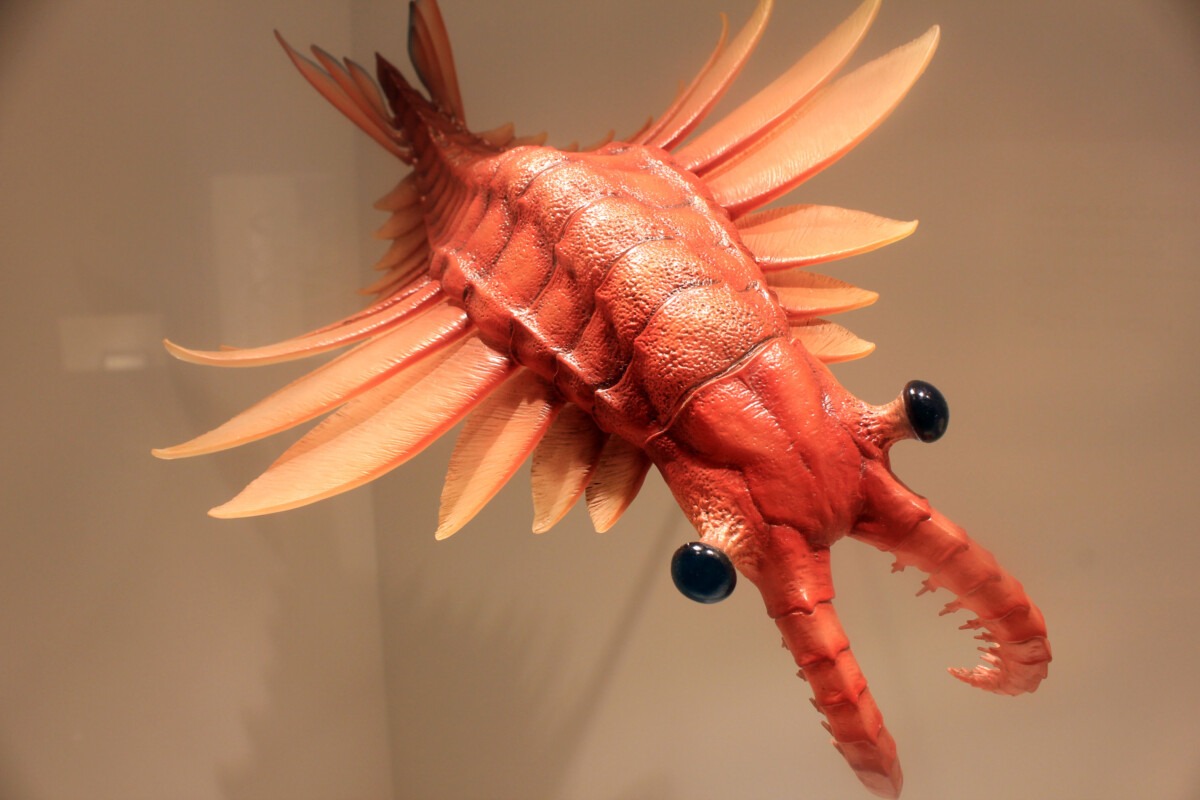
520 Million Years Ago
First Simple Brains; Proto-Short-Term Memory; Simple Sentience.
Asaphid trilobite
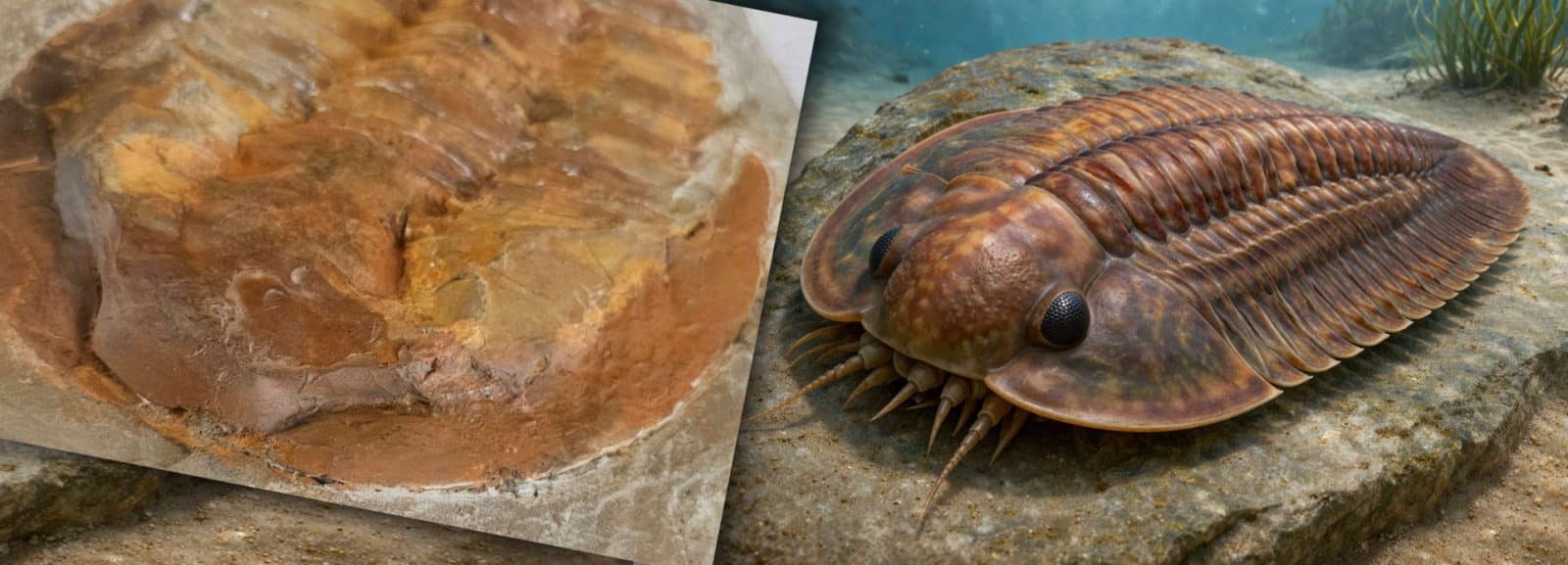
An Ordovician asaphid-like trilobite from an ancient shallow sea, broad-bodied and well armored, representing one of the many early arthropod forms that flourished long before life moved onto land.
Lived from 470 to 445 million years ago.
Ordovician–Silurian Extinction: Ice Strikes the Seas
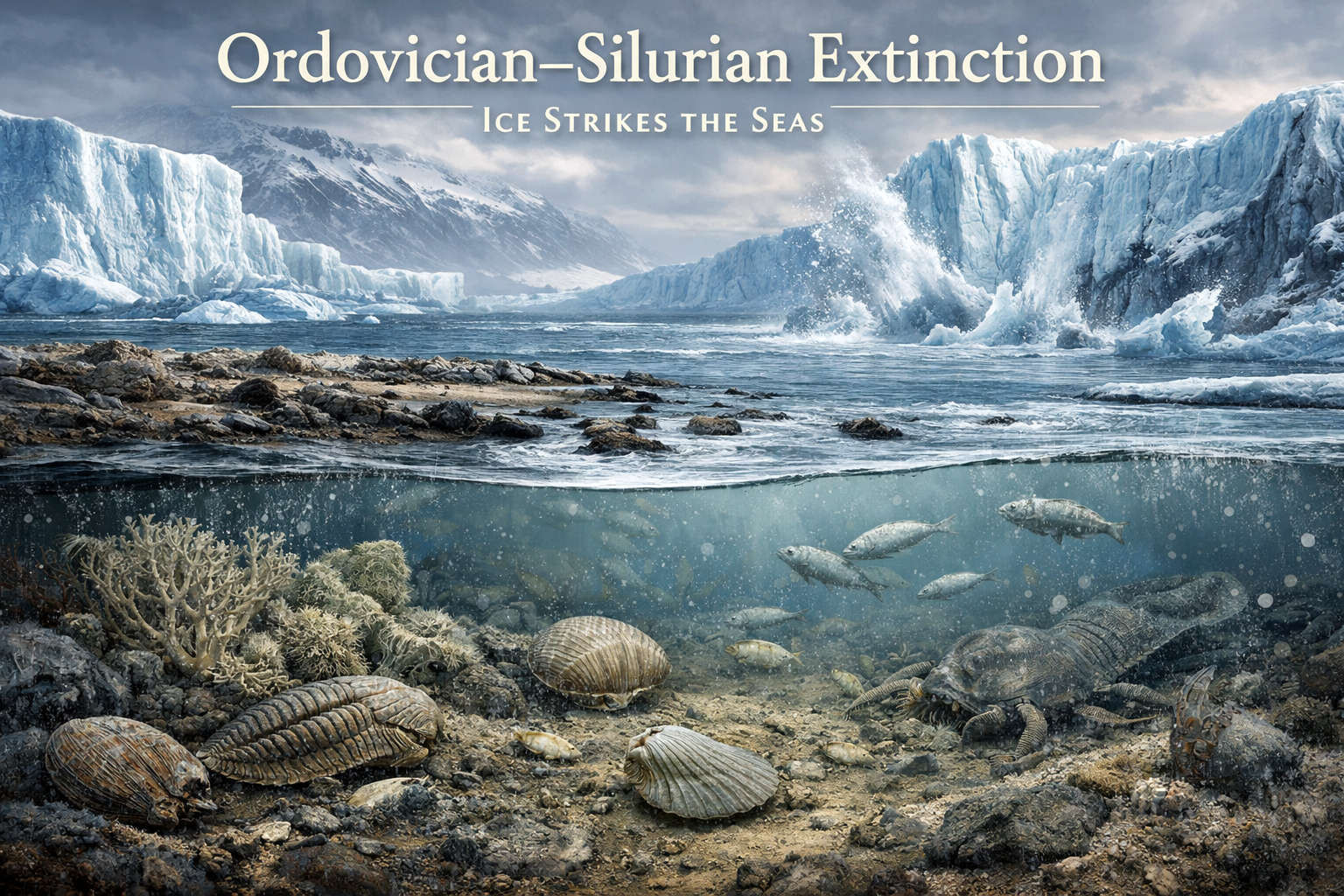
The Ordovician–Silurian extinction shows how climate change can reshape evolution by collapsing old ecosystems and opening space for new life.
~444 Million Years Ago
Cause: Global Cooling and Falling Seas
Oldest Known Air Breather
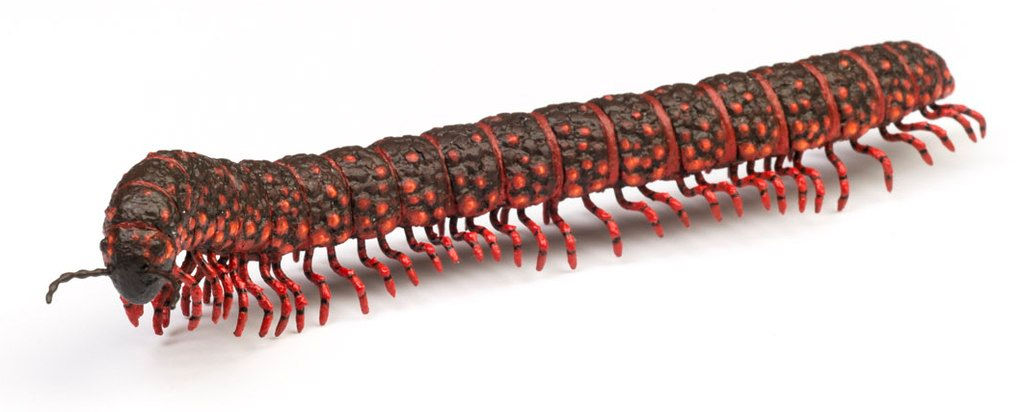
414 Million BCE
Oceans Lose Their Breath
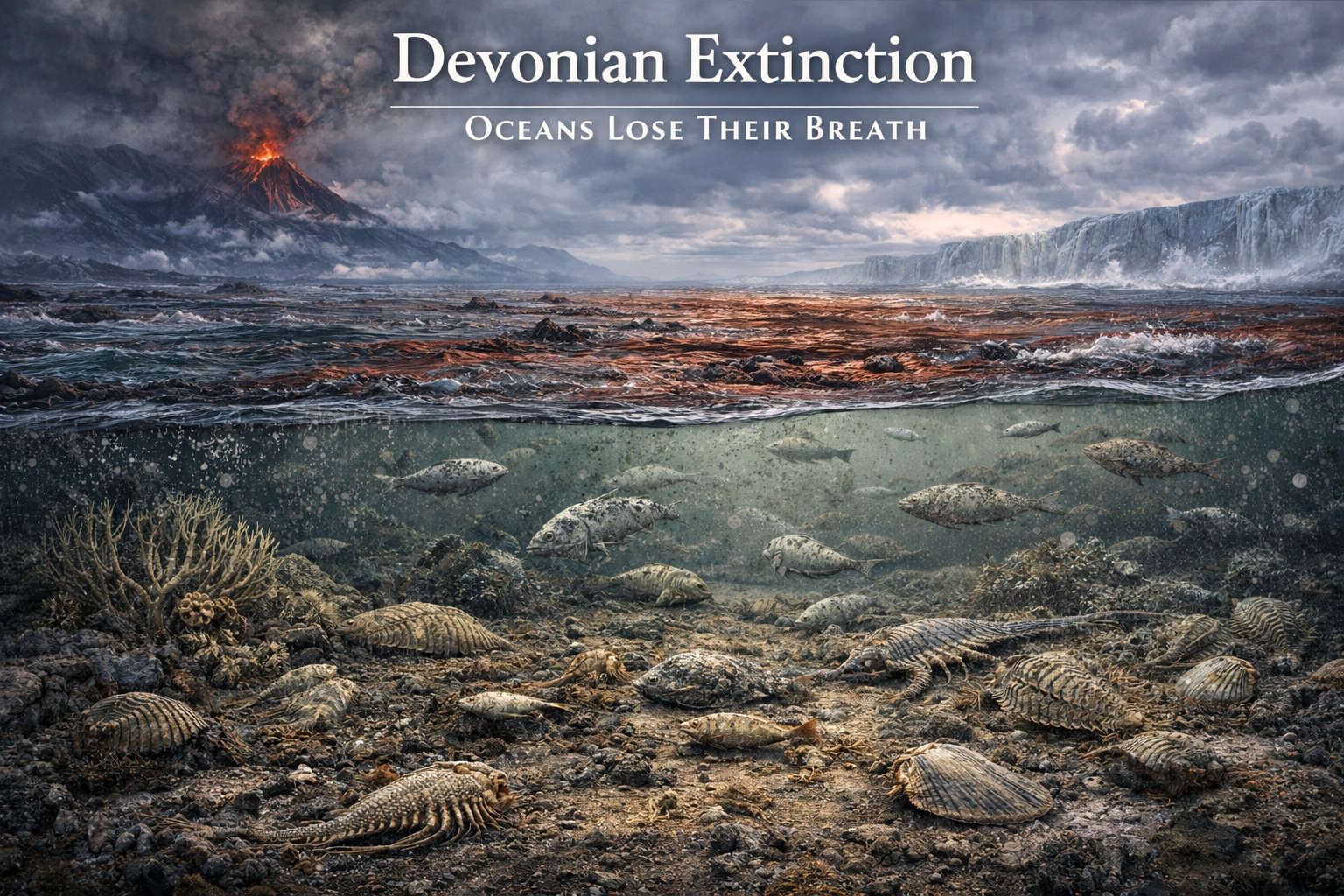
The Devonian extinction shows that evolution can be reshaped not by one sudden blow, but by a long collapse in ocean health.
~372–359 Million Years Ago
Cause: Ocean Anoxia
The Synapsid World of the Late Permian
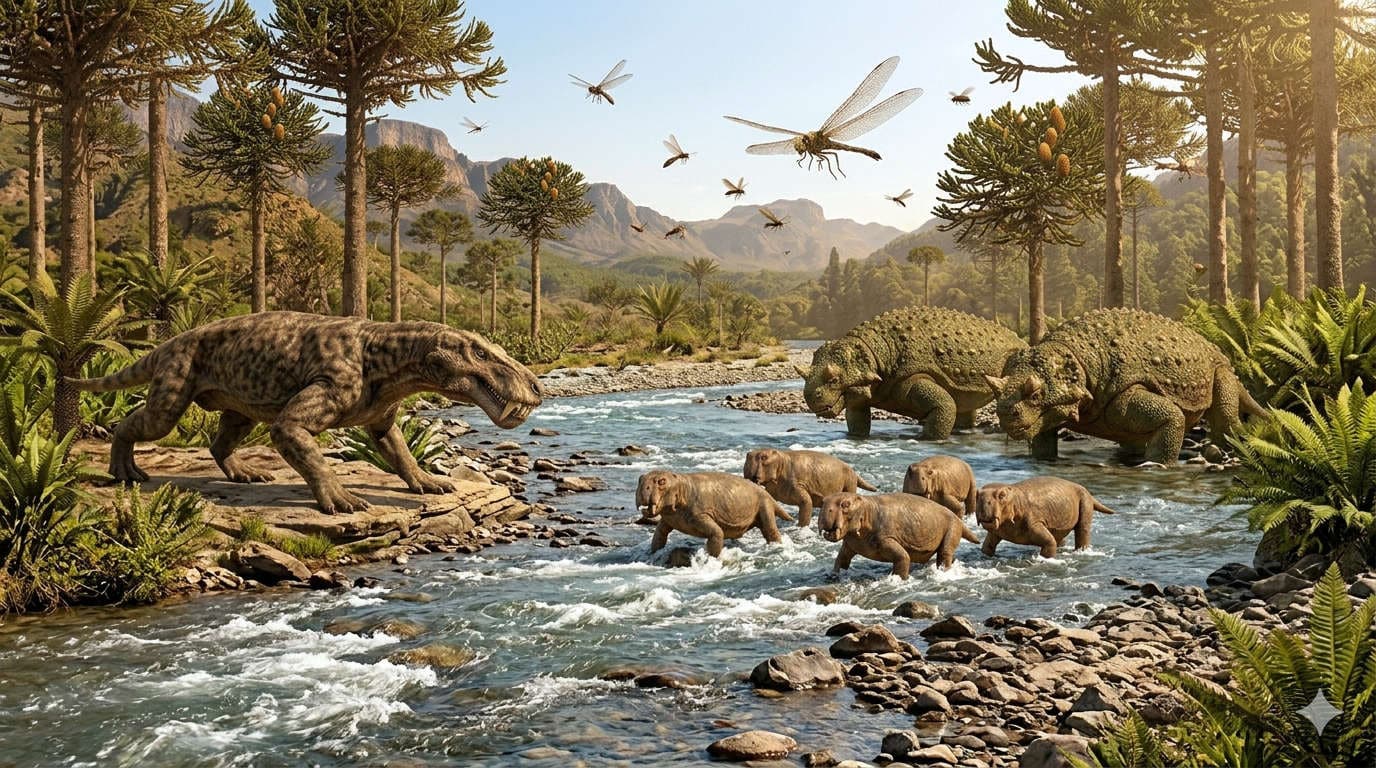
A Late Permian river world about 255 million years ago, where synapsids still ruled the land. A gorgonopsid stalks near the water while dicynodonts gather at the river’s edge and pareiasaurs move through the floodplain, alongside amphibians, large insects, and hardy pre-flowering plants.
255 Million years ago.
The P-T Extinction
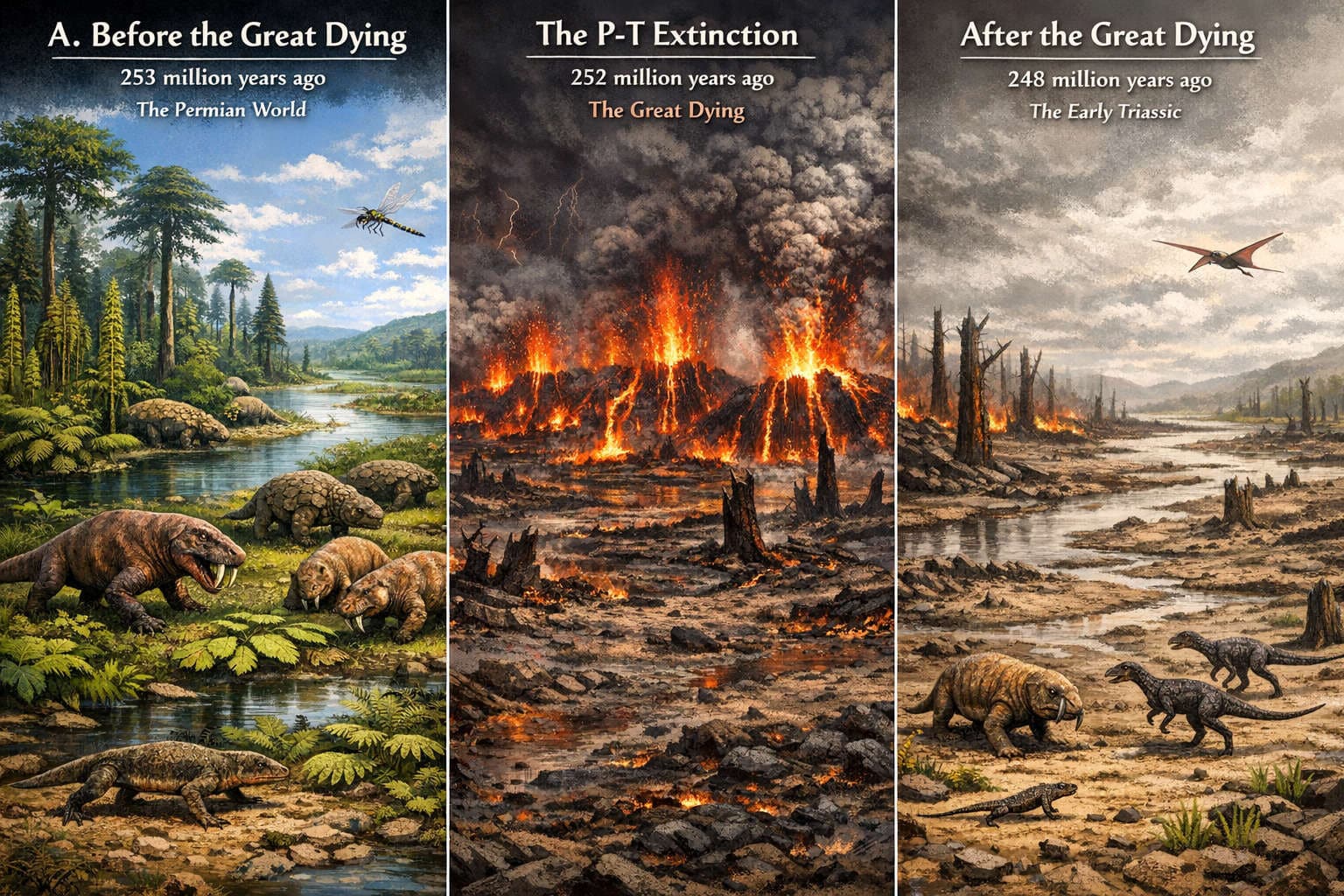
The Permian-Triassic extinction was not just the end of many species. It was a planetary reset that destroyed the old synapsid-dominated world and opened the door for the archosaur line that would later give rise to dinosaurs.
251,902,000 years ago (+/- 900 years).
Cause: Massive Volcanic Eruptions in Siberia
Mesozoic Era: Age of Dinosaurs
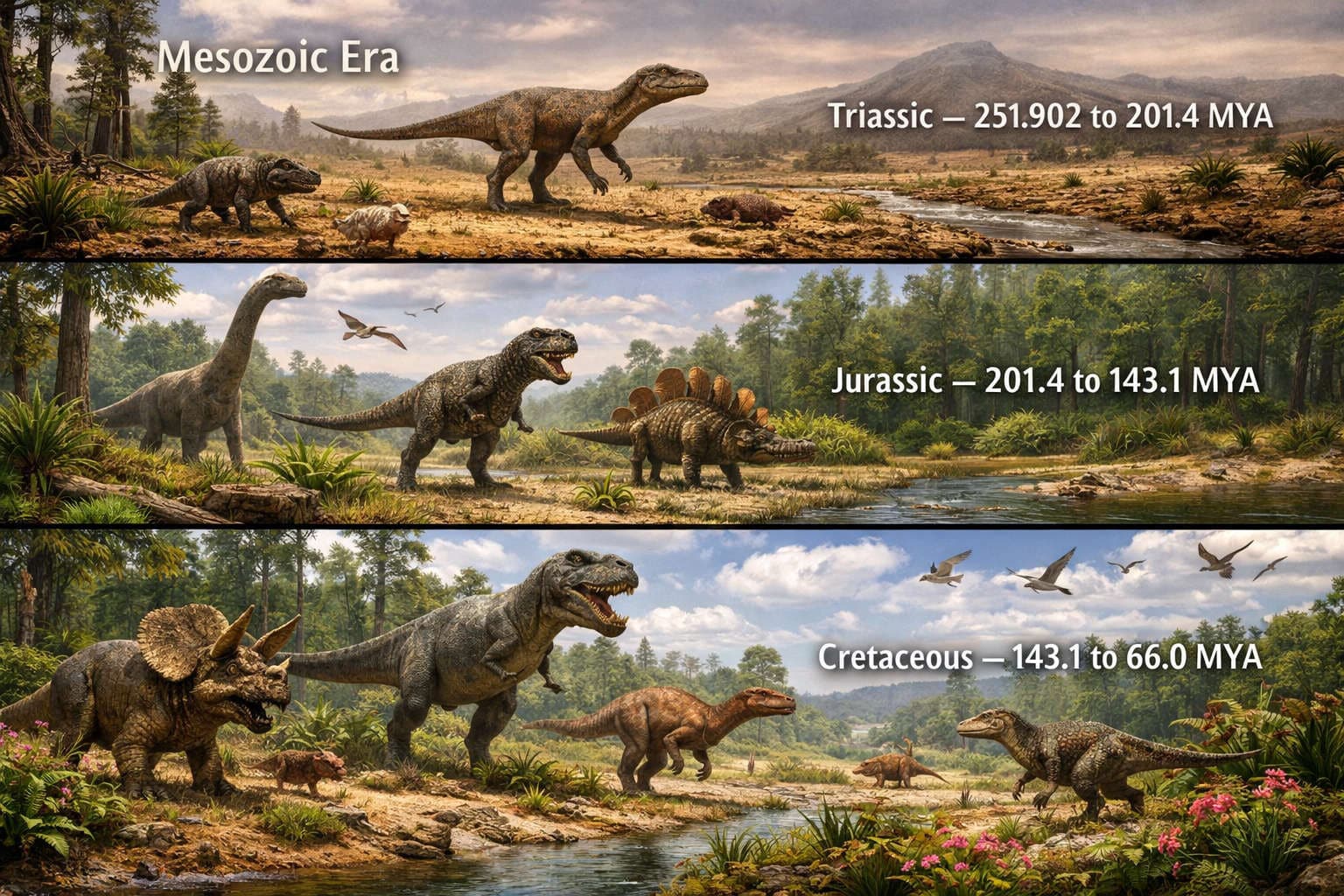
The Mesozoic era starts with the end-Permian mass extinction 252 million years ago. It ends the reign of dinosaurs with the K–Pg extinction 66 million years ago.
From 251.902 to 66.0 million years ago.
186 Million years: Dinosauria reigned from extinction to extinction.
Triassic–Jurassic Extinction: Volcanoes Open the Age of Dinosaurs
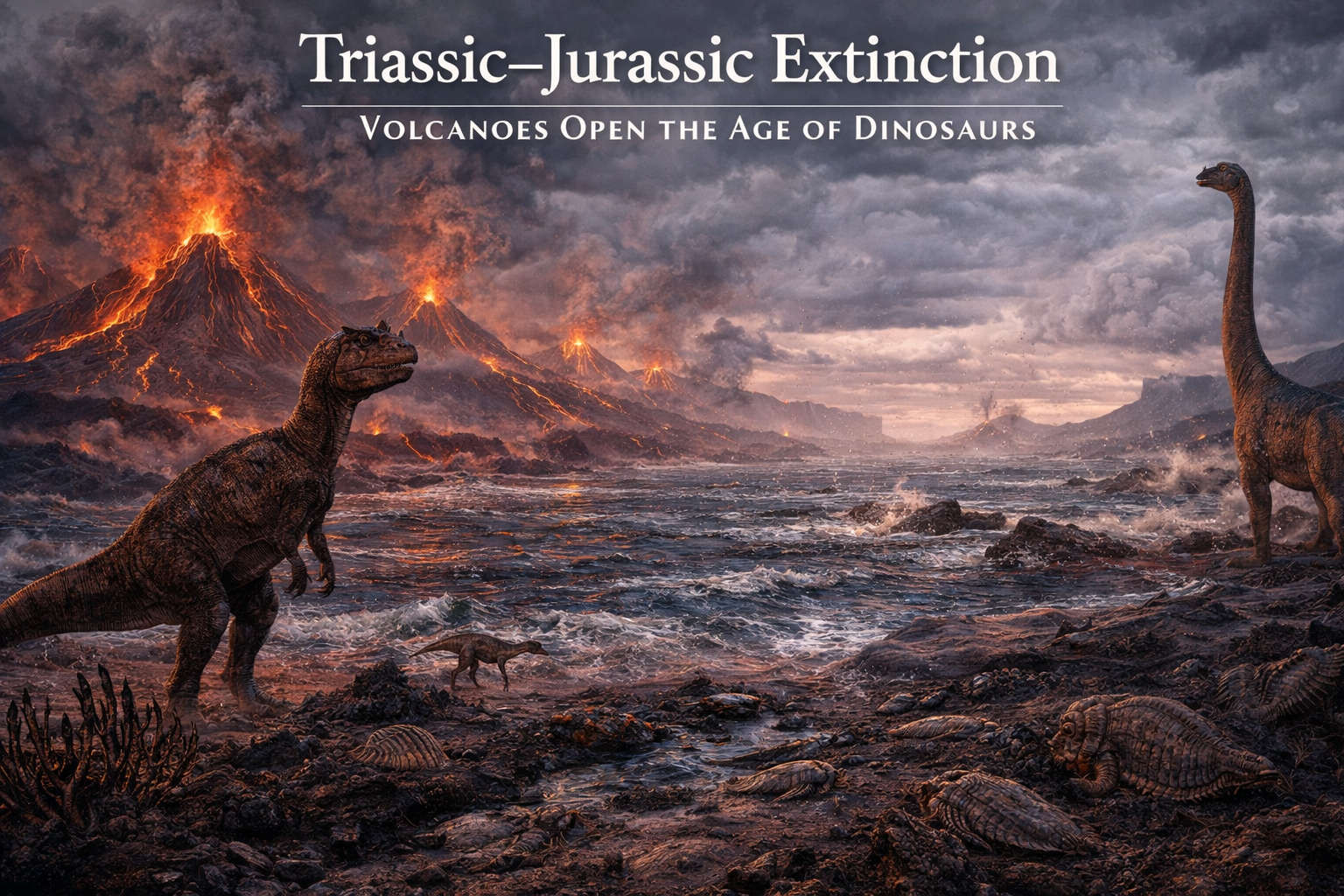
As Pangea cracked apart, massive volcanic eruptions poisoned air and oceans. This image includes early dinosaurs as foreshadowing: survivors waiting in the smoke before their Jurassic rise.
~201 Million Years Ago
Cause: Massive Volcanic Eruptions
The K-Pg Extinction
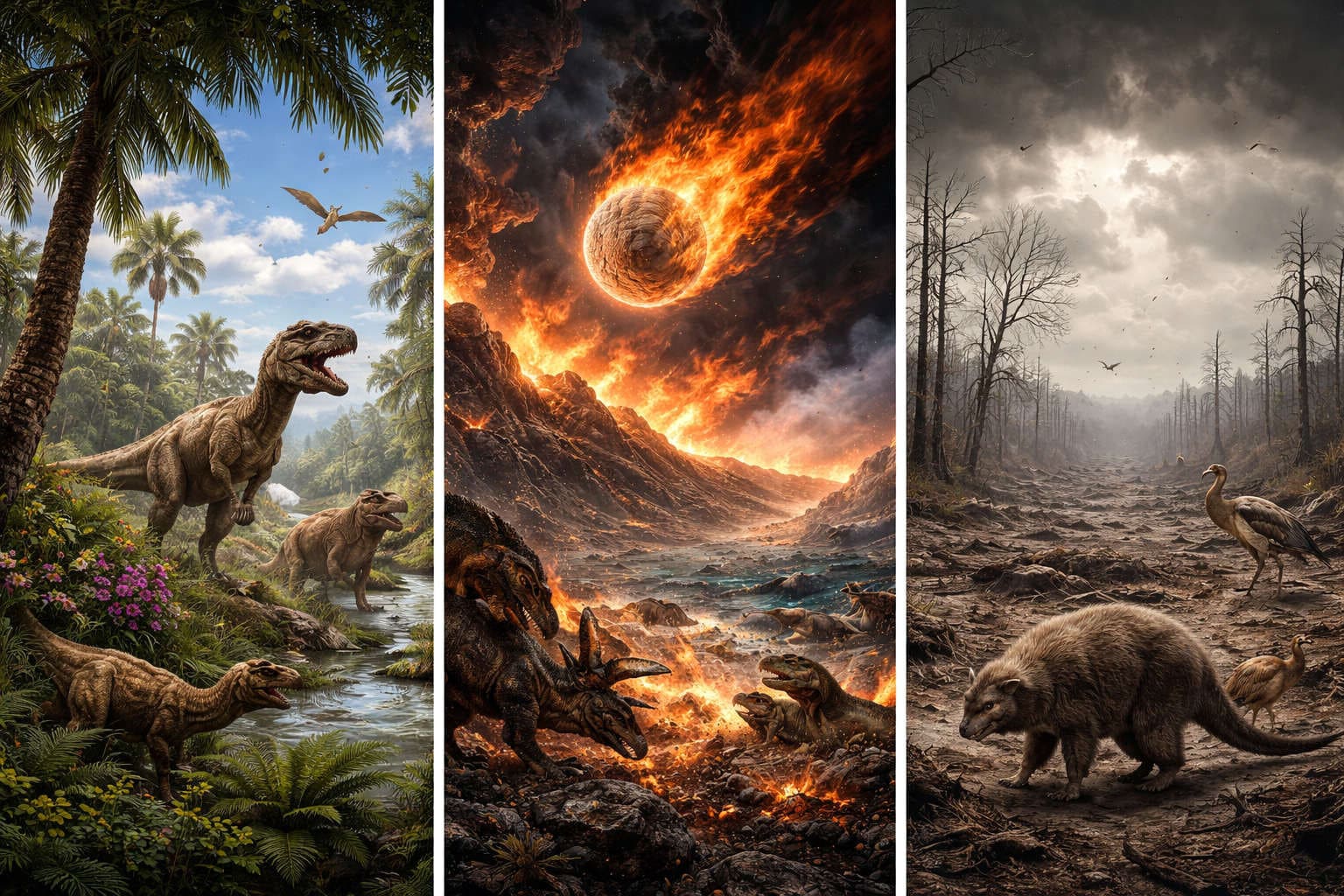
The K–Pg extinction was a sudden global catastrophe that ended the long dominance of non-avian dinosaurs and opened the way for mammals and modern birds to expand into a transformed world.
66.04 million years ago (+/- 900 years).
Cause: Massive Meteor
Cenozoic Era: Age of Mammals & Birds
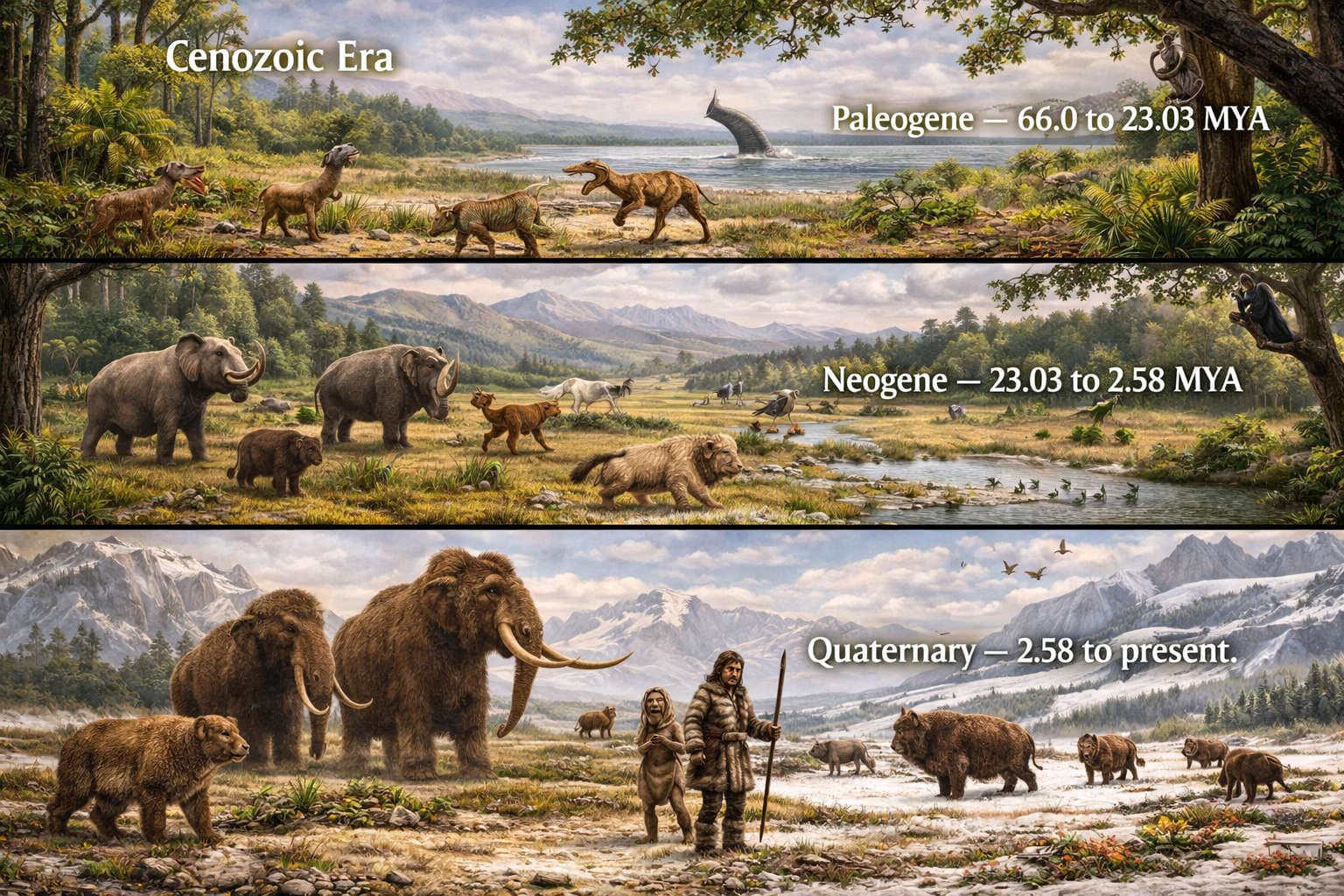
The Cenozoic era starts with the K–Pg extinction 66 million years ago. That event marks the sudden end of the reign of dinosaurs and the rise of mammals and birds.
66.04 million years ago to the present.
66 Million years: From extinction to society.