Explore Science-first Philosophy

All

Master Timeline

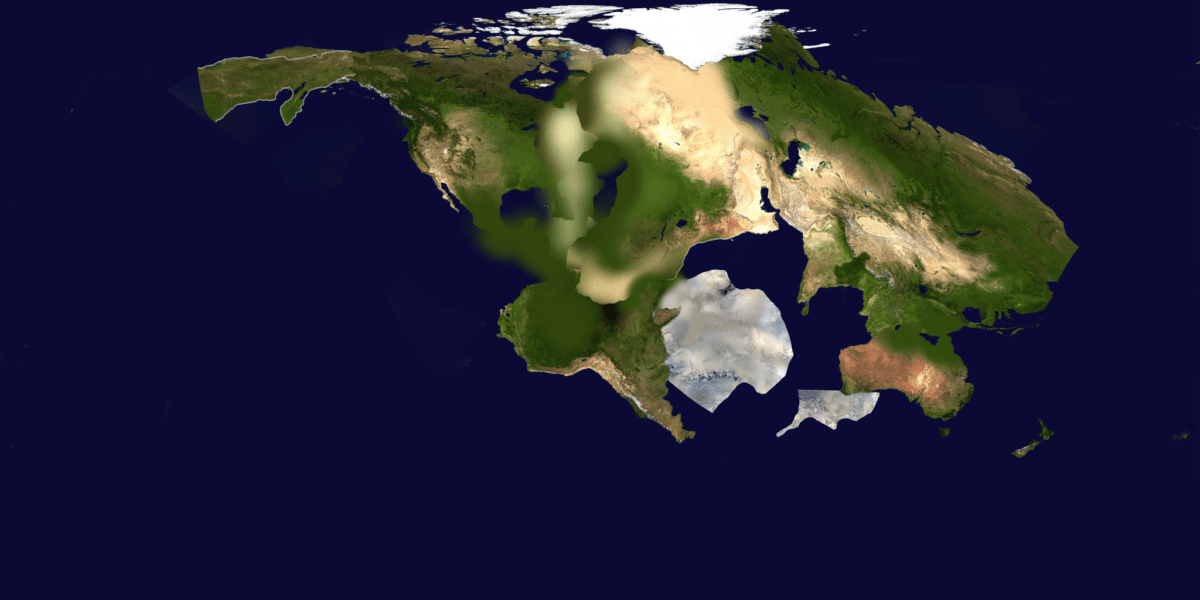
Owen is the best GG, CC BY-SA 4.0 , via Wikimedia Commons

New Pangaea Proxima Supercontinent

We can measure the movement of continents very precisely. Their future locations are a simple exercise in the empirical sciences. Predictive models like “Pangaea Proxima” (sometimes called “Next Pangaea” or “NeoPangaea”) predict the formation of a new supercontinent in about 250 million years, potentially sooner. This model sees “ALL” of Earth’s continents coming together to

New Pangaea Proxima Supercontinent Read More »

Lambda Model: Heat Death of the Universe

The Lambda Cold Dark Matter model of the universe predicts a Big Freeze. The Big Freeze is projected sometime after 10100 years from now. That’s a set of googol years from now. After billions is trillions then quadrillion. After quadrillions is Quintillion, Sextillion, Septillion, Octillion, Nonillion, Decillion, and finally a GOOGOL. This number is beyond

Lambda Model: Heat Death of the Universe Read More »

Black Dwarf Sun

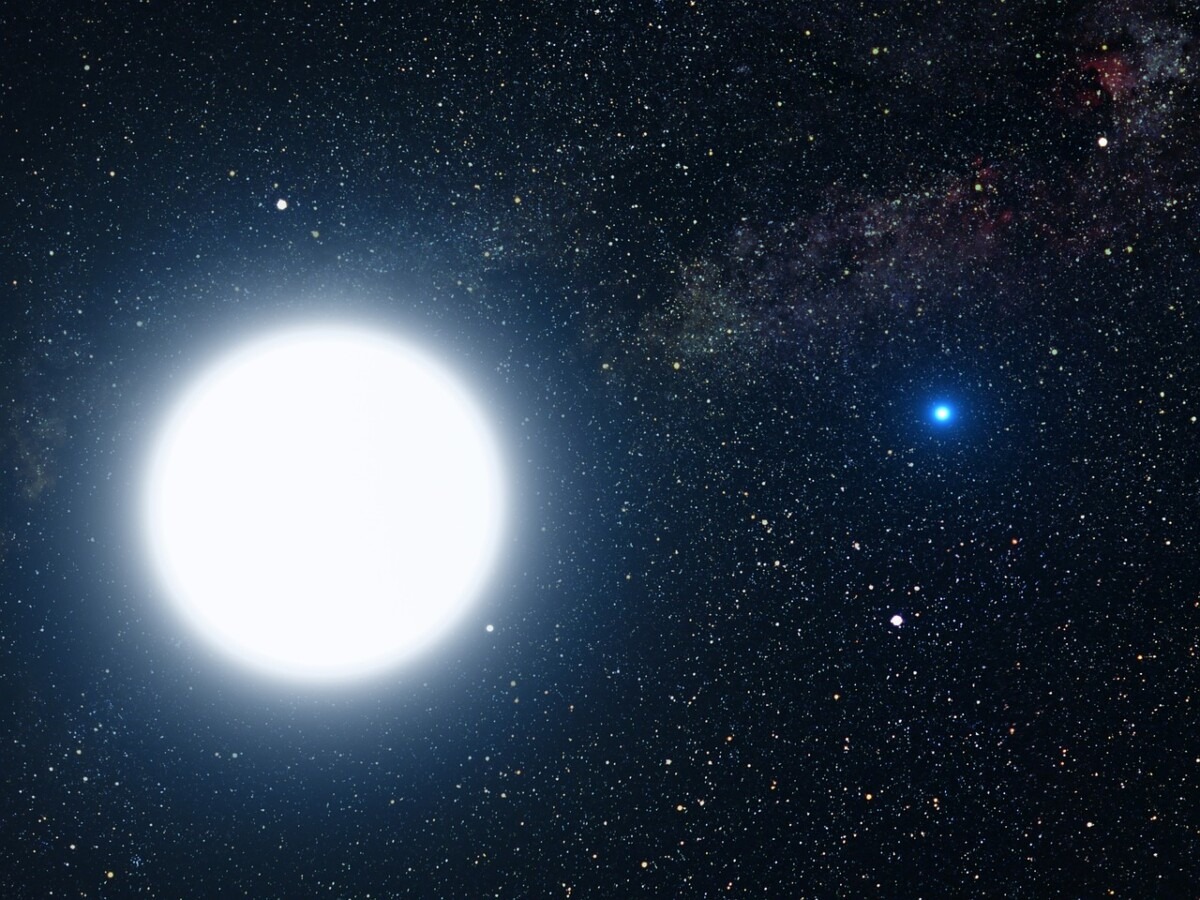
Over an incredibly long timescale, the Sun’s white dwarf remnant could cool enough to become a black dwarf, a theoretical stellar remnant that emits no light. Although speculative, theoretical models give us insight into the lifespan of the Sun as a white dwarf. After transitioning into a white dwarf, the Sun is expected to cool

Black Dwarf Sun Read More »

M31 Andromeda Galaxy

Galaxies are Born

Current observations, such as those of GN-z11, suggest that galaxy formation began as early as 400 million years after the Big Bang. This galaxy, observed at a redshift of z=11.09, stands as a testament to the rapidity with which the universe’s first structures began to coalesce from the primordial gas. While the detection of GN-z11

Galaxies are Born Read More »

big bang, black hole, supermassive star, galaxy, cosmos, physical, science fiction wallpaper.

Electroweak Era

We are still within the speculative first second. The Electroweak Era ends around 10−12 seconds after the Big Bang. Following inflation, the universe continued to expand and cool, allowing the electromagnetic and weak nuclear forces to separate. Particles continued to form and annihilate in a hot, dense environment, but as the universe cooled further, the

Electroweak Era Read More »

Electrostatic plasma sphere in the dark. Tesla coil - physics experiment

Planck Era

The Plank Era occurred in the first part of the first millisecond after the singularity. Current estimated put it at up to 10−43 seconds after the Big Bang. The term “era” is used for this micro-duration as a sort of tip of the hat to Einstein’s Relativity. It reflects a conceptual approach to time that

Planck Era Read More »

Cosmos Stars Cluster Structure Stunning Astrophotography Dramatic Celestial Wallpaper. Bright blue n

Population II Stars: Heavy Element Synthesis

Legacy: Began enriching the interstellar medium with heavier elements, including carbon, necessary for organic chemistry From the ashes of Population III stars, celestial giants, rose a new generation of stars, the Population II stars. These stars contained a higher proportion of the heavier elements, granting them a longer lifespan, and likely the company of planets.

Population II Stars: Heavy Element Synthesis Read More »

Molecules or atom isolated on blue background

First Atoms

The image of the early universe that we see in the CMB reveals a time shrouded in darkness. During this era, the 17 known particles first started to combine to form the universe’s first atoms. Electrons, protons, and neutrons came together to create neutral hydrogen atoms, a process that allowed photons—or light—to traverse the cosmos

First Atoms Read More »

Scroll to Top