
Neolithic Symbols: China
Good journalism slows the spread of error by checking what happened, who said it, and what supports it.
Neolithic Symbols: China Read More »


Prehistory refers to the time before ancient history which is defined as 4000 BCE to 500 CE. The term prewriting is used for the old use of prehistory as being the time before written history.
Good journalism slows the spread of error by checking what happened, who said it, and what supports it.
Neolithic Symbols: China Read More »
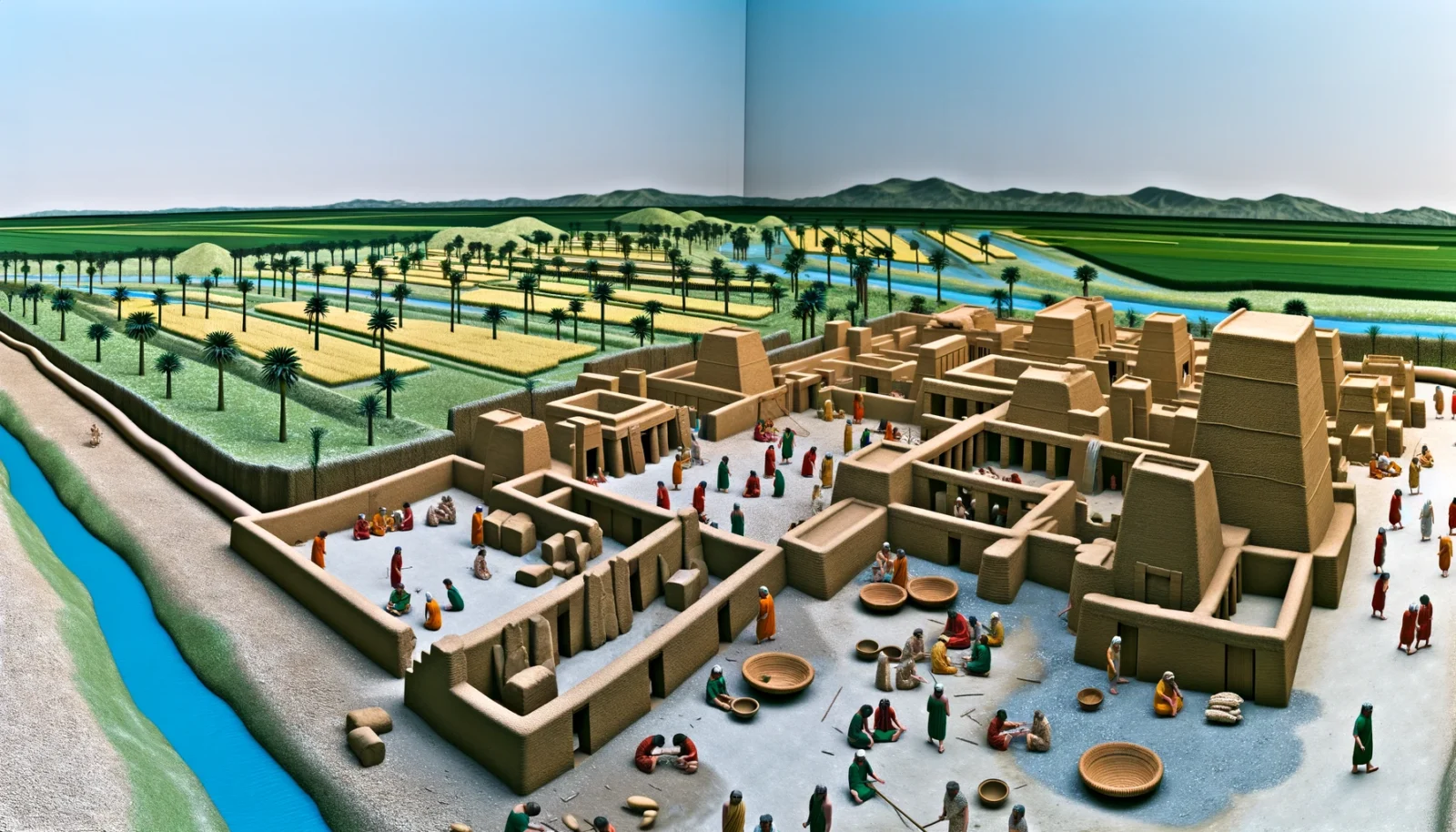
From 6500 to 4000 BCE, the Sumer civilization increased in social polarization. For example, central houses in the settlements became bigger. This early Sumer culture is characterized by large unwalled villages with multi-roomed rectangular mud-brick houses. The village featured public buildings including temples and centralized government. They had fine quality greenish colored pottery decorated with
Early Sumer Civilization Read More »
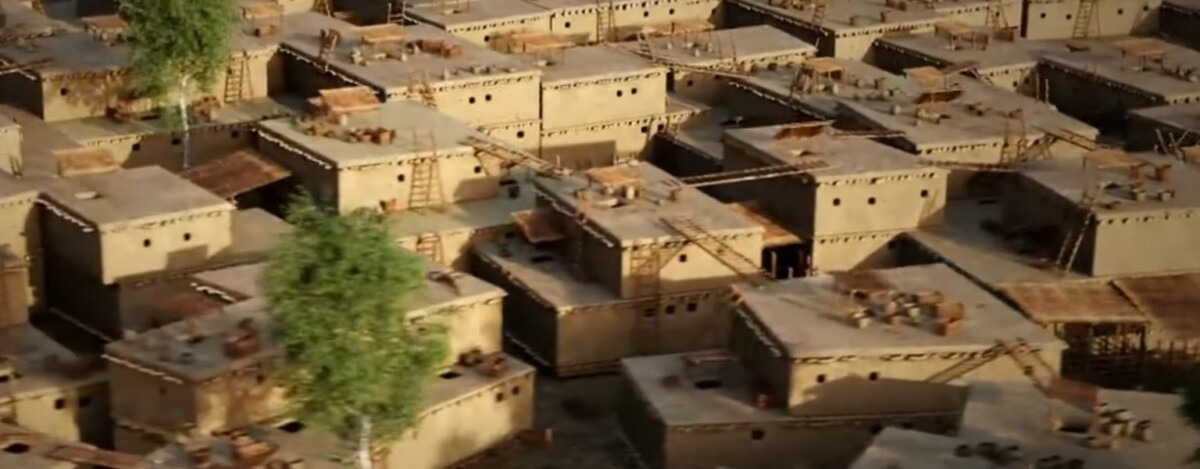
The city of Çatalhöyük was a very large Neolithic city in the southern Anatolia peninsula in modern day Turkey. The population of 5,000 to 10,000 lived in mudbrick buildings. Some of the larger buildings have ornate murals. A painting of the village, with the twin mountain peaks in the background is frequently cited as the
City of Catalhoyuk Read More »
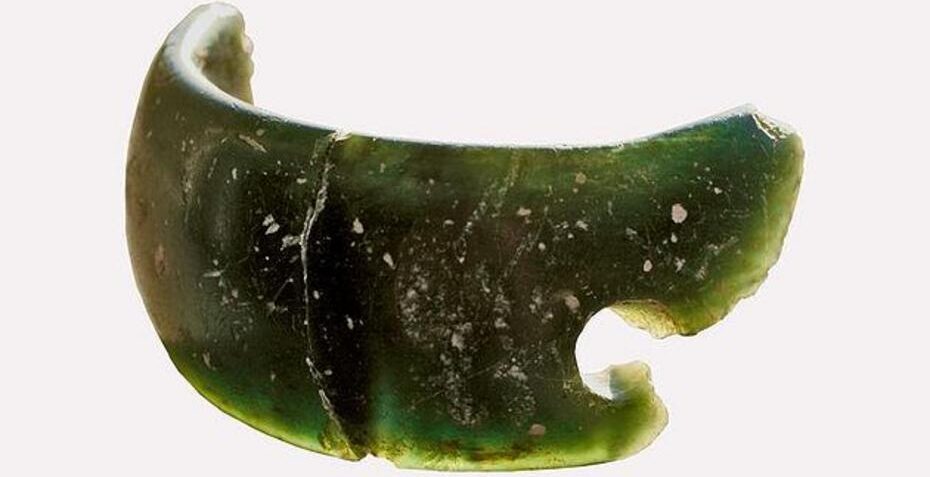
Denisovan: This bracelet dates from 70,000 to 40,000 BCE. It was discovered inside the Denisova Cave beside ancient human remains. The Denisova Cave is a cave located in Siberia, Russia. Other cave finds include woolly mammoth and woolly rhino bones. Scientists say there is evidence that the bracelet’s maker used a drill. This is the
Oldest Known Bracelet Read More »

7,000 Generations Ago All humans today share a single grandma, circa 175,000 BCE. We know this because all humans alive today share our ancestor’s haplogroup L genes — from our X chromosome. She was one of many thousands of women living in eastern Africa. Many maternal lines survived for many generations but ultimately over time

11,000 Generations Ago All humans today share a single grandpa, circa 275,000 BCE. We know this because all humans alive today share our ancestor’s haplogroup A genes — from our Y chromosome. He was one of many thousands of men living in eastern Africa. Many paternal lines survived for many generations but ultimately over time
Adam: Haplogroup A Read More »
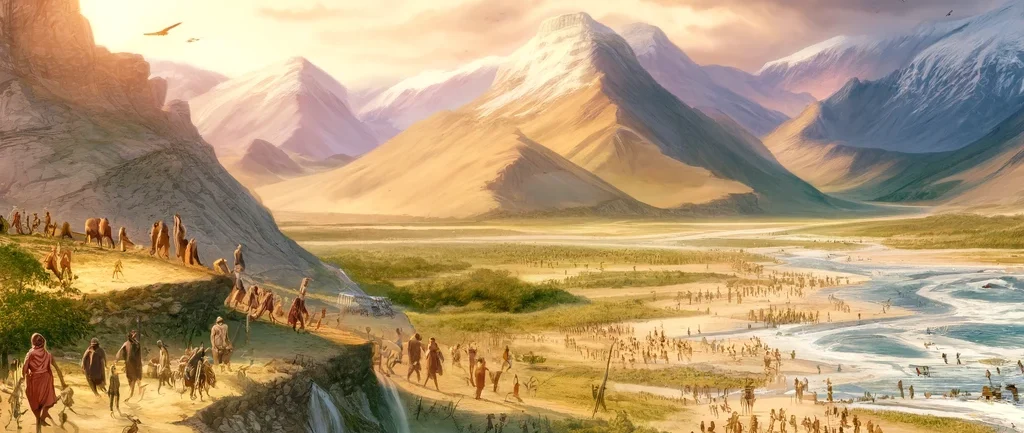
The “out of Africa” migration took place in many waves of which two are widely recognized: 130,000 to 100,000 BCE, and the Southern Dispersal around 70,000 to 50,000 BCE. Through genetic DNA testing we know that none of the genetic differences prior to circa 70,000 BCE exist in today’s humans.
Many Early Out of Africa Migrations Read More »
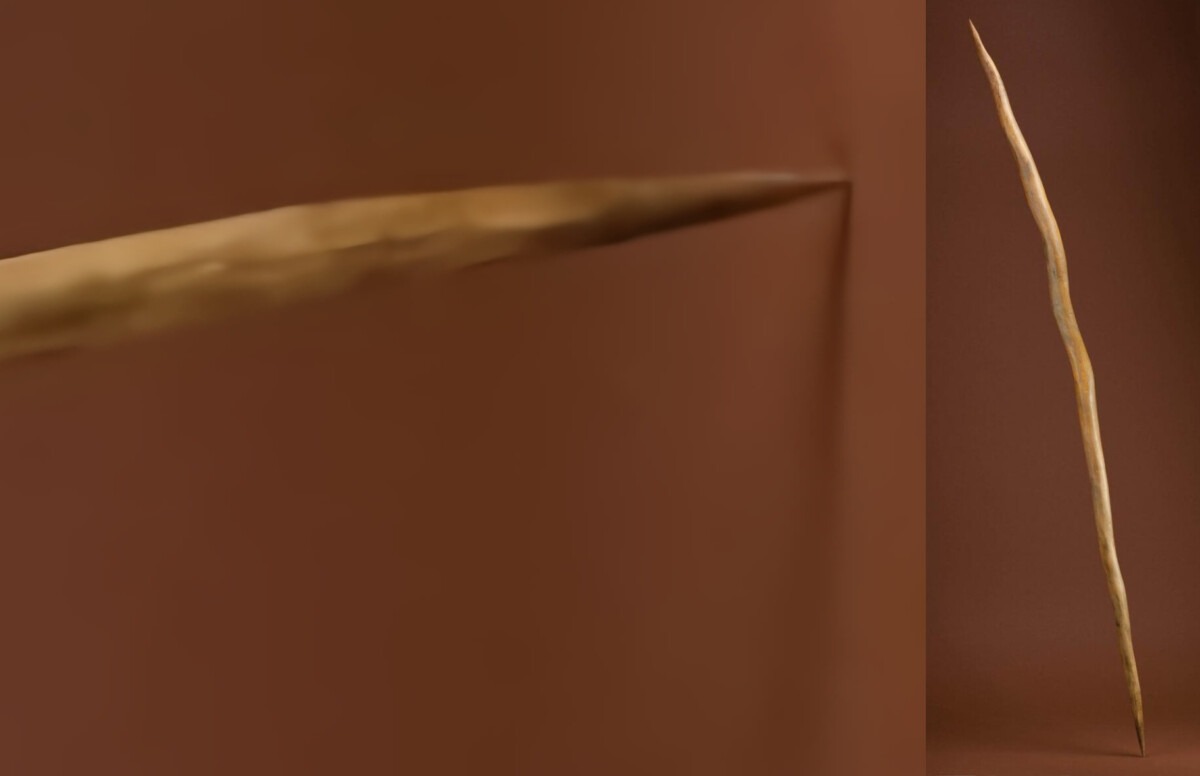
14,000 Generations Ago Homo heidelbergensis: Long spears made hunting large animals more safe. The oldest wooden spears found so far were found in Germany and dates to circa 400,000 BCE. In fact, they are currently the oldest known wooden artifacts. The find included 3 wooden spears, stone tools, and the butchered remains of more than
Oldest Surviving Spear Read More »
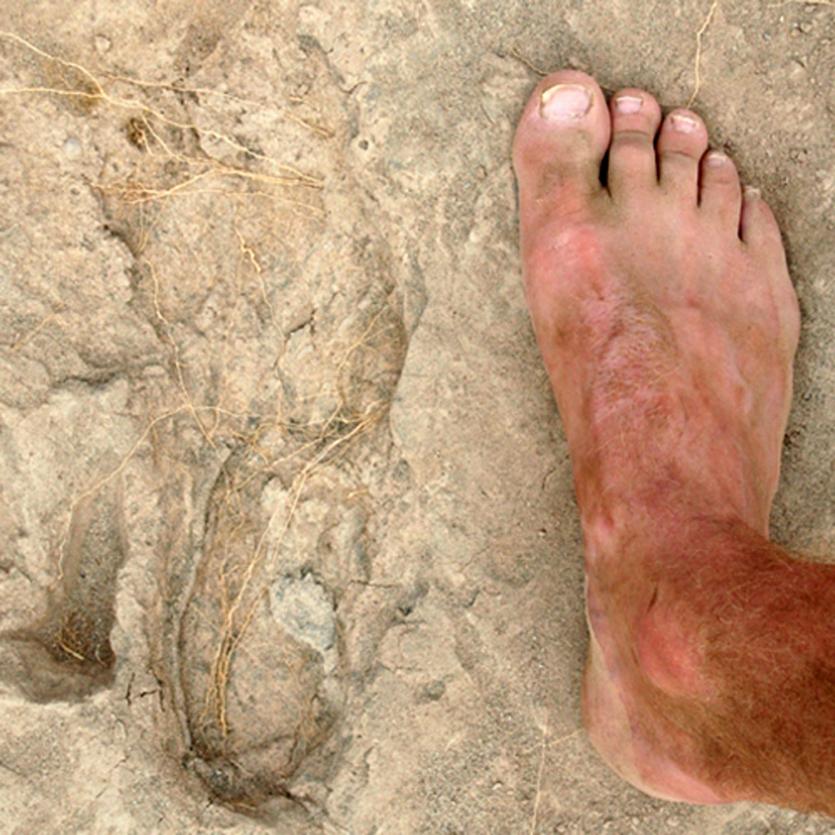
60,800 Generations Ago Species: Likely Homo erectus, our direct ancestor. The footprints found in Ileret, Kenya represent the oldest undisputed evidence of hominins walking upright in an efficient manner characteristic of modern humans. Our style of upright walking, which Homo erectus appears to have shared, is energy-efficient and adapted for long distances. It involves a
Oldest Modern Human-like Footprints Read More »

Genus Homo: Rapid brain growth in our human ancestors started about 800,000 BCE. Now, by rapid brain growth we mean about 600,000 years! Larger complex brains helped early humans to survive. They interacted with each other and their surroundings in new and different ways.
Rapid Brain Growth Read More »
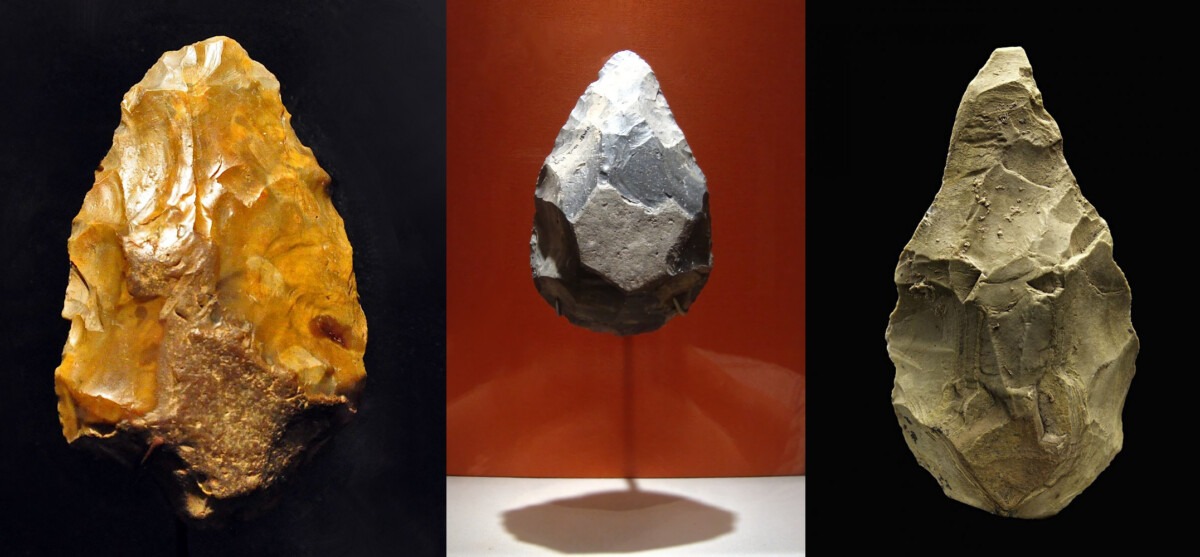
70,400 Generations Ago (from 2020 CE) By about 1.76 million BCE, early humans began to create hand axes. They would strike really large flakes, then continue to shape them around the edges. On the right, the hand axe pictured dates to circa 1.1 million BCE. It was found at Isampur, India.
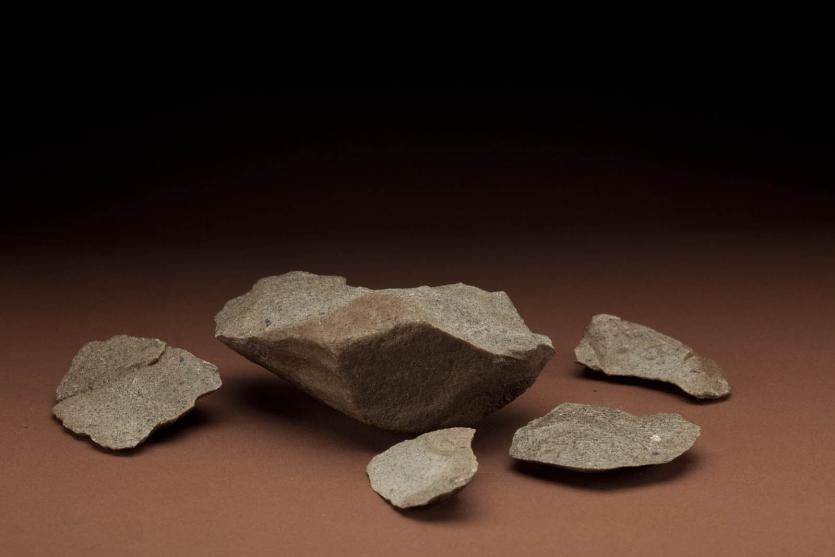
The earliest known stone tools date back to at least 3.3 million years ago. They are identified by their purposeful flaking patterns, sharp edges, and location with other more identifiable artifacts or fossils. They are then verified with microscopic analysis confirming repetitive use.
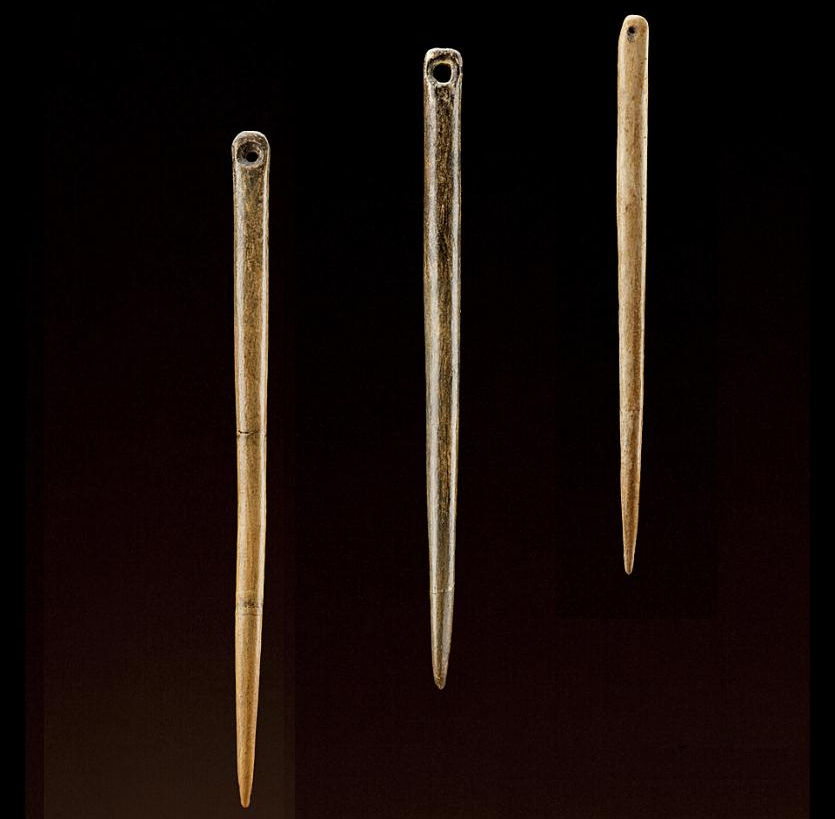
1,200 Generations Ago Humans used bone and ivory needles like these about 28,000 BCE to sew warm, closely fitted garments. These bone needles are from Xiaogushan, Liaoning Province, China, and are dated to about 28,000 to 21,000 BCE.
Advanced Sewing Needles Read More »
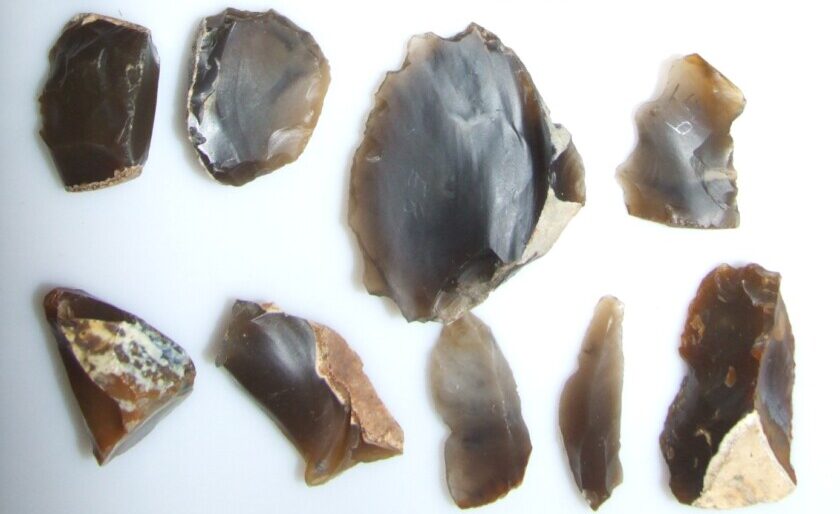
31,600 Generations Ago Burned flint tools dated to circa 790,000 BCE were discovered at Gesher Benot Ya’aquov, Israel. Control of fire is one of the key traits of the genus Homo.
Fire-Altered Stone Tools Read More »

6,000 Generations Ago By circa 150,000 BCE, the size of our brain and it’s capabilities matured. Think about this. A human born today and a human born in 150,000 BCE had roughly the same mental and physical capacities. This includes all of our traits including our need for attention and power, our ingenuity, our gullibility to
Modern Human Looks and Brains Read More »
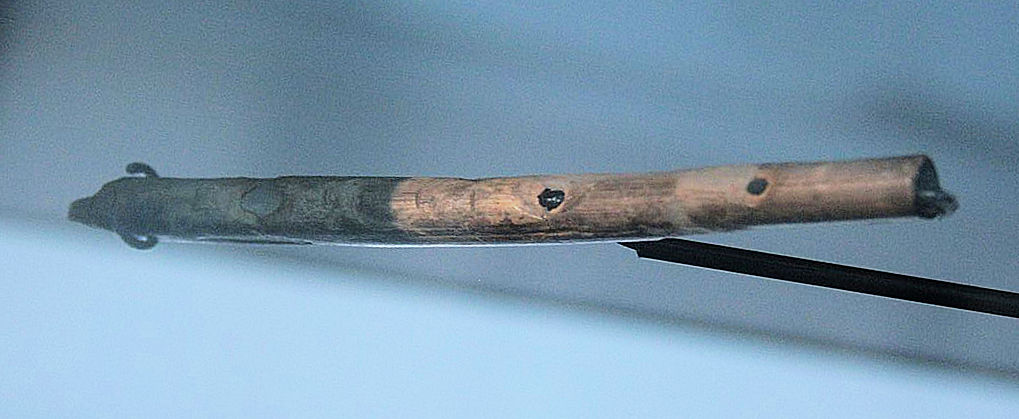
1,600 Generations Ago The oldest undisputed musical instrument is the Hohle Fels Flute discovered in the Hohle Fels cave in Germany’s Swabian Alb in 2008. The flute is made from a vulture’s wing bone perforated with five finger holes.
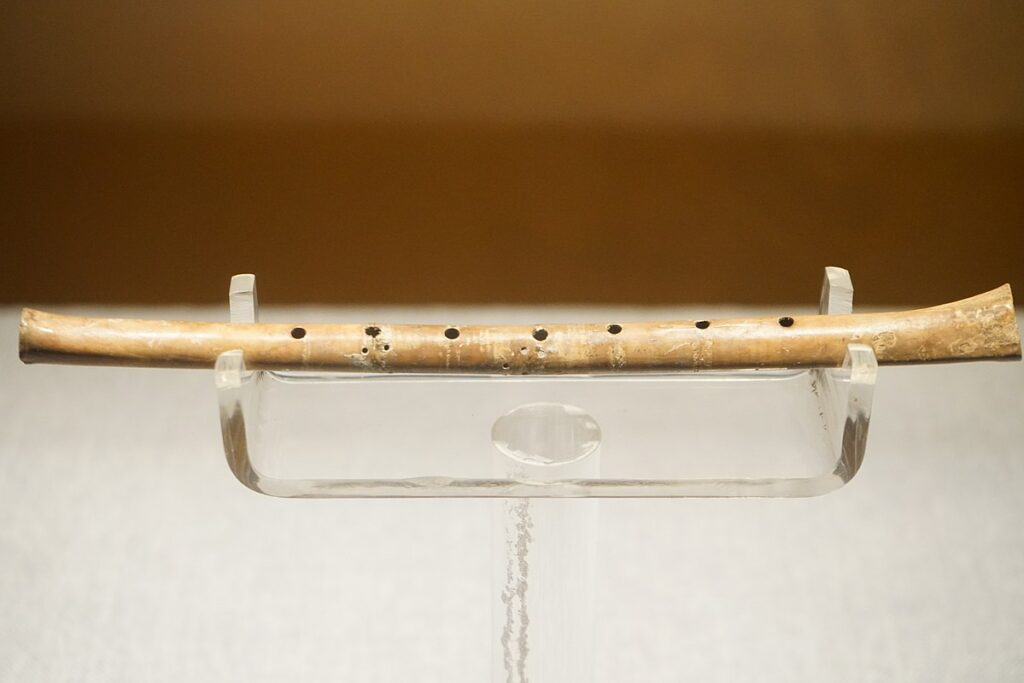
The Jiahu gudi is the oldest known musical instrument from China. This 8,000 year old flute dates back to circa 6,000 BCE. Gudi literally means “bone flute”.
Oldest Known Flute in China Read More »
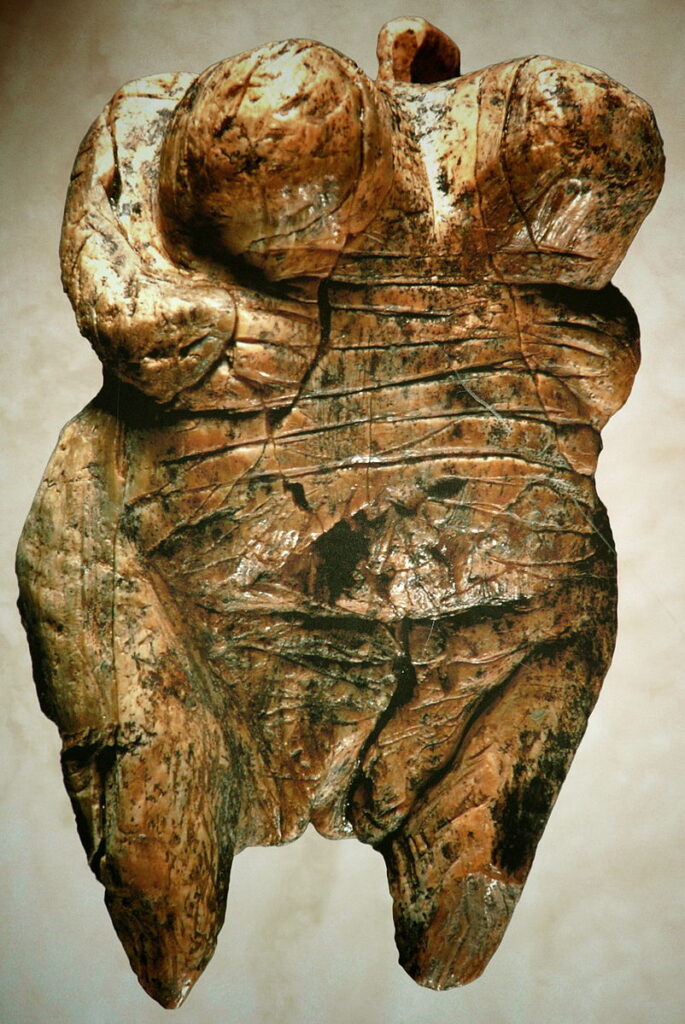
The Venus of Hohle Fels is a 2.4″ figurine made of wooly mammoth ivory that was unearthed in 2008 in Hohle Fels, a cave near Schelklingen, Germany. It was pieced together from six pieces found in a cluster, about 10 feet below ground, and about 60 feet from the cave entrance. The left arm and
Venus of Hohle Fels Read More »
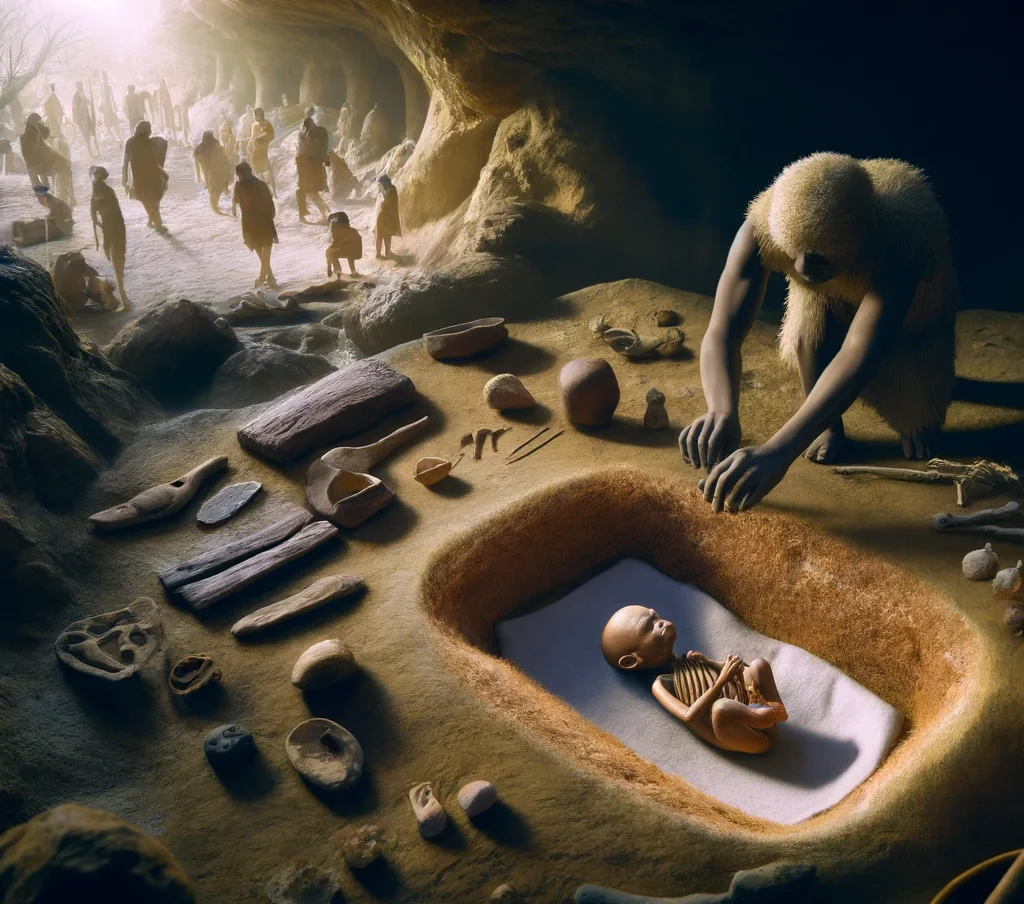
By 76,000 BCE our cognitive ability meets emotional intelligence. Is this when we started believing in one story?
Earliest Known Prepared Burial, “Mtoto” Read More »

468 Generations Ago (from 2020 CE) The Neolithic Revolution is the earliest known Agricultural Revolution. It is very likely that humans practiced forms of agriculture earlier. How much earlier? Well, without evidence, we are guessing. For convenience, anthropologists label humans as hunter-gatherers prior to the Neolithic Revolution. The fact is that the current theory states
Neolithic Revolution Read More »