Cognitive Biases
Your mind bends reality before you notice. Take control by owning your biases. Slow down. Check your confidence against evidence.


Rational ideas that are not historical stories nor empirical observations. Things like algebra and logic which help us indirectly describe the empirical. Also, things like the rational idea that dinosaurs once existed which is based on empirical evidence like fossils.
Your mind bends reality before you notice. Take control by owning your biases. Slow down. Check your confidence against evidence.

Cause and effect shape outcomes regardless of belief. Actions, not intent, nor faith, determine what follows.
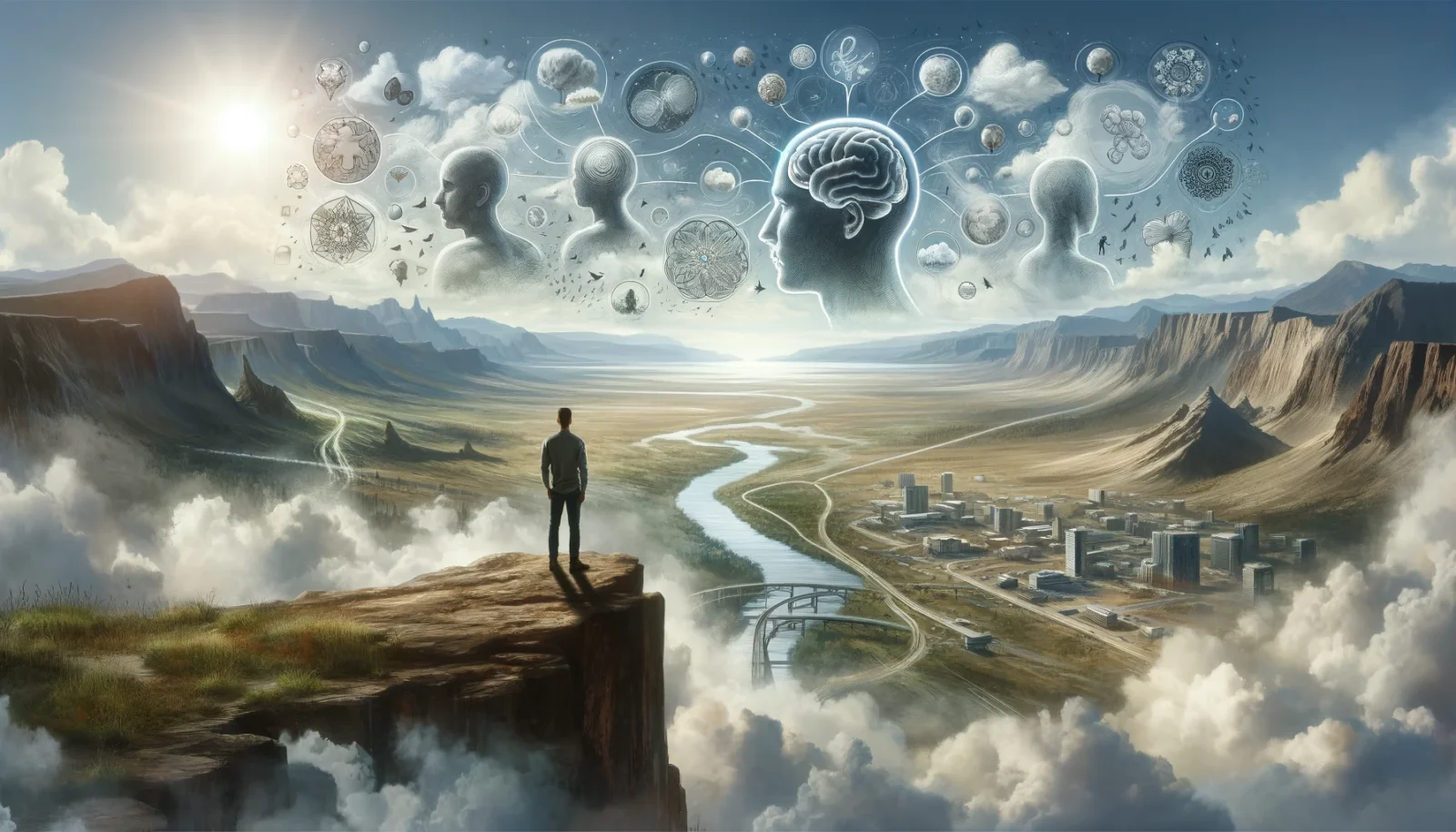
Cognitive distancing is the ability to look at an event from a distance.
Cognitive Distancing Read More »

Negative visualization is the technique of analyzing future adverse scenarios including various worst-cases.
Negative Visualization Read More »

Cognitive reframing is the technique where you ask how else you can interpret something.
Cognitive Reframing Read More »

Allegorical interpretation is reading a story for meaning beyond its literal surface.
Allegorical Interpretation Read More »

30 Phil, Chapter 11, Epicurus, Touchstone 31: Dichotomy of Pleasure. Epicurus defined two types of pleasure: short-term and long-term. Too frequently people put short term pleasures over long-term ones causing deeper harm than warranted. A short-term pleasure is kinetic as in the active enjoyment of fulfilling a desire, such as eating a delicious meal or
Dichotomy of Pleasure Read More »

Agnosticism is the honest pause between belief and denial. Used well, it helps you live with mystery, spend your attention wisely, and choose which unknowns are worth exploring.

30 Phil, Chapter 10, Pyrrho of Elis, Touchstone 28: Skepticism. Skepticism emphasizes the continuous challenging of beliefs. Pyrrhonian Skepticism, founded by Pyrrho of Elis, takes this a step further by encouraging you to suspend judgment about reality and truth. This approach urges you to question your beliefs and avoid dogmatism. With skepticism, you question both

Ethics begins with the good life, but the good life is bigger than personal happiness. Flourishing means growing well within reality while helping others, society, and nature flourish too.

30 Phil, Chapter 9, Aristotle, Touchstone 26: Logical Fallacies. A logical fallacy is a flaw in reasoning that invalidates an argument. In simple terms, it’s when a conclusion doesn’t logically follow from its premises. They sidestep issues with a lack of valid argumentation. While using a fallacy doesn’t mean the conclusion is wrong, it does

Aristotle helped make reasoning visible. He showed that arguments have structure, and that conclusions must be tested against their premises.

30 Phil, Chapter 9, Aristotle, Touchstone 24: Empiricism. Empiricism says knowledge comes primarily from sensory experience. It emphasizes the role of observation and evidence in forming beliefs and understanding the world.

30 Phil, Chapter 9, Aristotle, Touchstone 23: Rationalism. Rationalism emphasizes reason and a priori knowledge—knowledge you are born with—as the primary means of understanding reality. It says truths can be known independently of experience and that reason alone can provide an understanding of the world.

30 Phil, Chapter 9, Aristotle, Touchstone 22: Syllogisms. While deductive reasoning existed informally before Aristotle, he formalized it in his work “Prior Analytics” by introducing the Syllogism. It structures arguments into two key premises leading to a conclusion and remains widely used today. Aristotle knew that syllogisms can both analyze and validate derived truths, by logically

30 Phil, Chapter 8, Plato, Touchstone 21: Ignorance is Bliss. The concept of “Ignorance is bliss” says being uninformed or unaware of certain truths can lead to greater happiness. Take, for example, germophobes—people who are excessively concerned about germs. Constant awareness and meticulous research about germs and contamination could elevate their levels of stress, affecting
Ignorance is Bliss Read More »

Reflective inquiry is the act of exploring and examining one’s own thoughts, beliefs, and assumptions to clear the illusions of life.
Reflective Inquiry Read More »

Identity is not one thing. It is a living mosaic made of inherited traits, personal choices, social influences, and life experiences. We are not born with a fully formed essence. We build who we become.

A worldview is the lens through which you see reality, yourself, and other people. It is made of your personal language, religion, and philosophy.