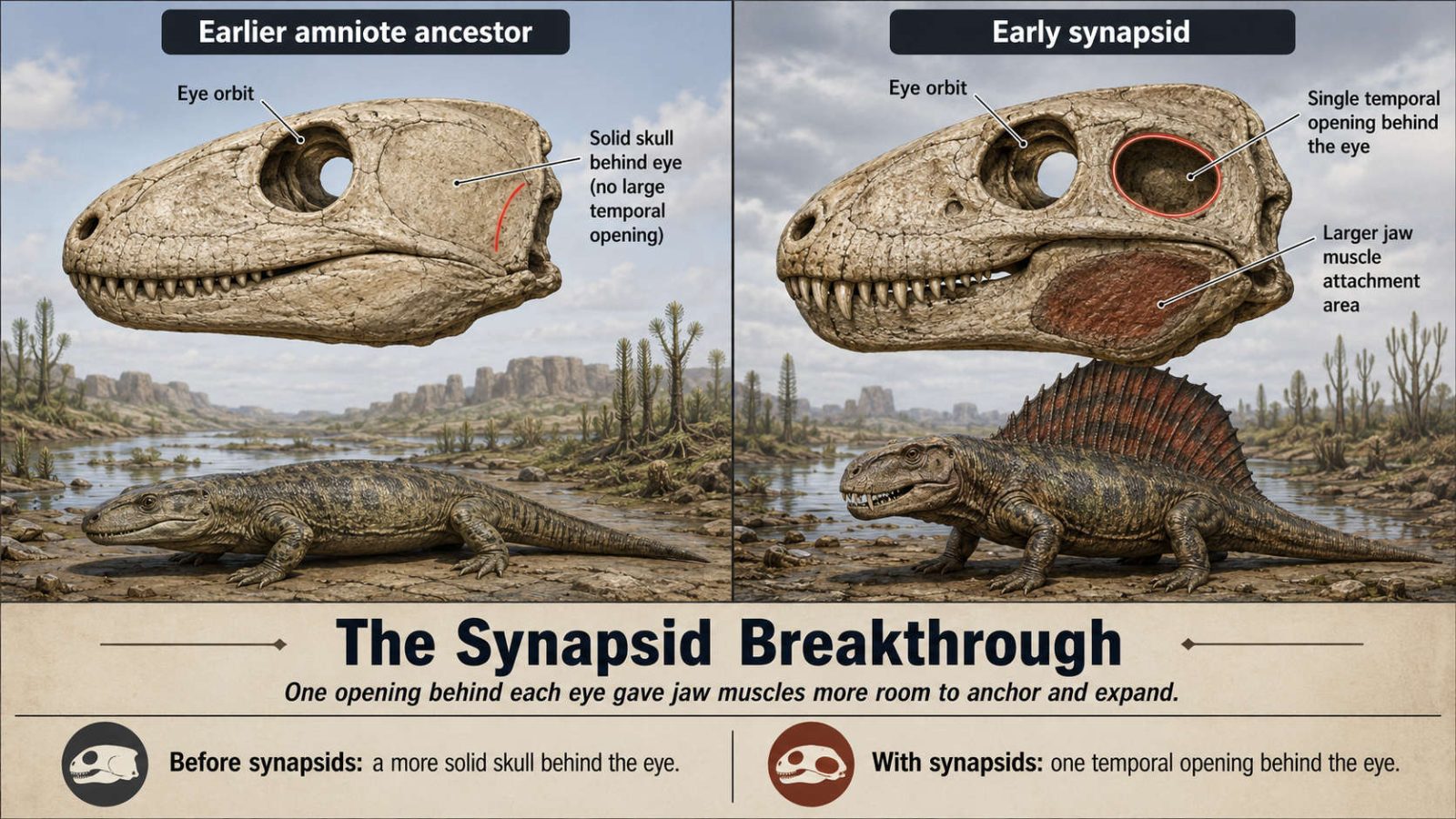
Echinerpeton and Archaeothyris are among the oldest known synapsids. They mark the mammal-side branch of amniotes, recognized by the single temporal opening behind the eye. UCMP frames Synapsida as a 300-million-year-old group with mammals as one surviving branch, while Archaeothyris is commonly treated as one of the oldest undisputed synapsids.
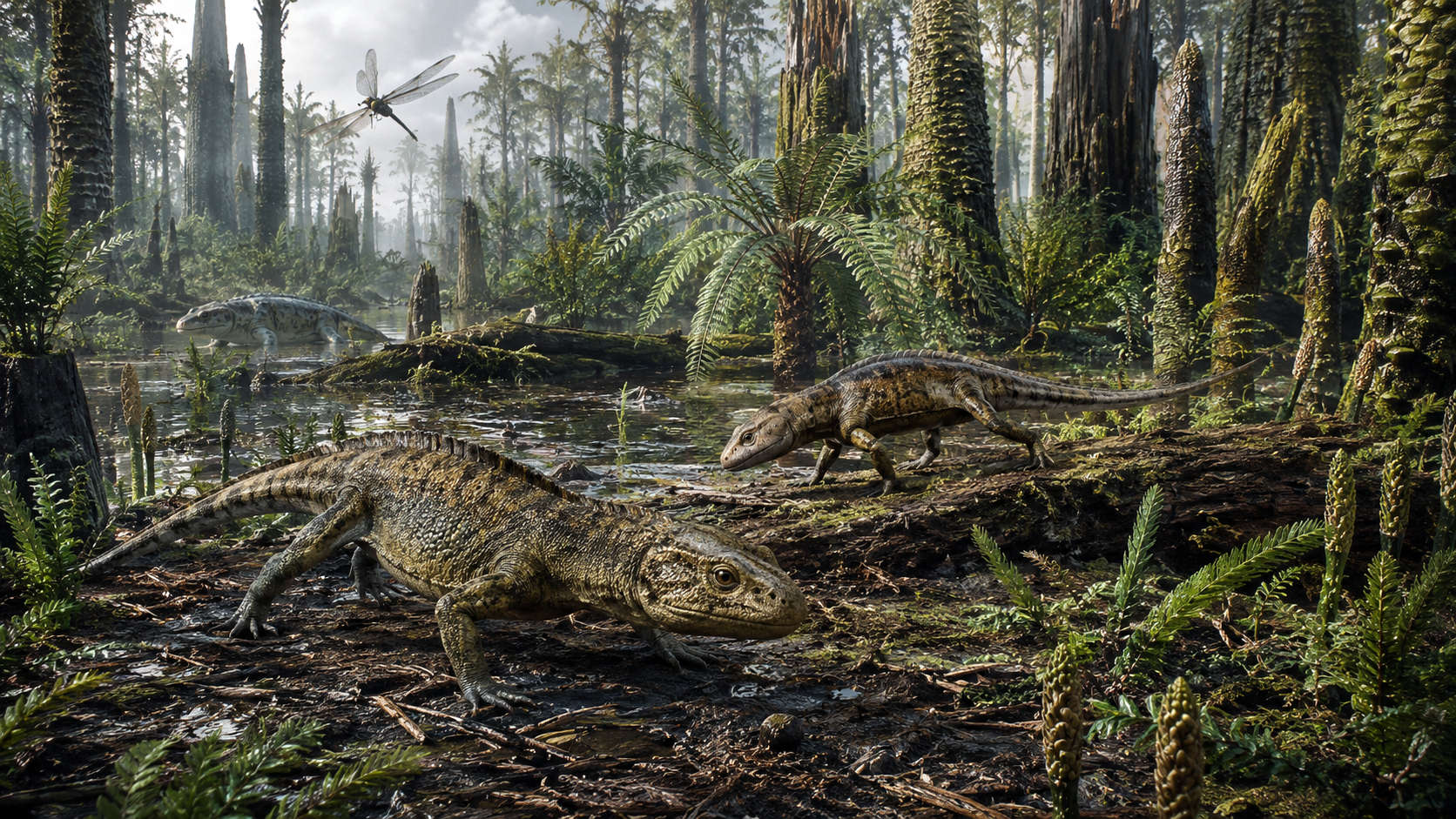
Picture in the foreground an Echinerpeton. It had a slightly more robust body and a subtle raised/back-ridge look. The Echinerpeton is an ancestor to the Dimetrodon so it had taller neural spines., but not a big Dimetrodon-style sail, yet.
In the midground, picture an animal on a log, that’s the Archaeothyris. It was smaller, lower, slimmer, and more agile. Kind of like a small, lizard-like early synapsid predator.
A common environment for these first synapsids was a swampy Carboniferous coal forest with wet ground, shallow water, giant lycopsid-like trunks, horsetail/clubmoss-style plants, and dense ferns. Giant dragonfly-like insects were around too. The environment of the synapsids was a “Coal Age forest” mood.