
Explore Natural Philosophy

Science • Phil • Cr. Think • Hist •

STORY

Last Non-Cynodont Therapsids

By Michael Alan Prestwood

Sat 23 May 2026
Published 4 weeks ago.
Updated 4 weeks ago.
Related Stories
XX/XY Sex System Emerges: A Tale of Mammalian Evolution
Bilaterian Split: The Origin of Agency
Pangaea Splitting Starts Splitting Evolution
First Therapsids
Genus Orangutans
Mesozoic Era: Age of Dinosaurs
Share :
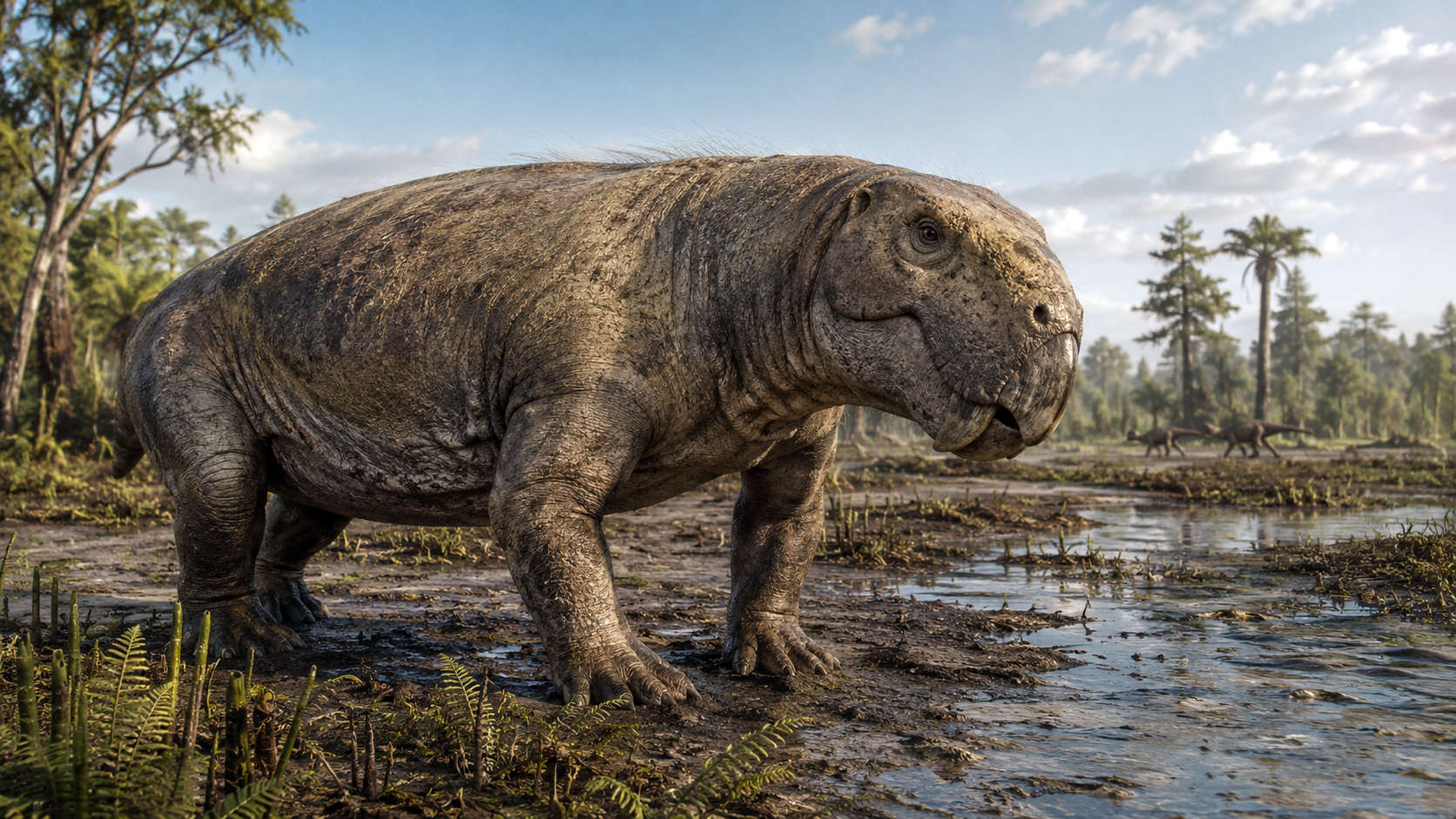
Near the end of the Triassic, around 210–201 million years ago, late dicynodonts such as Lisowicia bojani represented some of the last non-cynodont therapsids. They were part of the mammal-side branch of life, but not part of the cynodont line that led toward mammals. Large, beaked, heavy-bodied, and plant-eating, they were the fading giants of an older therapsid world.

Last Non-Cynodont Therapsids

~205 Million years ago

The last non-cynodont therapsids likely included late dicynodonts, such as Lisowicia bojani and related Late Triassic forms. Dicynodonts were herbivorous therapsids with beak-like mouths and, in many species, tusks. They belonged to the broader mammal-side branch, but they were not cynodonts and did not lead directly to mammals. Their disappearance near the end of the Triassic marked the fading of the older non-cynodont therapsid lines.

By the Late Triassic, around 210–201 million years ago, late dicynodonts lived in a world increasingly dominated by archosaurs: early dinosaurs, large predatory rauisuchian-like relatives of crocodiles, pterosaurs, croc-line reptiles, turtles, amphibians, and other surviving therapsids, including cynodonts. Their environments likely included seasonal floodplains, river systems, forested lowlands, and open patches of vegetation across Pangaea. In Europe, Lisowicia bojani lived in what is now Poland, in a dinosaur-age ecosystem where large herbivores and large predators were both becoming more prominent. Its discovery showed that at least some dicynodonts were still competing in the “large herbivore” role at the same time early sauropodomorph dinosaurs were expanding.

Dicynodonts were an older, highly successful branch of therapsids — mammal-side animals, but not cynodonts. Most were plant-eaters with heavy bodies, short tails, powerful jaws, and beak-like mouths; many had tusks, though Lisowicia itself appears to have lacked the classic long tusks and instead had a massive beaked skull. Lisowicia bojani was extraordinary: elephant-sized, late-surviving, and more upright-limbed than earlier dicynodonts, showing that this older therapsid branch was still evolving, not merely fading away. But they were not on the direct mammal path. Their disappearance near the end of the Triassic marks the fading of the non-cynodont therapsid world, while the cynodont branch continued toward mammaliaforms and mammals.

— map / TST —

Michael Alan Prestwood
Author & Natural Philosopher
Prestwood writes on science-first philosophy, with particular attention to the convergence of disciplines. Drawing on his TST Framework, his work emphasizes rational inquiry grounded in empirical observation while engaging questions at the edges of established knowledge. With TouchstoneTruth positioned as a living touchstone, this work aims to contribute reliable, evolving analysis in an emerging AI era where the credibility of information is increasingly contested.
Email
Print
This month @ TST
Column Menu
June 2026
»COLUMN ARCHIVE
Column Research….
1. Timeline Story
Secular Spirituality Settles
2. Linked Quote
“Extraordinary claims require extraordinary evidence.”
3. Science FAQ »
What is the difference between a spiritual and empirical belief?
4. Philosophy FAQ »
What is secular spirituality?
5. Critical Thinking FAQ »
How does spirituality relate to public belief?
6. History FAQ!
Is secular spirituality supported in history and science?
Bonus Deep-Dive Article
The Material-Spiritual Framework: A Philosophy of Spirituality

Comments

Join the Conversation! Currently logged out.

Leave a Reply

NEW BOOK! NOW AVAILABLE!!

30 Philosophers: A New Look at Timeless Ideas

by Michael Alan Prestwood
The story of the history of our best ideas!
Scroll to Top