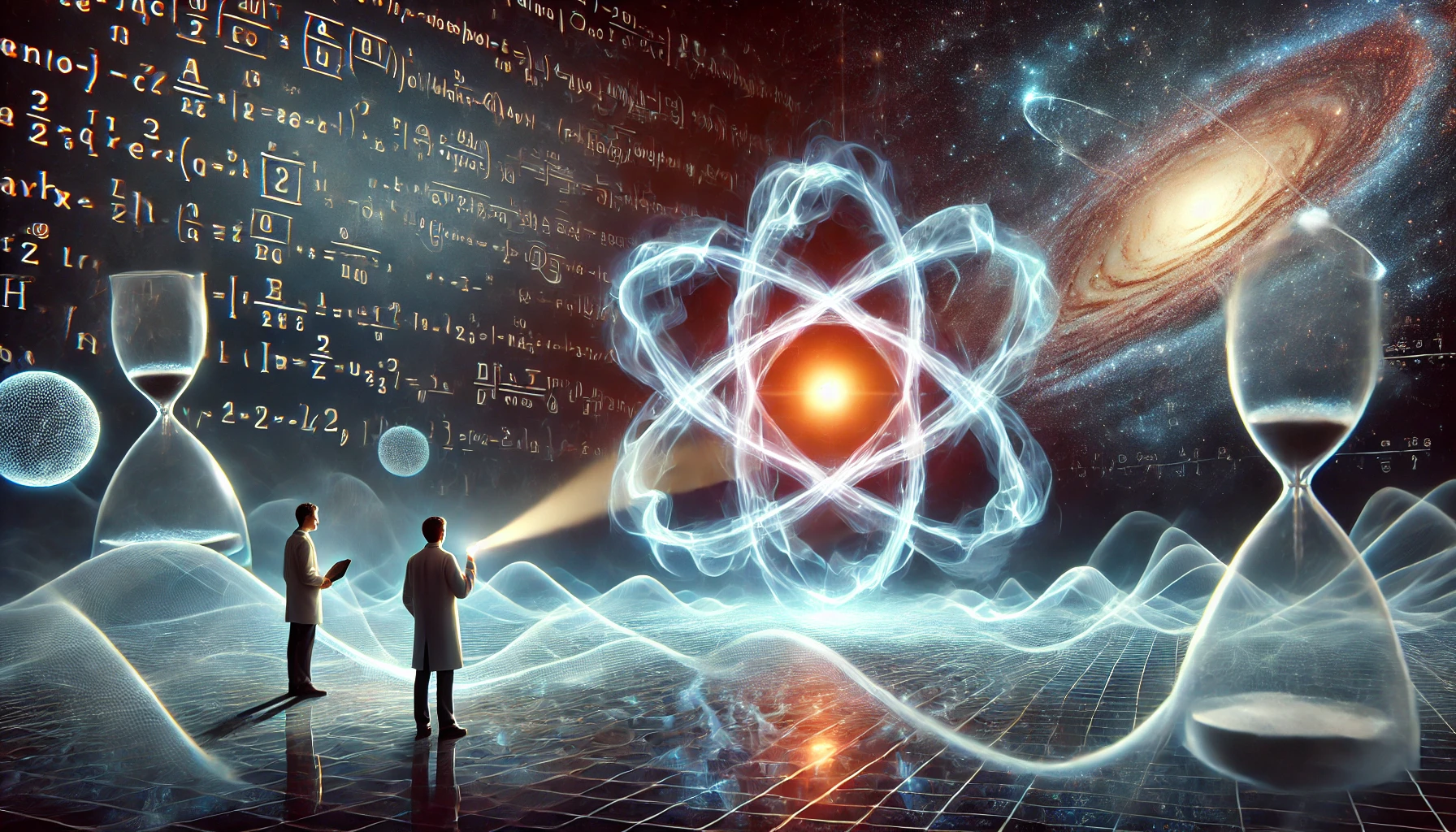
In quantum mechanics, tiny things like electrons are described as a range of possible states before measurement. This is called superposition. But when we measure the system, we get one definite result.
That raises the big question: What exactly happens during measurement?
Does the particle settle into one state because the physical system changes? Or does the wavefunction simply update because our knowledge has changed? In other words, is the wavefunction describing reality itself, or is it describing what we can know about reality?
That is the measurement problem.
Some interpretations say measurement physically collapses the wavefunction into one outcome. Others say there is no collapse at all; the math simply tells us how to update our expectations. Still others, like many-worlds, say every possible outcome happens, but in different branches of reality.
Entanglement adds to the mystery. When two particles are entangled, measuring one is linked with what we can say about the other, even across great distances. That does not mean we can send messages faster than light, but it does challenge our everyday picture of separateness.
The quantum measurement problem is not the mystery of whether quantum results are real. They are. The mystery is what the results mean. Quantum behavior is empirical. The wavefunction is rational. The deeper meaning is metaphysical.
We know how to predict the outcomes. We are still debating what reality is doing underneath the prediction.