Weekly Insights for Thinkers

All

Master Timeline

Eve: Haplogroup L

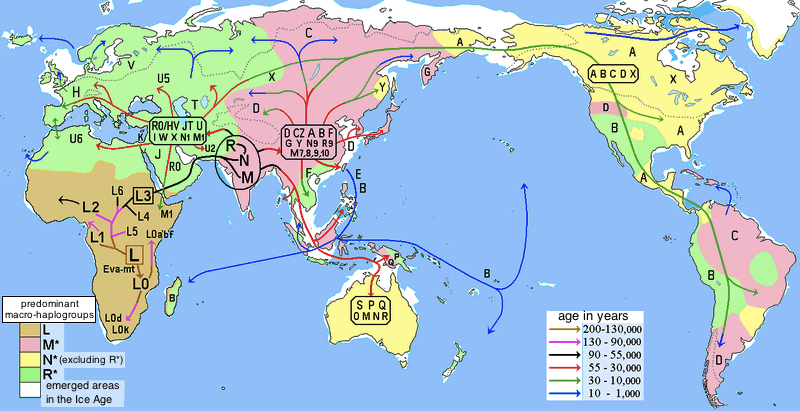
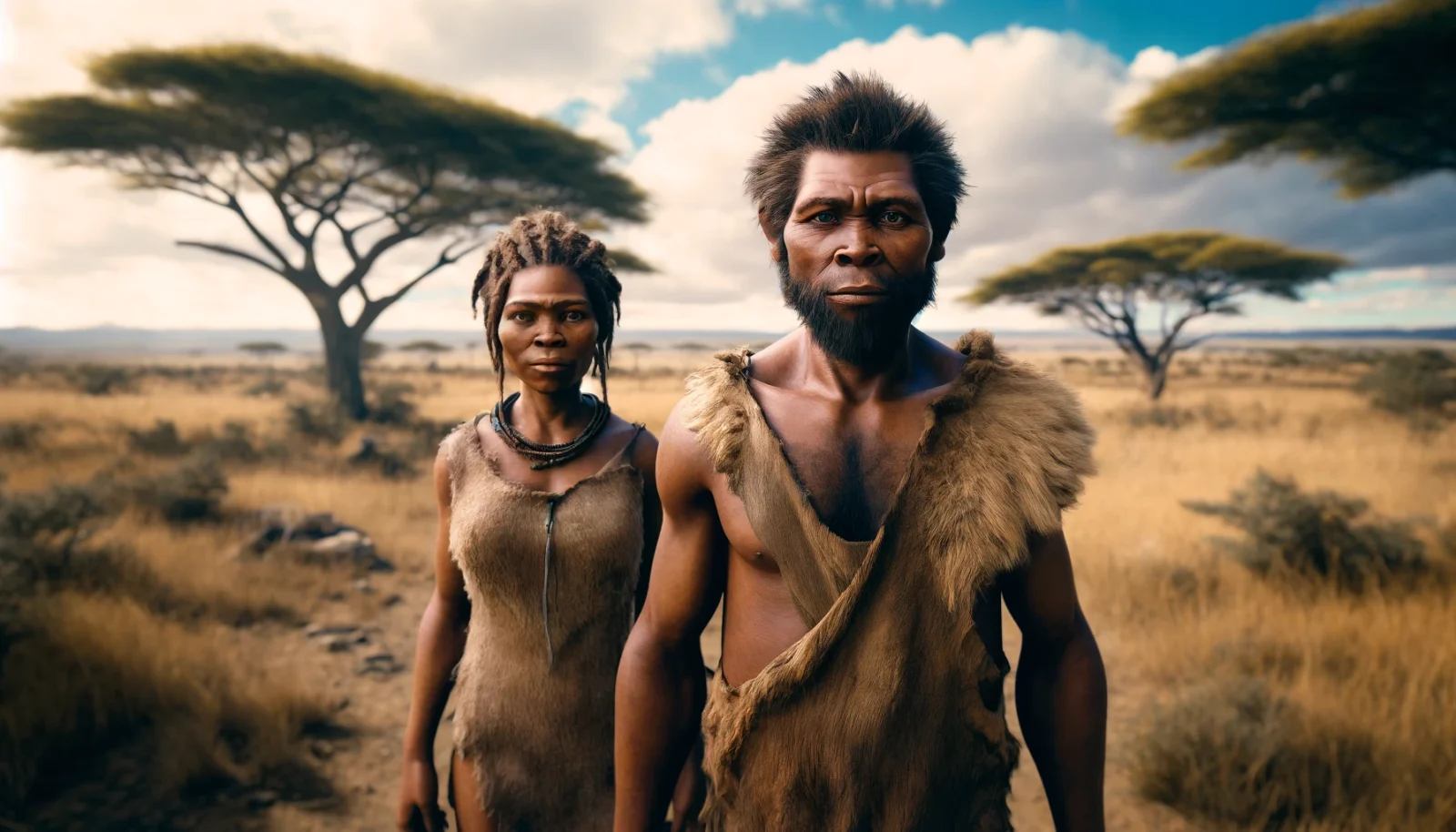
7,000 Generations Ago All humans today share a single grandma, circa 175,000 BCE. We know this because all humans alive today share our ancestor’s haplogroup L genes — from our X chromosome. She was one of many thousands of women living in eastern Africa. Many maternal lines survived for many generations but ultimately over time […]
Eve: Haplogroup L Read More »

Adam: Haplogroup A

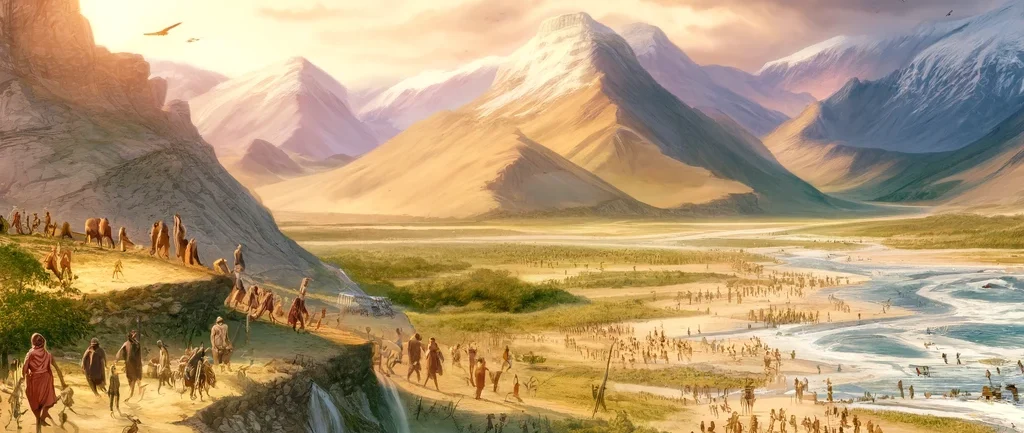
11,000 Generations Ago All humans today share a single grandpa, circa 275,000 BCE. We know this because all humans alive today share our ancestor’s haplogroup A genes — from our Y chromosome. He was one of many thousands of men living in eastern Africa. Many paternal lines survived for many generations but ultimately over time

Adam: Haplogroup A Read More »

Oldest Surviving Spear

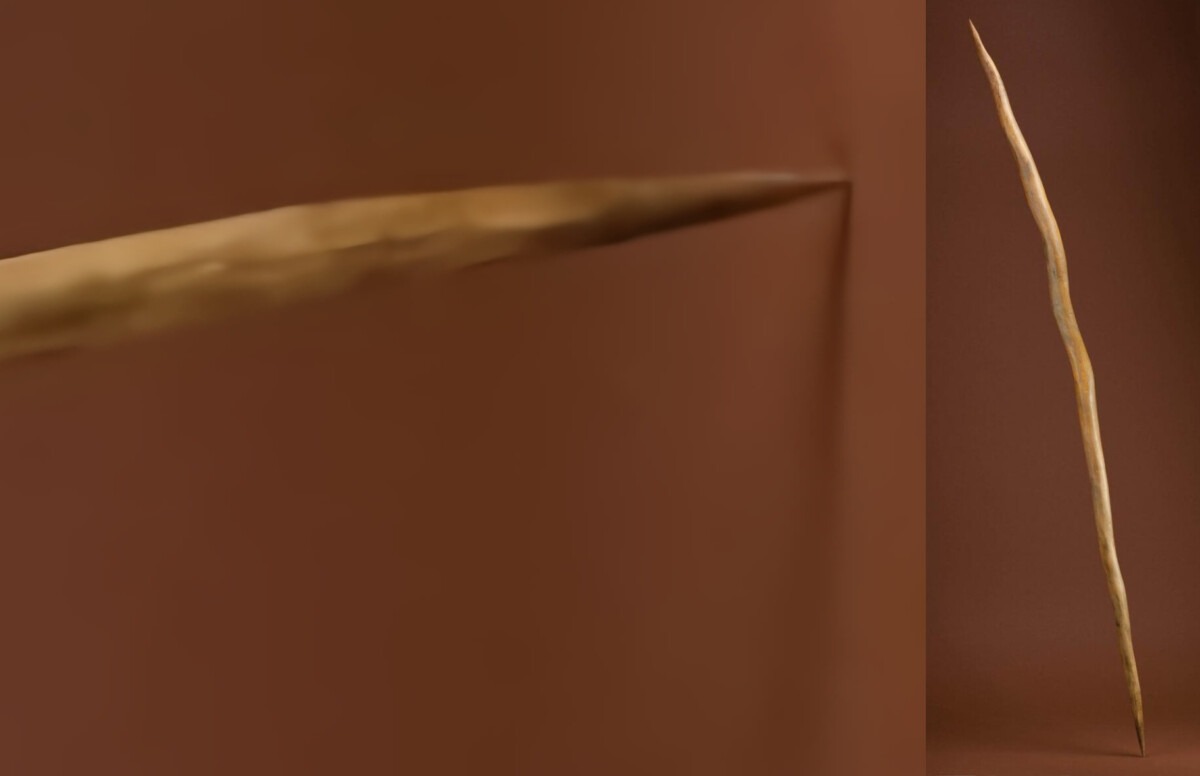
14,000 Generations Ago Homo heidelbergensis: Long spears made hunting large animals more safe. The oldest wooden spears found so far were found in Germany and dates to circa 400,000 BCE. In fact, they are currently the oldest known wooden artifacts. The find included 3 wooden spears, stone tools, and the butchered remains of more than

Oldest Surviving Spear Read More »

Oldest Modern Human-like Footprints

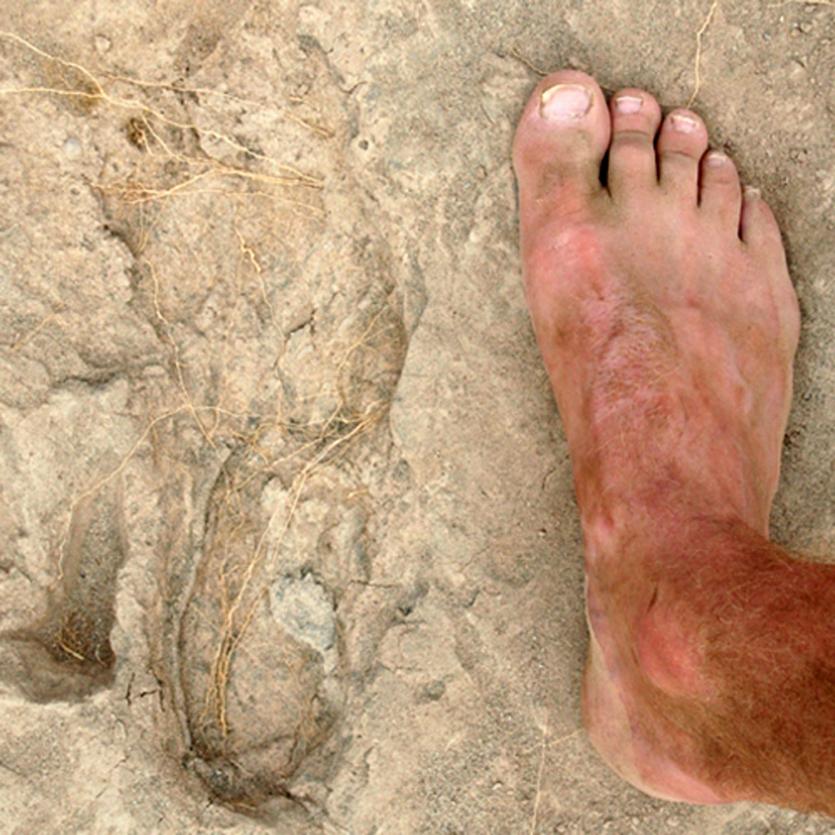
60,800 Generations Ago Species: Likely Homo erectus, our direct ancestor. The footprints found in Ileret, Kenya represent the oldest undisputed evidence of hominins walking upright in an efficient manner characteristic of modern humans. Our style of upright walking, which Homo erectus appears to have shared, is energy-efficient and adapted for long distances. It involves a

Oldest Modern Human-like Footprints Read More »

Genus: Sahelanthropus (Walking Upright)

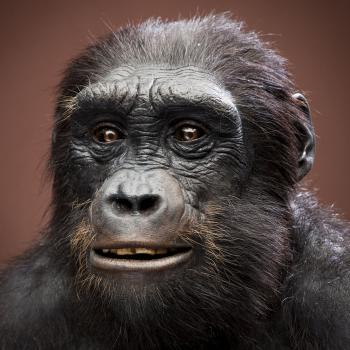
260,000 Generations Ago CHLCA candidate: Often considered one of the earliest potential hominins, Sahelanthropus tchadensis, best known from the “Toumai” skull found in Chad, exhibits features that suggest bipedalism but remains debated due to limited fossil evidence. With two human anatomical traits, small canine teeth, and a spinal cord hole in the cranium further forward

Genus: Sahelanthropus (Walking Upright) Read More »

Hand Axe

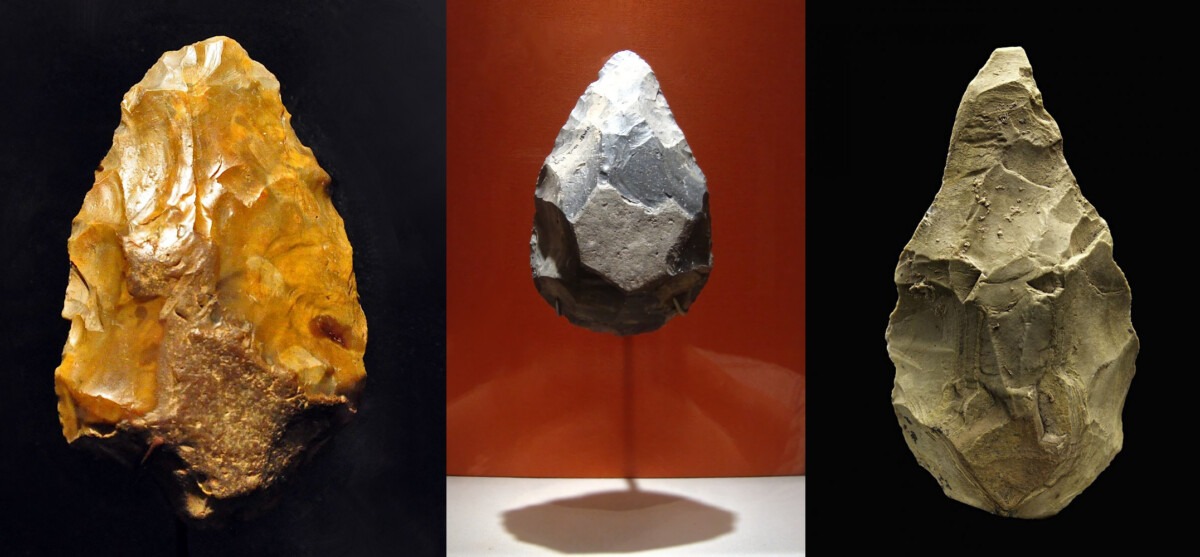
70,400 Generations Ago (from 2020 CE) By about 1.76 million BCE, early humans began to create hand axes. They would strike really large flakes, then continue to shape them around the edges. On the right, the hand axe pictured dates to circa 1.1 million BCE. It was found at Isampur, India.  

Hand Axe Read More »

Early Stone Tools

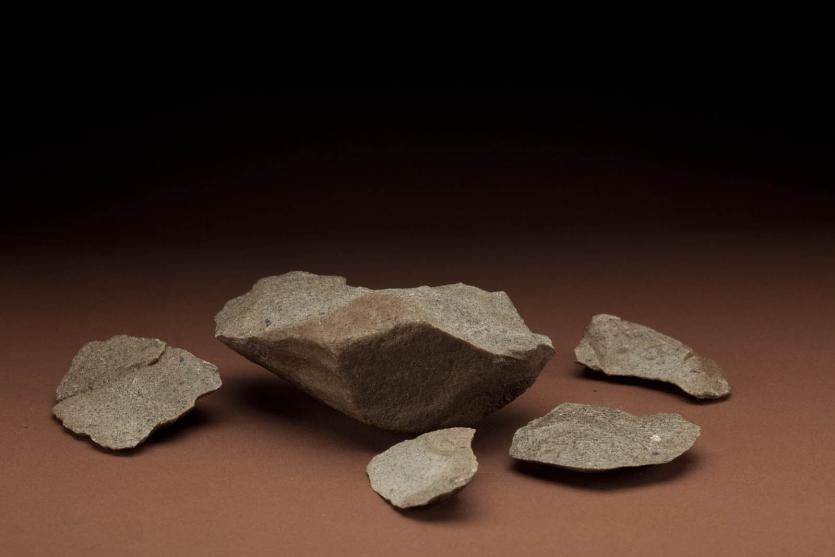
The earliest known stone tools date back to at least 3.3 million years ago. They are identified by their purposeful flaking patterns, sharp edges, and location with other more identifiable artifacts or fossils. They are then verified with microscopic analysis confirming repetitive use.

Early Stone Tools Read More »

Bone Flute

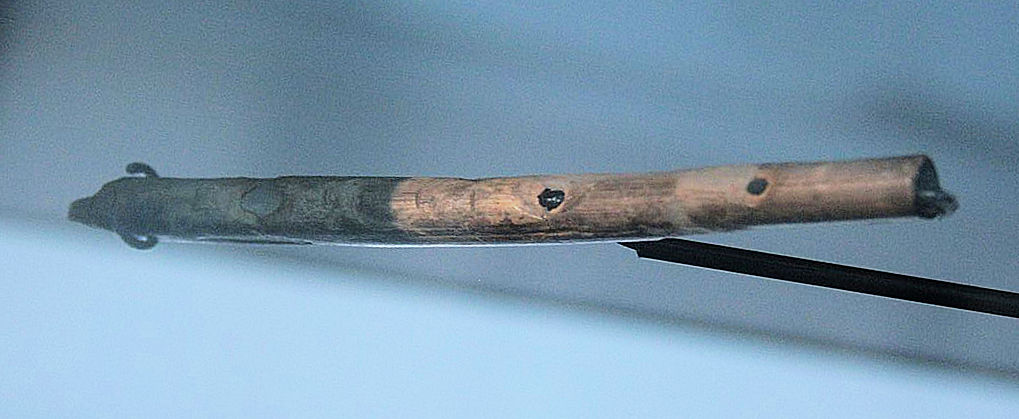
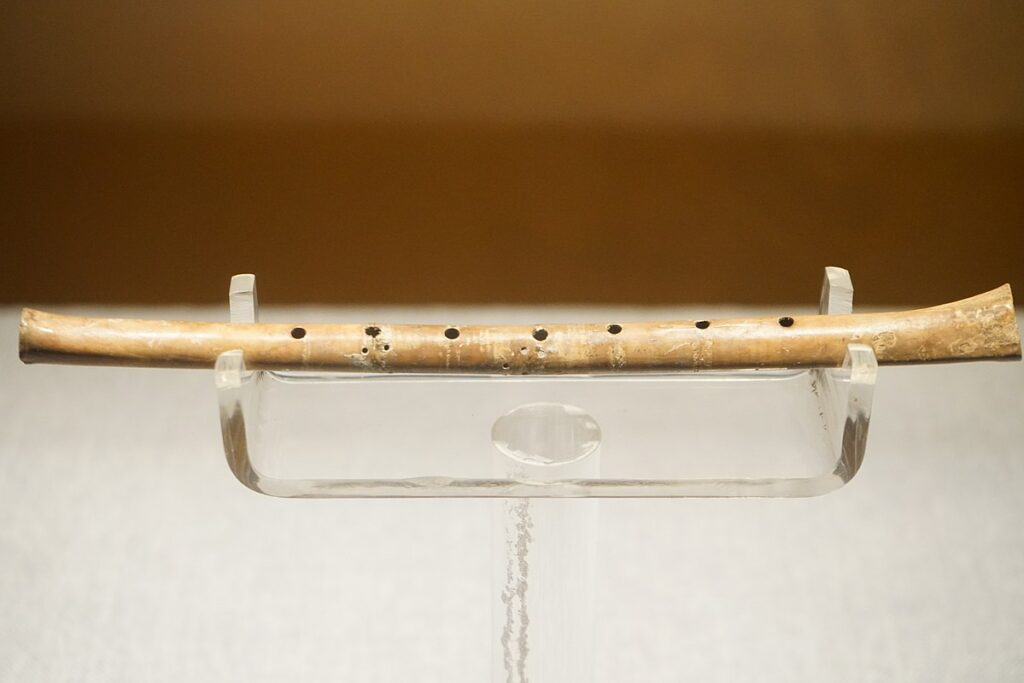
1,600 Generations Ago The oldest undisputed musical instrument is the Hohle Fels Flute discovered in the Hohle Fels cave in Germany’s Swabian Alb in 2008. The flute is made from a vulture’s wing bone perforated with five finger holes.

Bone Flute Read More »

Ramessos, CC BY-SA 3.0 , via Wikimedia Commons

Venus of Hohle Fels

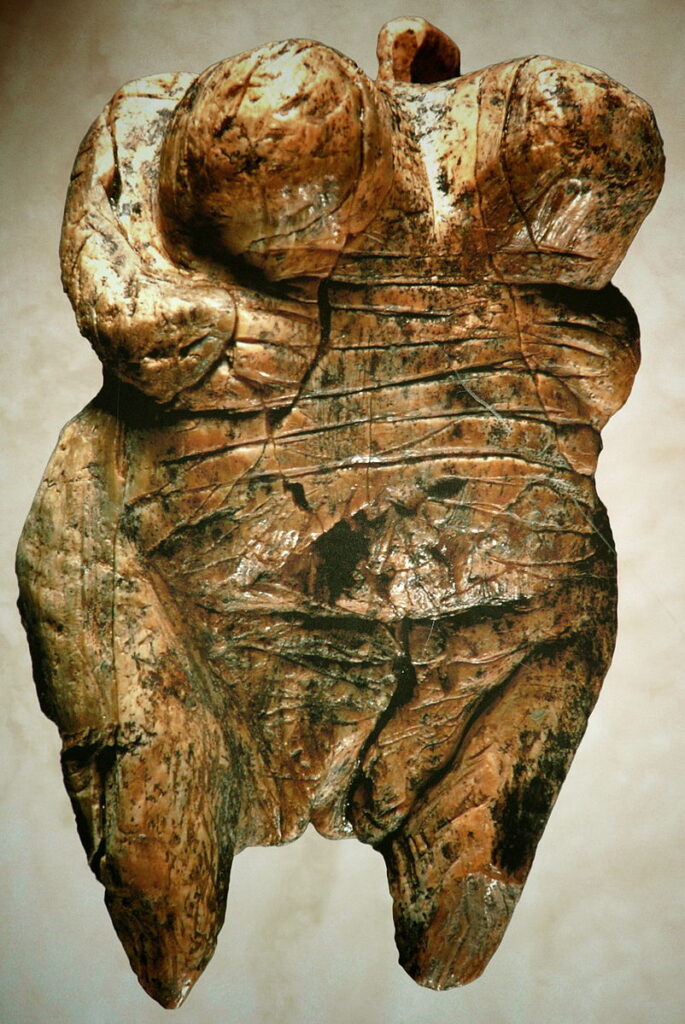
The Venus of Hohle Fels is a 2.4″ figurine made of wooly mammoth ivory that was unearthed in 2008 in Hohle Fels, a cave near Schelklingen, Germany. It was pieced together from six pieces found in a cluster, about 10 feet below ground, and about 60 feet from the cave entrance. The left arm and

Venus of Hohle Fels Read More »

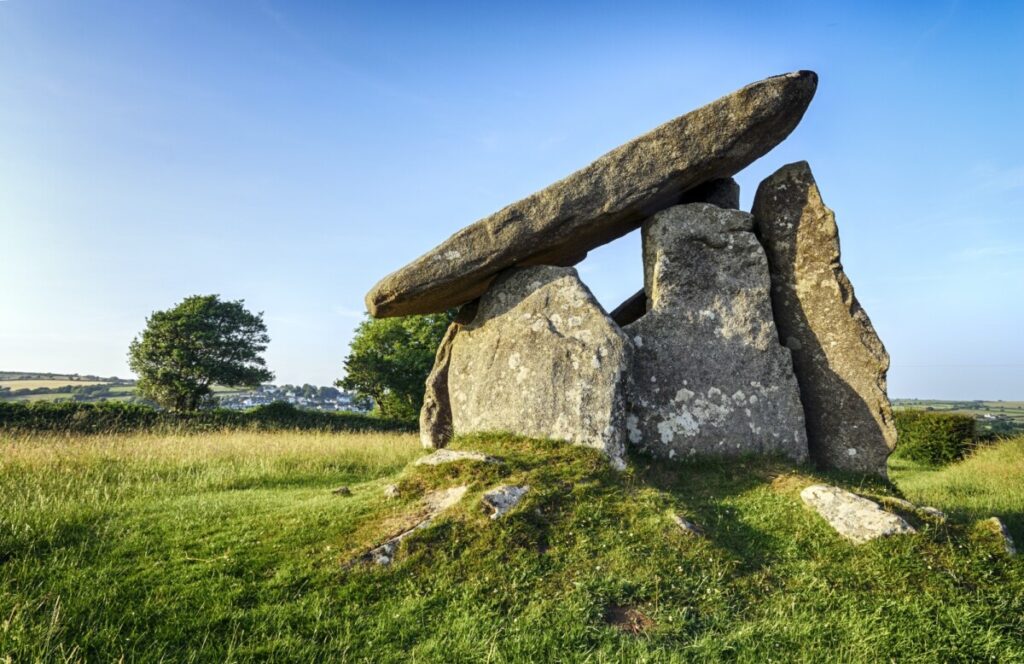
Trevethy Quoit a Portal Dolmen in Cornwall

Neolithic Revolution

468 Generations Ago (from 2020 CE) The Neolithic Revolution is the earliest known Agricultural Revolution. It is very likely that humans practiced forms of agriculture earlier. How much earlier? Well, without evidence, we are guessing. For convenience, anthropologists label humans as hunter-gatherers prior to the Neolithic Revolution. The fact is that the current theory states

Neolithic Revolution Read More »

Scroll to Top