Explore Science-first Philosophy

All

Master Timeline

Epicurus

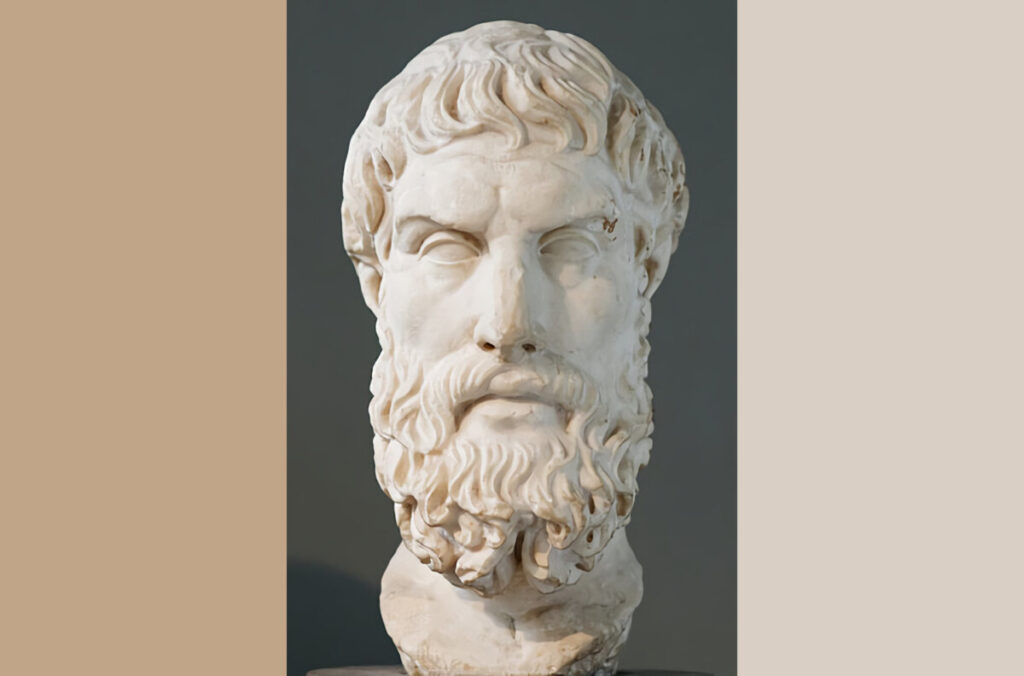
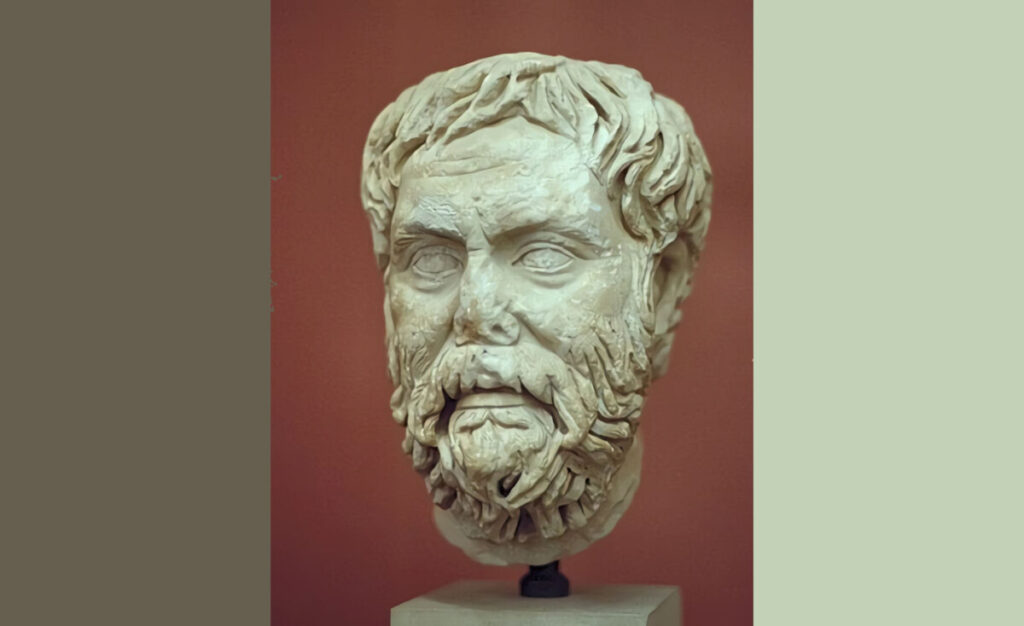
94 Generations Ago 30 Phil, Chapter 11: Epicurus and Epicureanism Epicurus founded Epicureanism in 307 BCE. The goal of Epicureanism is to help people attain a happy (eudaimonic), tranquil life characterized by ataraxia (free from fear) and aponia (free from pain). He authored over 300 books, scrolls, none of which survived the test of time. Some […]

Epicurus Read More »

Pyrrho of Elis

95 Generations Ago 30 Phil, Chapter 10: Pyrrho of Elis and Skepticism   Pyrrho, the skeptic, believed no one knows anything. Everything can be questioned. The best approach is to keep an open mind. Like Socrates, Pyrrho himself left no writings. We know of his teachings through his students and later writers.  Phrases that best represent

Pyrrho of Elis Read More »

Realistic Earth Planet against the the star sky

Spherical Earth

The Greeks knew the Earth is spherical. For example, Pythagoras (570-495 BCE), Aristotle (384-322 BCE), and Euclid (circa 450 BCE) wrote about the Earth as a sphere. Eratosthenes (276-194 BCE) even calculated the circumference of the Earth to within 1%. He also wrote about the idea that India could be reached by sailing westward from

Spherical Earth Read More »

Aristotle

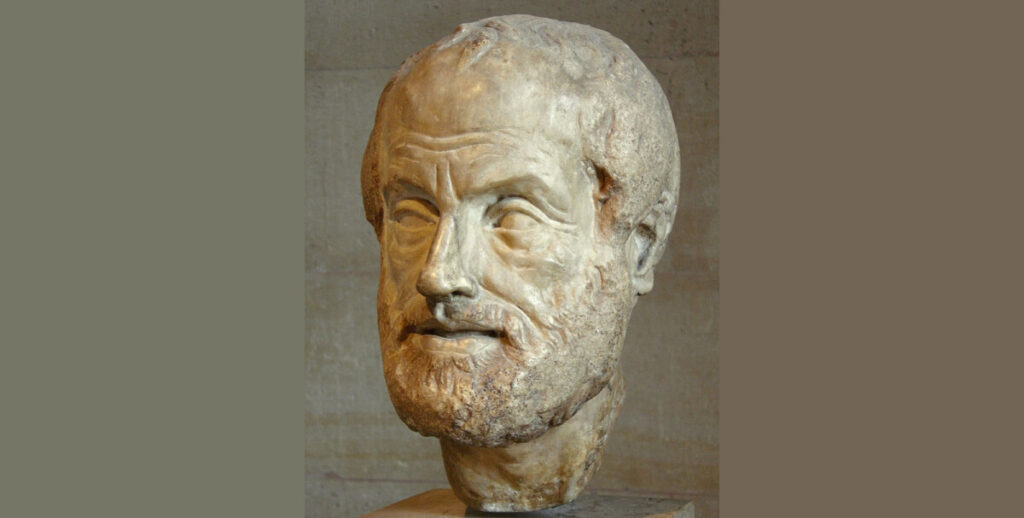
96 Generations Ago 30 Phil, Chapter 9: Aristotle and Empiricism Aristotle was the greatest Greek philosopher and covered nearly all subjects including physics, biology, zoology, metaphysics, logic, ethics, aesthetics, poetry, theatre, music, rhetoric, psychology, linguistics, economics, politics, meteorology, geology, and government. His Aristotelian philosophy characterized by deductive logic and an analytic inductive method. Some of

Aristotle Read More »

Plato

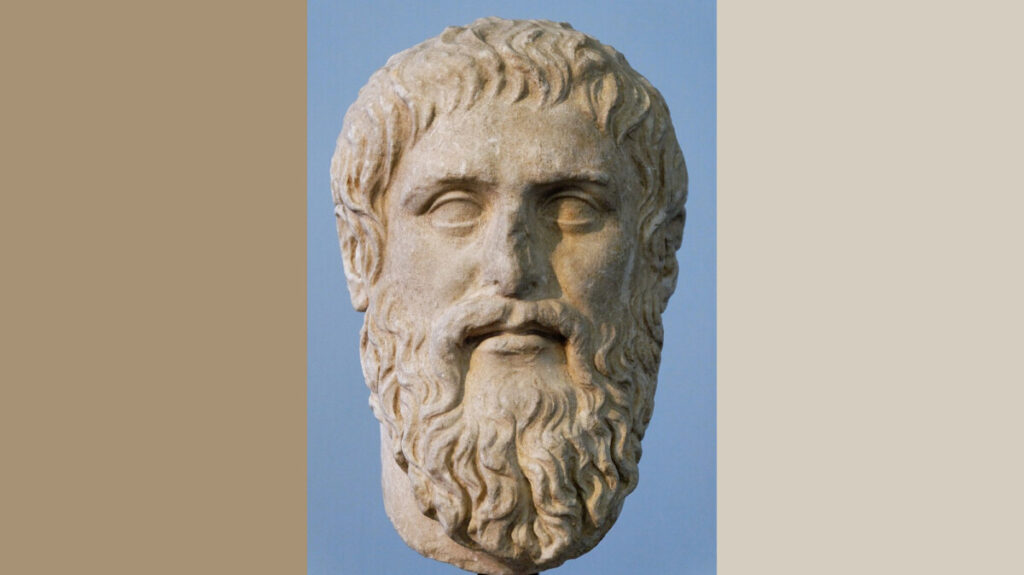
98 Generations Ago 30 Phil, Chapter 8: Plato and Rationalism Plato was a Greek philosopher born in Athens. He was a student of Socrates and a teacher of Aristotle. Plato’s Theory of Forms asserts that the reality is only a shadow, or image, of the true reality of the Realm of Forms — abstract, perfect,

Plato Read More »

Proto-Sinaitic script

155 Generations Ago The Proto-Sinaitic alphabet is considered the earliest trace of alphabetic writing and the common ancestor of both Ancient South Arabian script and the Phoenician alphabet. The ancient South Arabian script evolved about 1900 BCE which continued to evolve into today’s Modern South Arabian languages. The Phoenician alphabet evolved into the Greek alphabet

Proto-Sinaitic script Read More »

Phoenician Alphabet

133 Generations Ago The Phoenician alphabet is a direct continuation of the Proto-Canaanite script circa 1300 BCE. Starting about 900 BCE, the Phoenician alphabet thrived and was adapted by others. It evolved into use by many languages including Greek, Old Italic and Anatolian scripts. These early uses of the alphabet evolved into the alphanumeric alphabet. 

Phoenician Alphabet Read More »

Noah’s Flood Myth

The legendary story of Noah’s flood occurred in the year 2348 BCE if you believe Ussher’s biblical timeline he made up in 1654. However, this flood myth is clearly based on the Sumerian flood story documented in the Epoch of Gilgamesh circa 2100 BCE. The Epoch of Gilgamesh is regarded as one of the earliest

Noah’s Flood Myth Read More »

Cuneiform Writing

Earliest known writing in Africa/Middle East zone. Human DNA today is the same as 50,000 BCE. There is no doubt there were many dozens and perhaps thousands of civilizations prior to the Sumer civilization, but Sumer is the earliest known, or at least the earliest well known. The Sumer civilization first established between 6500 and

Cuneiform Writing Read More »

Confucius

103 Generations Ago 30 Phil, Chapter 5: Confucius and Confucianism Confucius is remembered for his practical applied philosophy. His sayings are a reflection of many centuries of common sense sayings making his philosophy deeply Chinese. My favorite sayings: The man who knows he can, and the man who knows he cannot, are both correct. Real

Confucius Read More »

silhouette of native american shaman with pikestaff

All States “allow” Native Americans to Vote

Basic Timeline: 1787 – Article 1, S2, P3 of the Constitution states, “Representatives and direct Taxes shall be … determined by adding to the whole Number of free Persons…excluding Indians not taxed, three fifths of all other Persons.” 1868 – 14th Amendment passed, it declared all persons “born or naturalized in the United States, and

All States “allow” Native Americans to Vote Read More »

Scroll to Top