

Evolution TL: March to Life > Evolution > Great Apes > Human > Consciousness > All to Us
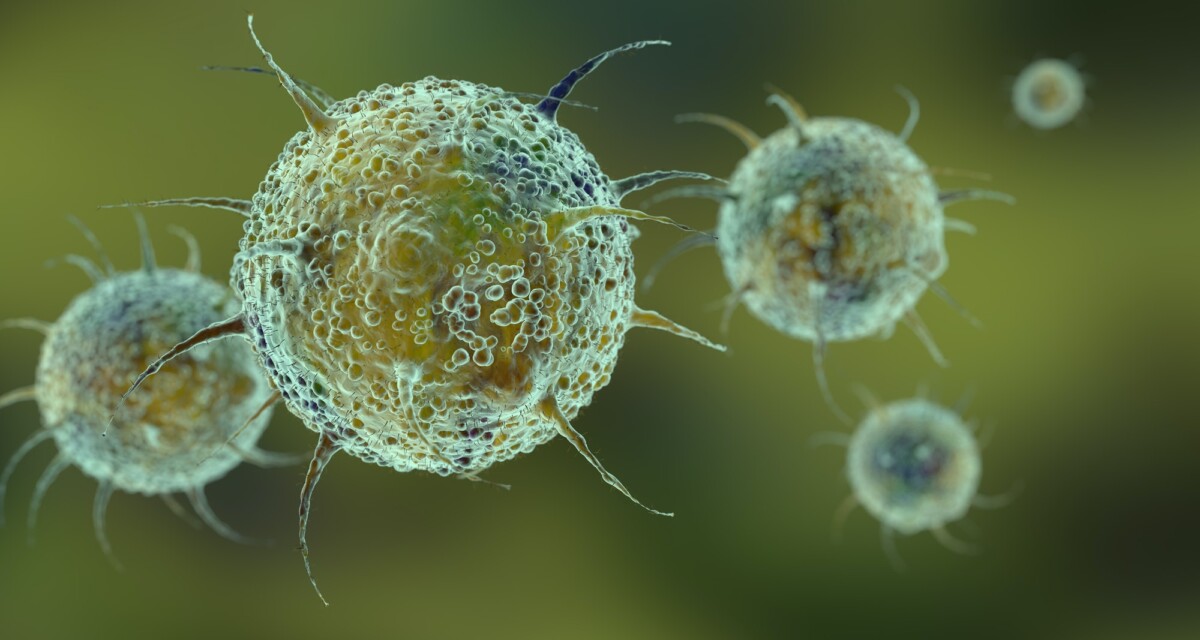
In a real sense on Earth, the beginning of all modern cellular life is LUCA, which diverged into bacteria and archaea. Viruses, in contrast, represent multiple ancient inventions of parasitic replication layered over billions of years. Not quite life, some viral lineages may be nearly as old as cells, while others are evolutionary latecomers. Viruses are not one lineage — they are recurring evolutionary solutions.
Pre-LUCA Genetic Jungle: RNA Replicators and Early Virus-Like Entities.
LUCA lived about 3.75 bya
Virus Evolution Fuzzily Starts 3.7 bya
LUCA lived about 3.75 bya
Virus Evolution Fuzzily Starts 3.7 bya
Virus: Riboviria (Early RNA replicators)
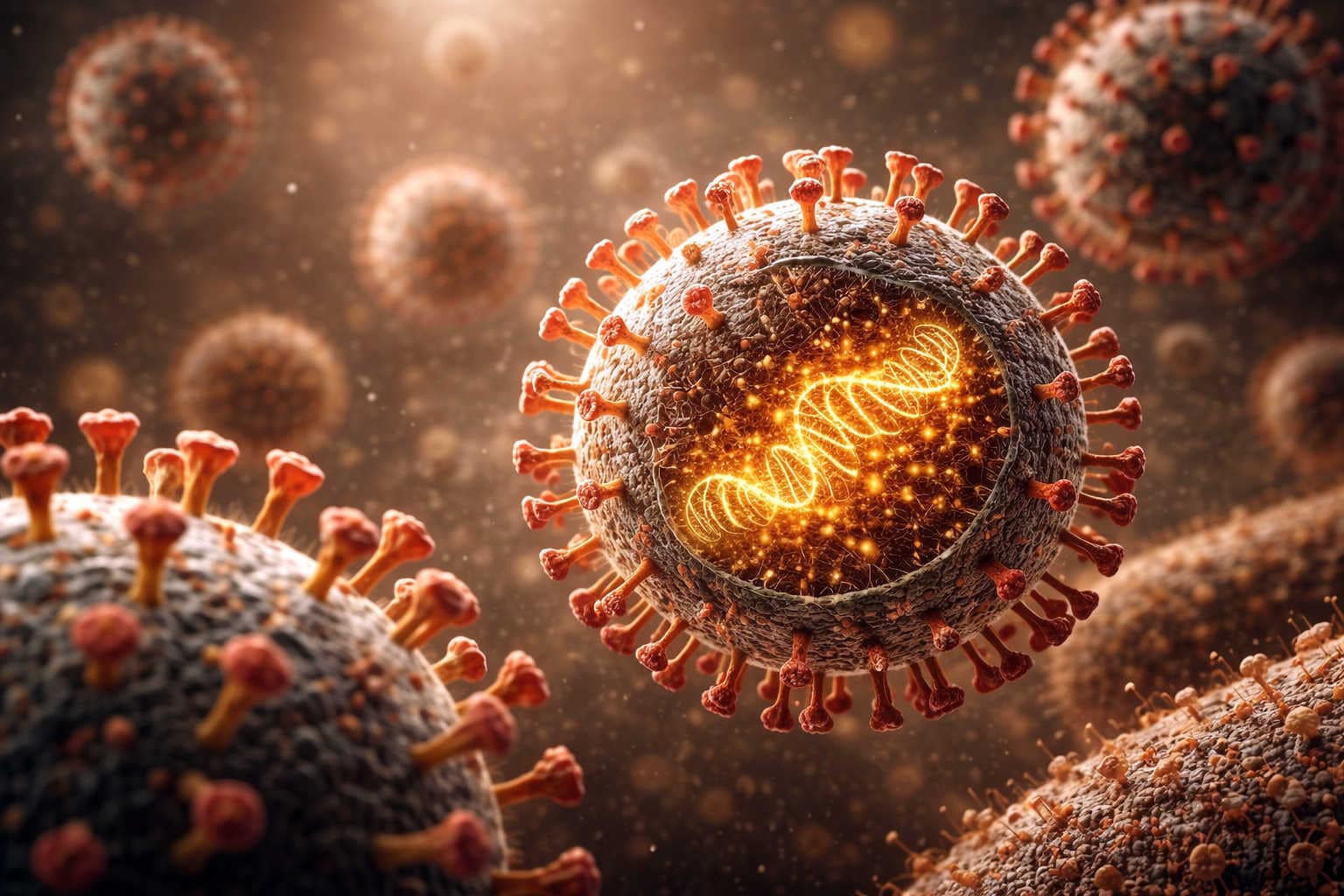
About 3.7 billion years ago, RNA virus ancestors may trace back to the RNA world, but we can’t prove whether they predate LUCA or arose just after.
~3.7 Billion Years Ago (+/- 100 million)
Bacteriophage → Duplodnaviria
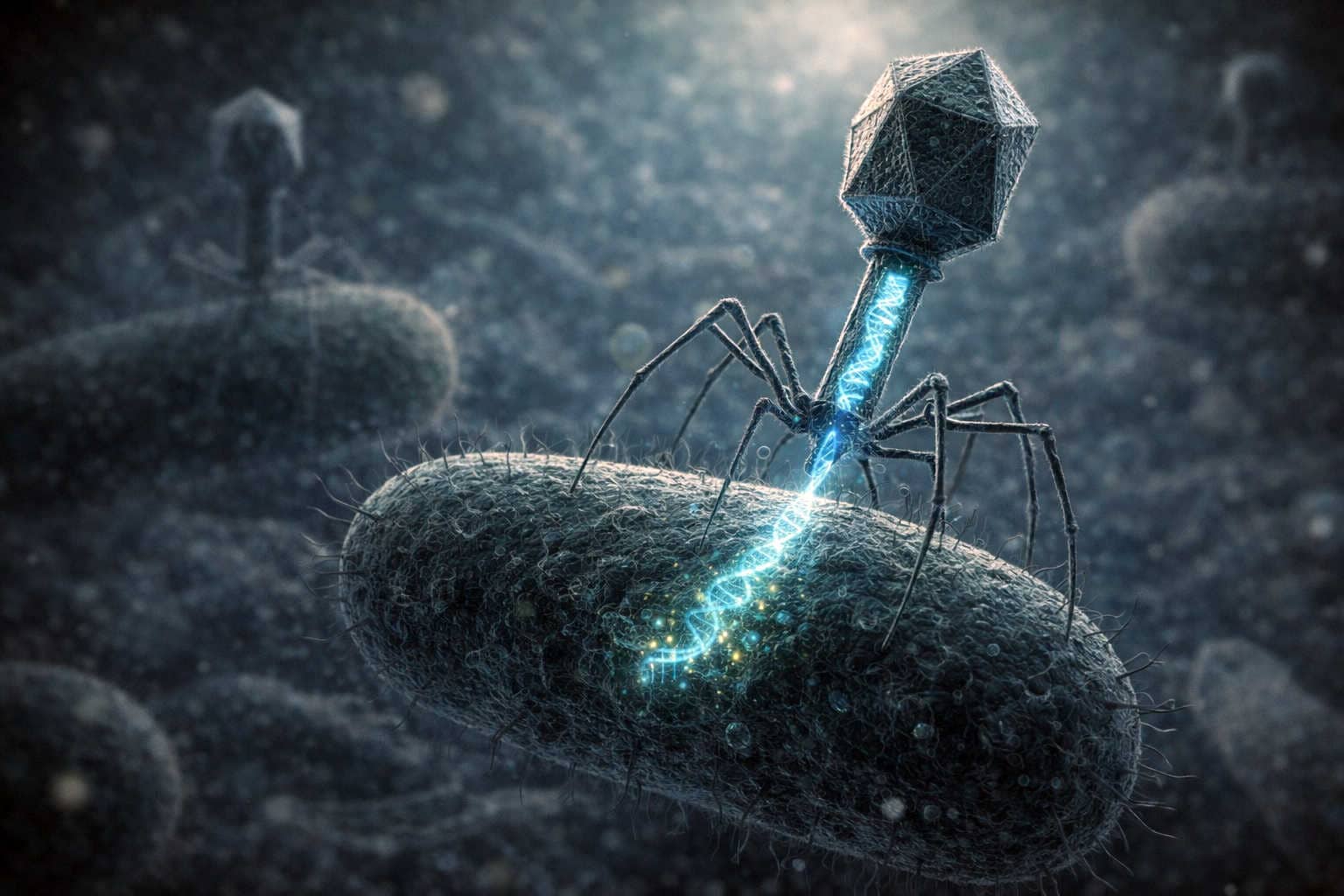
Around 3.2 billion years ago, the Duplodnaviria evolved a high-pressure, icosahedral protein armor that turned viruses into biological syringes capable of injecting DNA into any domain of life.
~3.2 Billion Years Ago (+/- 200 million)
The HK97-Fold (Steel Pouch)
Virus: Varidnaviria

About 2.75 billion years ago, the Varidnaviria evolved a unique "Double Jelly-Roll" protein fold to build massive, diverse shells, allowing viruses to scale up from tiny parasites to "giant" viruses that mimic cells.
~2.75 Billion years ago (+/- 200 million)
double jelly-roll capsid DNA viruses
Great Oxidation Event: Third Atmosphere

Cyanobacteria released oxygen faster than Earth could absorb it, changing the oceans, atmosphere, and future of life.
~2.4 Billion Years Ago
Cause: Cyanobacteria Produce Oxygen
Monodnaviria
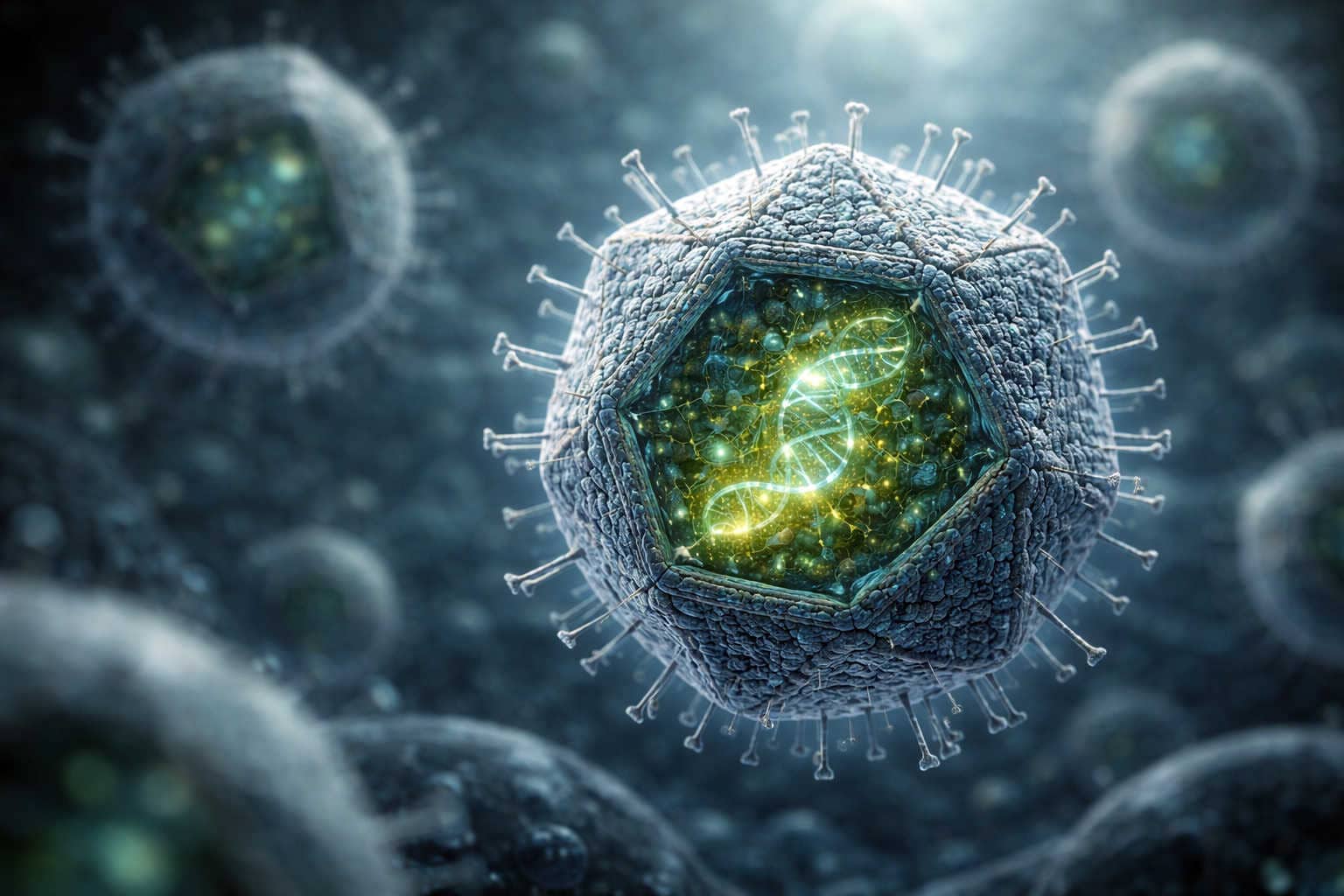
About 1.75 billion years ago, Monodnaviria evolved as "runaway" genetic loops (plasmids) that stole structural proteins from other viruses to become independent, single-stranded DNA parasites.
~1.75 Billion years ago (+/- 200 million)
single-stranded DNA viruses
Retroviruses (within Riboviria)
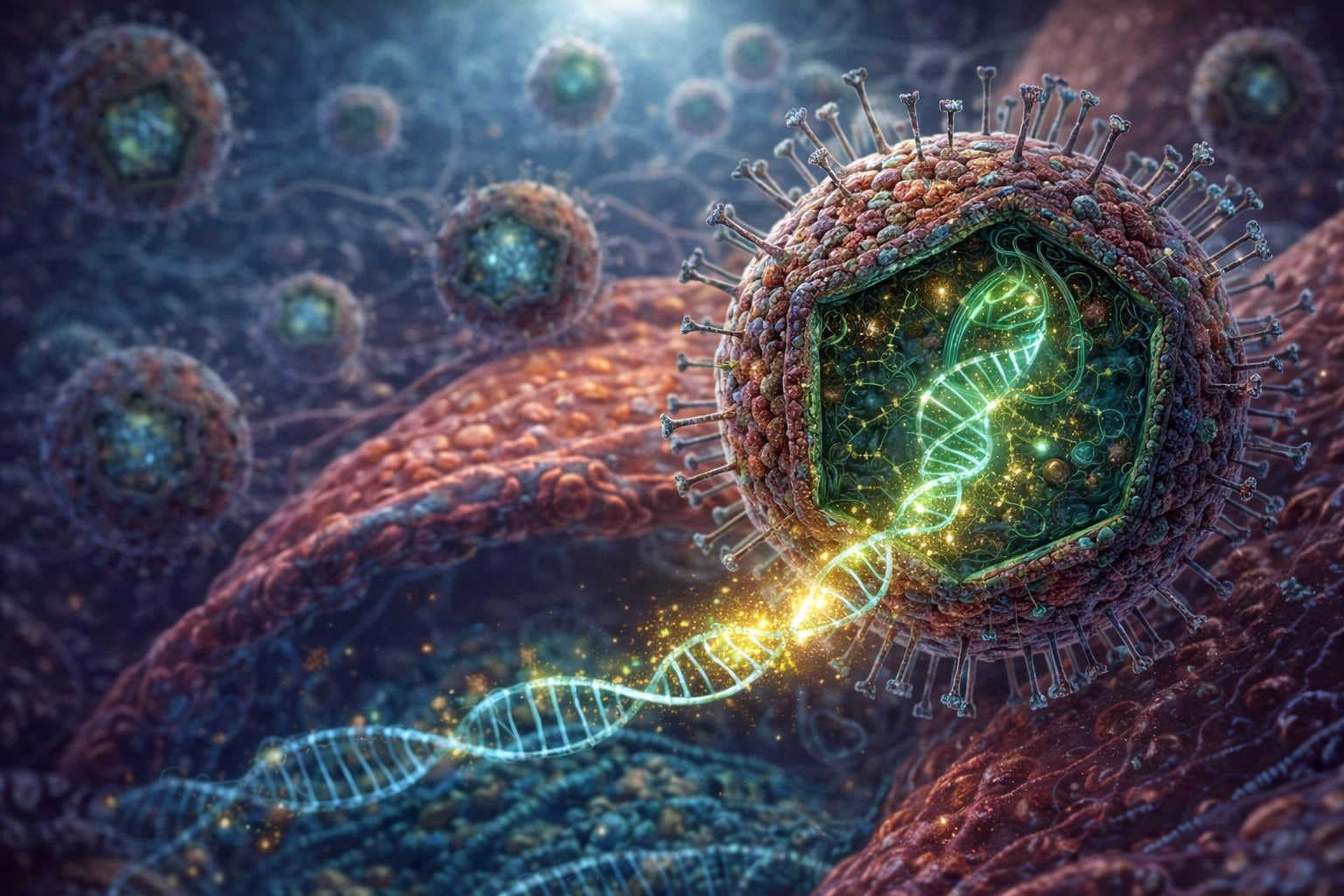
About 1.25 billion years ago, Retroviruses emerged by transforming "jumping genes" into infectious agents, mastering the ability to rewrite a host’s permanent genetic code.
~1.25 Billion years ago (+/- 200 million)
Stitch themselves permanently into the host’s genome
Giant viruses (within Varidnaviria)
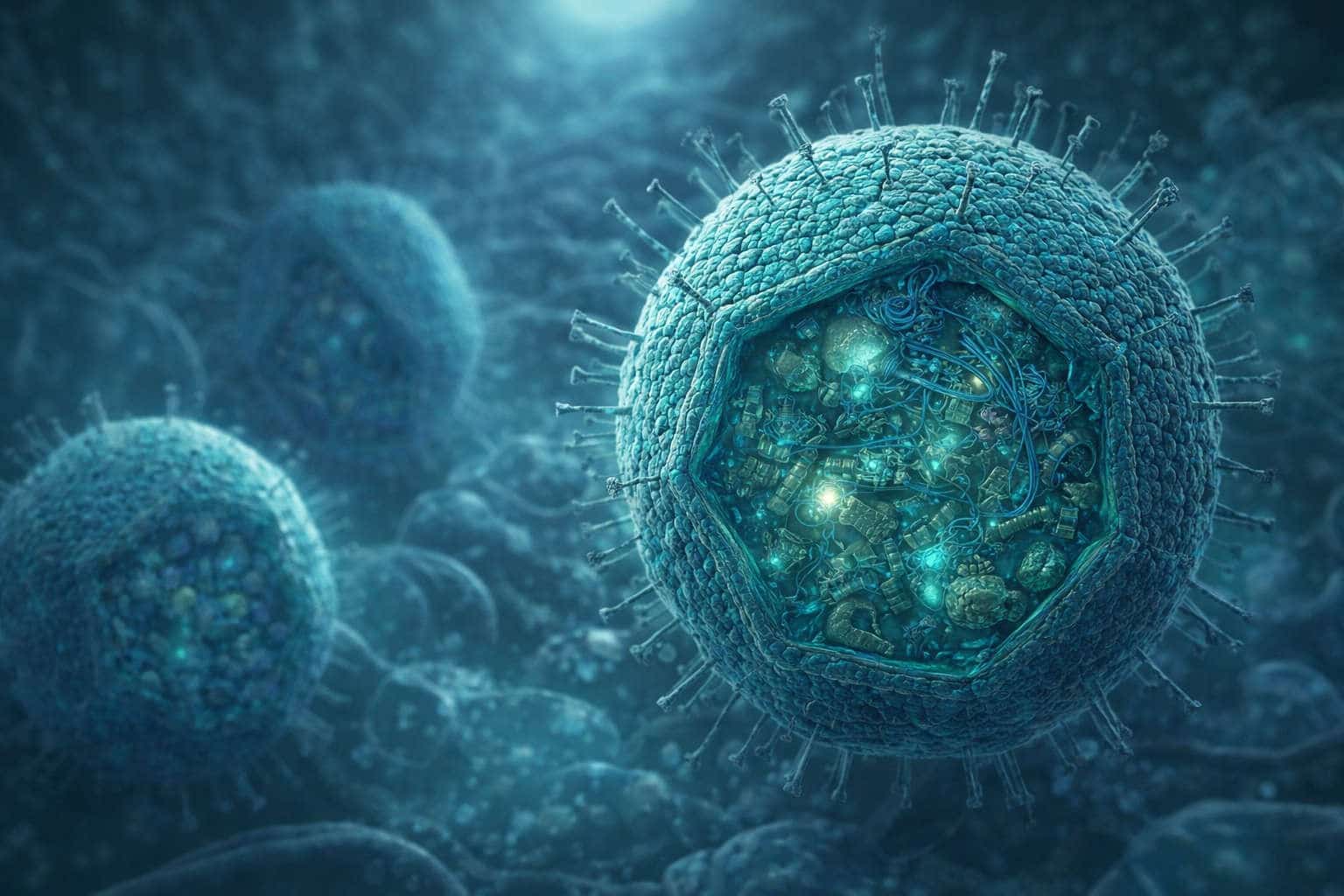
A billion years ago, some viruses turned into genetic junkyard collectors and swelled to nearly a micrometer across.
~1 Billion years ago (+/- 200 million)
Extreme genetic theft
Snowball Earth: When Ice Reached the Equator
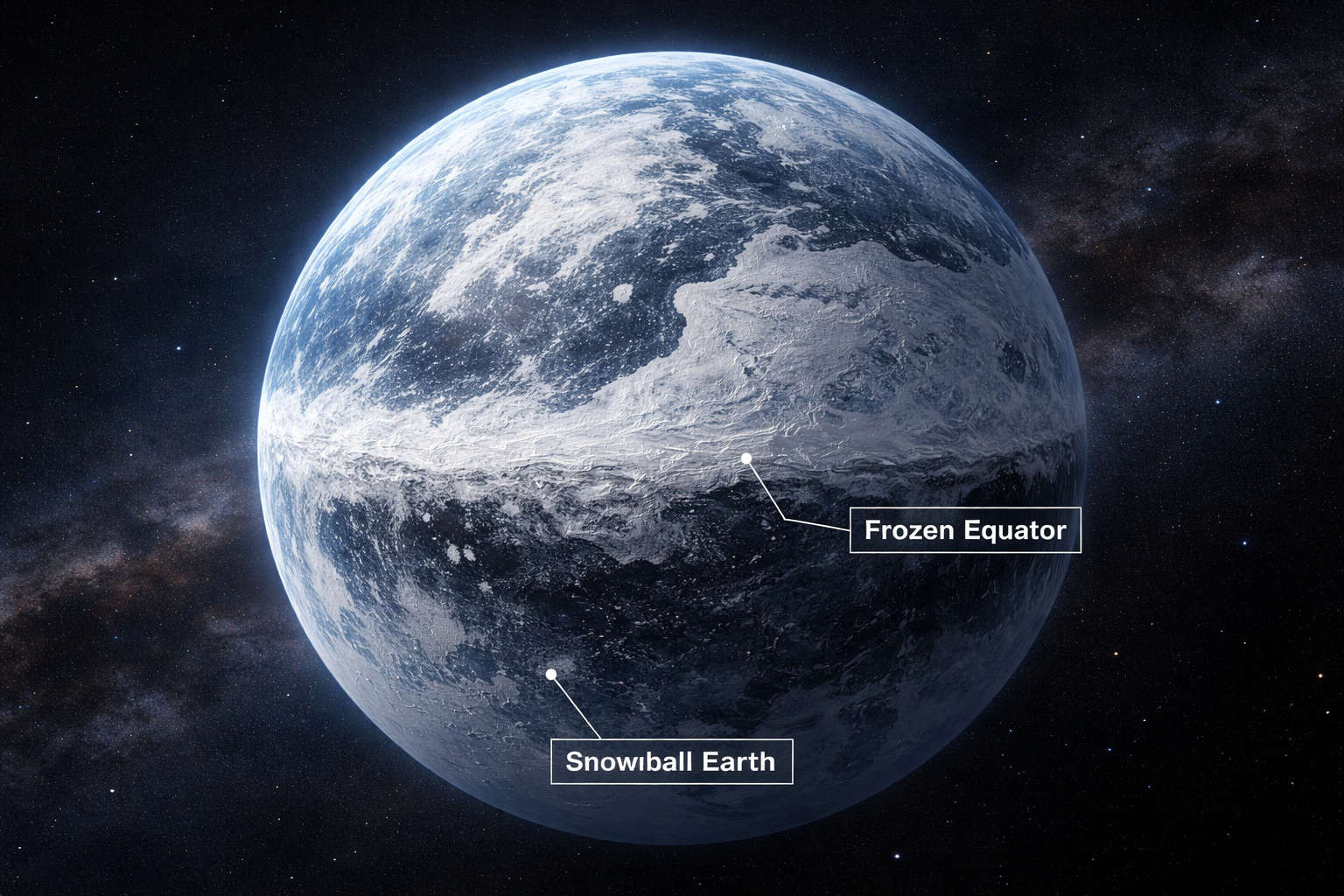
For tens of millions of years, Earth plunged into its deepest known freeze. Ice sheets reached sea level at low latitudes, perhaps even the equator, turning the planet into a near-global ice world and reshaping the path toward complex life.
From 717 million years ago through 635.
Cause: Continental Drift, Falling CO₂
Paleozoic Era: The Age of Synapsids
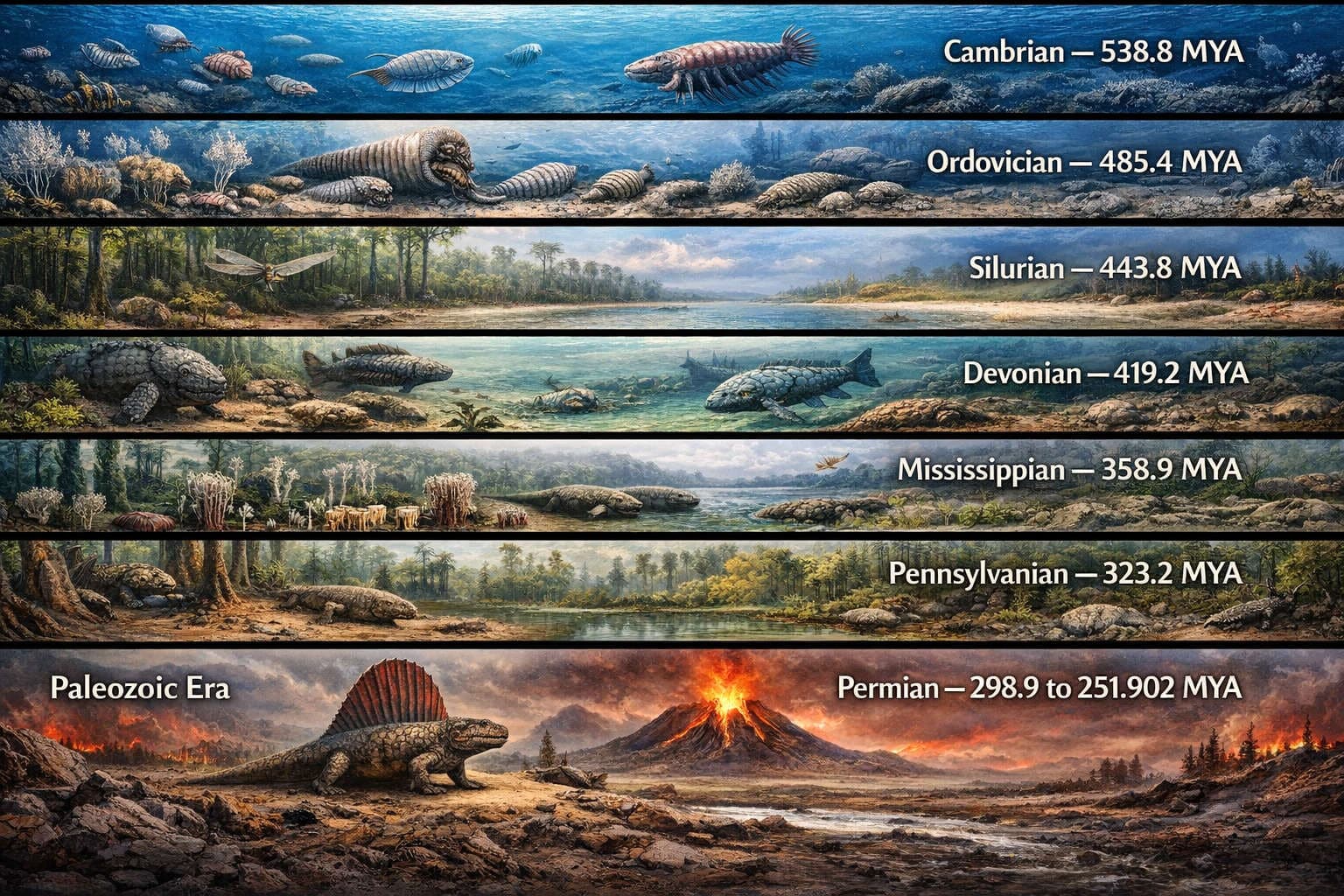
The Paleozoic era is marked by the rise of complex animal life 538.8 million years ago. It ends with the end-Permian mass extinction 252 million years ago. A volcanic cascade global warming event.
From 538.8 to 251.902 million years ago.
287 Million years: From burrowing to extinction.
Ordovician–Silurian Extinction: Ice Strikes the Seas
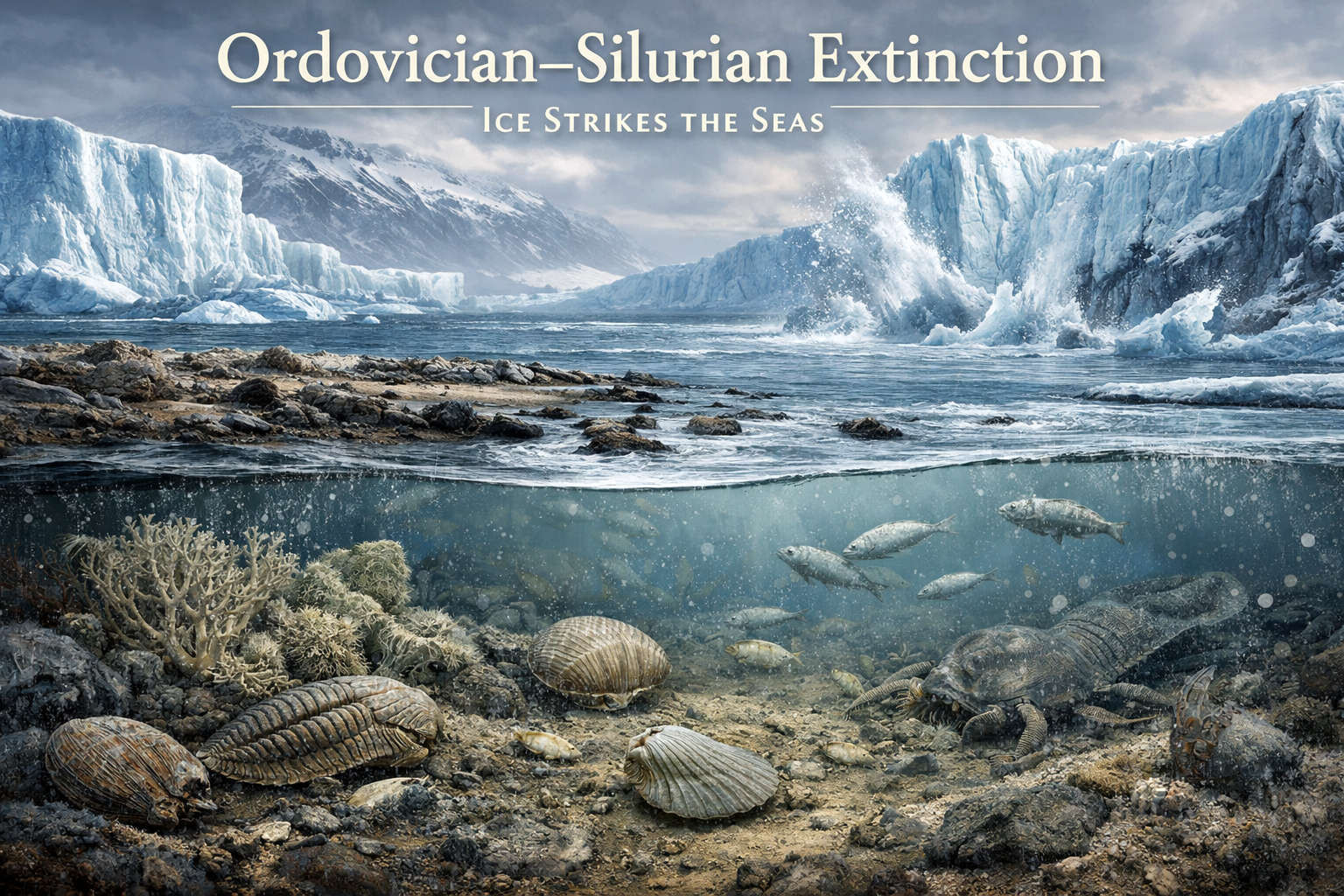
The Ordovician–Silurian extinction shows how climate change can reshape evolution by collapsing old ecosystems and opening space for new life.
~444 Million Years Ago
Cause: Global Cooling and Falling Seas
Oceans Lose Their Breath
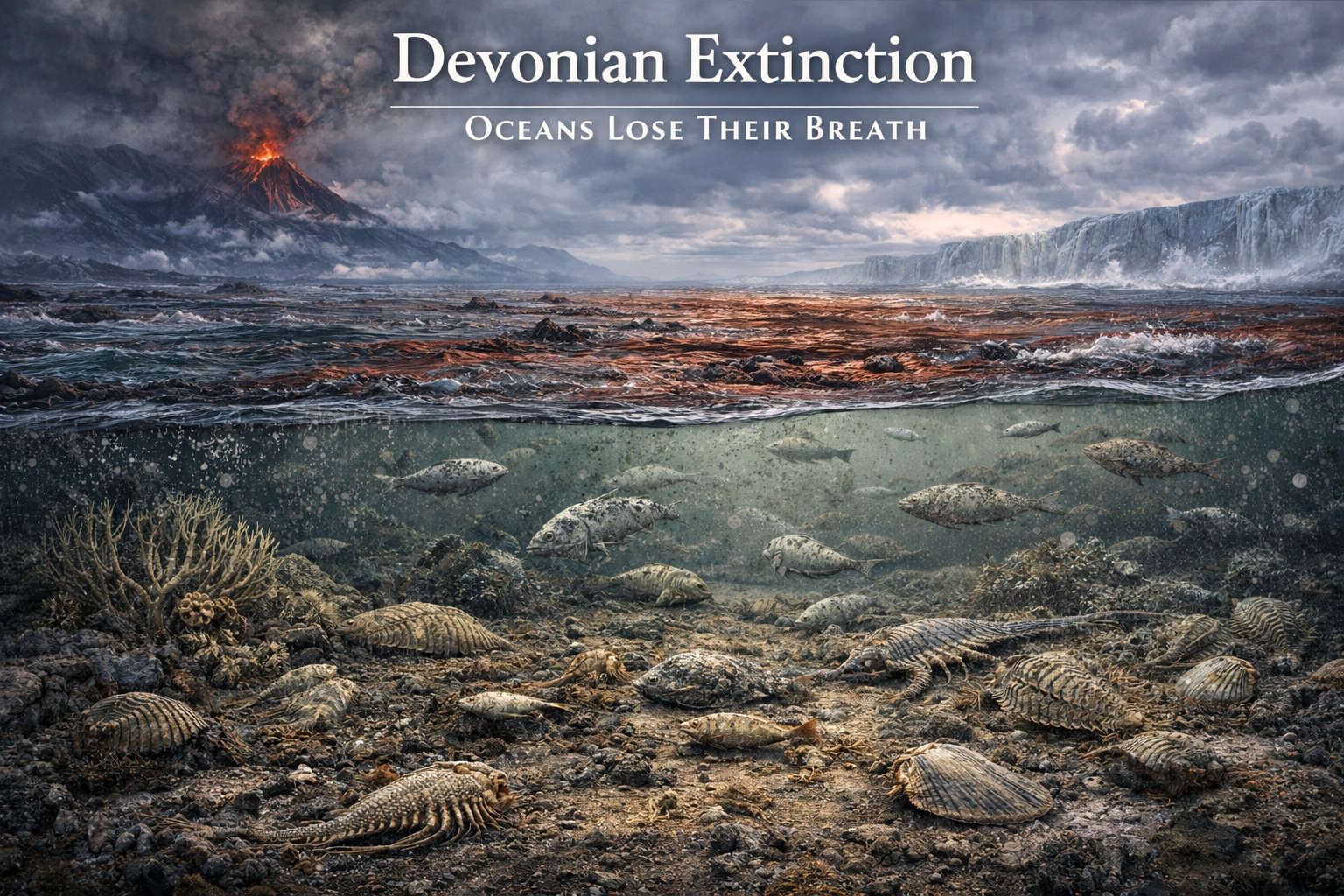
The Devonian extinction shows that evolution can be reshaped not by one sudden blow, but by a long collapse in ocean health.
~372–359 Million Years Ago
Cause: Ocean Anoxia
The P-T Extinction
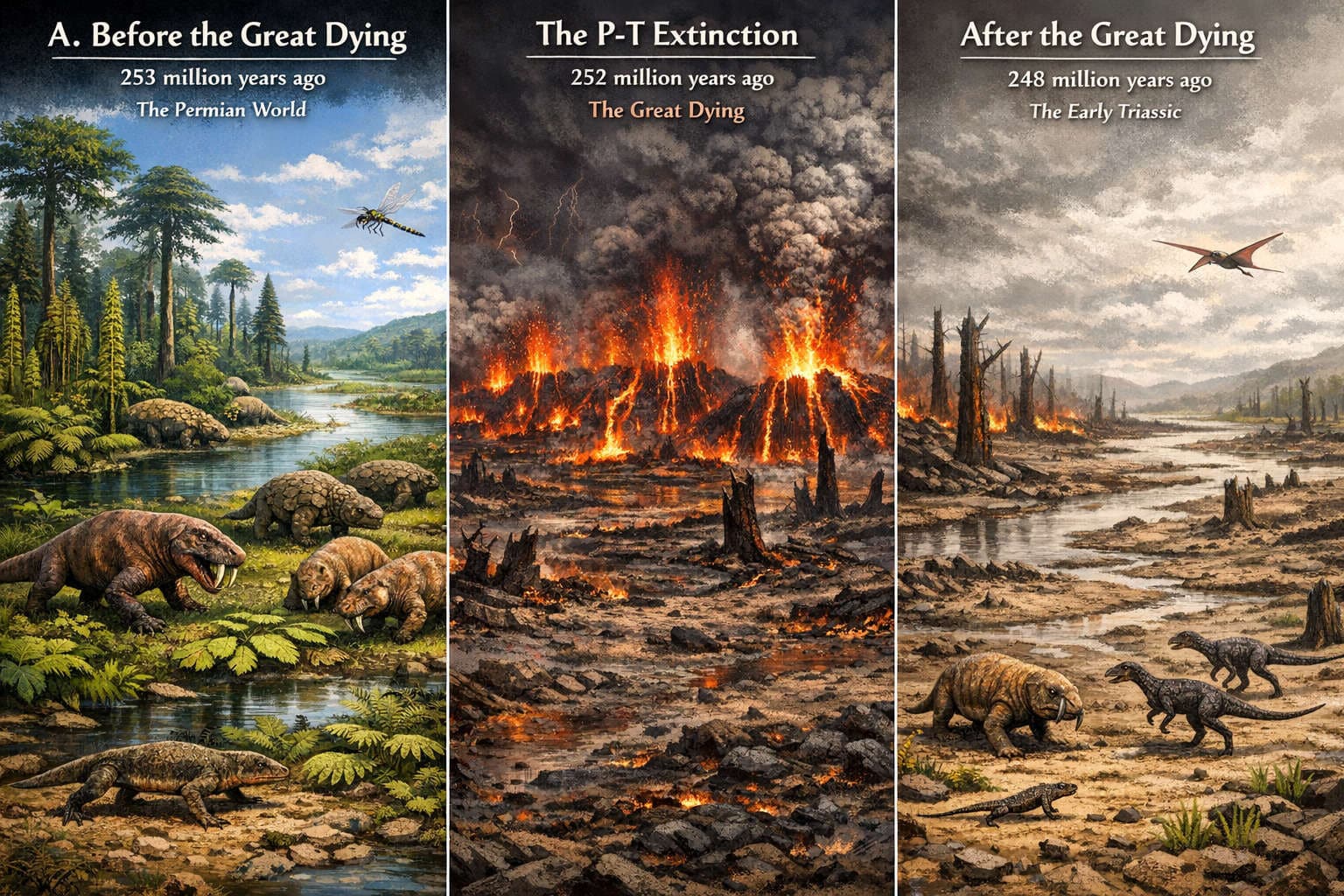
The Permian-Triassic extinction was not just the end of many species. It was a planetary reset that destroyed the old synapsid-dominated world and opened the door for the archosaur line that would later give rise to dinosaurs.
251,902,000 years ago (+/- 900 years).
Cause: Massive Volcanic Eruptions in Siberia
Mesozoic Era: Age of Dinosaurs
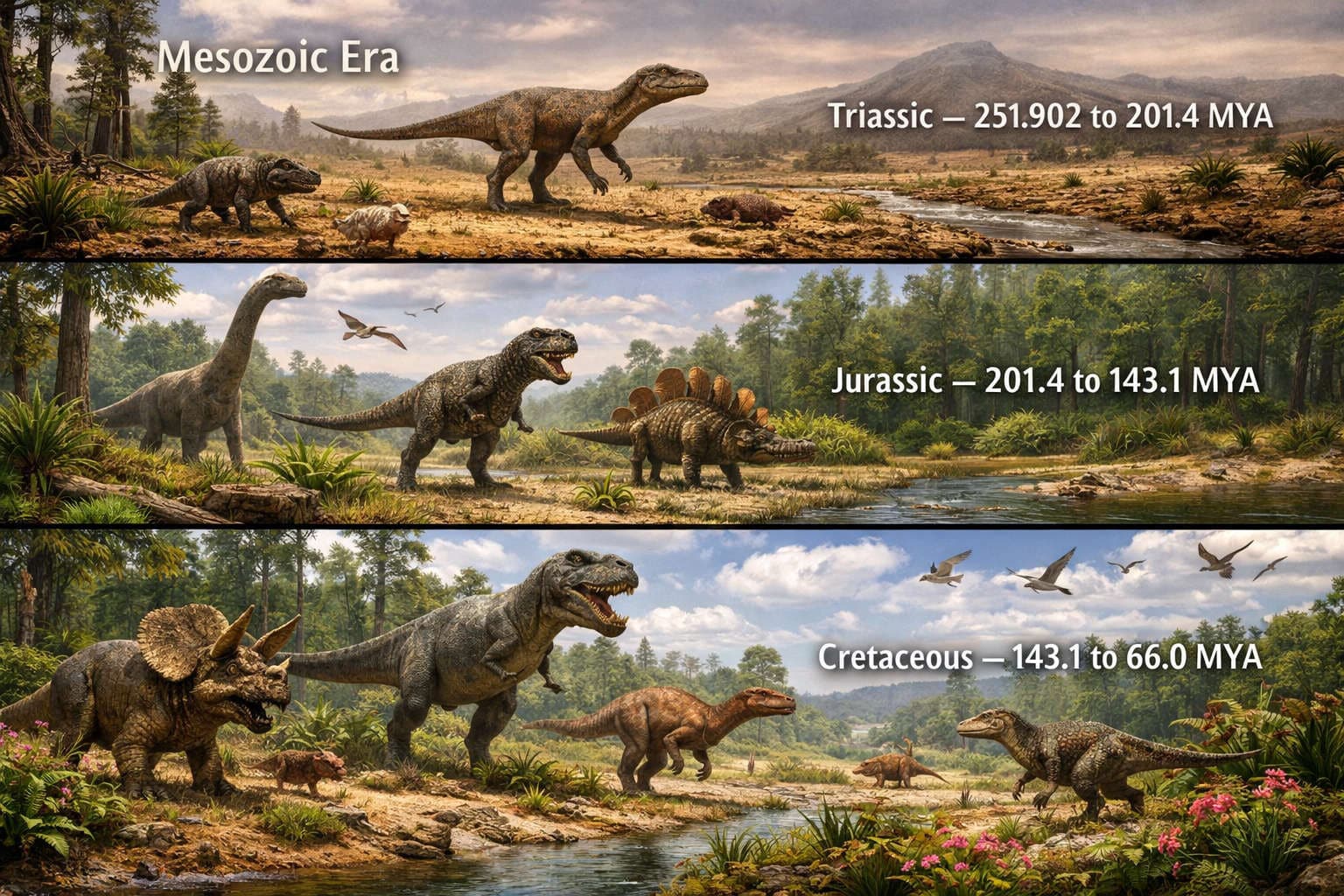
The Mesozoic era starts with the end-Permian mass extinction 252 million years ago. It ends the reign of dinosaurs with the K–Pg extinction 66 million years ago.
From 251.902 to 66.0 million years ago.
186 Million years: Dinosauria reigned from extinction to extinction.
Triassic–Jurassic Extinction: Volcanoes Open the Age of Dinosaurs
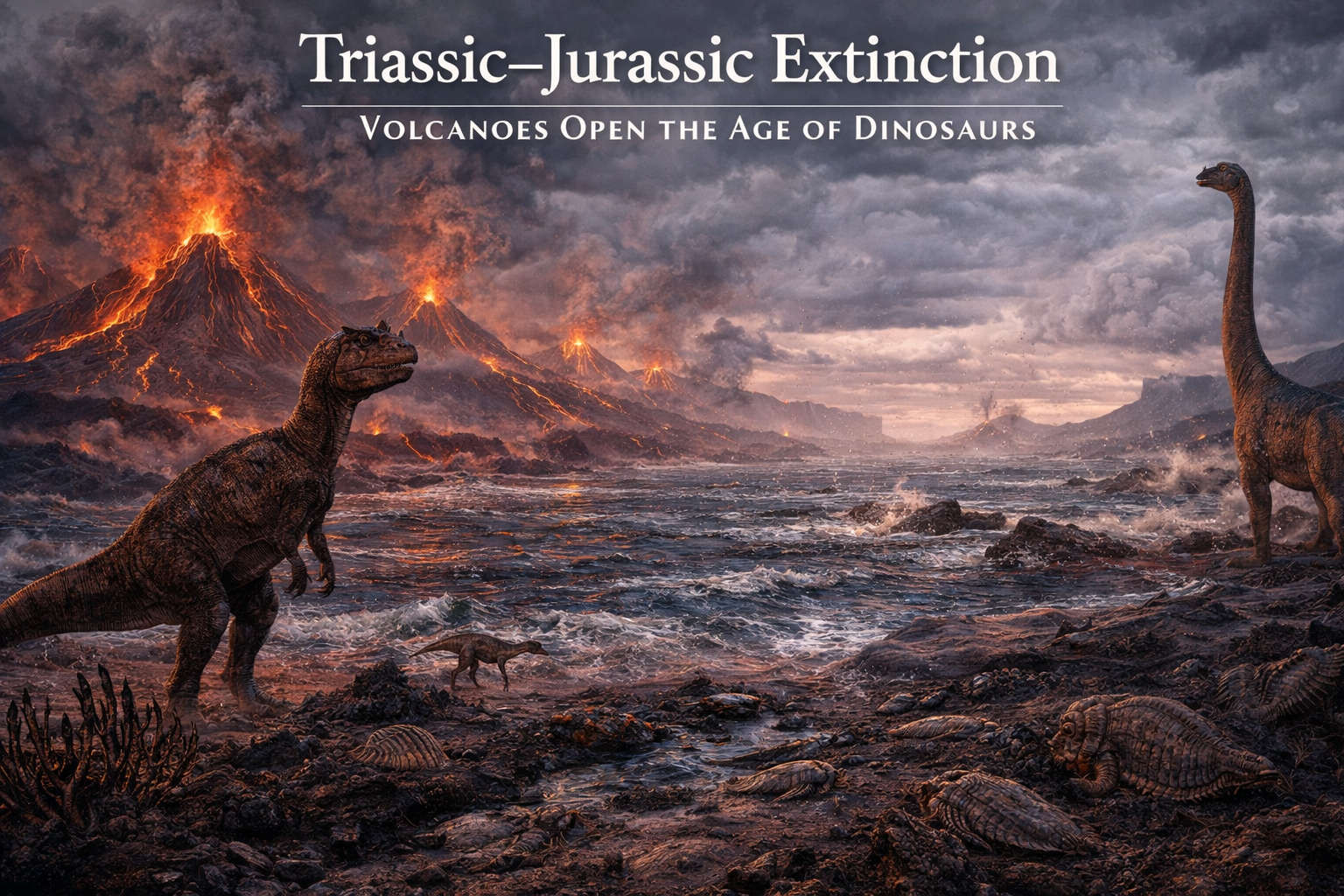
As Pangea cracked apart, massive volcanic eruptions poisoned air and oceans. This image includes early dinosaurs as foreshadowing: survivors waiting in the smoke before their Jurassic rise.
~201 Million Years Ago
Cause: Massive Volcanic Eruptions
The K-Pg Extinction
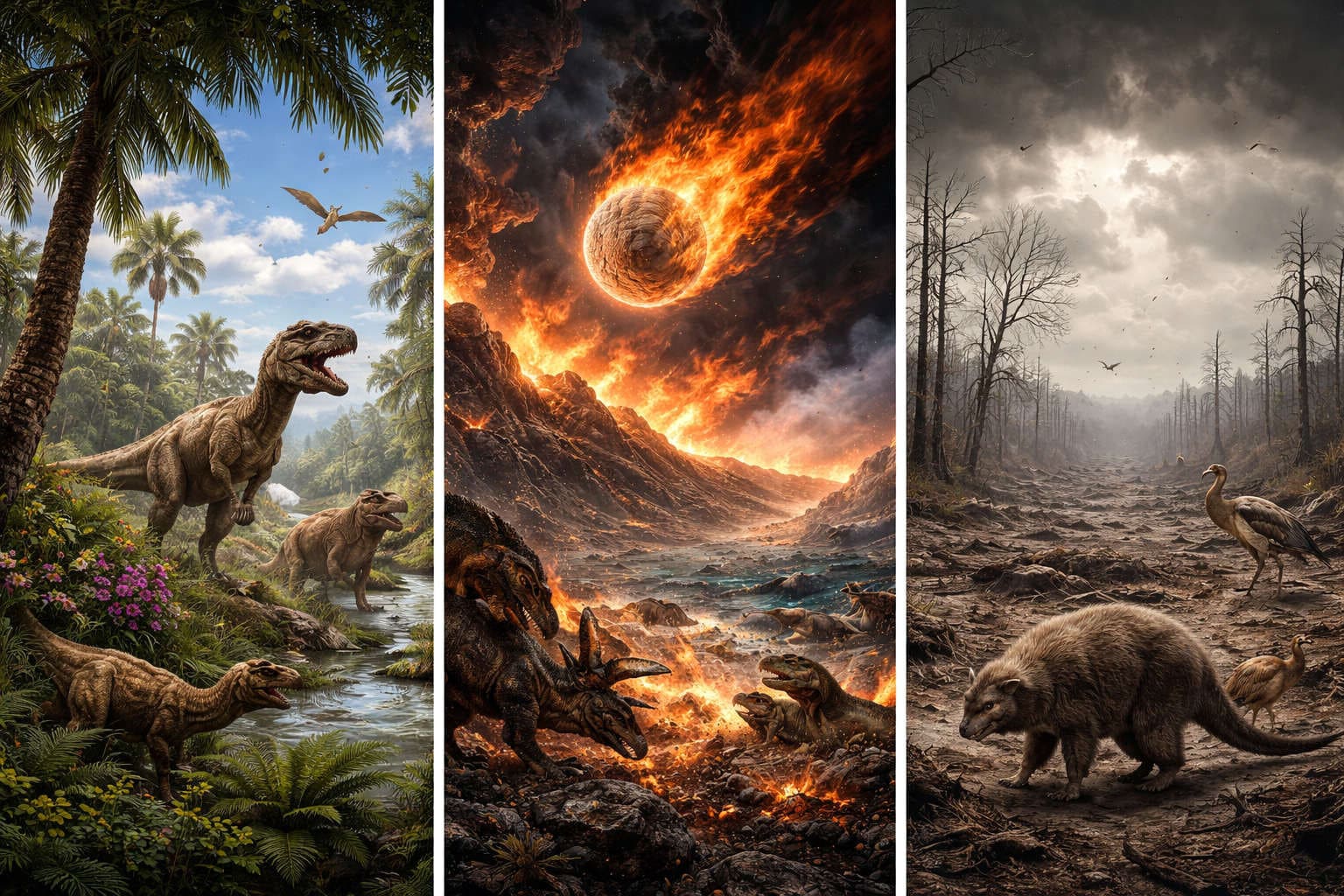
The K–Pg extinction was a sudden global catastrophe that ended the long dominance of non-avian dinosaurs and opened the way for mammals and modern birds to expand into a transformed world.
66.04 million years ago (+/- 900 years).
Cause: Massive Meteor
Cenozoic Era: Age of Mammals & Birds
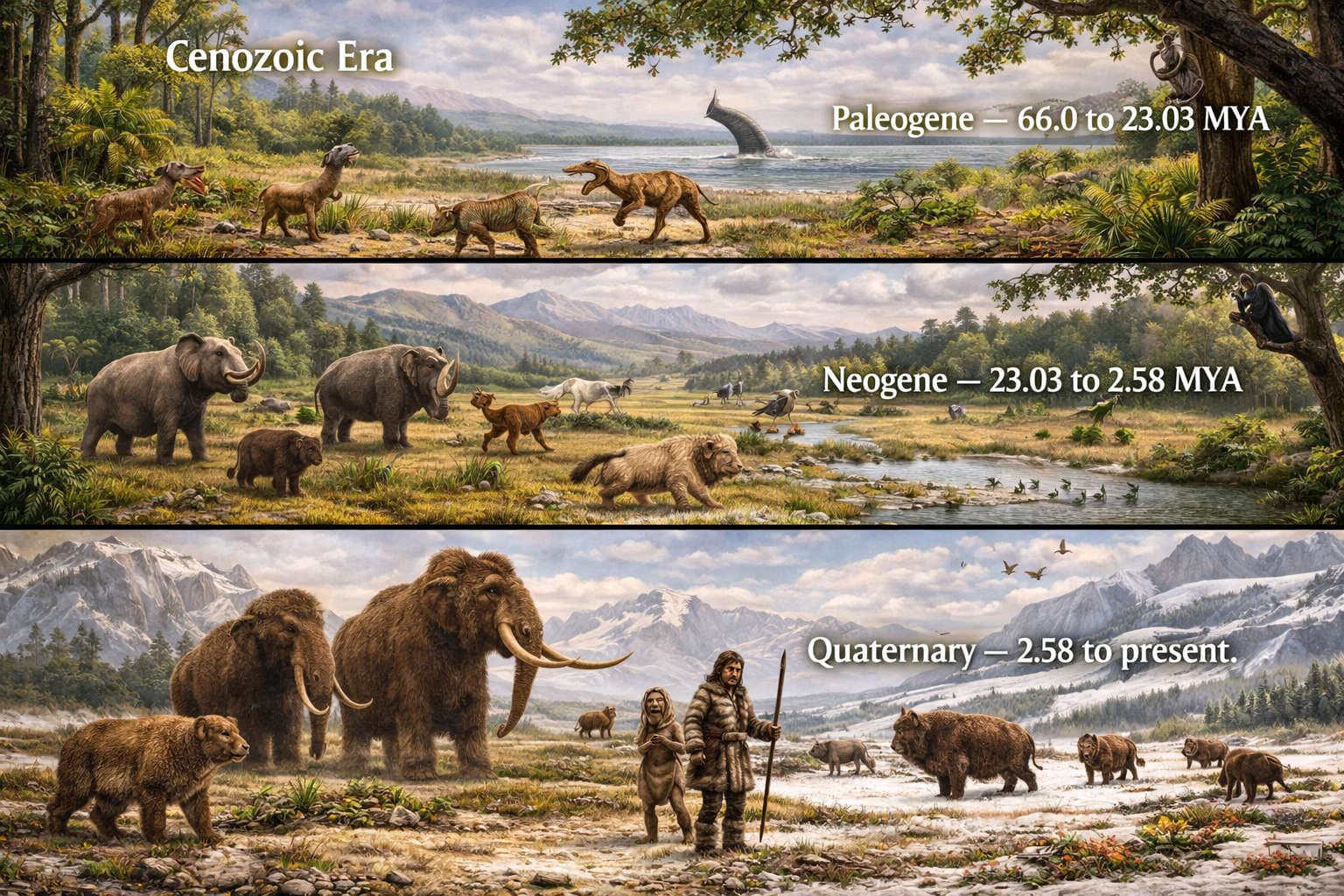
The Cenozoic era starts with the K–Pg extinction 66 million years ago. That event marks the sudden end of the reign of dinosaurs and the rise of mammals and birds.
66.04 million years ago to the present.
66 Million years: From extinction to society.