

Evolution TL: March to Life > Evolution > Great Apes > Human > Consciousness > All to Us
Fungi emerge about 600 million years ago. The earliest true fungal lineages likely resembled modern chytrids. Aquatic Produced flagellated (swimming) spores Fed by external digestion (already a defining fungal trait). This is before large animals dominate land.
Fungi-Animal Ancestors Split from Plants 1.65 bya
Fungi and animal ancestors split 950 MYA (single-celled)
Multicell fungi ancestors start 900 mya
True Fungi Evolution Starts 600 mya
Fungi and animal ancestors split 950 MYA (single-celled)
Multicell fungi ancestors start 900 mya
True Fungi Evolution Starts 600 mya
Prokaryotic Life
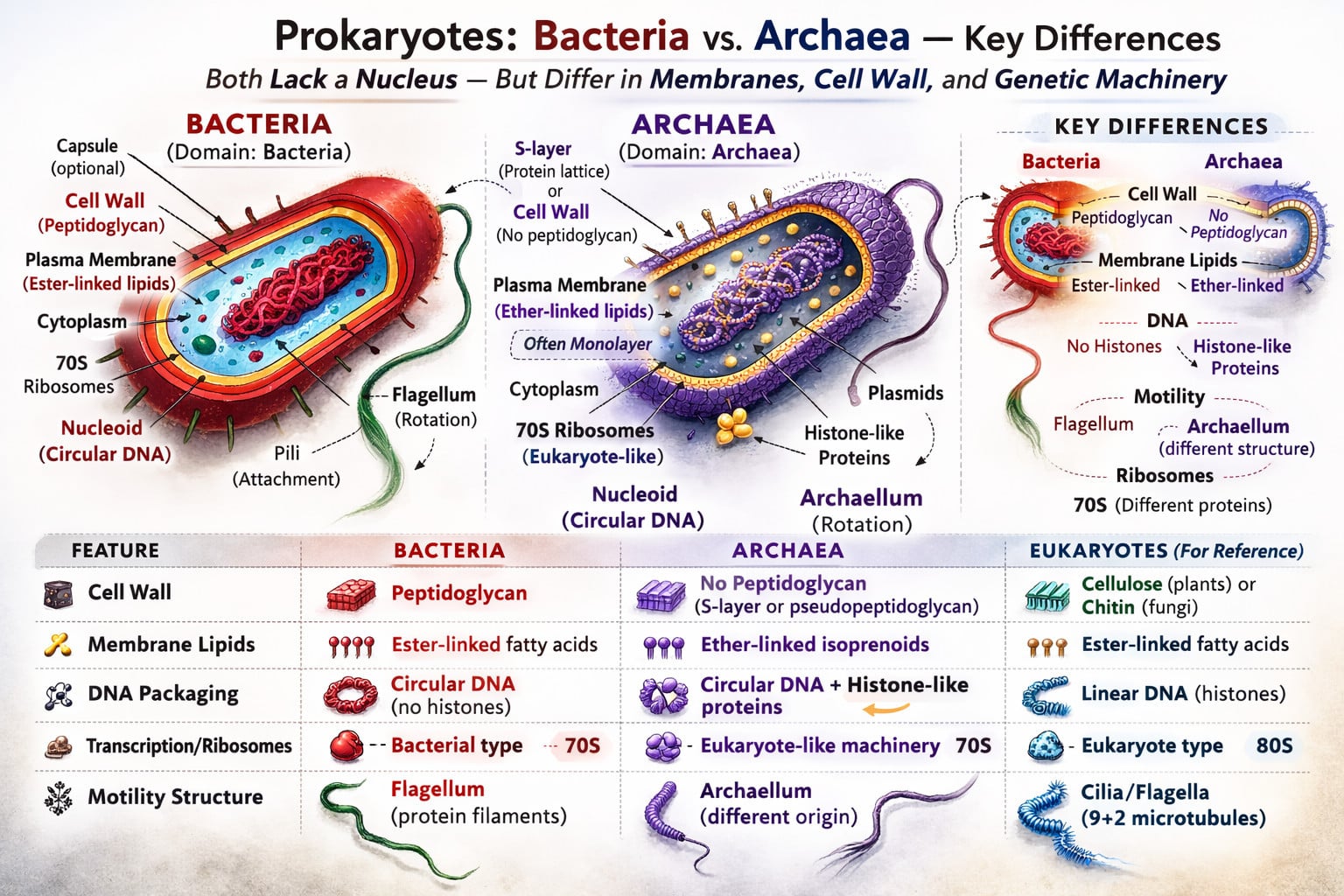
Archaea look like bacteria at first glance — small, simple, and lacking a nucleus. But they are fundamentally different.
3.73 Billion Years Ago (after LUCA)
Membrane and metabolic diversity.
Archaea Diverge
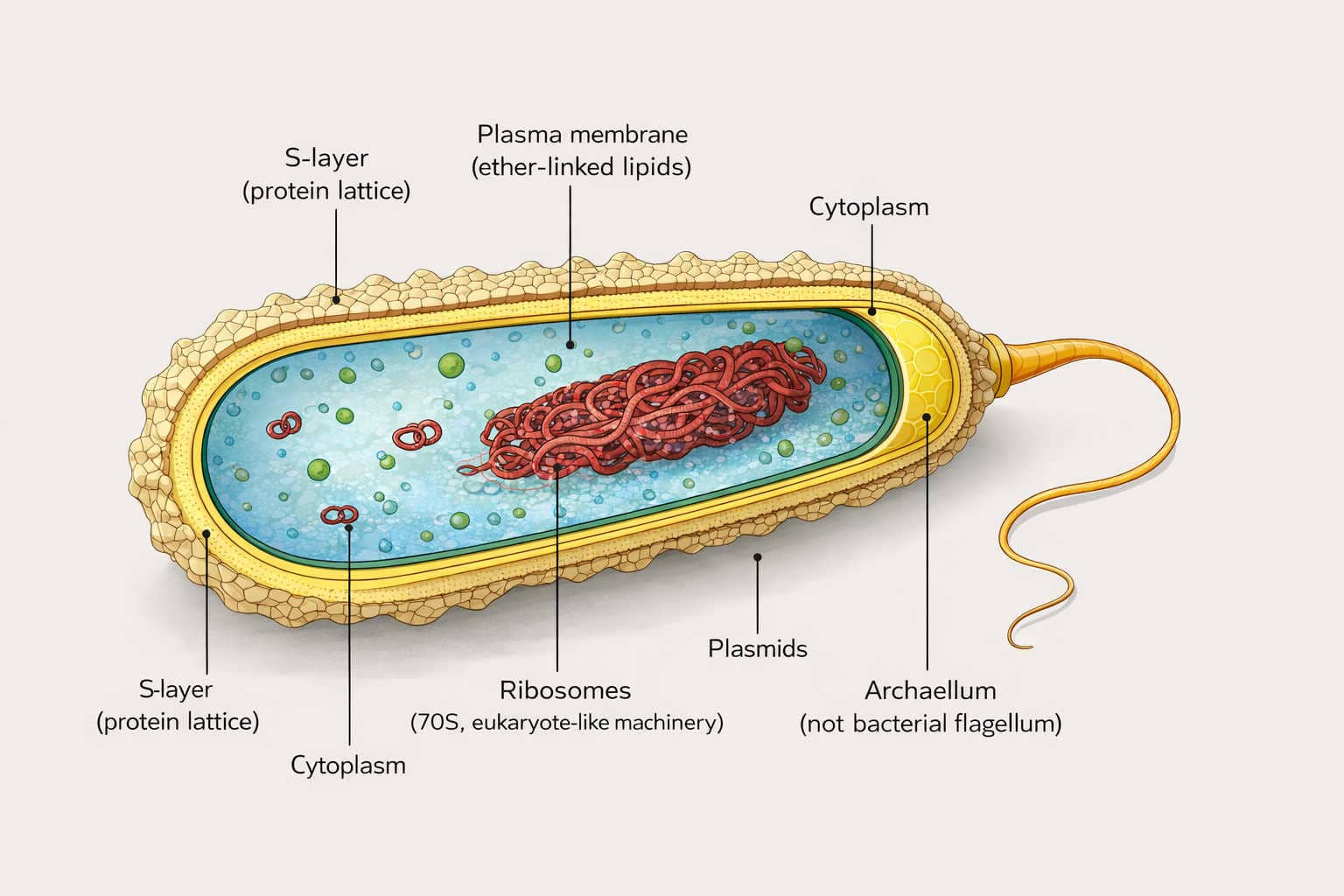
Both archaea and bacteria are prokaryotes — cells without nuclei.
3.73 Billion Years Ago (shortly after LUCA)
Ether-linked membranes and distinct genetic machinery
Touch: Life Learns to Feel Force
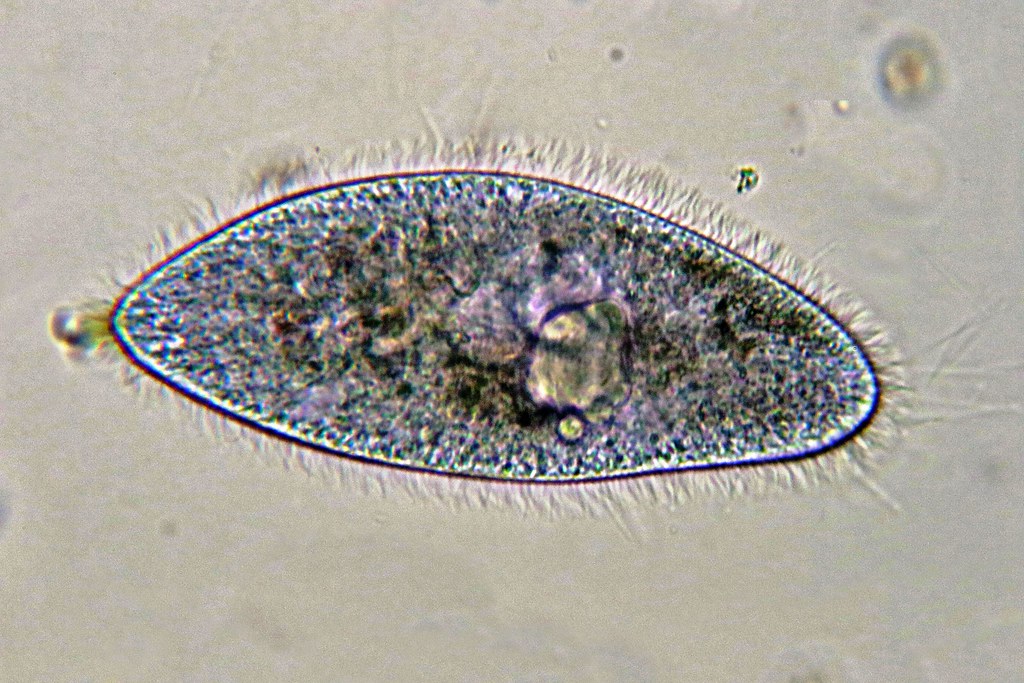
About 3.72 billion years ago, right after LUCA, when cells emerged, touch became the most ancient form of biological sensing: required to physically navigate reality.
~3.72 Billion Years Ago (after prokaryotes)
Mechanical sensitivity to pressure and membrane stretch
The First True Eukaryotes
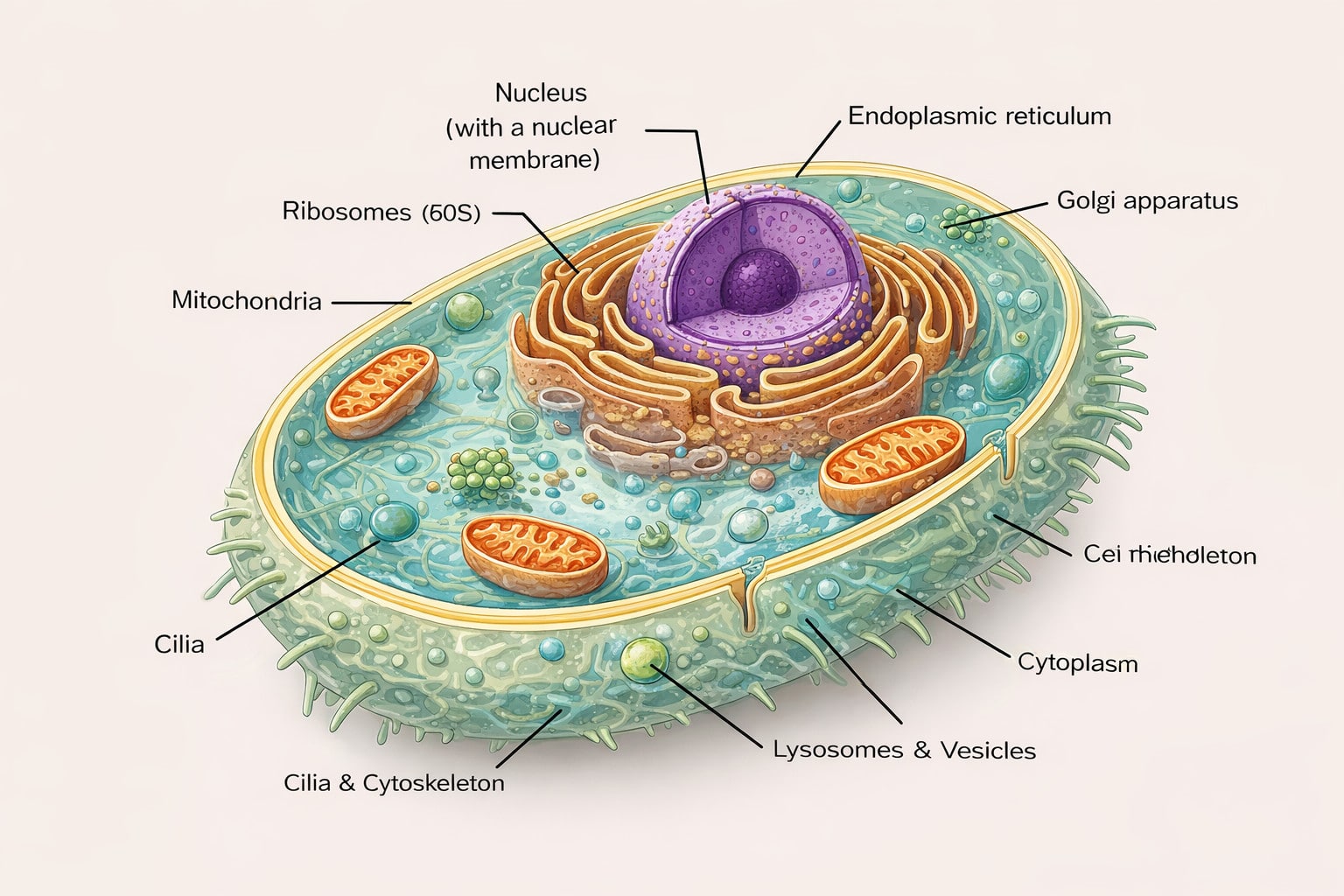
Eukaryotes divided labor within single-celled life, featuring a true nucleus and membrane-bound organelles. From them branched plants, fungi, and animals.
2.4 Billion Years Ago (+/- 300 million years)
Great Oxidation Event: Third Atmosphere
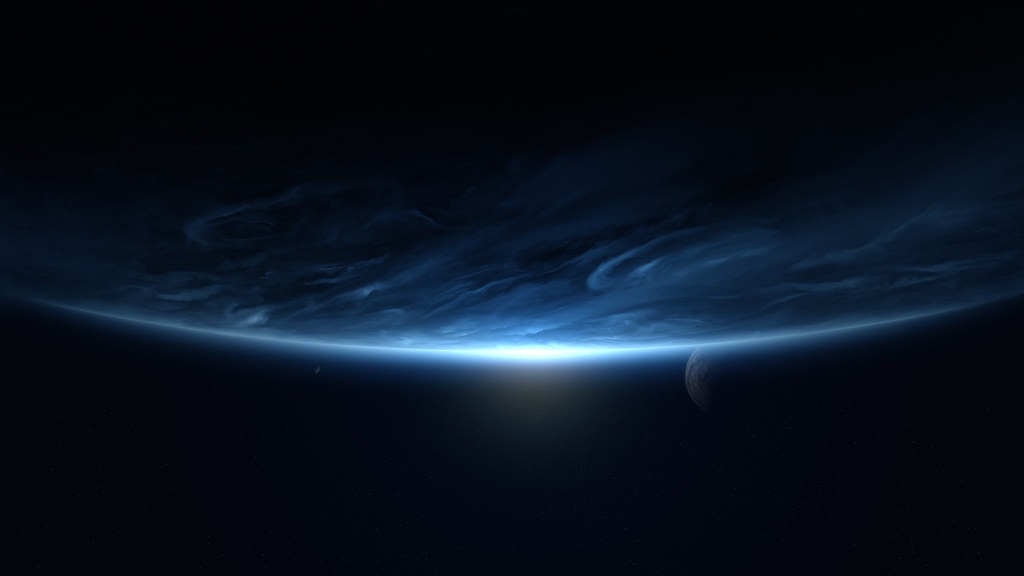
Cyanobacteria released oxygen faster than Earth could absorb it, changing the oceans, atmosphere, and future of life.
~2.4 Billion Years Ago
Cause: Cyanobacteria Produce Oxygen
Bacterial Endosymbiosis: Origin of Eukaryotes
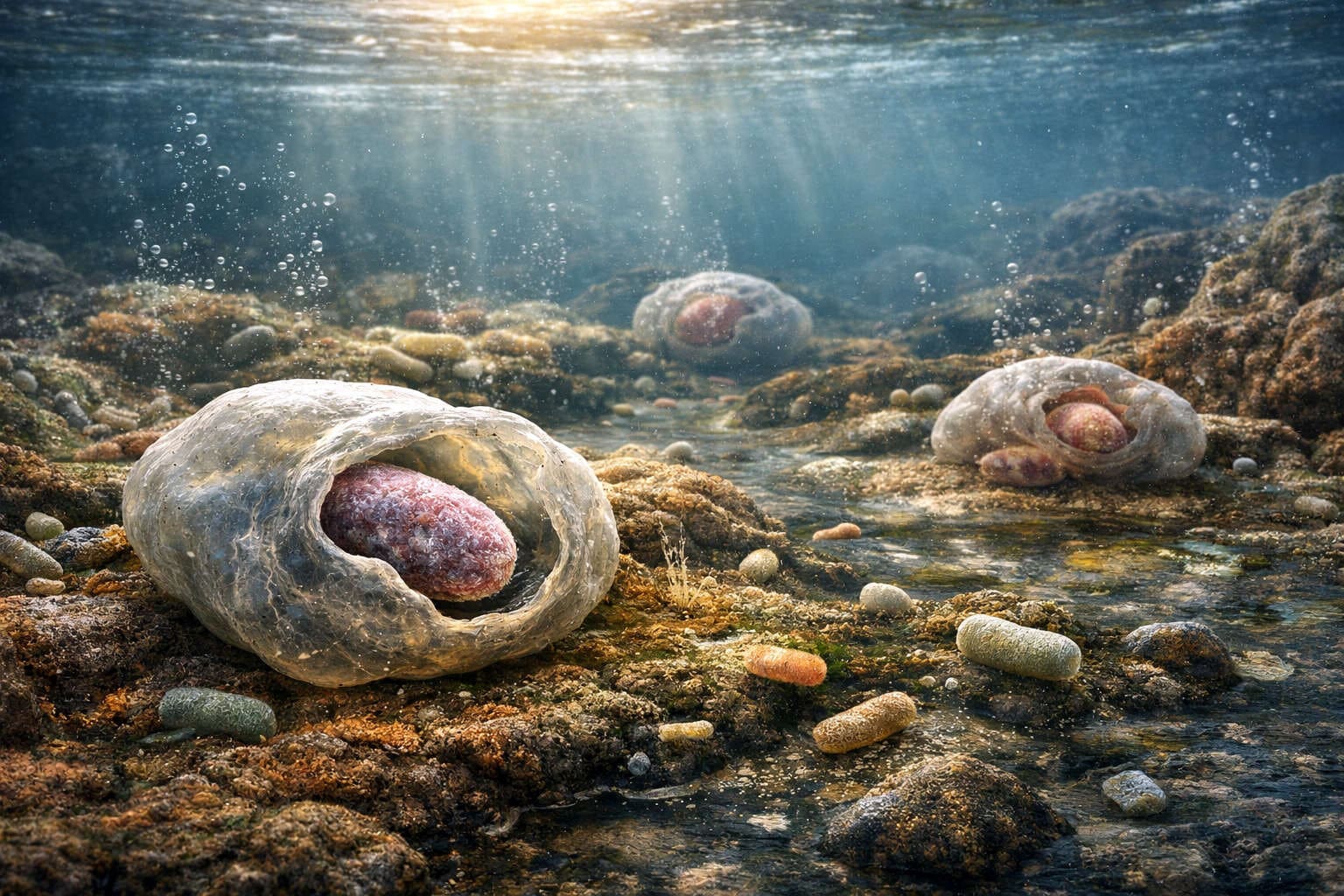
About 2 billion years ago, bacteria are added to cells and that group leads to eukaryotes. You are a walking chimera ecosystem made of an Archaea host and trillions of Bacterial power-plants.
~1.9 Billion years ago (+/- 100 million)
Bacteria are added to eukaryote ancestor cells
LECA: Likely Sexual Reproduction
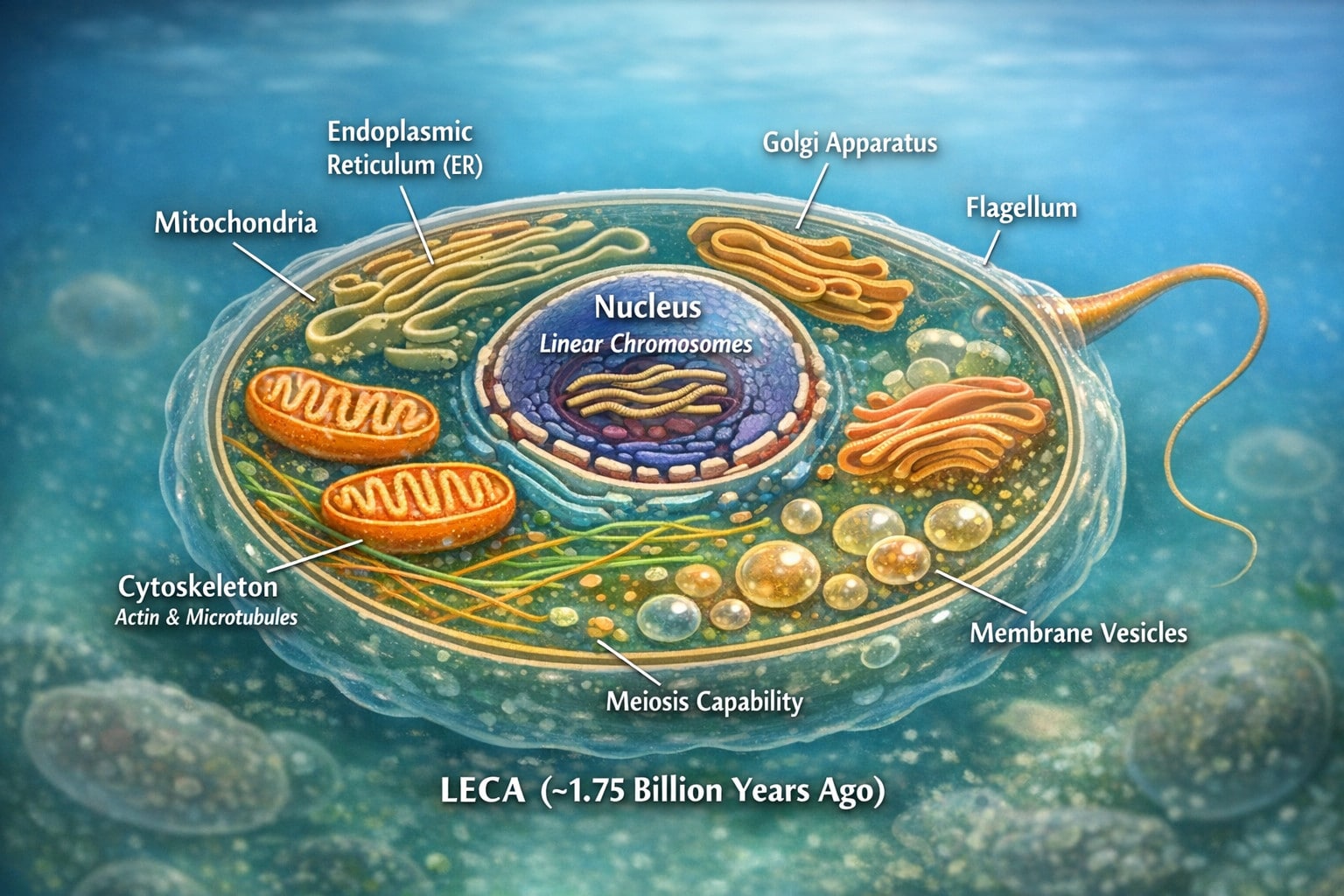
LECA is the Last Eukaryotic Common Ancestor. LECA reproduced sexually pushing the mixing of DNA back before 1.75 billion years ago.
~1.75 billion years ago (+/- 50 million)
Last Eukaryote Common Ancestor
Unikonts: Single-Motor flagella Reform
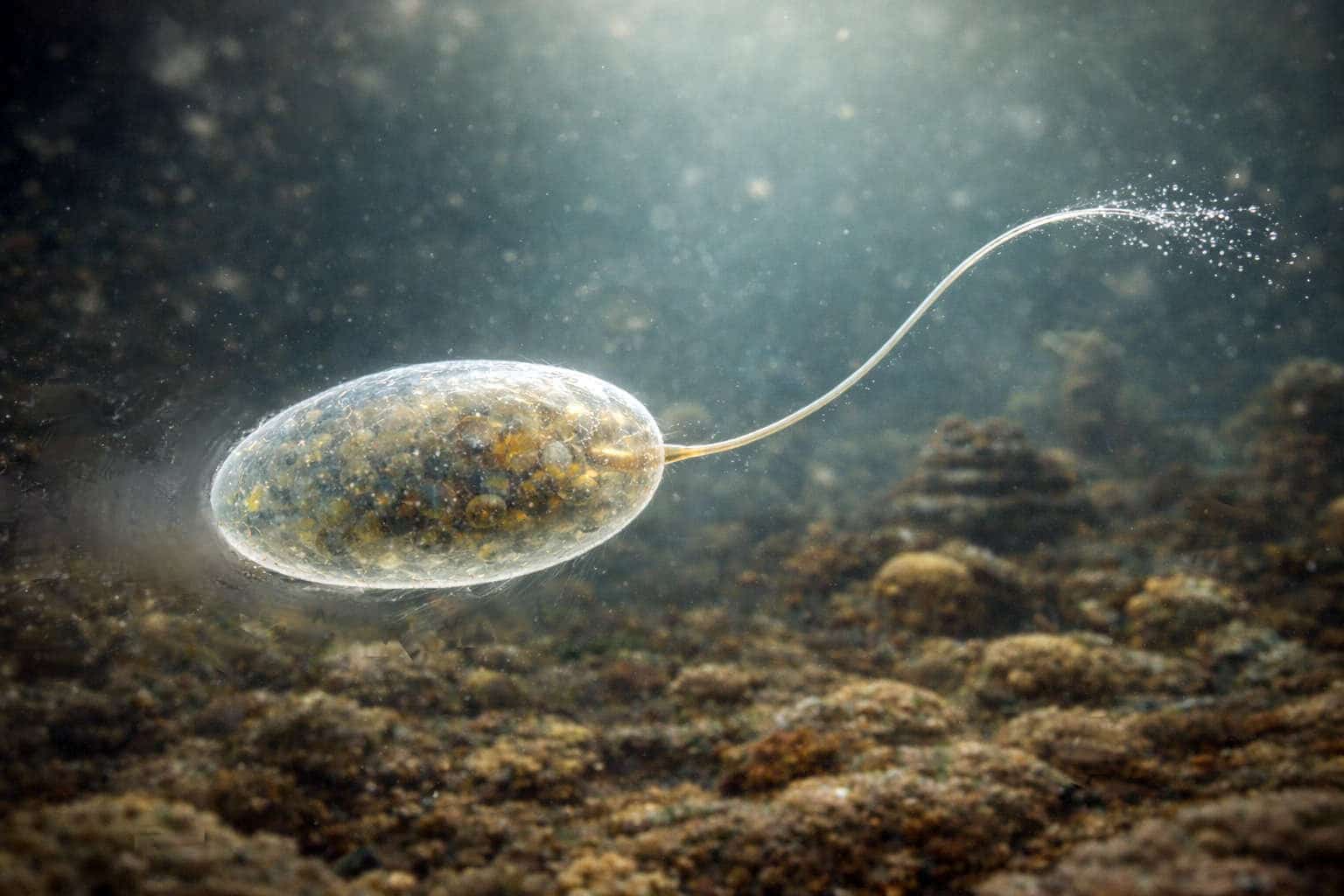
By 1.3 billion years ago, our animal-fungi ancestor, the Unikonts, stopped using two pulling flagella and narrowed it down to one pushing one.
~1.3 Billion Years Ago (+/- 100 million)
Transition to a Single Flagellum
Intracellular Flow and Nutrient Exchange
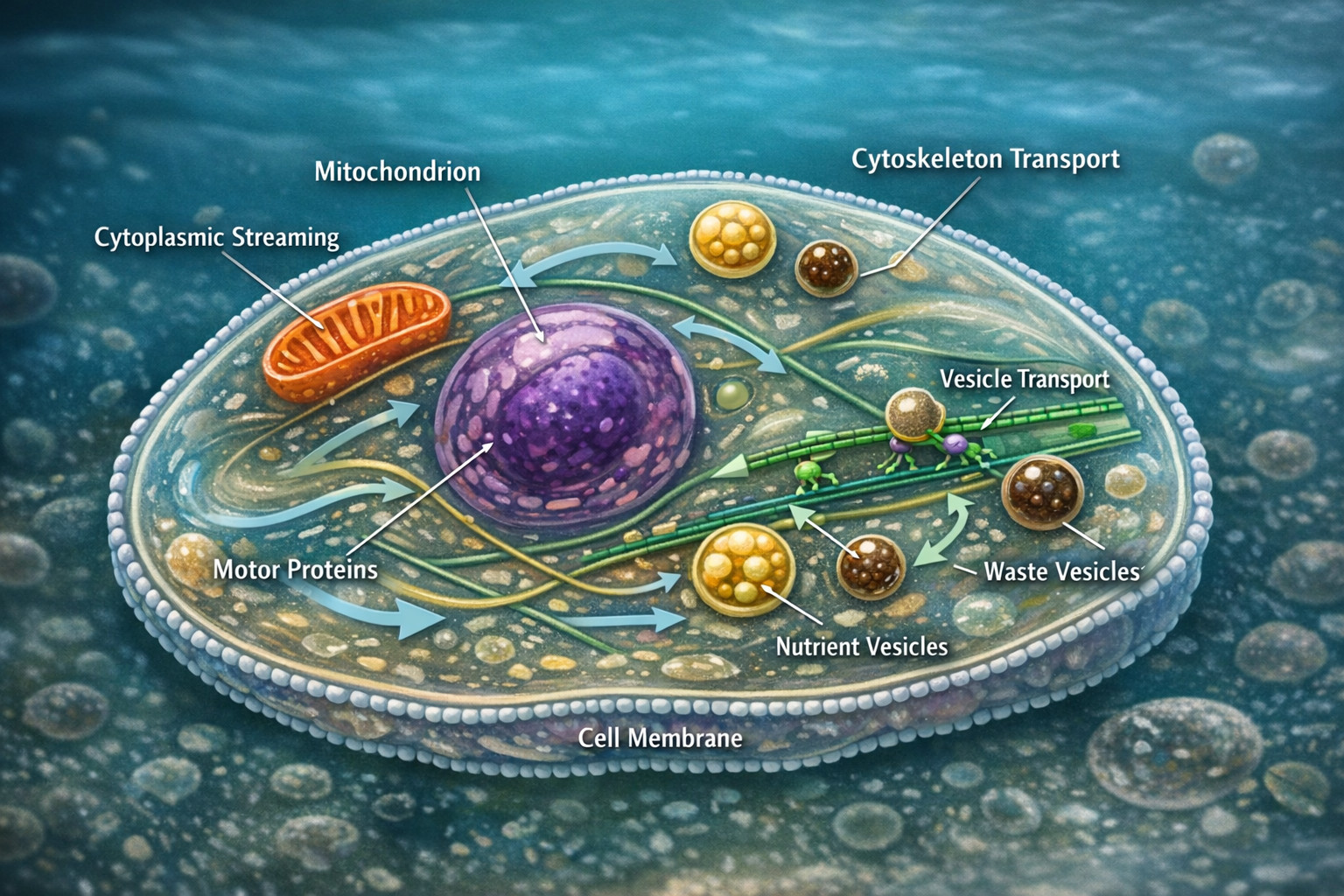
Eukaryote cells evolve cytoplasmic streaming and cytoskeleton-guided transport systems to circulate nutrients, organelles, and waste internally.
~1.2 Billion Years Ago (+/- 300 million)
Cytoplasmic streaming and vesicle transport
Opisthokonts: True Posterior Flagellum
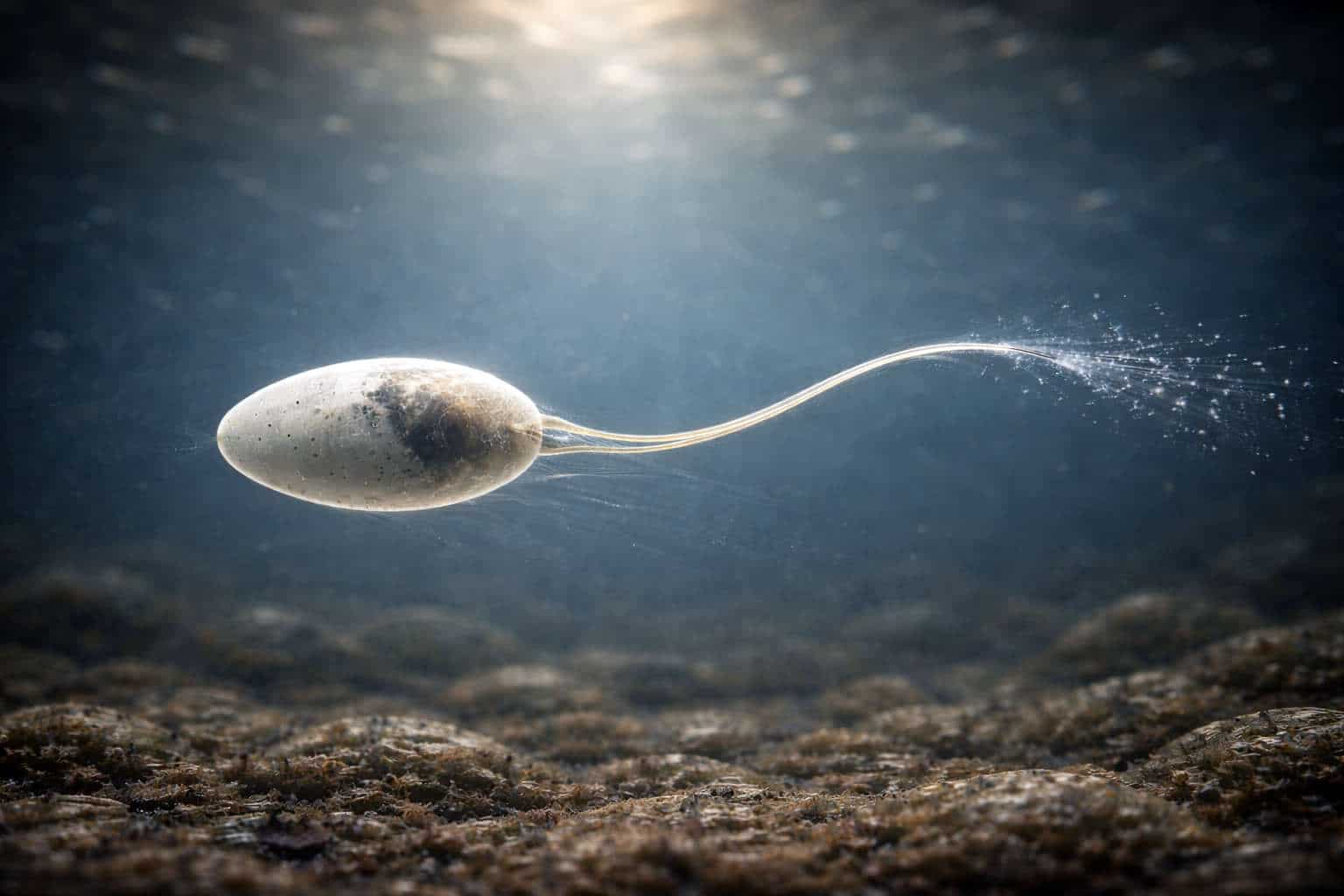
By 1.15 billion years ago, our animial-fungi ancestor evolve a true posterior flagellum. Single-celled animal sperm has a lineage back to this ancestor.
~1.15 Billion Years Ago (+/- 50 million)
12 unique amino acids + glycogen energy storage + True Posterior Flagellum
Fungi Ancestors Split Off: (aquatic Holomycota)
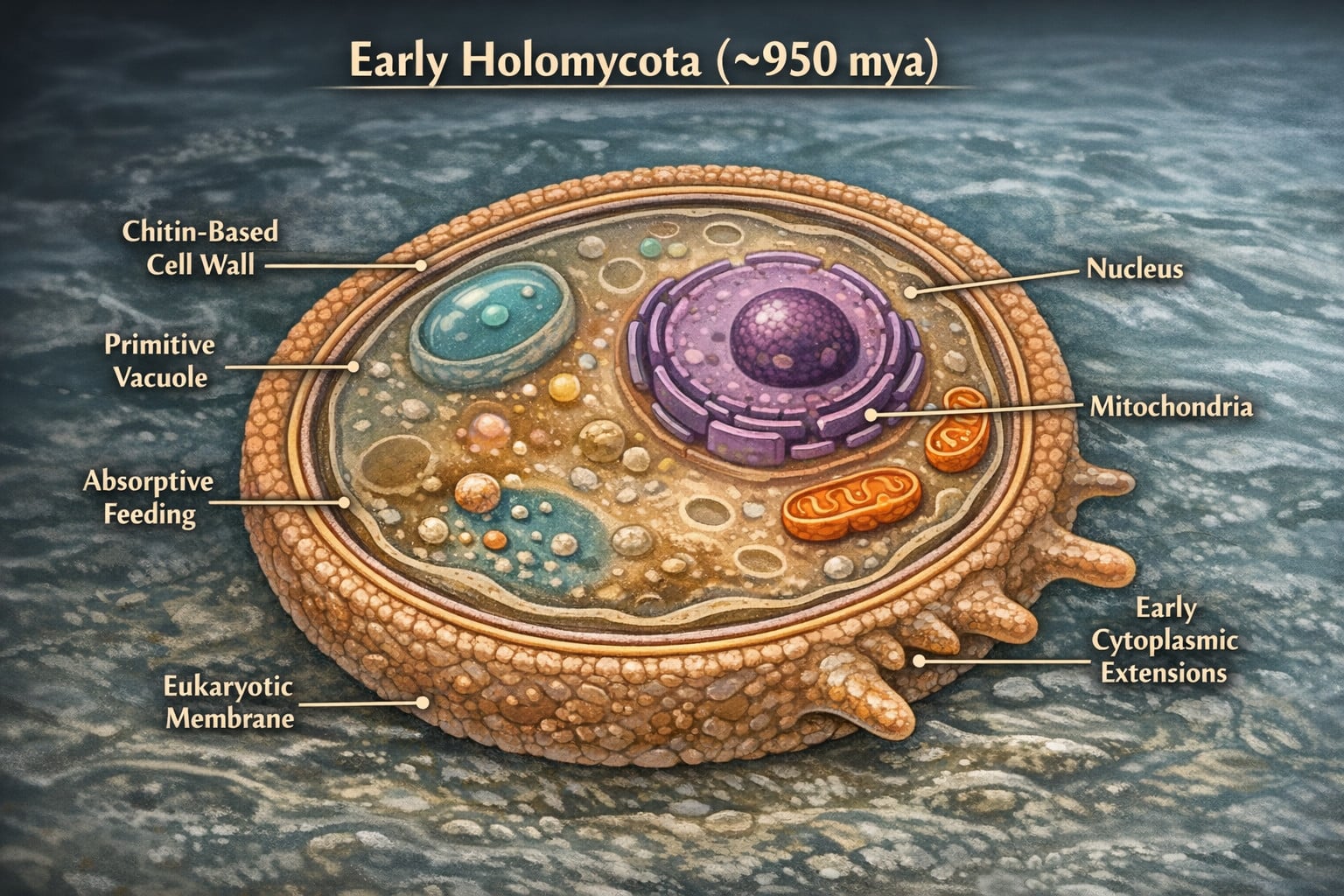
By 950 million years ago, fungi ancestors used growth over motion to survive.
~950 Million Years Ago (+/- 50 million)
External digestion + chitin cell walls
Snowball Earth: When Ice Reached the Equator
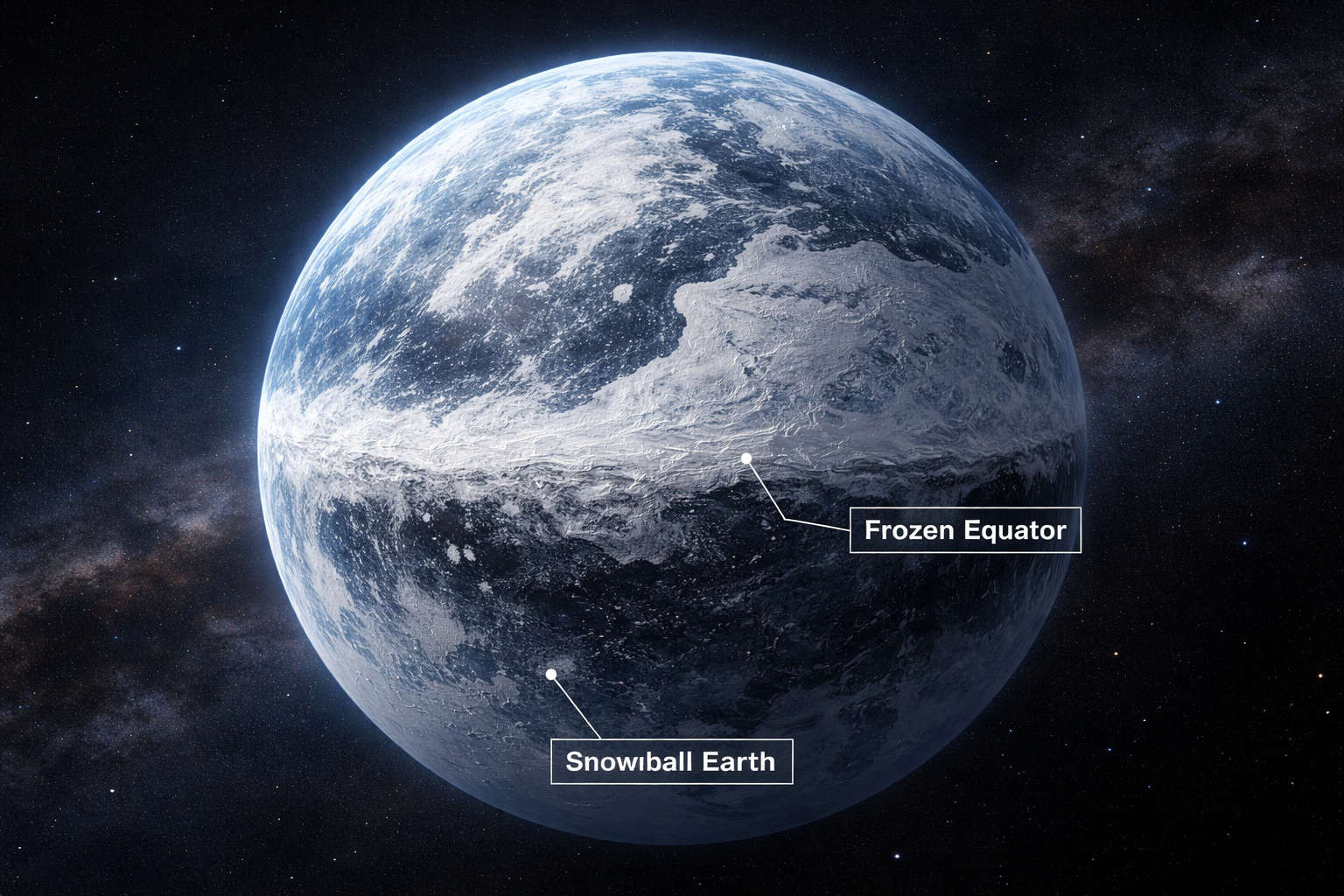
For tens of millions of years, Earth plunged into its deepest known freeze. Ice sheets reached sea level at low latitudes, perhaps even the equator, turning the planet into a near-global ice world and reshaping the path toward complex life.
From 717 million years ago through 635.
Cause: Continental Drift, Falling CO₂
First True Fungi: Chytrids (and living fossils)
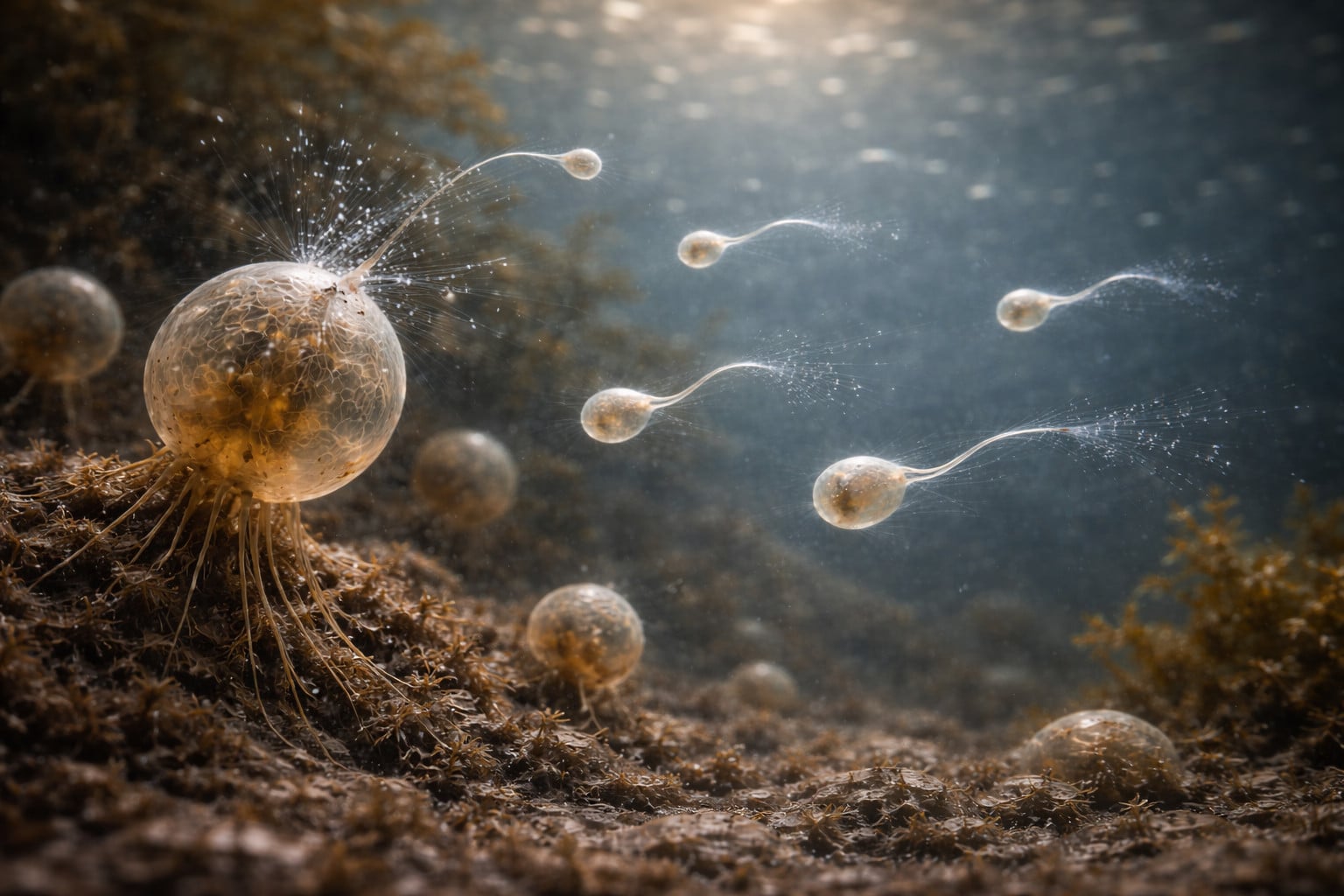
Chytrid-like fungi, reproducing with single posterior flagellated spores, are present in the fossil record by ~600 MYA.
~600 Million years ago (+/- 20 million)
Sperm-like reproduction to spread seed to new soil.
Mold Spores Emerge
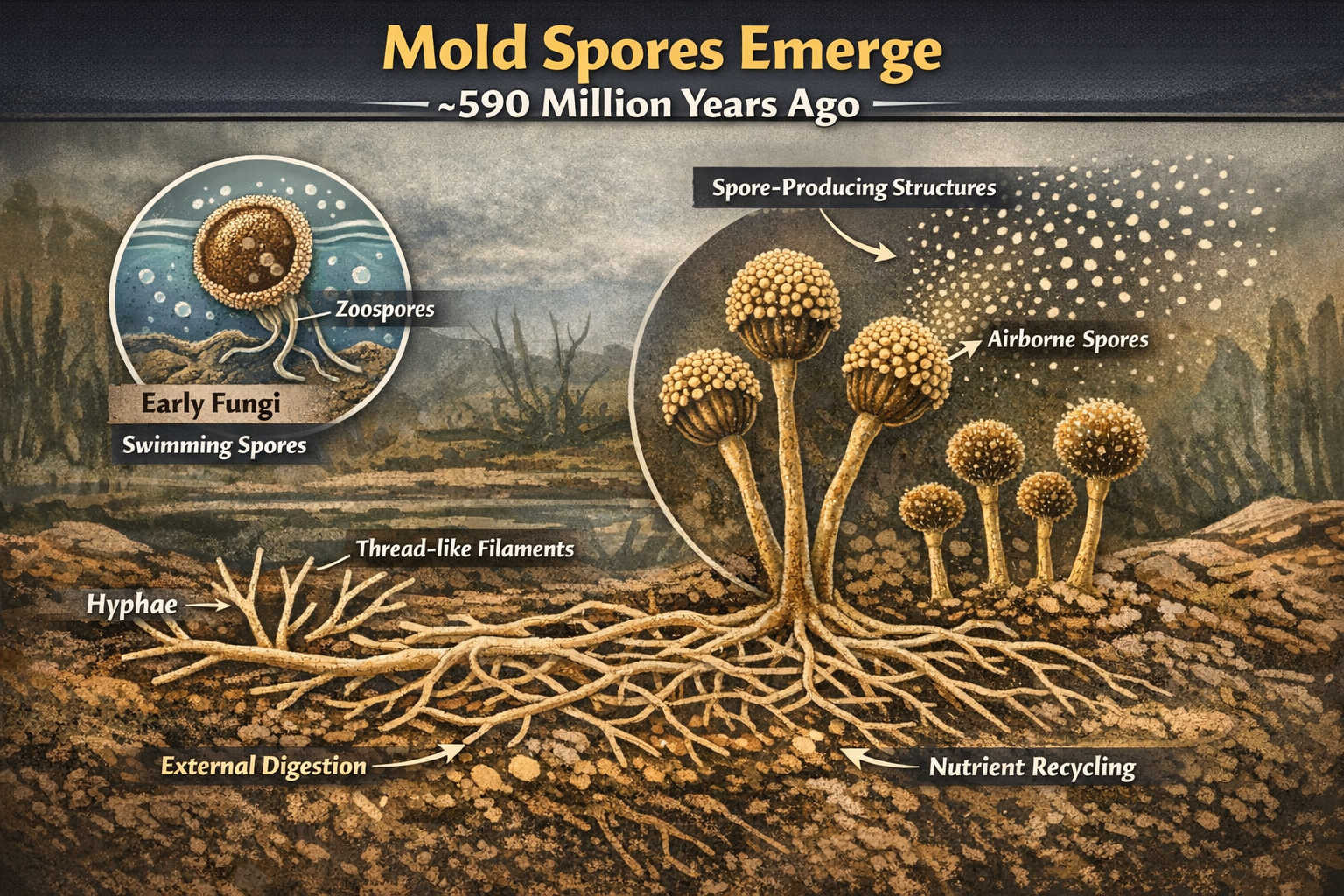
A mold spore is usually just one cell, but it carries the power to begin again. Released into the world, these tiny travelers helped fungi spread across early Earth and become some of nature’s great recyclers.
~590 Million years ago (+/- 30 million)
Paleozoic Era: The Age of Synapsids
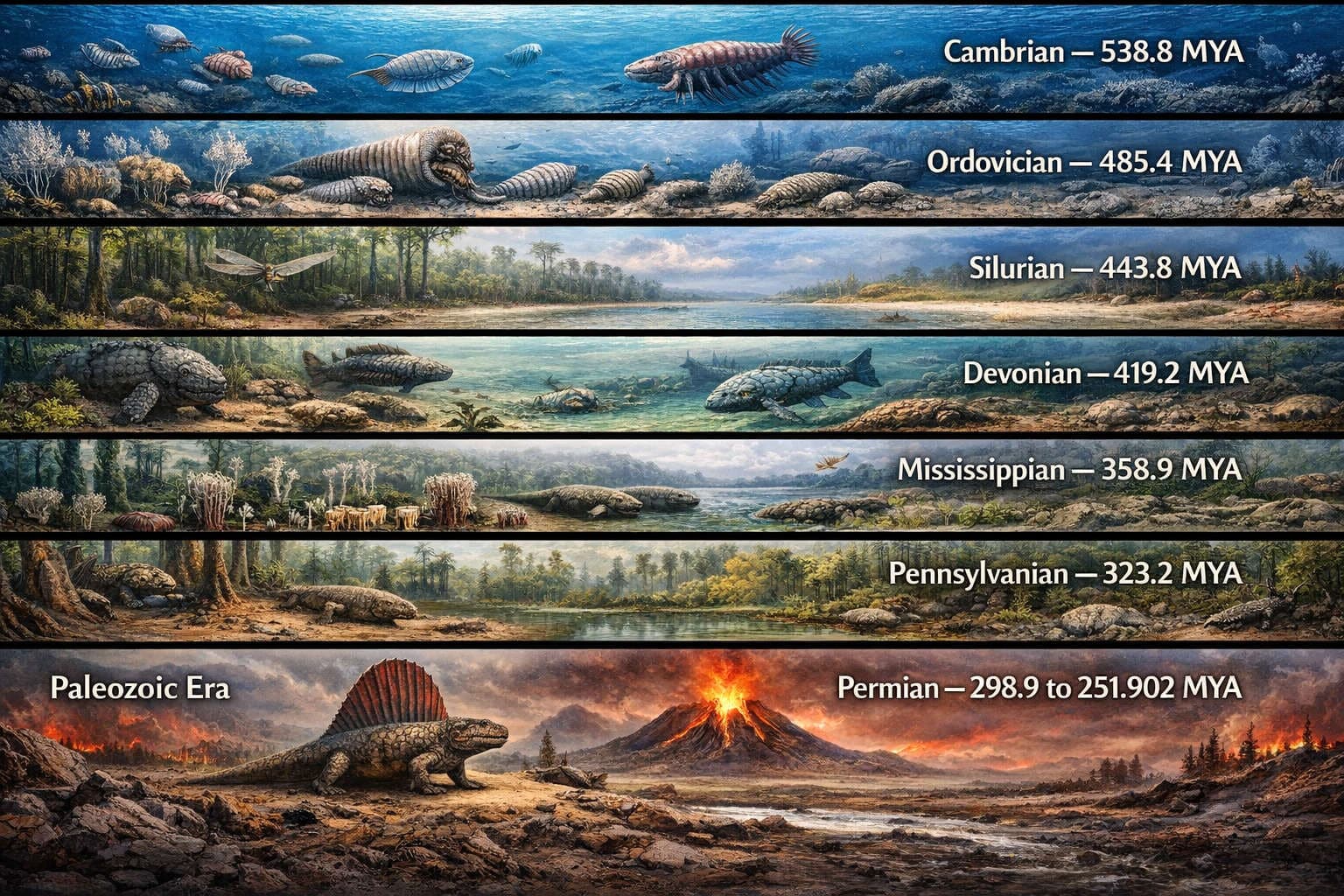
The Paleozoic era is marked by the rise of complex animal life 538.8 million years ago. It ends with the end-Permian mass extinction 252 million years ago. A volcanic cascade global warming event.
From 538.8 to 251.902 million years ago.
287 Million years: From burrowing to extinction.
Hyphae break rock
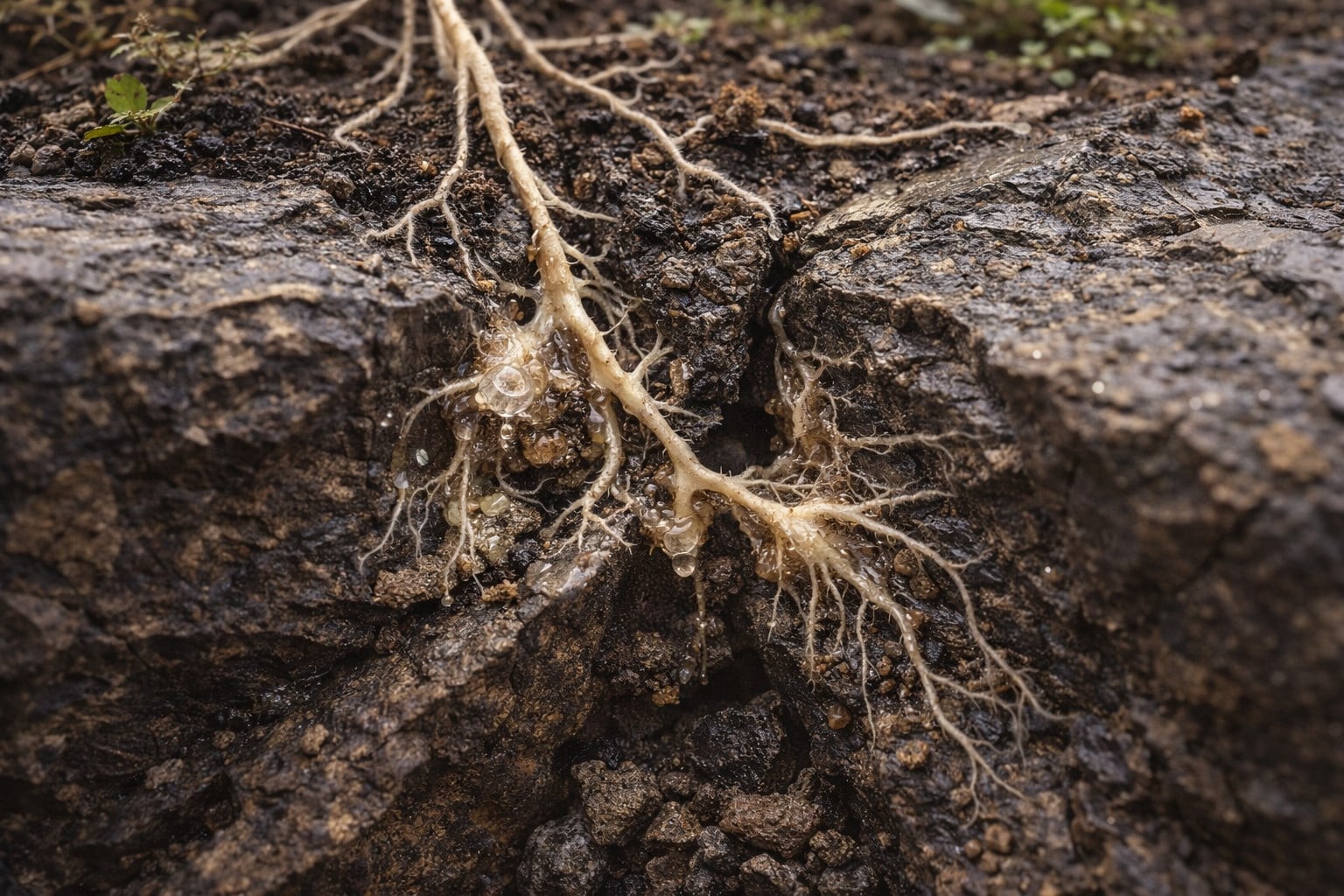
The conquest of land wasn’t driven by size — it was driven by threads. By 480 million years ago, hyphae began breaking into rock to make land habitable.
~480 MYA (+/- 20 million)
Filamentous growth (hyphae); terrestrial colonization
Fungal Underground Alliance
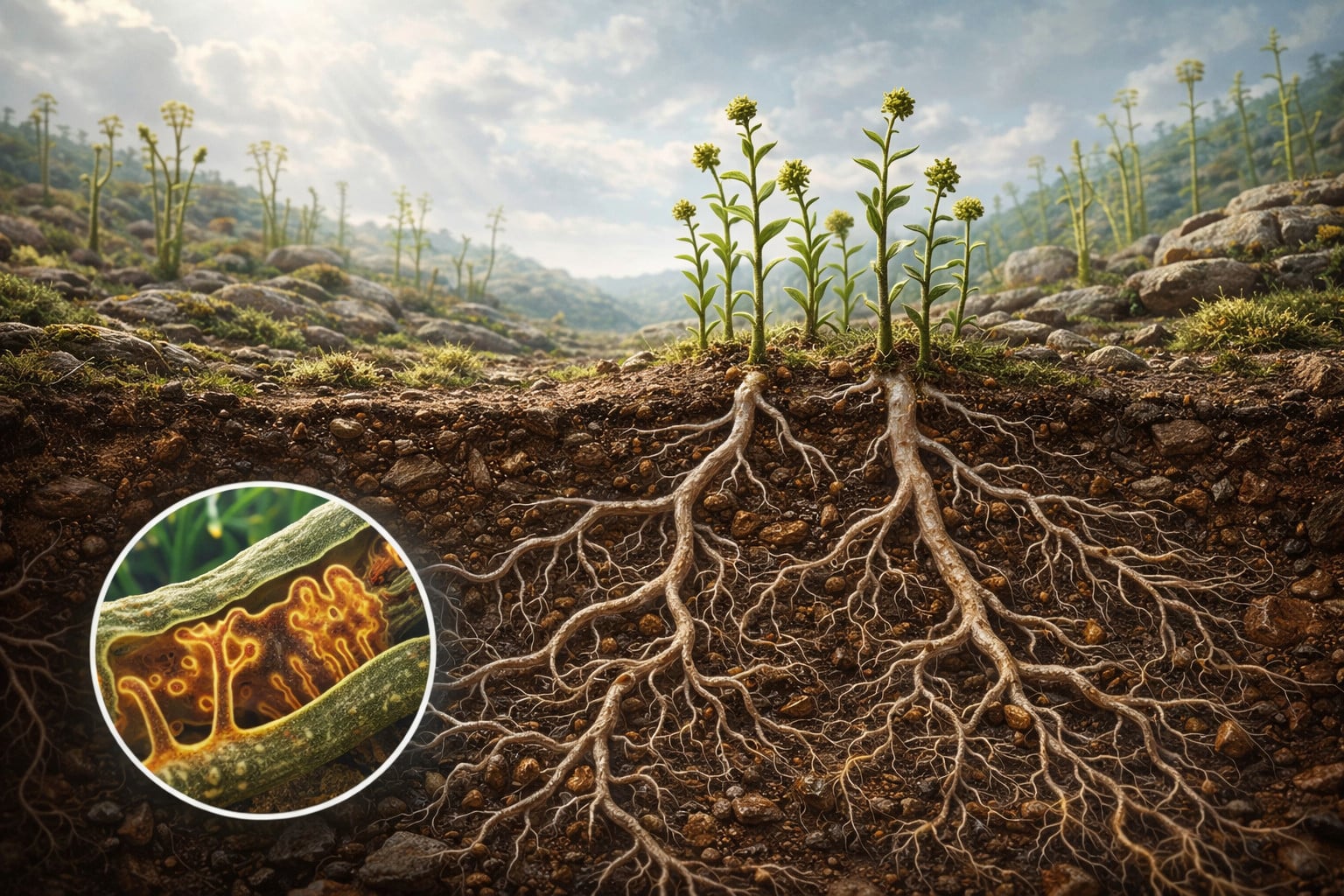
By 450 million years ago, fungi and plants started a rich dirt alliance. Forests grew because fungi fed them. Plants exchanged sugars for fungi phosphors and minerals.
~450 Million years ago (+/- 10 million)
Arbuscular mycorrhizae (Glomeromycota symbiosis)
Ordovician–Silurian Extinction: Ice Strikes the Seas
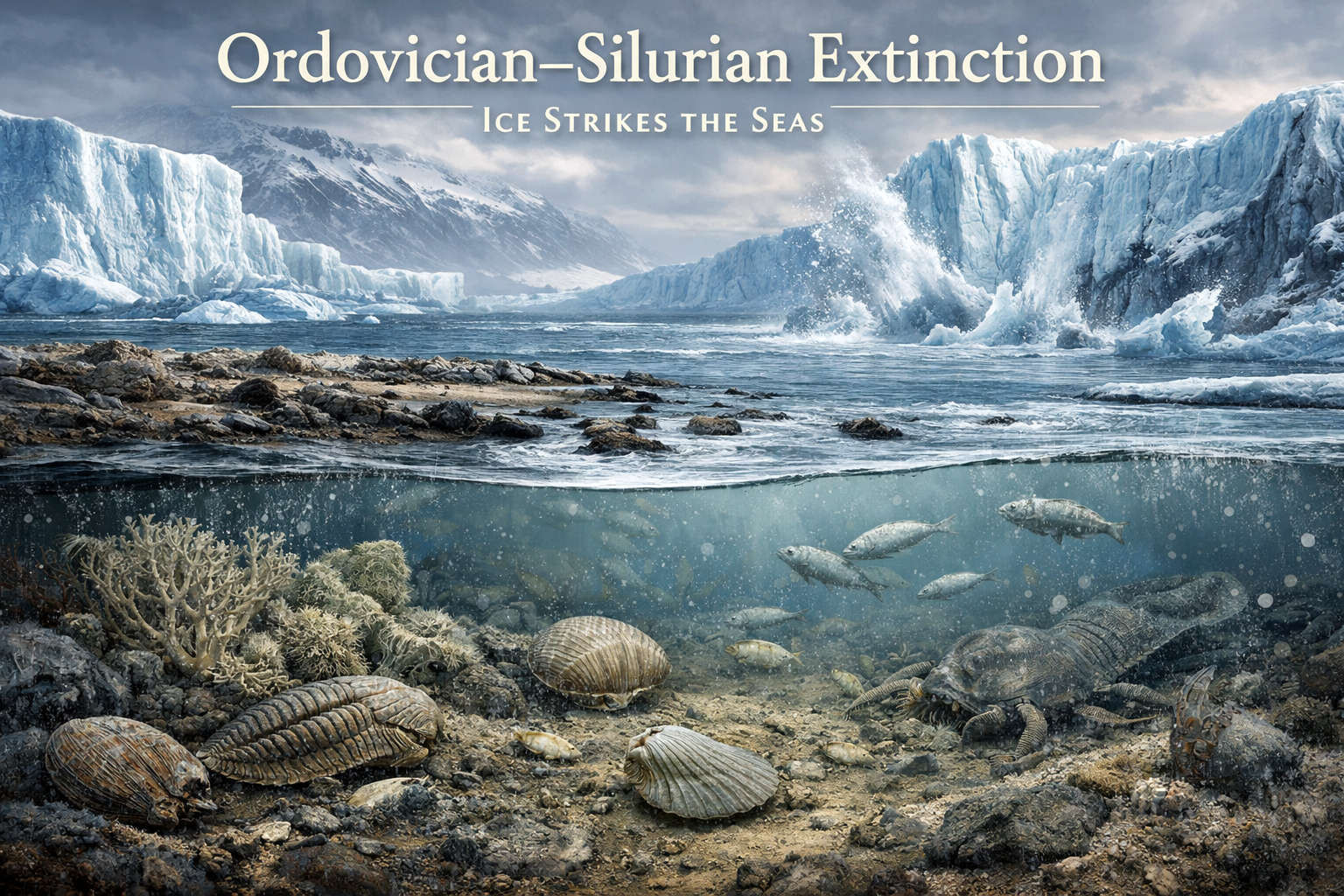
The Ordovician–Silurian extinction shows how climate change can reshape evolution by collapsing old ecosystems and opening space for new life.
~444 Million Years Ago
Cause: Global Cooling and Falling Seas
Fungal Great Split: Ascomycota & Basidiomycota
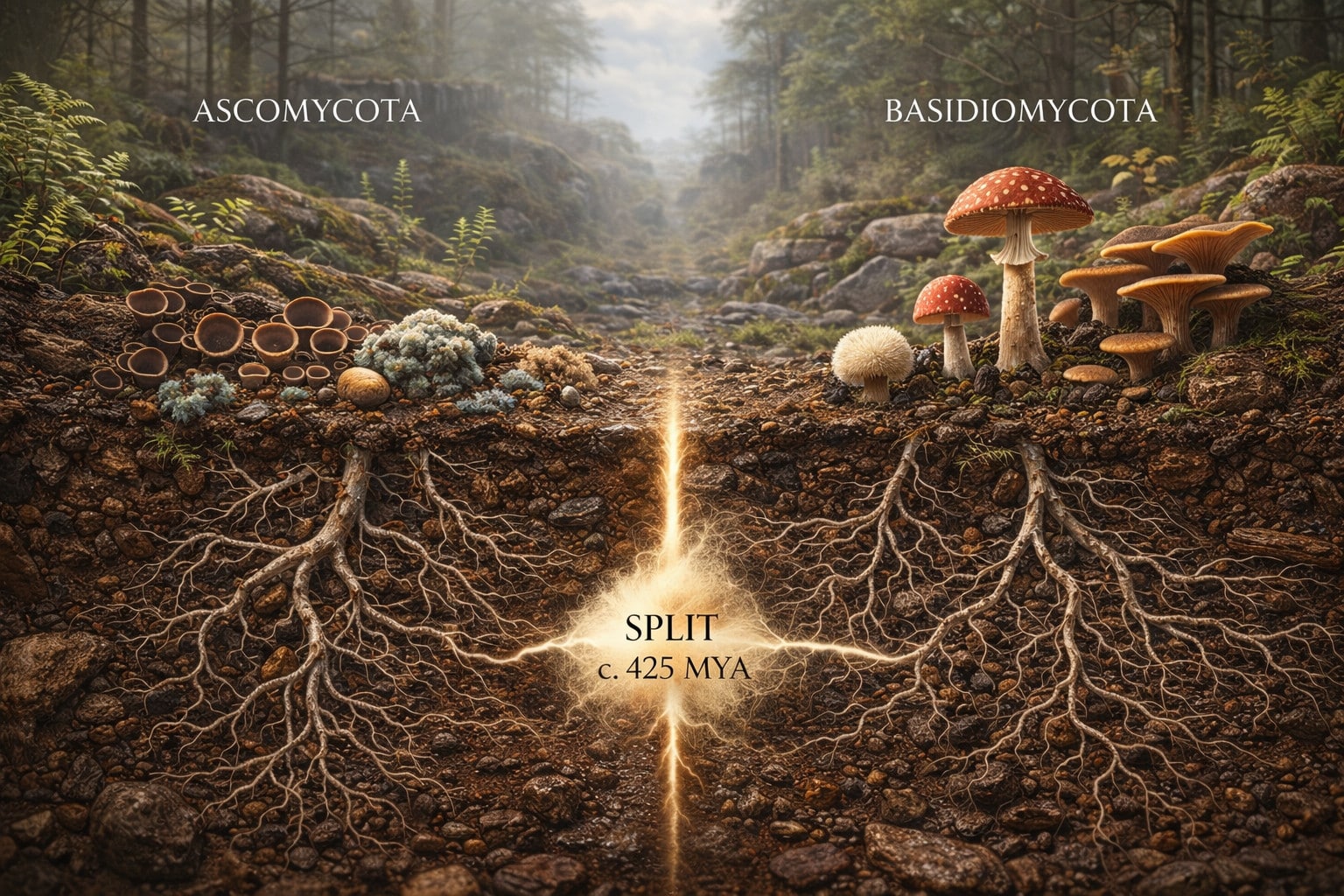
By 425 million years ago, fungi split into ascomycota and basidiomycota. Ascomycota gave rise to yeasts, truffles, and many molds. Basidiomycota gave rise mushrooms, puffballs, and bracket fungi.
~425 Million years ago (+/- 25 million)
Ascomycota and Basidiomycota Split
Fungal Giants of the Devonian
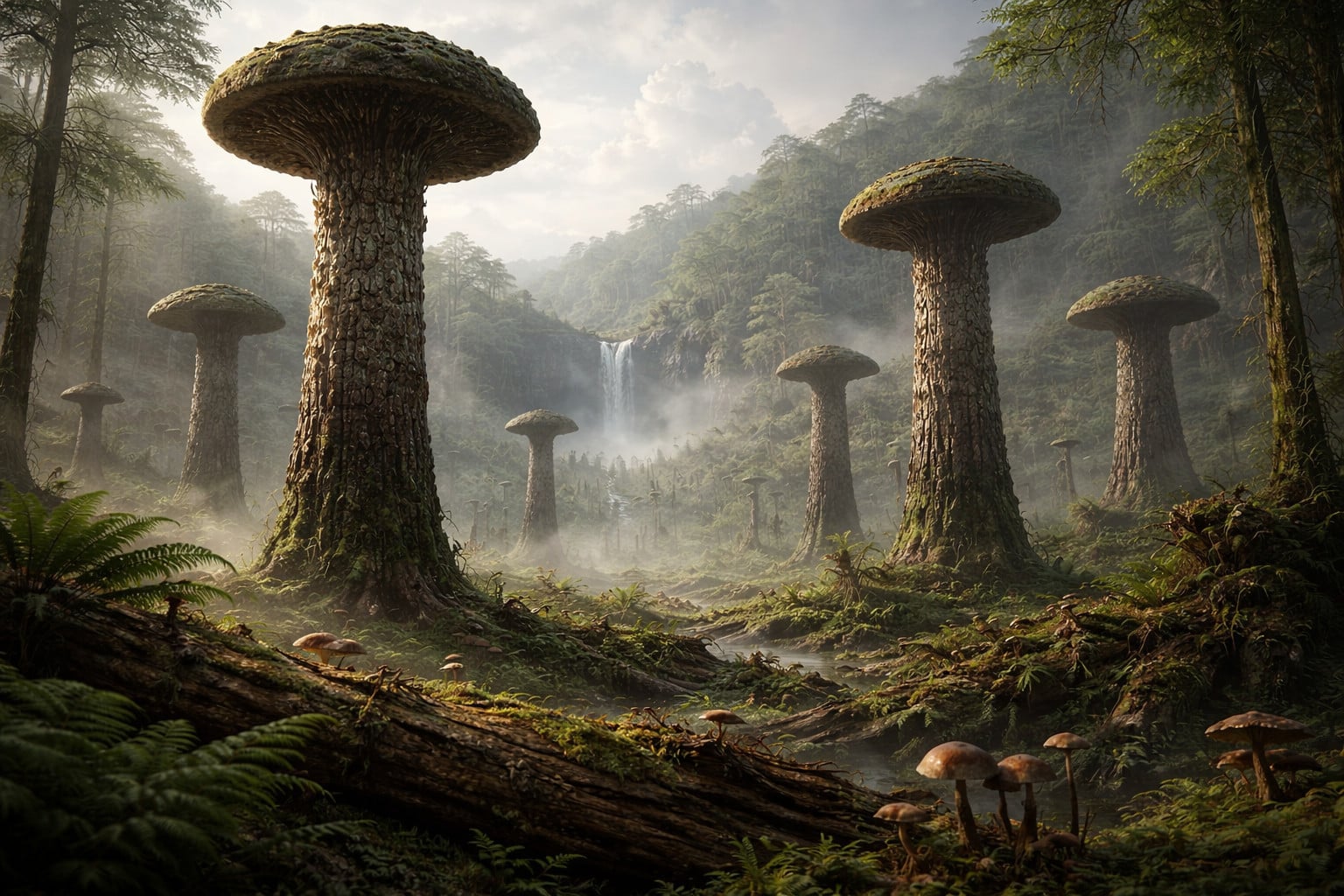
By 420 million years ago, the first giants on land were not plants — but fungi. Giant fungi as tall as 30 feet (9 meters) thrived during the Devonian
~420 MYA (+/- 20 million)
Large upright fungal structures (e.g., Prototaxites)
Oceans Lose Their Breath
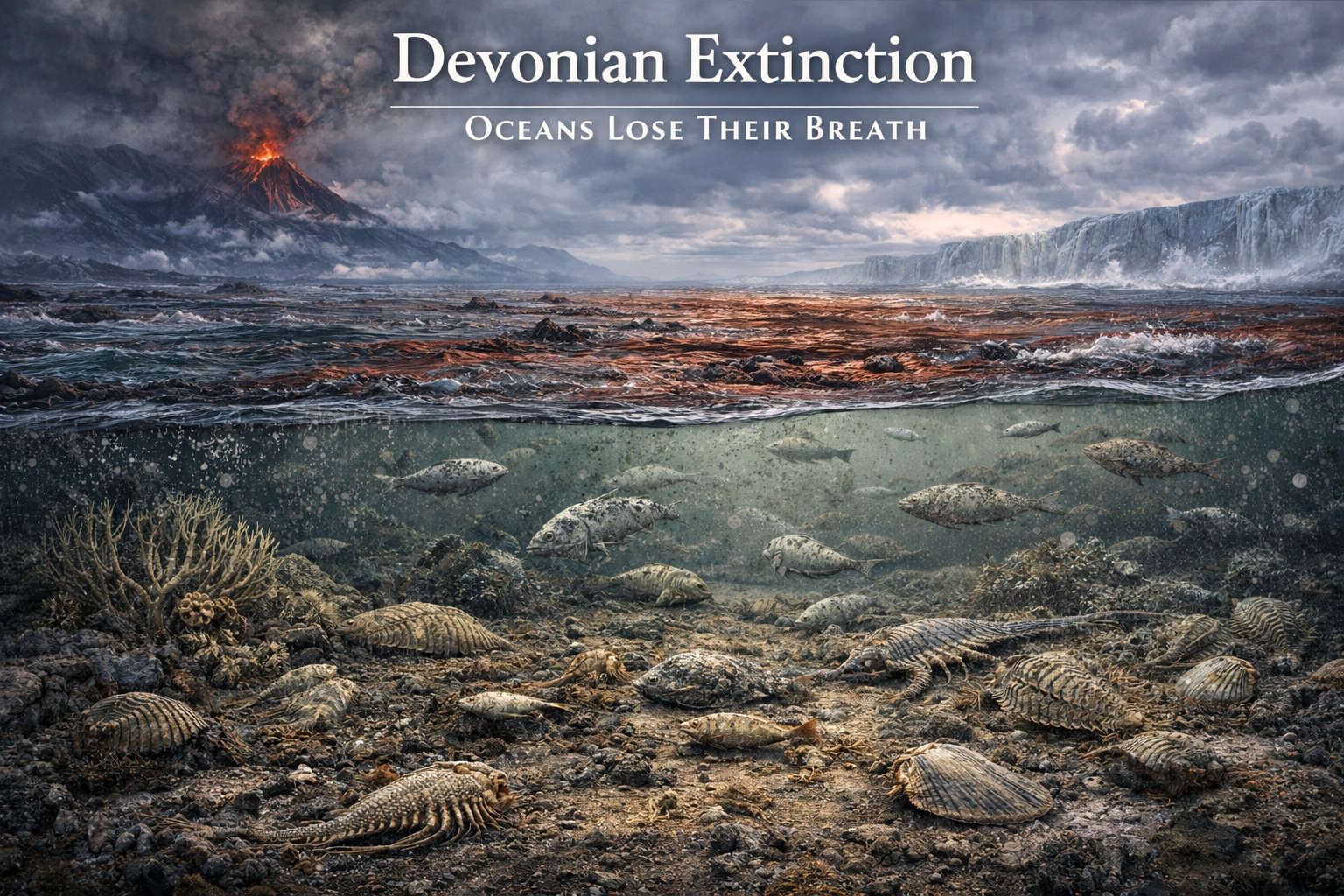
The Devonian extinction shows that evolution can be reshaped not by one sudden blow, but by a long collapse in ocean health.
~372–359 Million Years Ago
Cause: Ocean Anoxia
The P-T Extinction
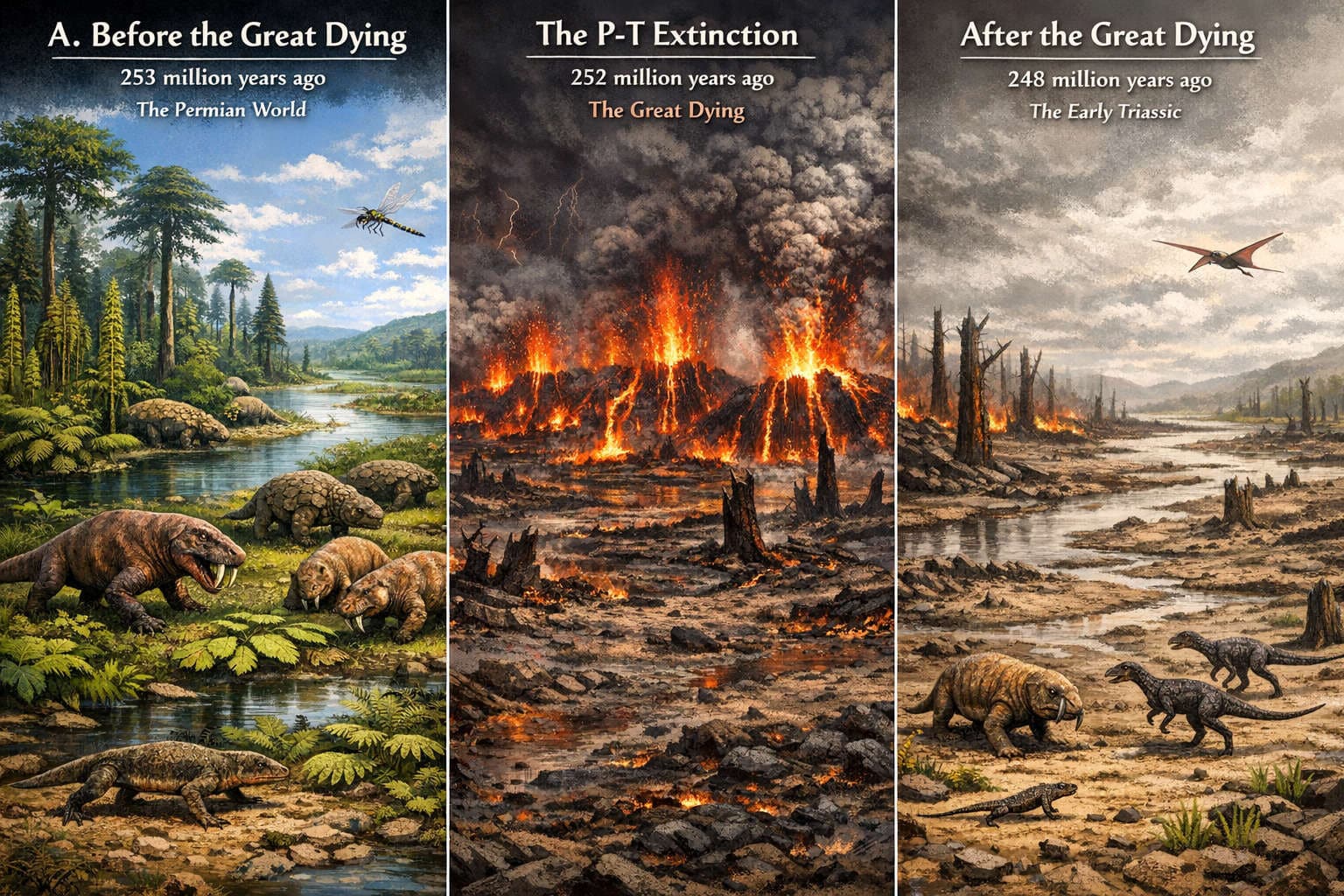
The Permian-Triassic extinction was not just the end of many species. It was a planetary reset that destroyed the old synapsid-dominated world and opened the door for the archosaur line that would later give rise to dinosaurs.
251,902,000 years ago (+/- 900 years).
Cause: Massive Volcanic Eruptions in Siberia
Mesozoic Era: Age of Dinosaurs
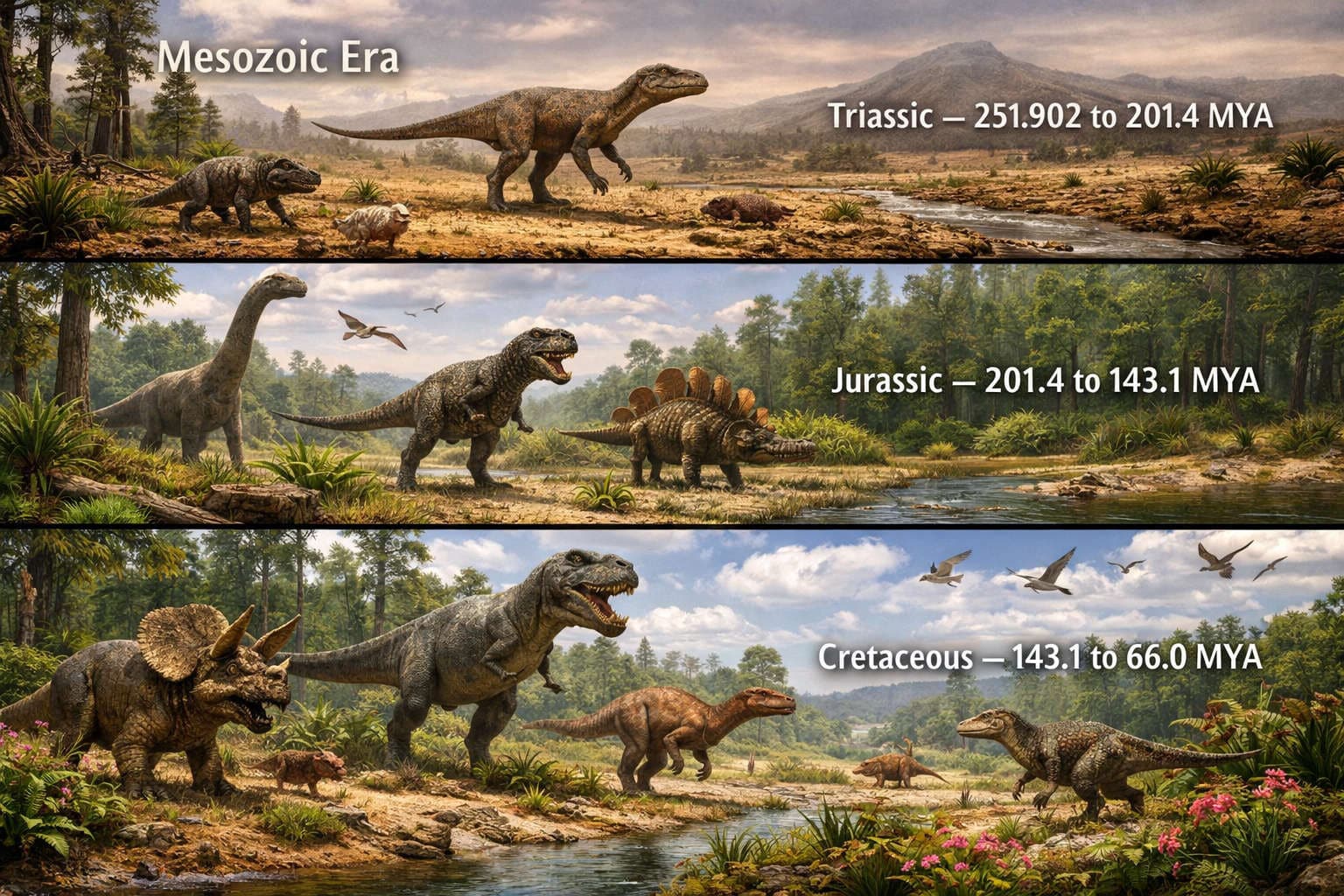
The Mesozoic era starts with the end-Permian mass extinction 252 million years ago. It ends the reign of dinosaurs with the K–Pg extinction 66 million years ago.
From 251.902 to 66.0 million years ago.
186 Million years: Dinosauria reigned from extinction to extinction.
Fungal Survivors of Extinction
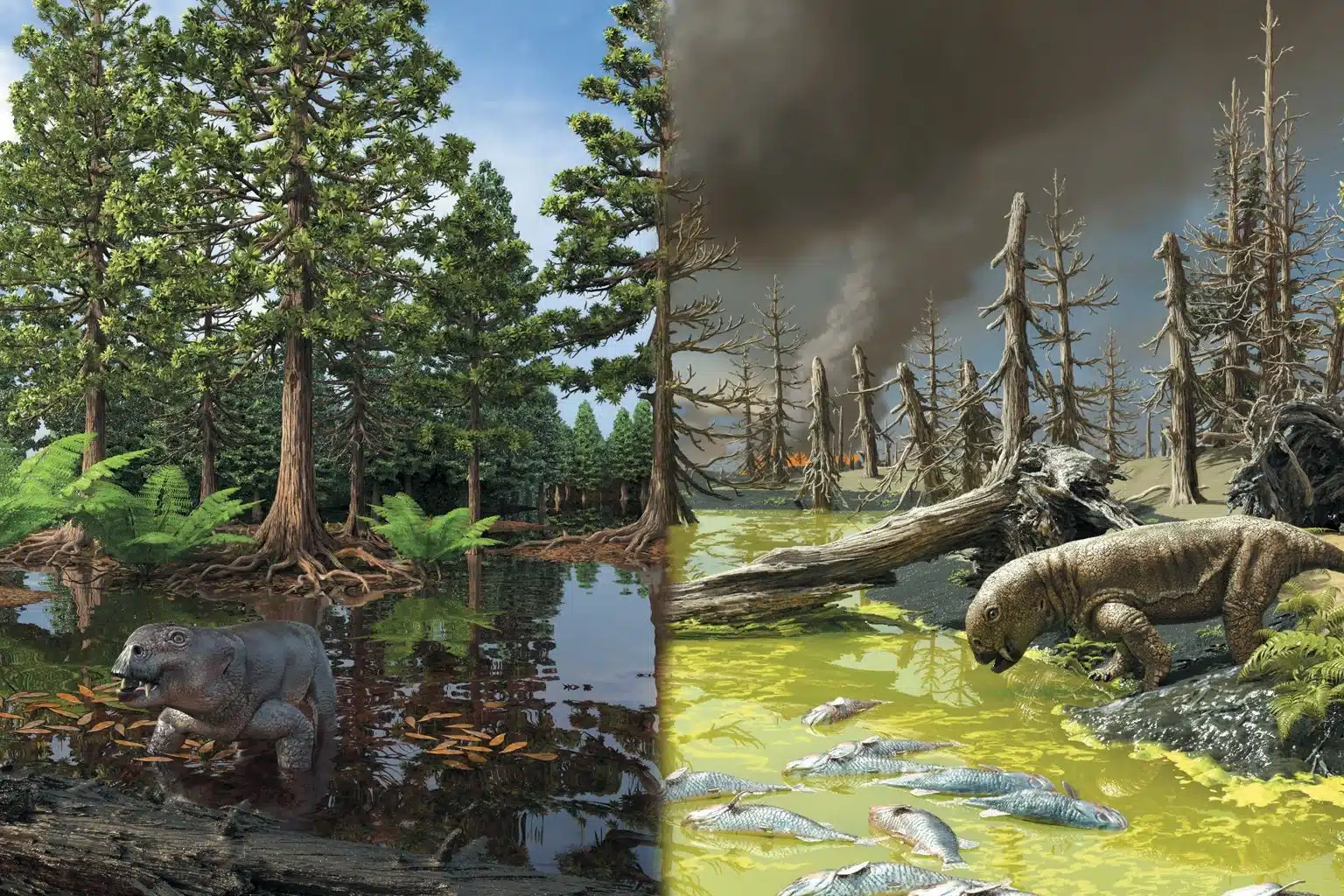
The mass extinction at 252 million years ago marks the Permian to Triassic boundary. Fungi are not just participants in ecosystems — they help reset the ground.
~252 MYA (Permian–Triassic boundary)
Massive fungal proliferation after extinction
Triassic–Jurassic Extinction: Volcanoes Open the Age of Dinosaurs
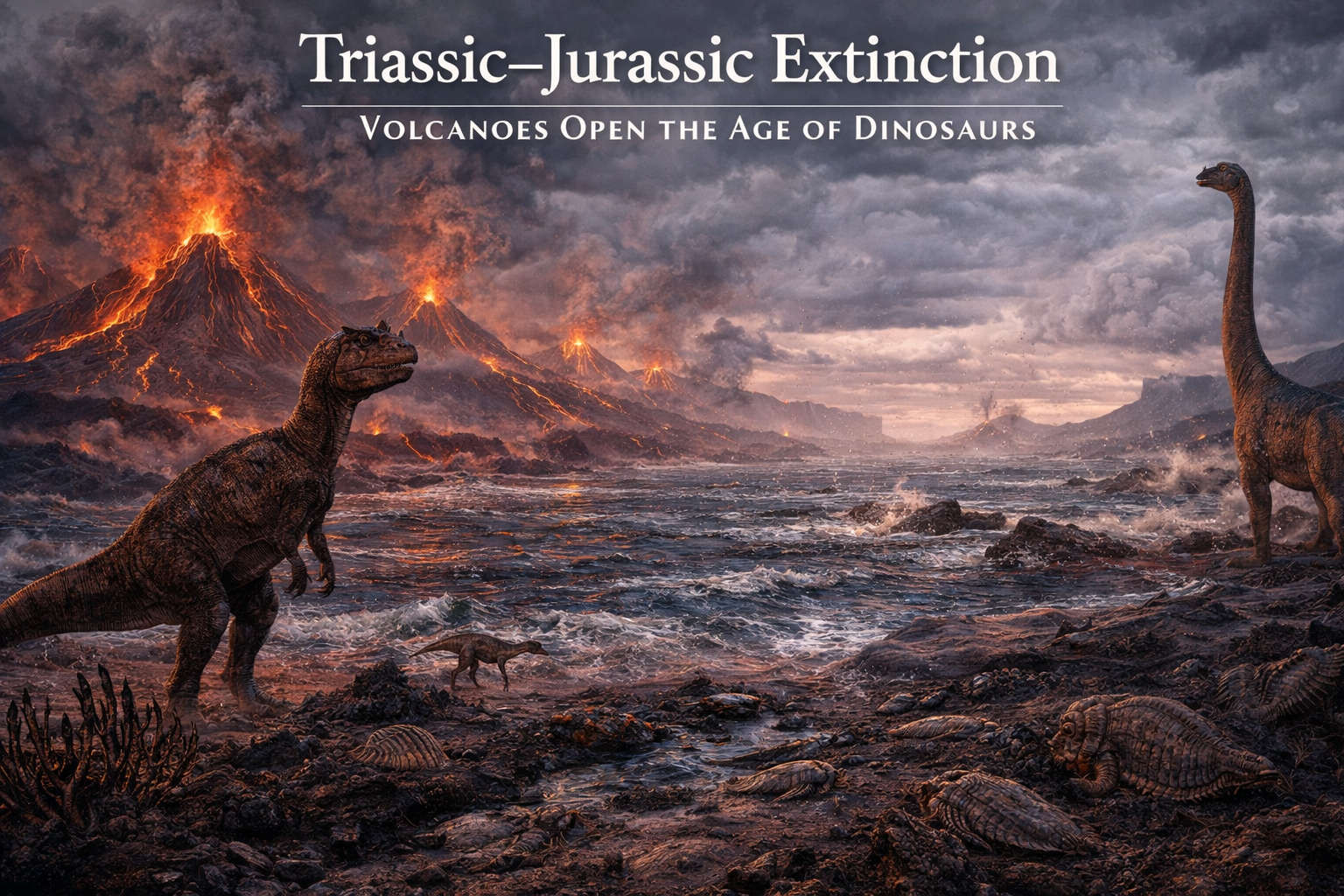
As Pangea cracked apart, massive volcanic eruptions poisoned air and oceans. This image includes early dinosaurs as foreshadowing: survivors waiting in the smoke before their Jurassic rise.
~201 Million Years Ago
Cause: Massive Volcanic Eruptions
The K-Pg Extinction
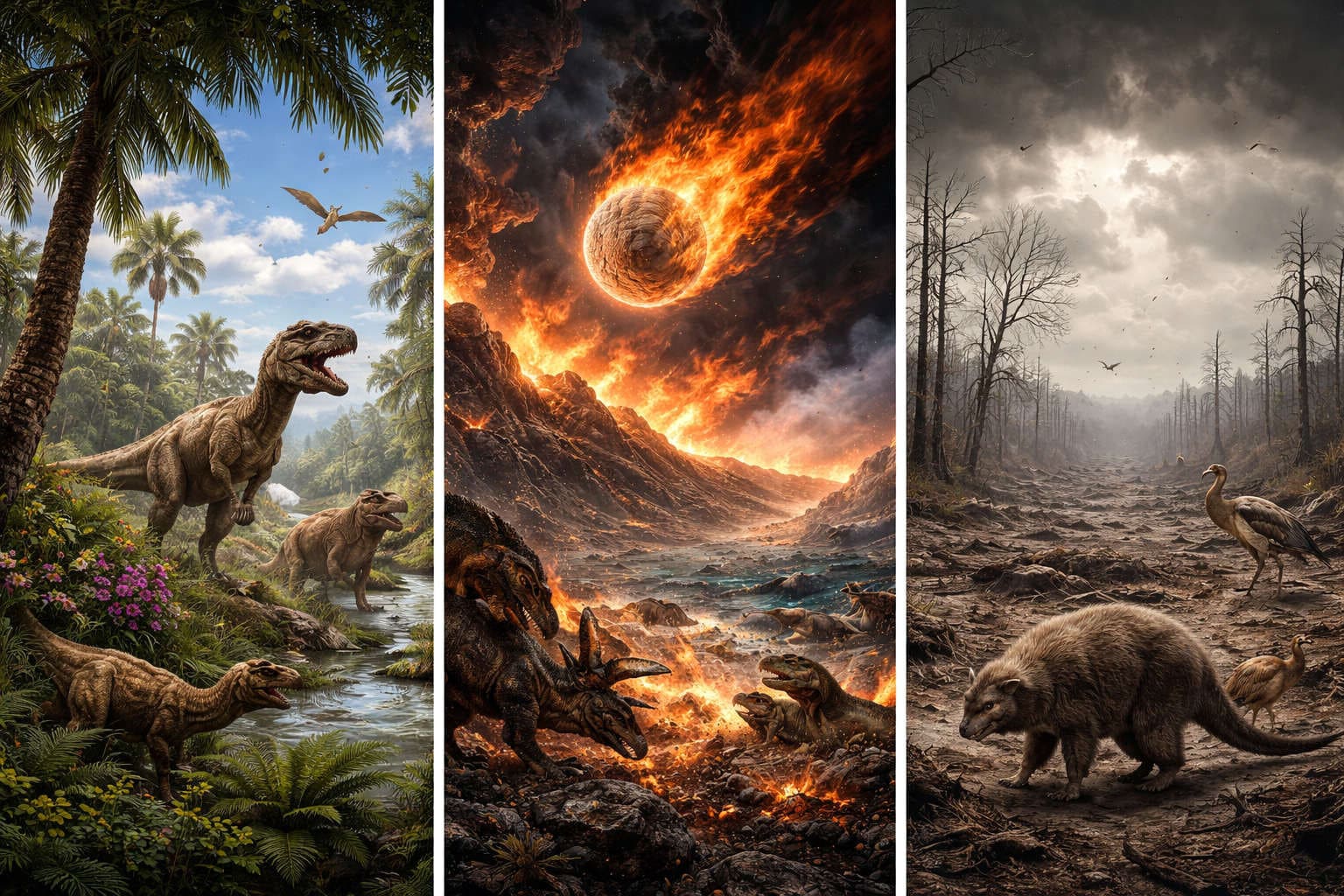
The K–Pg extinction was a sudden global catastrophe that ended the long dominance of non-avian dinosaurs and opened the way for mammals and modern birds to expand into a transformed world.
66.04 million years ago (+/- 900 years).
Cause: Massive Meteor
Cenozoic Era: Age of Mammals & Birds
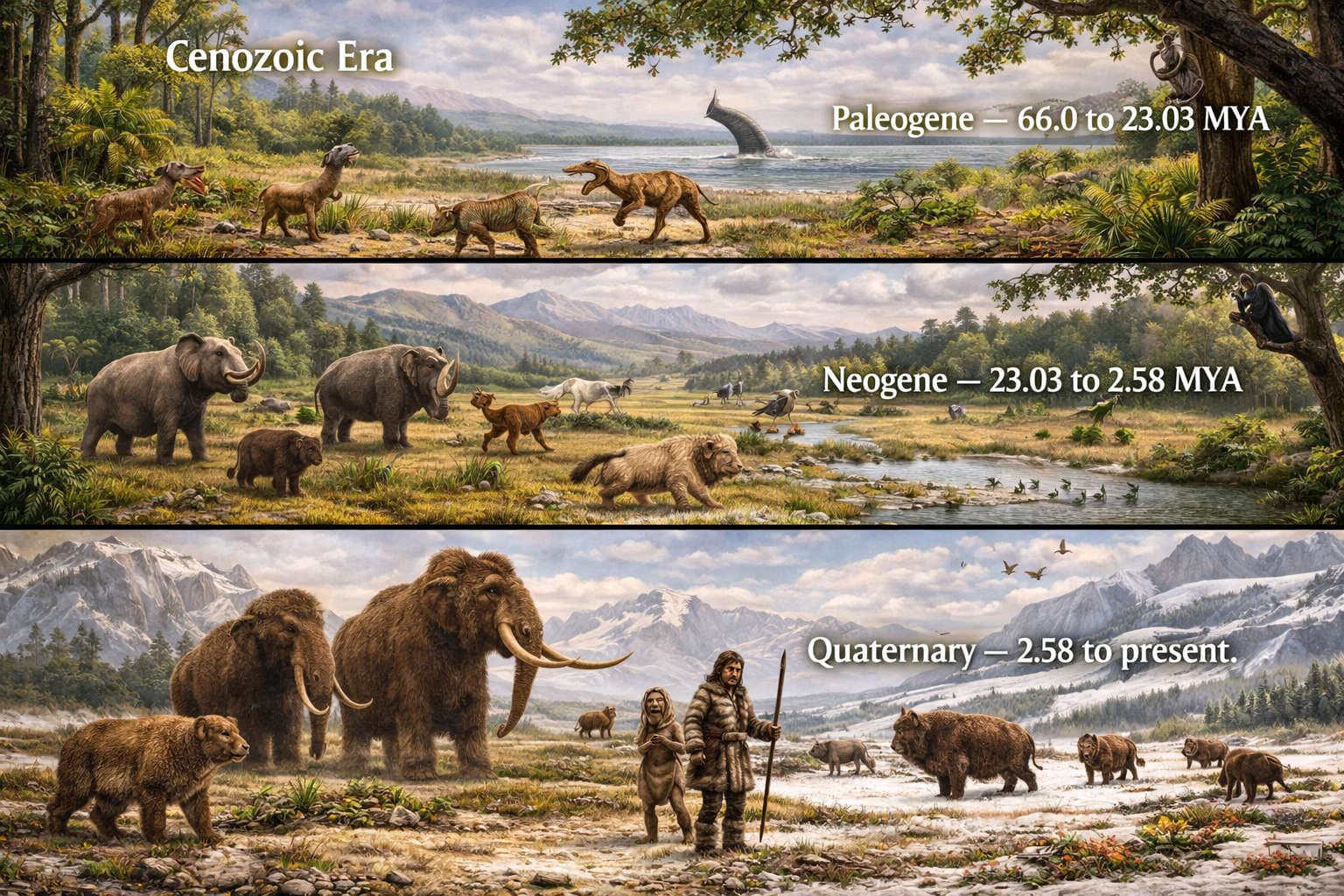
The Cenozoic era starts with the K–Pg extinction 66 million years ago. That event marks the sudden end of the reign of dinosaurs and the rise of mammals and birds.
66.04 million years ago to the present.
66 Million years: From extinction to society.
Black mold
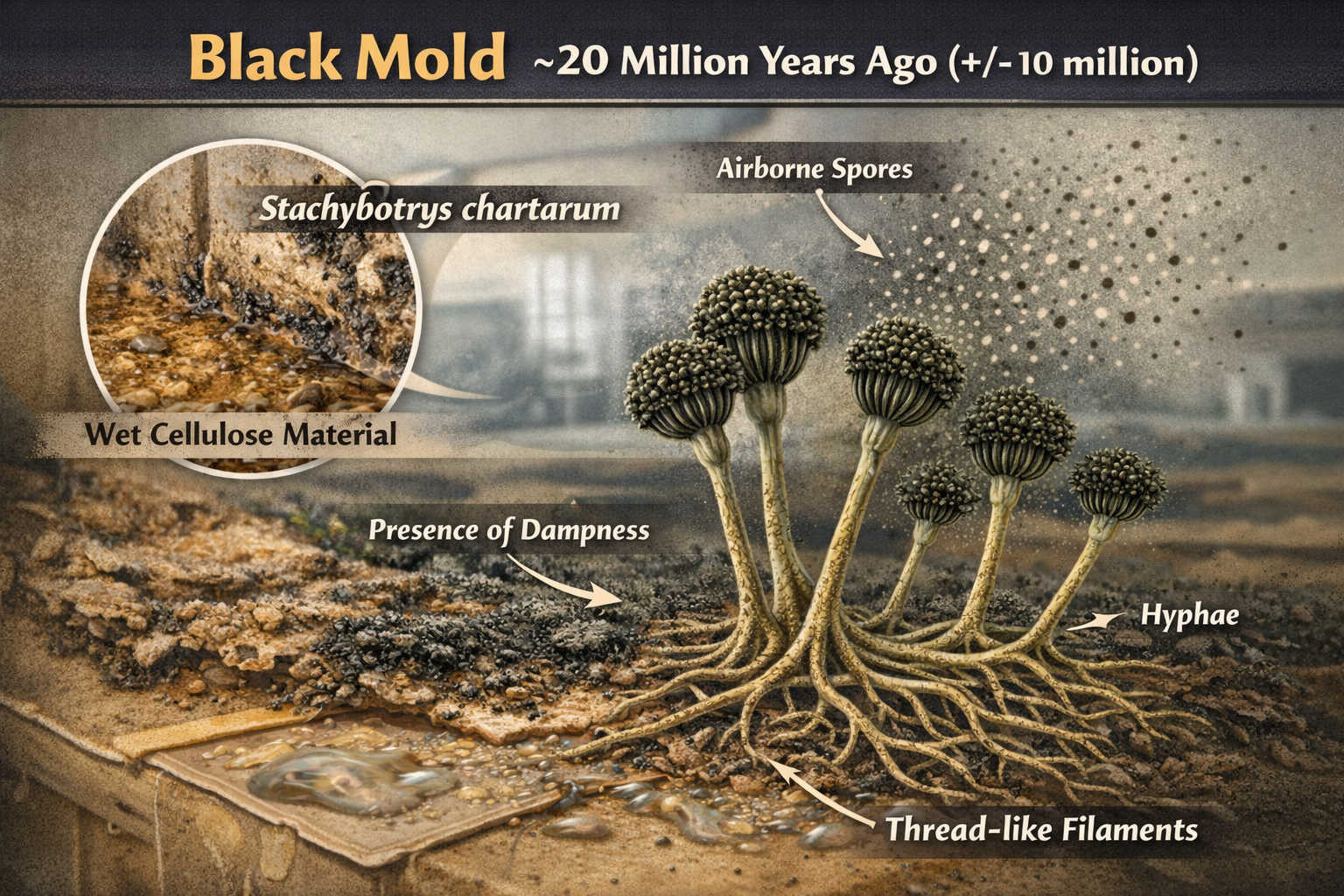
The dark mold in your shower is part of the same ancient mold story — not always the exact same species, but certainly the same fungal world.
~20 Million Years Ago (+/- 10 million)