
Explore Natural Philosophy

Phil • Cr. Think • Science • Hist •
Related Quotes
“I am old and weak and bruised (with rupture and colic), and lameness on both feet.”
“It is wrong always, everywhere, and for anyone, to believe anything upon insufficient evidence.”
“Reality is self-creating by definition… our impressions of it are what we use to build knowledge.”
“It was an act of despair, to sacrifice physics for the sake of finding an explanation.”
“Extraordinary claims require extraordinary evidence.”
“The first person who thought of saying ‘This is mine’ was the real founder of civil society.”
Share :
Email
Print

Mike's Takeaway:

Source: An Enquiry Concerning Human Understanding

Hume’s quote from 1748 was not saying smart people believe nothing. He was not telling us to become frozen skeptics, afraid to trust anything. He was saying belief should be earned. Let confidence rise, but make it rise for a reason.

That is the science-first spirit. You do not commit first and defend later. You let evidence, logic, testing, and good authority do their work. Some ideas deserve strong belief. Some deserve light belief. Some deserve no belief yet. That is believing well: proportion your confidence to the support.

This idea later sharpened into a modern skeptical rule. Marcello Truzzi used the phrase

“extraordinary claims require extraordinary proof,”

and Carl Sagan later gave the idea its most famous public form. The thread is clear: Hume gave us the calibration principle, Truzzi sharpened it for unusual claims, and Sagan carried it into modern science communication.

Truth is alignment with reality, and belief is confidence in that alignment. Calibration is the discipline of adjusting confidence to the kind and quality of support. Empirical claims answer to observation. Rational claims answer to logic. Speculative claims remain possible but unproven. Disproven claims should be released as truth. This is how secular spirituality stays honest: wonder remains open, but confidence must be earned.
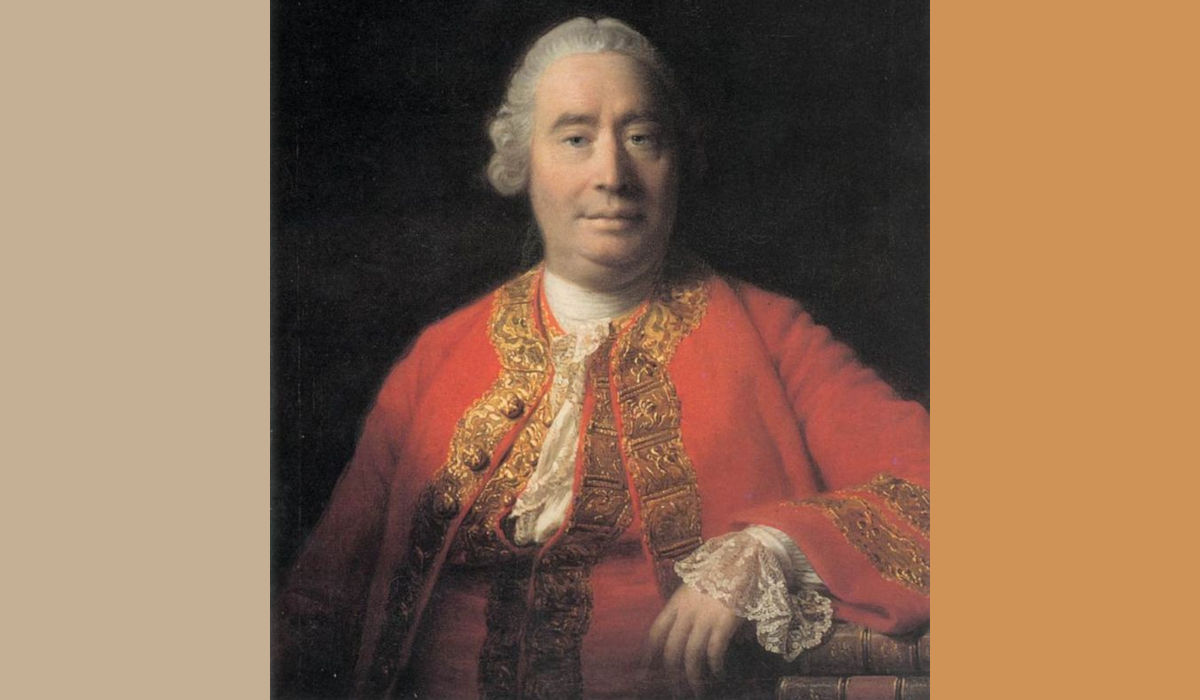
Analysis By Michael Alan Prestwood
07 Jul 2026
Published 3 months ago.
Updated 2 weeks ago.
https://en.wikipedia.org/wiki/File:David_Hume.jpg
The Scottish Enlightenment philosopher and historian Hume was a leading exponent of empiricism. The belief that all human knowledge derives solely from experience.
Michael Alan Prestwood
Author & Natural Philosopher
Prestwood writes on science-first philosophy, with particular attention to the convergence of disciplines. Drawing on his TST Framework, his work emphasizes rational inquiry grounded in empirical observation while engaging questions at the edges of established knowledge. With TouchstoneTruth positioned as a living touchstone, this work aims to contribute reliable, evolving analysis in an emerging AI era where the credibility of information is increasingly contested.
The Prestwood Column
Menu
July 2026
»COLUMN ARCHIVE
--COLUMN--
Column Research….
1. Timeline Story
The famous Lewis “Truth in Fiction” Paper
2. Linked Quote
“Truth is stranger than fiction…[which] is obliged to stick to possibilities;”
3. Science FAQ »
Why does fiction feel real?
4. Philosophy FAQ »
Can authors create fiction beyond our universe?
5. Critical Thinking FAQ »
How do we know what is true in a fictional world?
6. History FAQ!
What is the history of philosophy of fiction?
Bonus Deep-Dive Article
TST Philosophy of Fiction: Imaginative Realism

Comments

Join the Conversation! Currently logged out.

Leave a Reply

NEW BOOK! NOW AVAILABLE!!

30 Philosophers: A New Look at Timeless Ideas

by Michael Alan Prestwood
The story of the history of our best ideas!
Scroll to Top