

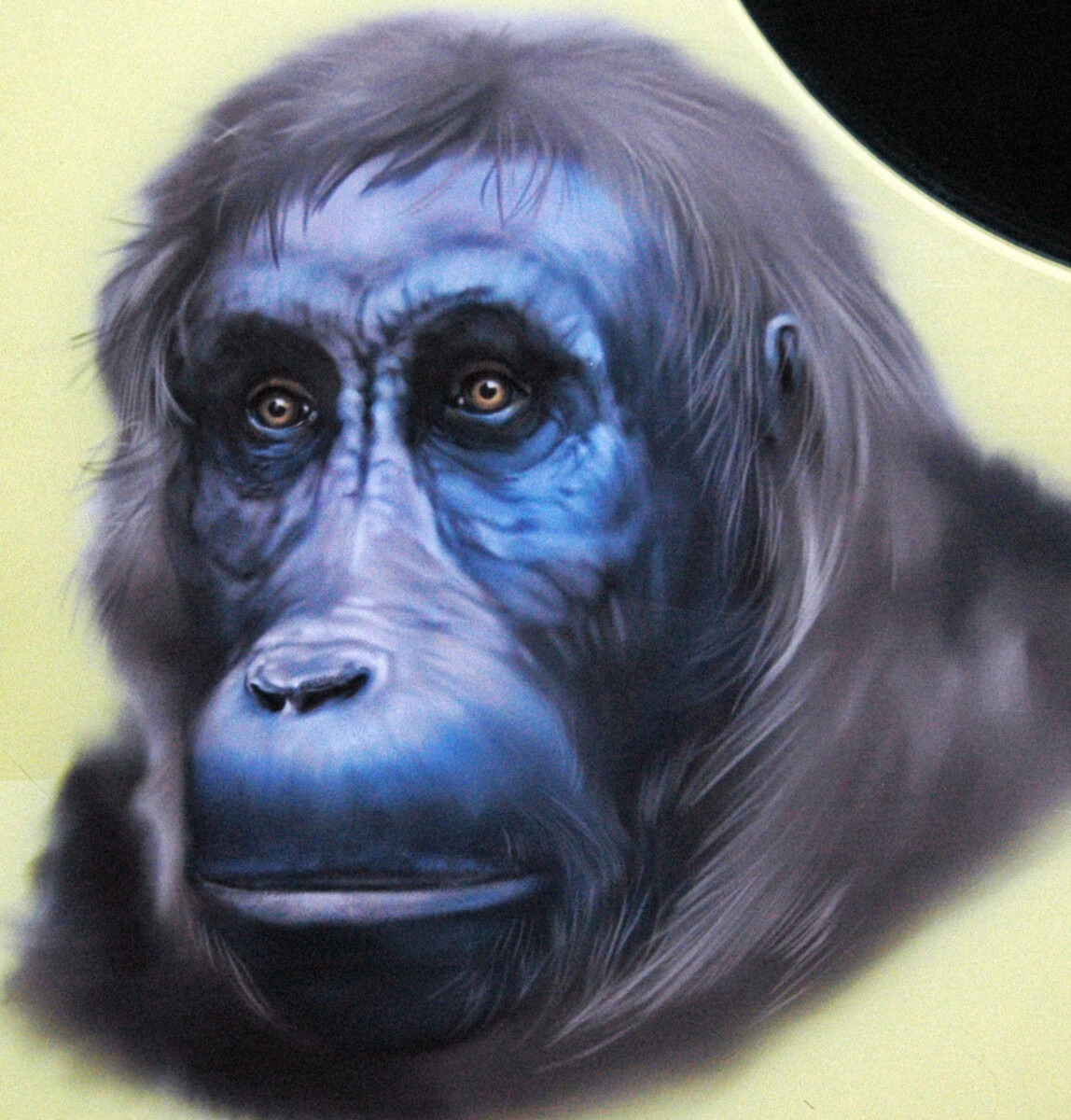
As various great ape species fill niche areas around the globe, branches emerge. The last common ancestor of all known great apes, including humans, lived about 16.5 mya. That branch leads to modern orangatans, which split off again about 12.5 mya. The last known split of the modern orangatan was about 400,000 years ago.
Orangutan ancestor: After the Great Apes LCA, orangutans evolved in Asia. The genus Sivapithecus represents early orangutans. An extinct species of the great apes, they lived in the Indian subcontinent from around 12 to about 8 million years ago. It is considered a close relative of the orangutan lineage and shares many similarities with modern orangutans, including a similar skull shape and dental structure. Sivapithecus indicus had a more advanced brain than earlier great apes, and its face was likely more protruding and snout-like, similar to modern orangutans. Its discovery in the Siwalik Hills of India and Pakistan has provided important insights into the evolution of the great ape lineage in Asia, and it is thought to have played a key role in the origins of the orangutan genus, Pongo.

