Weekly Insights for Thinkers

Science  Philosophy  Critical Thinking  History  Politics RW  AI  Physics  •  Evolution  Astronomy 30 Phil Book More…
Science  Phil  Cr. Think  Hist 

People in Book

The people of 30 Philosophers.

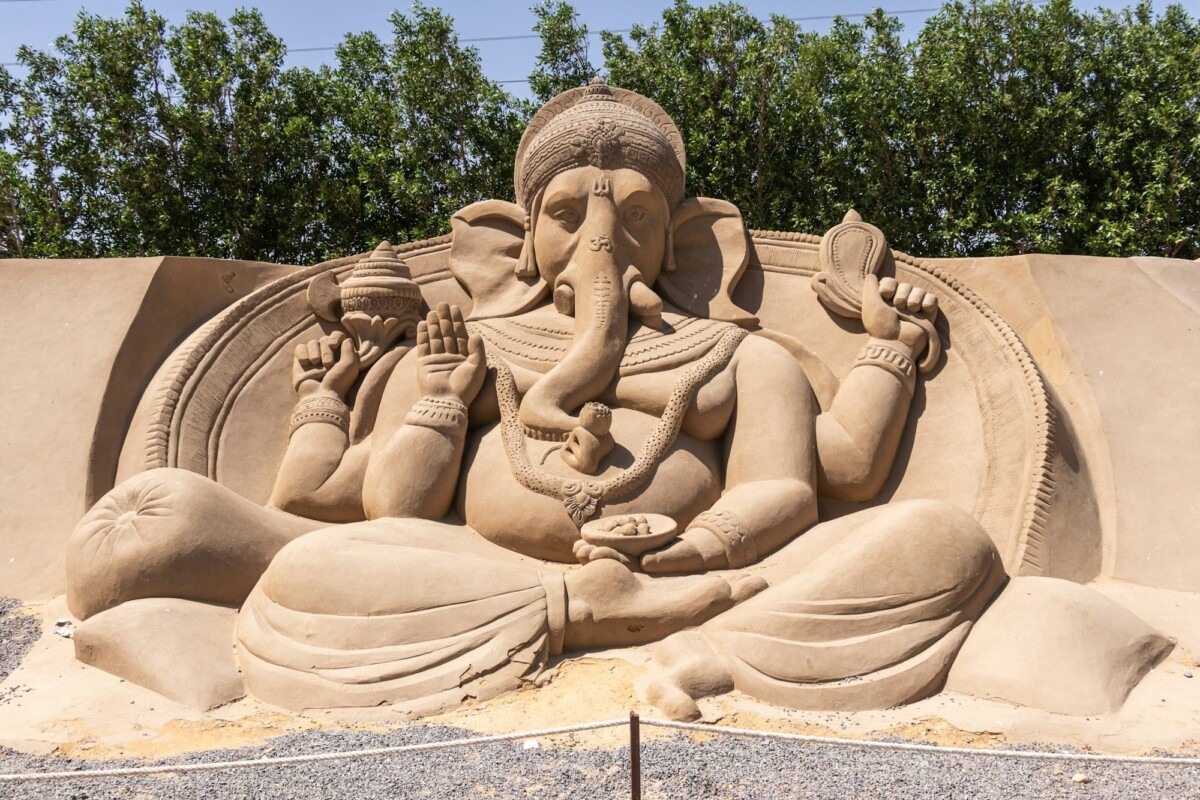
sand sculpture of Ganesha in Hinduism, the god of wisdom and well-being with the head of an elephant

Badarayana

73 Generations Ago 30 Phil, Chapter 14: Badarayana and Karma Badarayana is the sage who wrote the Brahma Sutras. Badarayana is placed at circa 200 CE, but the truth is, we don’t know when he lived. In my research, I found dates ranging from the 4th century BCE to the 4th century CE . While […]
Badarayana Read More »

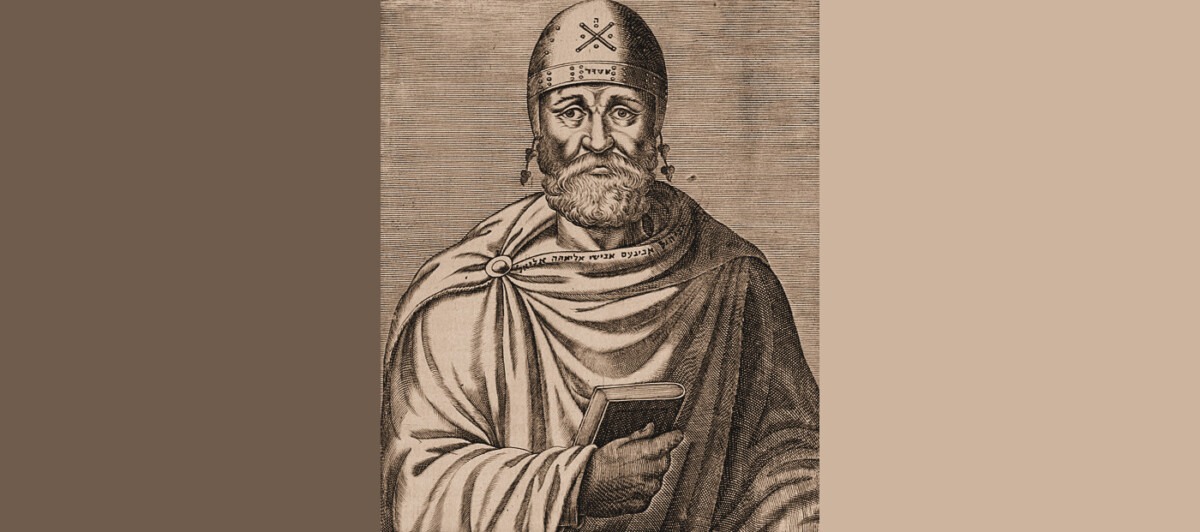
Philo of Alexandria

82 Generations Ago 30 Phil, Chapter 12: Philo and Abrahamic Philosophy Philo of Alexandria, was born in the dynamic environment before the split of Judaism and Christianity. He was born around the year 20 BCE and became an important Jewish leader delving into the enigmatic world of Hellenistic Jewish religion. Pictured: Portrait from 1500s. He

Philo of Alexandria Read More »

Gautama Buddha

103 Generations Ago 30 Phil, Chapter 6: Gautama Buddha and Buddhism In a much simpler time, the royal family of the Shakya dynasty lived in a palace located at the capital of the Shakya kingdom in present-day Nepal. Around 563 BCE, a boy named Siddhartha Gautama was born in the palace. At the age of

Gautama Buddha Read More »

Laozi

105 Generations Ago 30 Phil, Chapter 4: Laozi and Daoist Philosophy The life of Laozi is shrouded in mystery, but he is the first philosopher in “30 Philosophers” that attempts to construct a precise biography. The Spring and Autumn Period of China spanned nearly three centuries starting in 770 BCE, and Laozi lived about in the

Laozi Read More »

Hindu god Ganesha on white wooden table. Candles on background

Gargi Vachaknavi

112 Generations Ago (from 2020 CE) 30 Phil, Chapter 3: Gargi and the Concept of Holism Gargi lived in India around 800 BCE, give or take a century, but we do not know her lifespan. We know about her from early Vedic Tradition, specifically from the early Vedas. Gargi is one of the earliest known

Gargi Vachaknavi Read More »

King Shuruppak

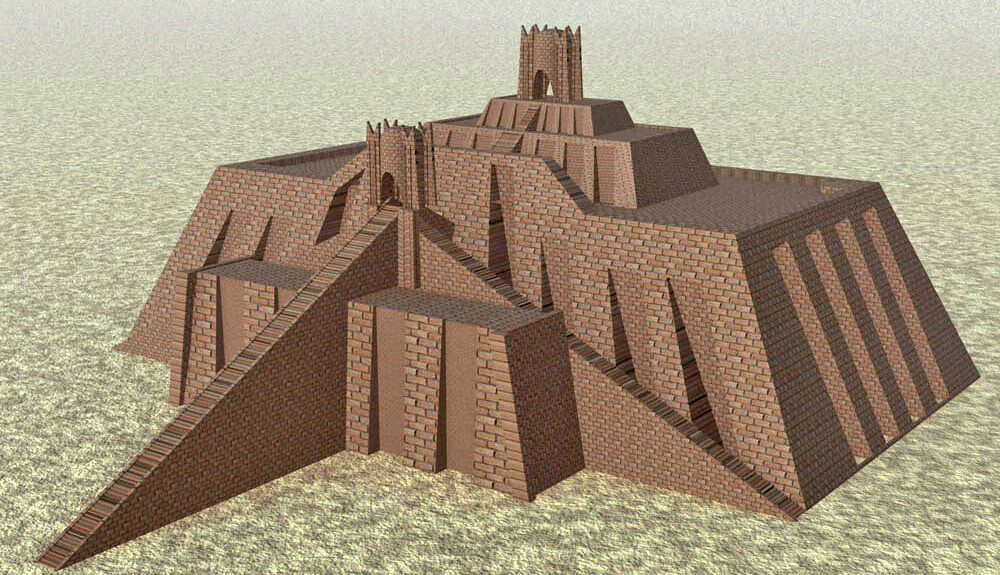
185 Generations Ago (from 2020 CE) 30 Phil, Chapter 2: Shuruppak and Paternal Wisdom Sumerian civilization consisted of over 30 city-states, among which Ur and Shuruppak were among the more prominent. We know about King Shuruppak from the Sumerian King List, an ancient text where he appears as the last king before a great flood.

King Shuruppak Read More »

Voltaire

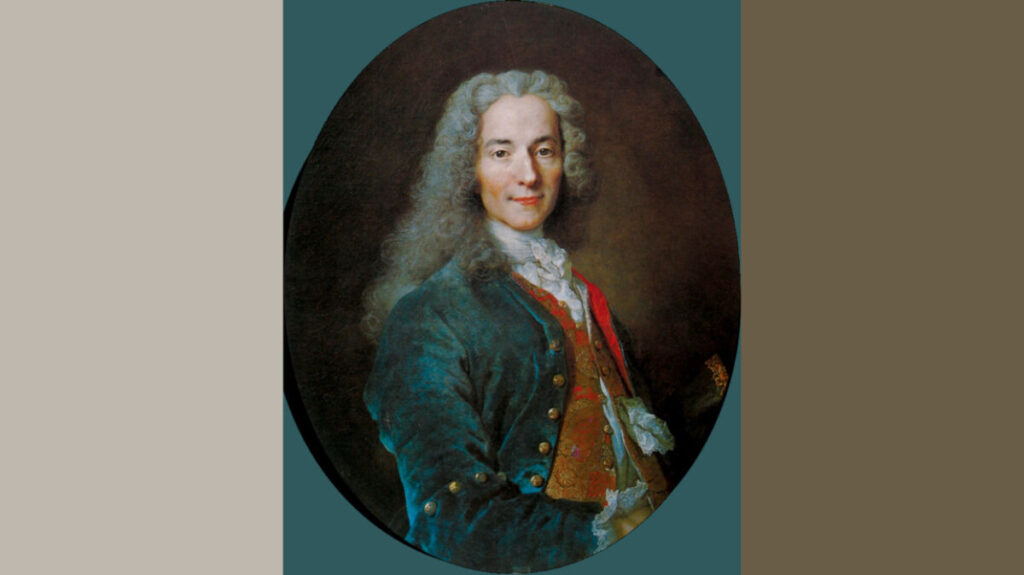
13 Generations Ago 30 Phil, Chapter 26: Voltaire and Modern Journalism Voltaire was a French Enlightenment philosopher born François-Marie Arouet. He was an advocate of civil liberties and satirized intolerance, and religious dogma in a time one was punished with censorship, jail, banishment, or worse. Some of my favorite Voltaire quotes translated from French: Those

Voltaire Read More »

https://en.wikipedia.org/wiki/File:David_Hume.jpg

David Hume

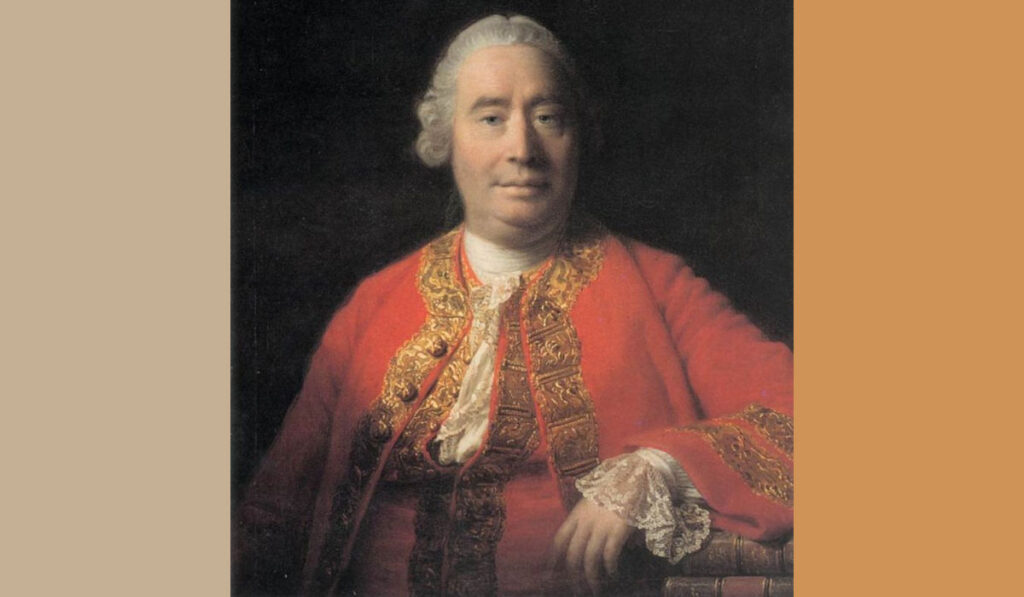
12 Generations Ago 30 Phil, Chapter 27: Hume and Skeptical Empiricism The Scottish Enlightenment philosopher and historian Hume was a leading exponent of empiricism. The belief that all human knowledge derives solely from experience. Some of my favorite Hume quotes: “A wise man proportions his belief to the evidence.” -A Treatise of Human Nature, 1739

David Hume Read More »

https://commons.wikimedia.org/wiki/File:Spinoza_(cropped).jpg

Baruch Spinoza

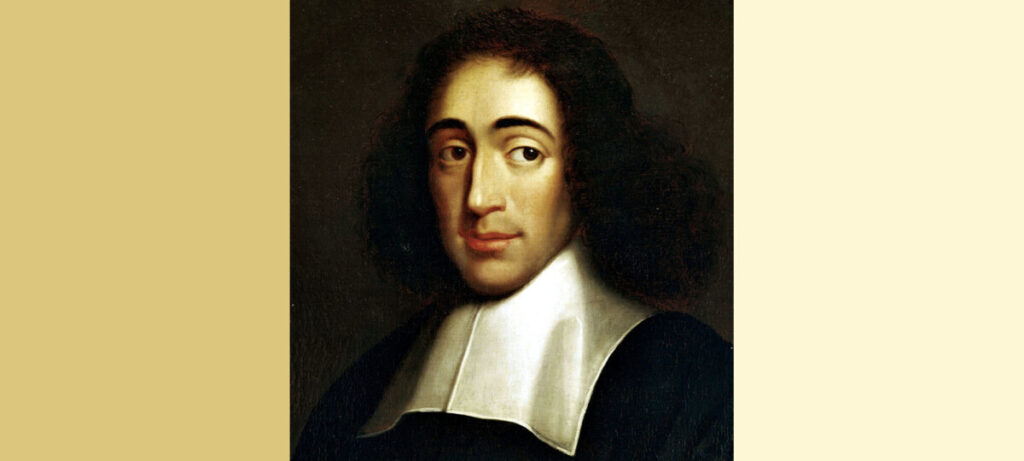
16 Generations Ago 30 Phil, Chapter 25: Spinoza and Monism The Dutch philosopher Spinoza was a lens grinder by profession, a proponent of Rationalism, and an early founder of Enlightenment. My favorite concept of Spinoza’s is that God is nature, and nature is God. For me, whenever I read God in prayers and such I

Baruch Spinoza Read More »

https://en.wikipedia.org/wiki/File:Paolo_Monti_-_Servizio_fotografico_(Napoli,_1969)_-_BEIC_6353768.jpg

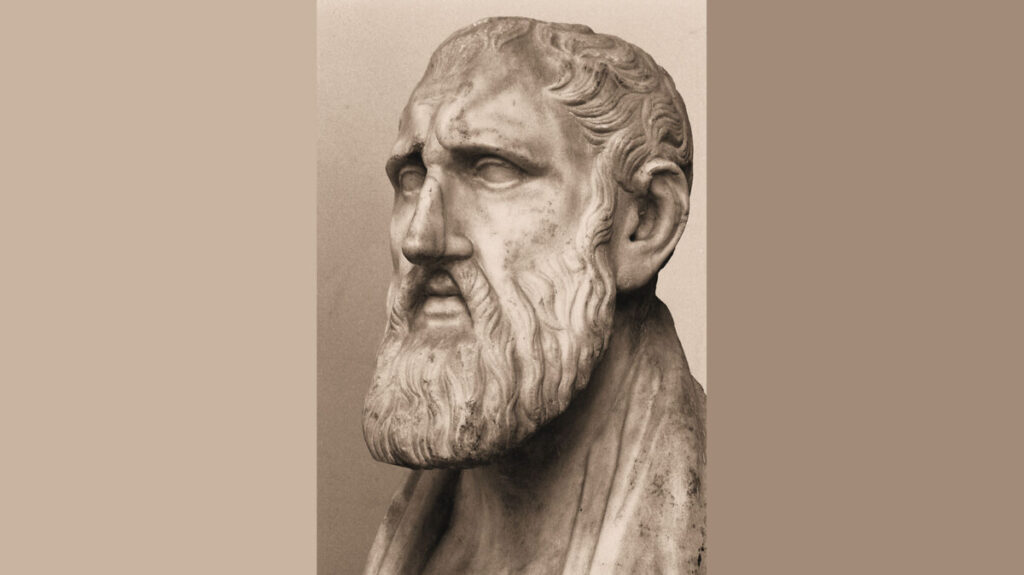
Zeno of Citium (334-262 BCE)

94 Generations Ago Zeno is considered the founder of the Stoic school of philosophy. When events occur in life, people react. Life is a series of events and immediate reactions. A stoic introduces a third middle step, a judge step. On their life journey, a stoic strives for a series of event-judge-react experiences. When you introduce

Zeno of Citium (334-262 BCE) Read More »

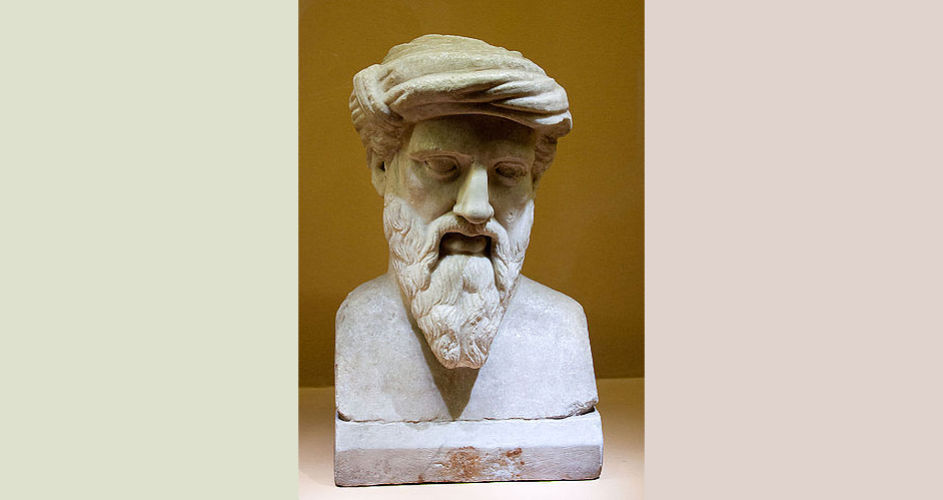
Pythagoras (570-495 BCE)

103 Generations Ago The Greek philosopher and mathematician Pythagoras was born in Ancient Greece on the island Samos which is about a mile off the coast of modern Turkey. History looks at Pythagoras as an educator and philosopher as well as a cult leader. He discovered the musical octave, used deductive reasoning, and embraced an

Pythagoras (570-495 BCE) Read More »

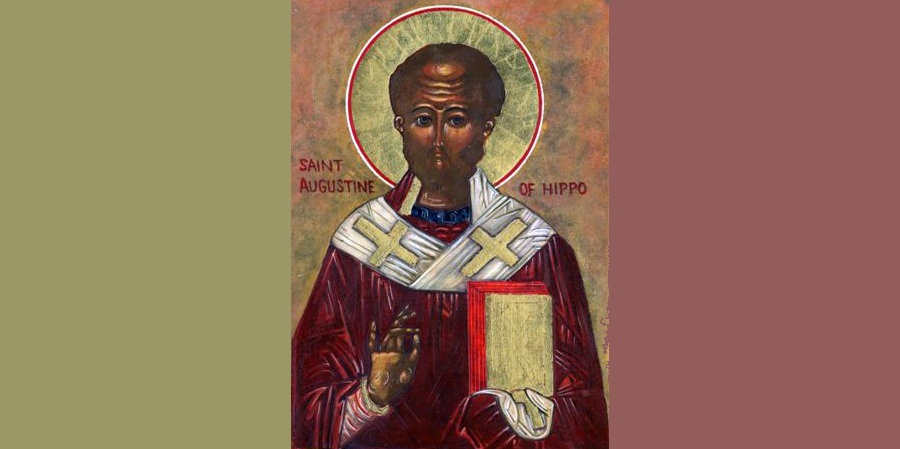
Augustine of Hippo

67 Generations Ago 30 Phil, Chapter 15: Augustine, Time, and War Augustine is known as the father of Western religious scholarship. He reconciled the science and philosophy of Aristotle with church beliefs. My favorite quotes:  The world is a book and those who do not travel read only one page. Right is right even if

Augustine of Hippo Read More »

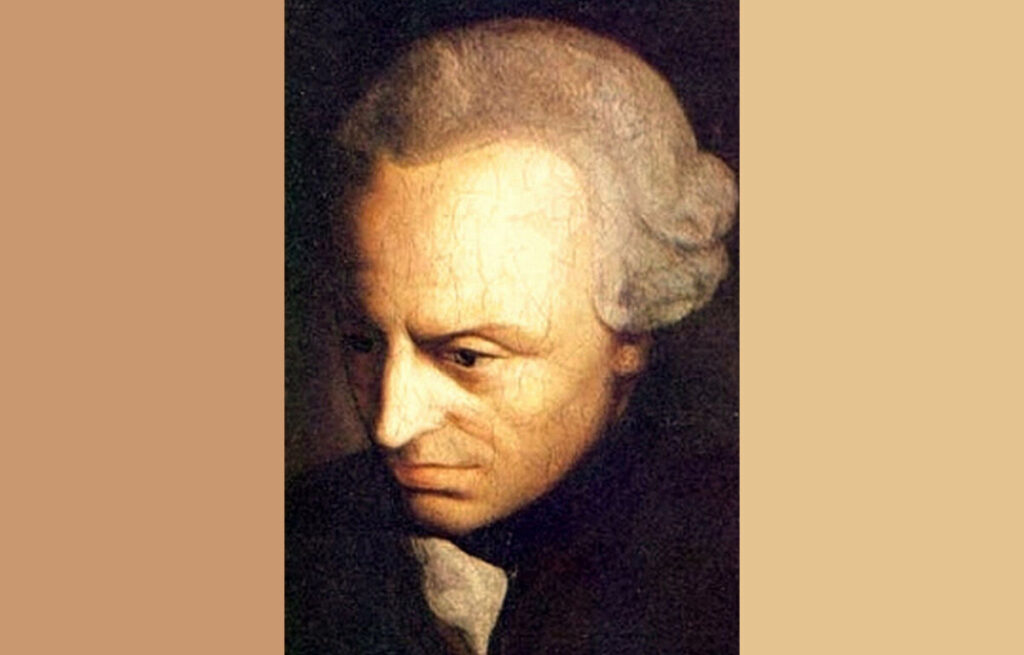
Immanuel Kant

12 Generations Ago 30 Phil, Chapter 28: Kant and Kantianism The German philosopher Immanuel Kant (22 April 1724 – 12 February 1804) was a central figure of the Enlightenment which put reason as the tool of choice when discussing God, nature, and humanity.  Some of my favorite translated quotes include: All our knowledge begins with

Immanuel Kant Read More »

Epictetus (50-135 CE)

Epictetus stressed that philosophy is a way of life and not simply analytical. The stoic philosopher Epictetus was cited by Marcus Aurelius in his Meditations. Epictetus was one of the future emperor’s teacher’s during childhood up to the age of 14. Although no writings by Epictetus are known, his students documented his beliefs and sayings

Epictetus (50-135 CE) Read More »

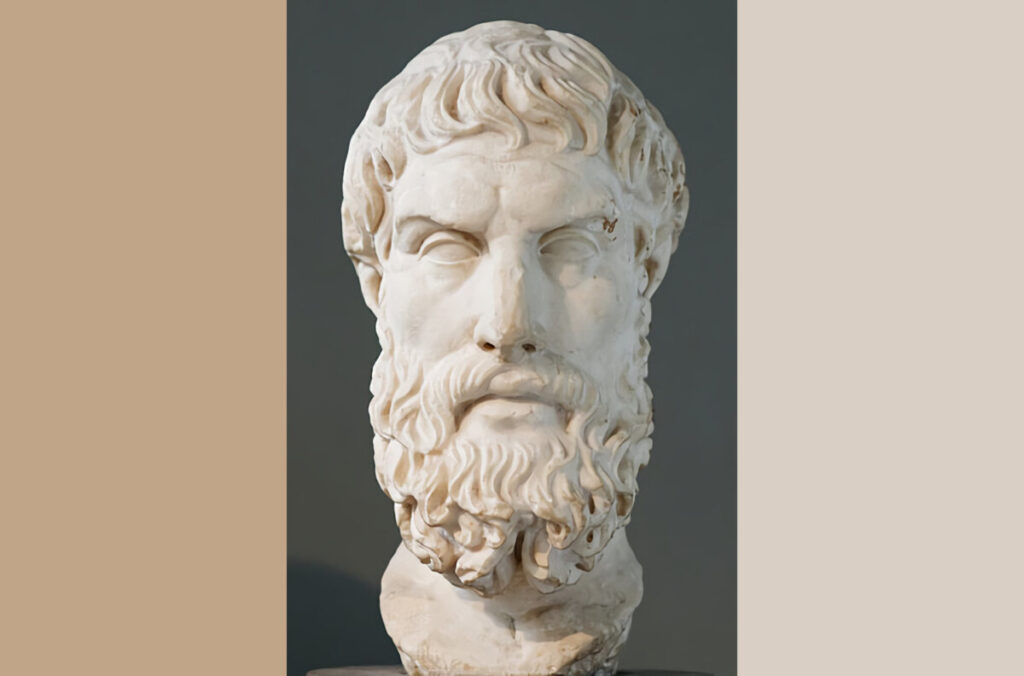
Epicurus

94 Generations Ago 30 Phil, Chapter 11: Epicurus and Epicureanism Epicurus founded Epicureanism in 307 BCE. The goal of Epicureanism is to help people attain a happy (eudaimonic), tranquil life characterized by ataraxia (free from fear) and aponia (free from pain). He authored over 300 books, scrolls, none of which survived the test of time. Some

Epicurus Read More »

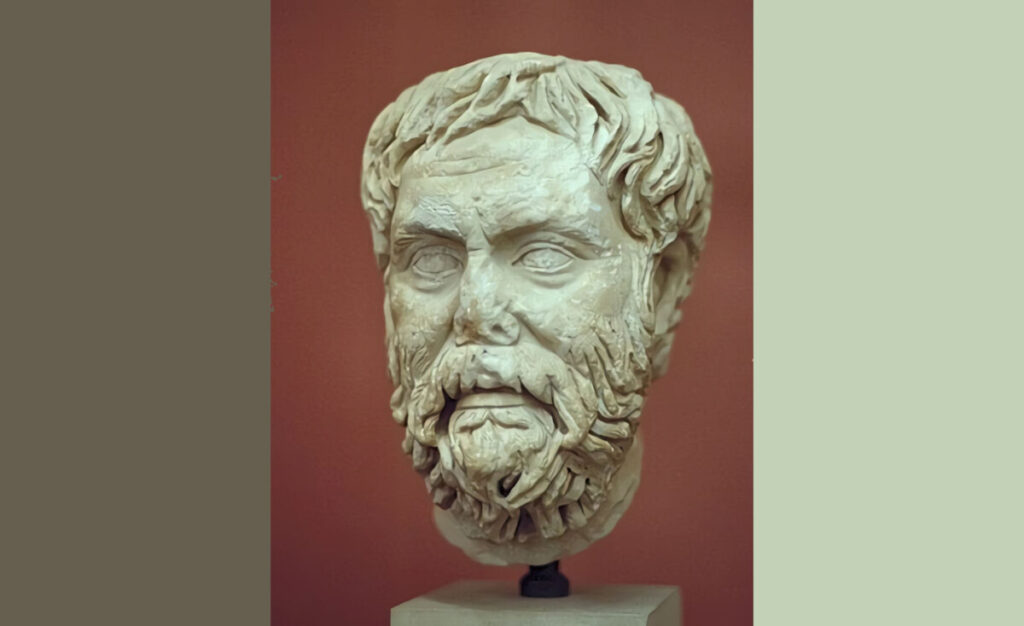
Pyrrho of Elis

95 Generations Ago 30 Phil, Chapter 10: Pyrrho of Elis and Skepticism   Pyrrho, the skeptic, believed no one knows anything. Everything can be questioned. The best approach is to keep an open mind. Like Socrates, Pyrrho himself left no writings. We know of his teachings through his students and later writers.  Phrases that best represent

Pyrrho of Elis Read More »

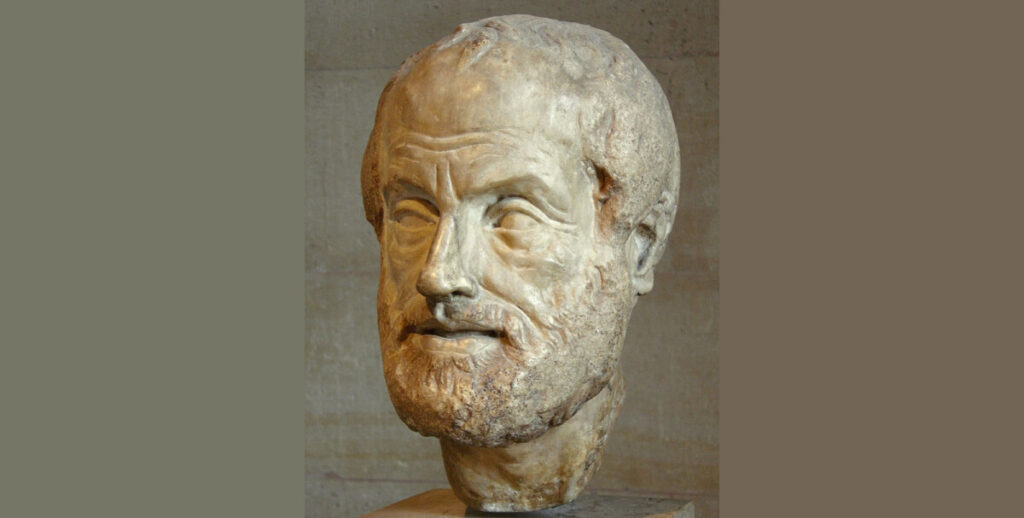
Aristotle

96 Generations Ago 30 Phil, Chapter 9: Aristotle and Empiricism Aristotle was the greatest Greek philosopher and covered nearly all subjects including physics, biology, zoology, metaphysics, logic, ethics, aesthetics, poetry, theatre, music, rhetoric, psychology, linguistics, economics, politics, meteorology, geology, and government. His Aristotelian philosophy characterized by deductive logic and an analytic inductive method. Some of

Aristotle Read More »

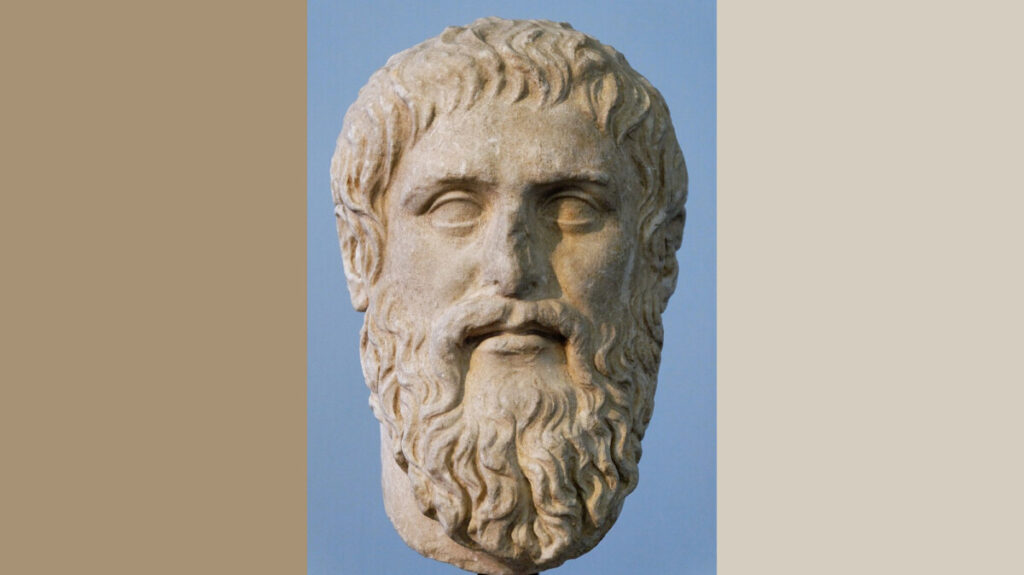
Plato

98 Generations Ago 30 Phil, Chapter 8: Plato and Rationalism Plato was a Greek philosopher born in Athens. He was a student of Socrates and a teacher of Aristotle. Plato’s Theory of Forms asserts that the reality is only a shadow, or image, of the true reality of the Realm of Forms — abstract, perfect,

Plato Read More »

Scroll to Top