

TOUCHSTONES Edition: This timeline encapsulates the touchstone ideas in “30 Philosophers: A New Look at Timeless Ideas.” The book contains exactly fourscore of touchstones spanning from 2600 BCE to the 1900s.
30 Philosophers Timeline: Touchstones
Big Bang Expansion
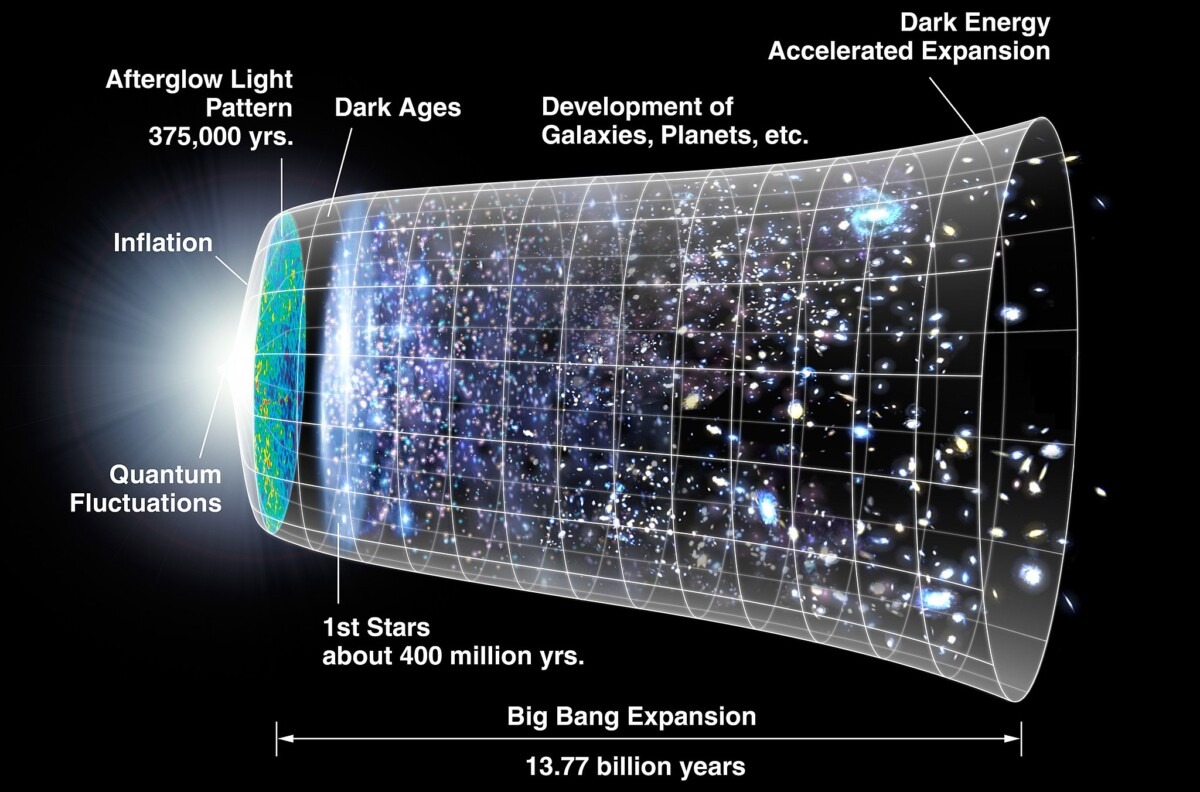
13.8 billion years ago, space itself began expanding and cooling, setting the stage for particles, atoms, stars, galaxies, planets, life, and us.
13.8 Billion Years Ago
Verified. Empirically supported and rationally deduced.
Free Will
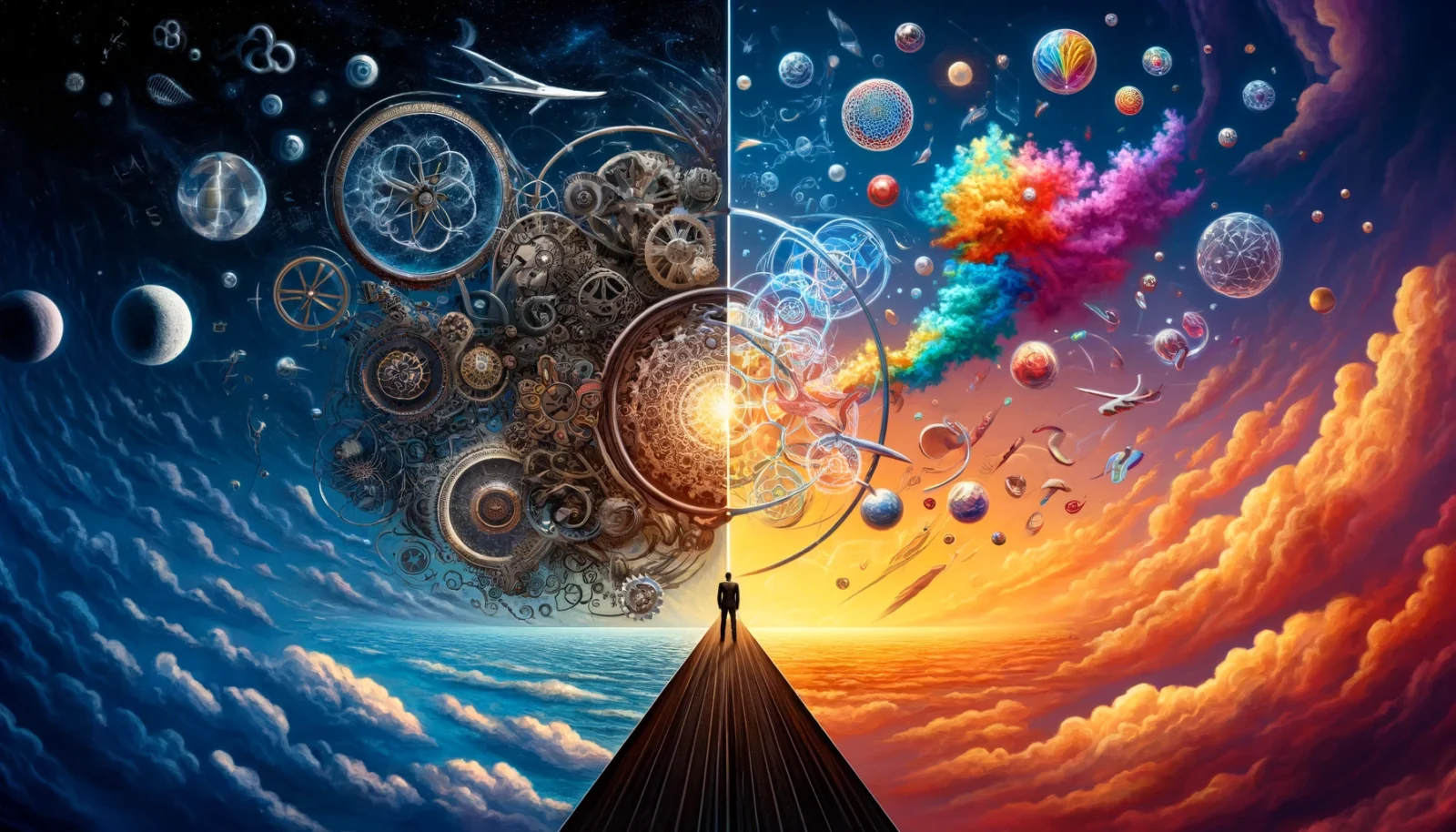
Free Will: two general types. Determinism says everything that happens is set in stone and can't be changed; in contrast, indeterminism says people and animals make choices.
How predetermined are our choices?
Evolution

Darwin identified several key categories, which are often discussed today as natural selection, sexual selection, and artificial selection.
Our true origin story.
Cultural Transmission
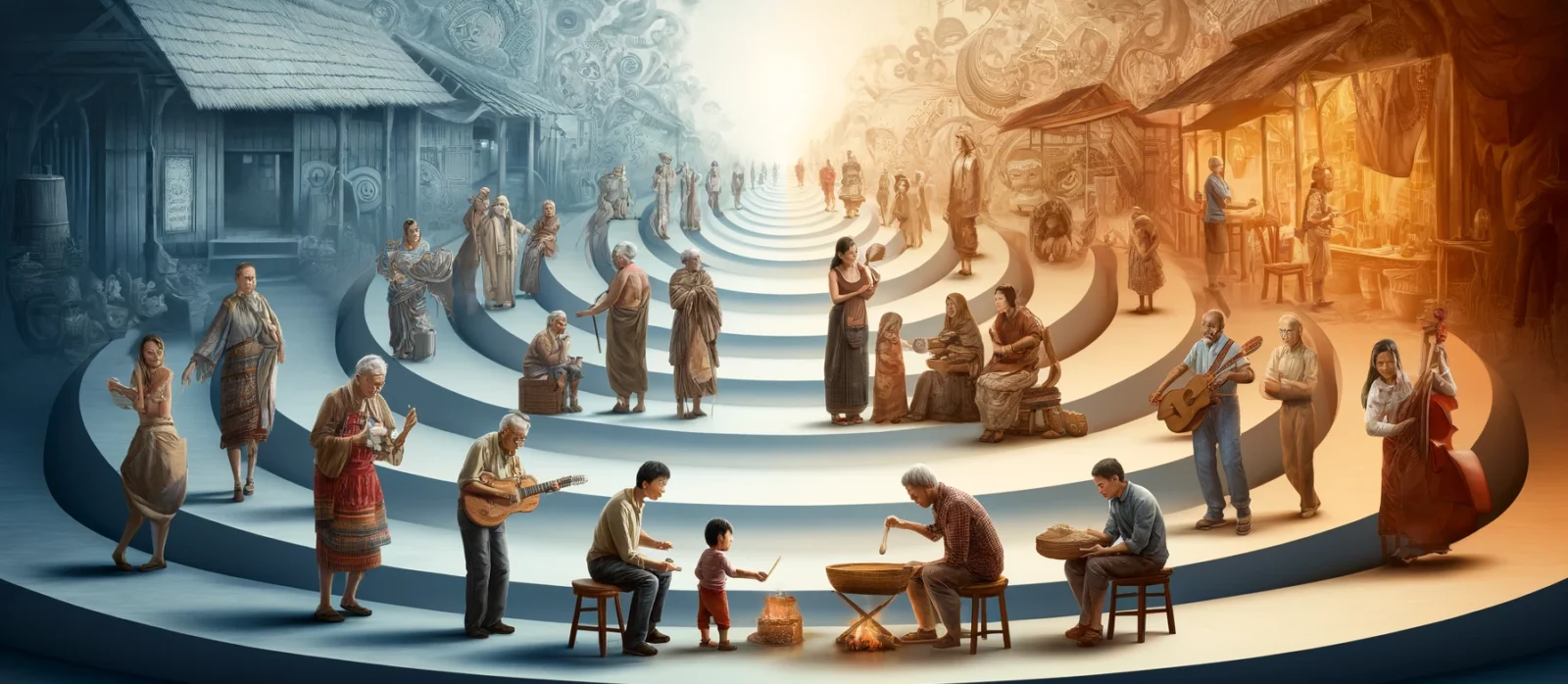
Cultural transmission fills our minds with inherited ideas, beliefs, and assumptions. You cannot control every idea you encounter, but you can influence what you repeatedly allow into your mind. Take control of your mental diet. Seek reliable sources, welcome thoughtful challenges, and question inherited assumptions before accepting them. Cultural transmission supplies the ideas; thinking well means deciding which ones deserve your belief.
What separates humans from animals.
Knowledge Framework

Knowledge frameworks are the mind’s filing system. They do not just store information—they shape how we sort ideas, test claims, and decide what deserves belief.
A network of ideas.
New Look
Philosophy

The what, why, and how of life.
Ontology

Ontology is the branch of metaphysics that studies being, existence, and what is real.
The Nature of Being.
We are more than self-aware.
Holism

Nature is the master plan.
Wu-wei or “non-action”

Go with the flow of nature.
Ziran, Authenticity, or Authentic Self

Let life unfold organically.
Yin and Yang

A good life is a balanced life.
Unknowable Dao

The Unknowable Dao reminds us that when we define something too tightly, we risk mistaking our description for the thing itself.
We can only describe nature.
Normalcy, Normal, and Abnormal

Normalcy is a pattern-based idea formed from repeated experience and reinforced by social expectations.
Normal grows from repetition.
A new look.
Schema

Universals name repeatable patterns among entities. Schemas are how minds organize those patterns into usable templates.
The abstractions of life.
Self & Non-Self; Atman & Anatman

Non-Self is the view that the self is not an unchanging thing, but a temporary pattern within the ongoing reconfiguration of reality.
Atman, the idea of self.
Anatman, the idea of non-self.
Nondualism and Dualism

Imagined image: The concepts of nondualism and dualism. The philosophical exploration of the mind, body, and reality, the distinctions and connections between them.
The separation of mind and body is an illusion.
Impermanence and Flux

Change is the only constant.
Worldview

You do not see the world raw. You see it through a worldview. That worldview grows from the frameworks you inherit and adopt, and it continues to change as your experience changes.
Your sub-culture and choices.
Identity

Identity is the personal mosaic that makes you you. It includes what you were born into, what you have chosen, and what has changed along the way. It is not fixed at birth. It is shaped over time through living, learning, belonging, and becoming.
Existence before essence.
Crafting yourself from your given traits.
Reflective Inquiry

Use reflective inquiry to help you notice the illusions you are living inside: inherited stories, social constructs, fear, trauma, ego, bias, and mistaken identity. To think well, turn inquiry inward and ask what you are mistaking for reality.
A constant state of self-assessment.
Ignorance is Bliss

Strategic ignorance.
Syllogisms

Logically connect things.
Rationalism

Prioritize your ideas over reality.
Empiricism

Prioritize reality over your ideas.
Logic

Aristotle helped make reasoning visible. He showed that arguments have structure, and that conclusions must be tested against their premises.
Reality is organized and mathematical.
Logical Fallacies

Flaws in reasoning.
Eudaimonia

In ancient Greek, eudaimonia was the best way to live. It varied by tradition, but usually included virtue as part of flourishing.
Flourish now and into the future.
Skepticism

Question your beliefs and avoid dogmatism.
Social Constructs
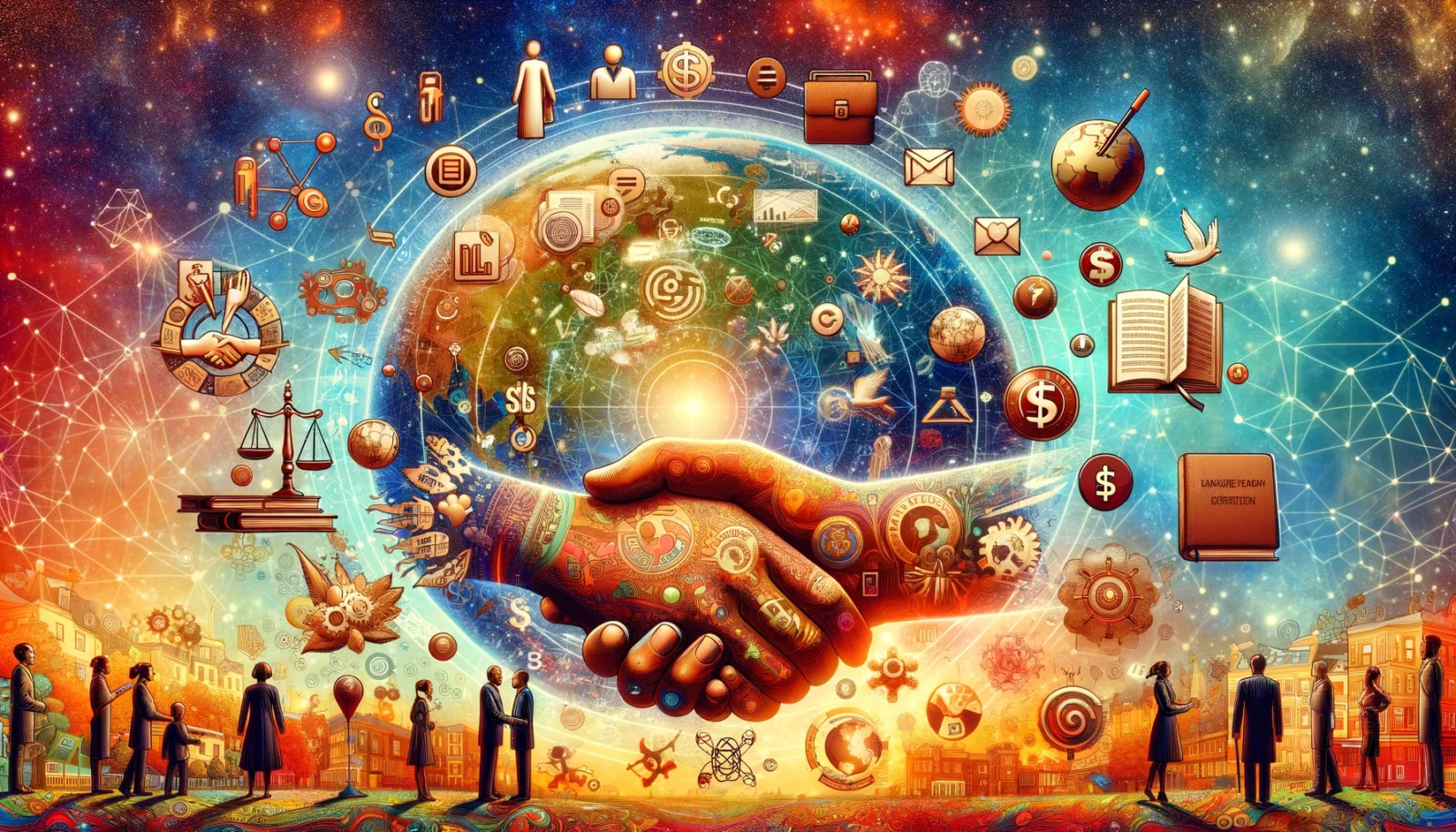
Social constructs are the human-made concepts shaping our reality.
Shared, not natural agreements.
Agnosticism

The essence of agnosticism is the uncertainty and indifference toward the unknowable.
Don't waste time on the unknowable.
Live in the present.
Dichotomy of Pleasure

Dichotomy of Pleasure: Epicureanism highlights the difference between short-term and long-term pleasures. They assert you can live a better life by focusing on long-term pleasures like exercise and reading over short-term pleasures like overeating and getting drunk.
Prefer long term pleasures over short.
Allegorical Interpretation

Imagined Image: Philo of Alexandria reinterpreting the story of Noah through allegorical interpretation. It captures the essence of his scholarly reinterpretation with symbolic elements.
Stories have complex meanings.
Cognitive Reframing

Mental agency is deliberately influencing what you attend to, how you interpret experience, and how you respond mentally. One technique is cognitive reframing where you ask how else you can interpret something. The key idea is that events frequently have several valid interpretations. Why not reframe events to align with a better life.
Emotions are judgements.
Negative Visualization

Negative visualization can give you mental agency by casting your gaze ahead, pinpointing potential hiccups and solutions in your journey. Part of taking control of the direction of your life is to understand and explore the road ahead.
Contemplate the future.
Cognitive Distancing
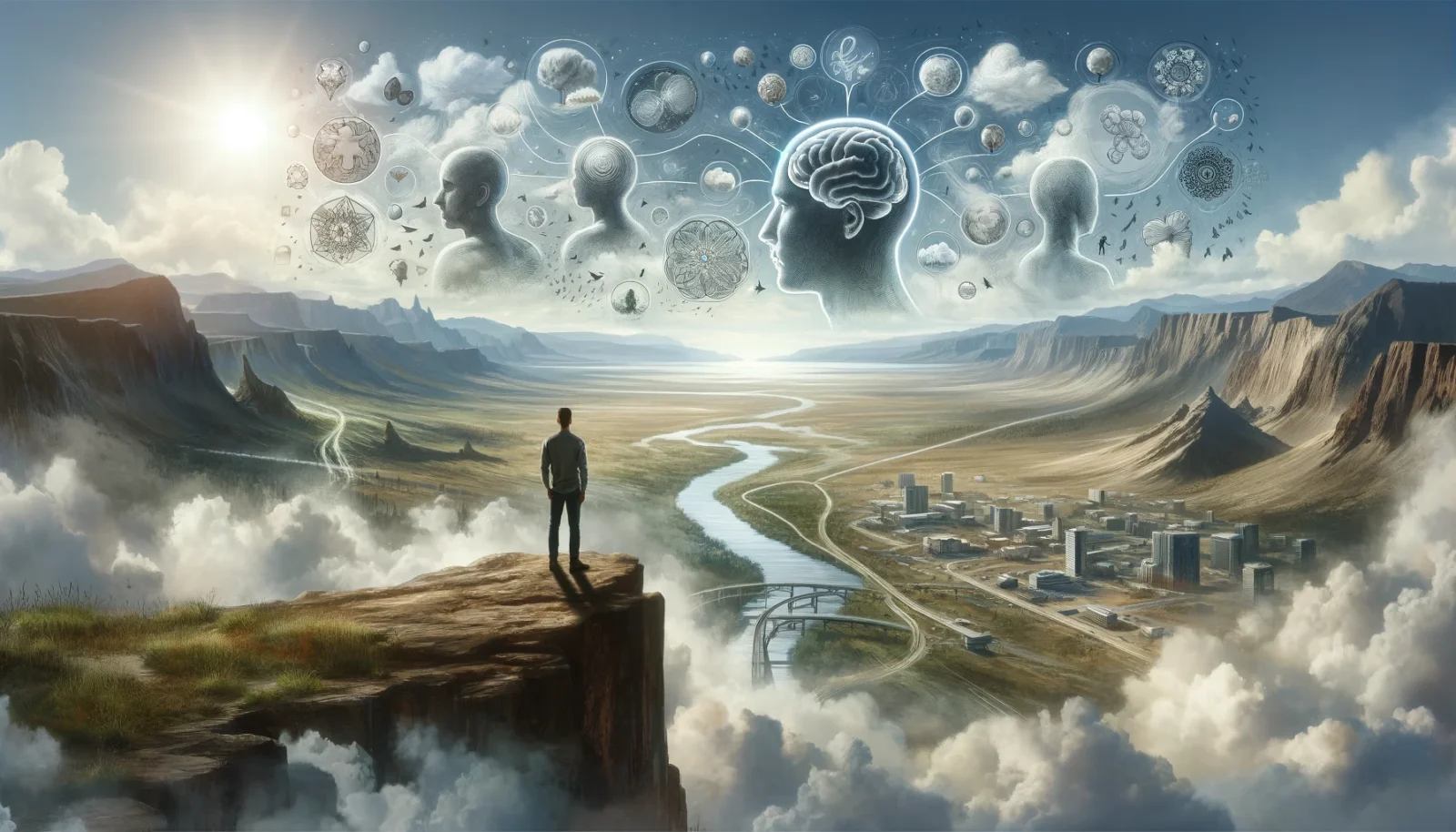
Cognitive Distancing and the Stoic View from Above: Gain clarity and objectivity by mentally elevating yourself to see the broader perspective, reducing the emotional impact of transient thoughts.
Step outside your reality.
Cause and Effect

Cause and effect, the idea that every action has a reaction and ethical implications of personal responsibility and the acceptance of consequences.
Karma
Cognitive Biases

Cognitive bias: the mind’s attempt to simplify complexity can quietly distort perception. Without discipline, shortcuts become traps — shaping decisions, inflating certainty, and steering judgment away from reality.
Maya, Illusion.
Chronoception

Chronoception: remembering past events, experiencing the present, and anticipating the future.
Spacetime
Eternity

Augustine's concept of eternity as 'all time at once,' positioned as a precursor to the modern block universe theory. Time existing simultaneously.
Block Theory of the Universe
New Look
Intellect

The Journey of Intellect: From the potential of a blank canvas, through the exploration of creating, to the mastery of refining a masterpiece. This triptych captures the evolution of human thought and creativity.
Blank slate filled with impressions
Essence and Existence

At least in this life, existence precedes essence: we are born into species-level biological structure, but individual identity forms over time. No publicly verified prewritten metaphysical script — only structured reality, evolving memory, and the eventual fading of each life into history’s shadow.
You exist, then you mold your essence.
The Five Senses of Humans

Olfaction or Sense of Smell Study.
Circa 1020
New Look
Touchstone: Perception

Perception, how the brain interprets sensory information and transforms it into understanding.
Interpretation
Intent

Good intent directs an action toward a defensible good with honesty, care, and responsibility. Bad intent directs an action toward harm, manipulation, exploitation, revenge, or selfish gain, even when it is disguised in moral language.
Good Intent vs Good Results
Object-Oriented Nature

Humans perceive a bicycle as a simple, efficient tool for movement, travel, and carrying things. However, each bike is an intricate assembly of parts like handlebars, frames, and wheels, made from materials such as aluminum, steel, and rubber. These materials themselves break down into fundamental elements like iron, carbon, and manganese. This image captures the layers of abstraction in our perception, from the complete bike to its atomic structure, showcasing the complexity behind everyday objects we use to move through the world.
Abstraction brings understanding and illusion
New Look
Pattern Recognition

Humans possess a remarkable ability to hierarchically organize the patterns they perceive, known as pattern ranking. From simple shapes and natural forms to complex abstract symbols, our minds categorize and rank these patterns, creating a structured understanding of the world. This image illustrates the cognitive process of organizing and interacting with patterns, highlighting the depth and complexity of human perception.
Patterns in Nature
The Idea of Ideas

A personal spiritual experience may be real as an experience, meaningful as a belief, and still fall short of public proof about the material world.
New Look
The Five Thieves

The Sikh concept of The Five Thieves: Lust, Anger, Greed, Attachment, and Ego.
5 ethical guideposts
Idea Modeling

Idea Modeling is a fresh new look at the process of creating new ideas. It is the dynamic interplay of various cognitive functions, but especially pattern recognition and conceptual blending. For this discussion let’s add in curiosity, gap-filling, and information bias. The whole thing is guided by apathetic agnosticism, our defense against bad ideas. It is in line with modern neurobiology, but to be clear, it’s just a general philosophical lens, another view of how ideas are forged.
How new ideas become.
New Look
Pragmatism

The Rational Pragmatist embraces common knowledge and accommodates their Christian faith while rejecting most other supernatural ideas. The Irrational Pragmatist does not believe in common knowledge.
3 Types: Empirical, Rational, & Irrational
New Look
Separation of Church and State

1748 with Montesquieu
Evolved from 1640 through 1748
Liberalism

Liberalism emphasizes personal freedom, individual rights, equality before the law, and limited government intervention. It is political freedom and civil liberties.
Everyone is equal.
Modern Cosmology

"<a href="https://www.flickr.com/photos/11304375@N07/2818891443" target="_blank" rel="noopener noreferrer">01 The Solar System PIA10231, mod02</a>" by <a href="https://www.flickr.com/photos/11304375@N07" target="_blank" rel="noopener noreferrer">Image Editor</a> is licensed under <a href="https://creativecommons.org/licenses/by/2.0/" target="_blank" rel="noopener noreferrer">CC BY 2.0</a>
1608
Absolute Truth

Remember absolute truth belongs to the material world as it is. Humans never hold it absolutely. You construct empirical and rational descriptions that align with reality or not, and then you believe each one with a degree of confidence. Each of your claims remains open to testing and revision. Even your strongest conclusions are provisional: true until disproven, not true beyond challenge.
The Idea of the Unknowable Dao
New Look
Truth Hammers

A disciplined thinker does not hand confidence to a claim just because it is common. First ask whether it lives by habit, tribe, and repetition, or by testing, evidence, and open challenge.
Processes that uncover truth.
New Look
The Scientific Method

1629
Modern science started in the 1600s.
Law

Public belief may accuse, praise, or panic. Law slows that down and asks: what can actually be shown?
Law protects.
Modern law emerges after the Middle Ages.
Natural Rights

Life, Liberty, & Property Rights
Due Process

Protection against authority.
Emerged in the 1600s.
Relativity Principle
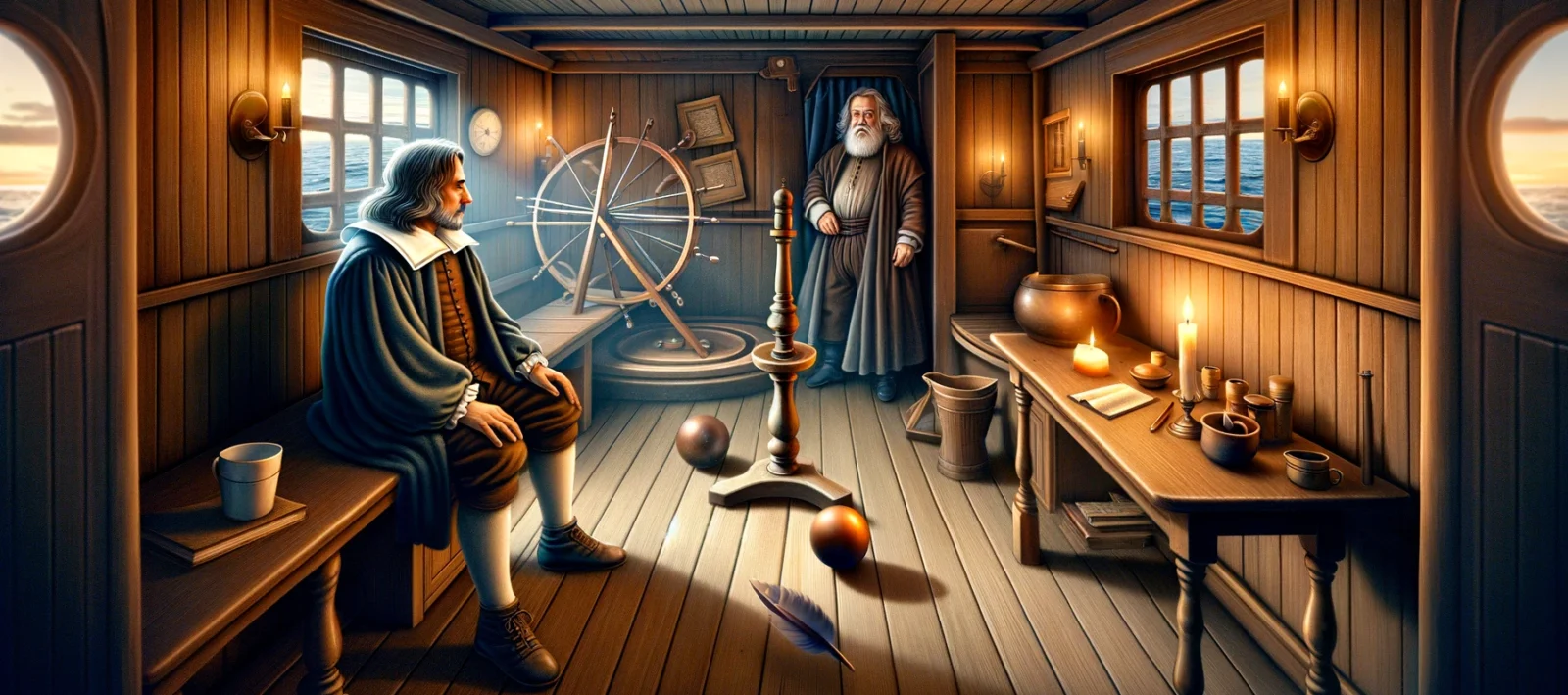
Jul 1632
Infinitesimal

1638
Mind-Body Dualism
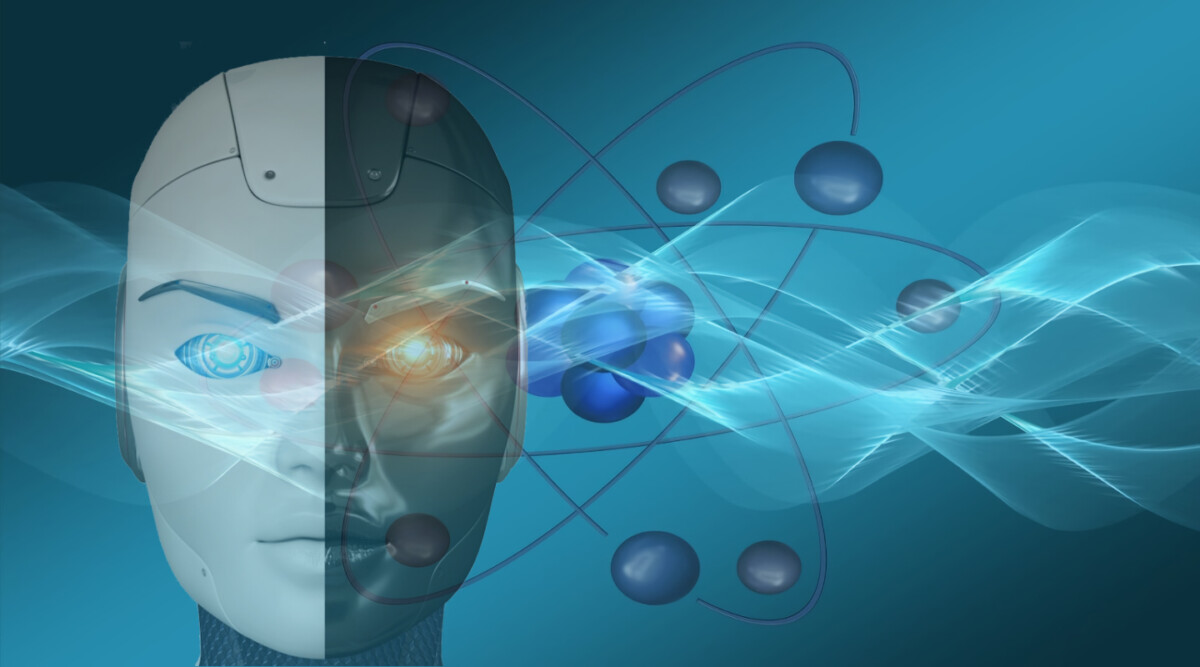
The relationship between the mind and body has long intrigued philosophers and religious scholars, sparking diverse perspectives and interpretations. Generally, dualism posits that the mind and body are distinct entities, while nondualism asserts that reality is a single, indivisible whole, with perceived divisions being illusory.
1641 - Two Substances: Body & Soul
Cartesian Dualism
Monism

The material world is reality itself: the shared world that exists whether we notice it, name it, believe in it, or not. Take control of how you respond to afterlife beliefs. You can have your own view while giving others room for theirs. No one knows for sure what awaits us after death. Focus on the life you can control, respect honest differences, and leave room for what remains unknown.
God is nature, nature is everything.
Western monism emerged with Spinoza in the 1600s.
Material-Spiritual Framework

The Material-Spiritual Framework's division of spirituality into agnostic, nontheistic, and theistic postures.
Spirituality is exploration.
New Look
The Social Contract

Citizens consent to be governed.
Emerged about 1689.
Fourth Estate

The Fourth Estate emphasizes freedom of the press and has a role in challenging authority.
The force of public opinion.
The fourth emerged in the 18th & 19th centuries.
Journalism

Journalism tests public claims by gathering facts, checking sources, and bringing events into the open.
Storytelling for the people.
Modern journalism started in the early 1700s.
Transcendental Idealism

Our Ideas are Not Reality
The Eastern unknowable Dao emerged in the West in the late 1700s.
Categorical Imperative
Live by universal values.
Emerged in late 1700s.
Skeptical Empiricism

Skeptical Empiricism is the idea that all knowledge stems from experiences and challenges the concept of innate knowledge.
Knowledge is experience.
The Problem of Induction

The Problem of Induction illustrates the circular nature of inductive logic and the intellectual puzzle it presents.
Patterns might mislead.
Hume’s Fork

Life is definitions & observations.
New Look
Checks and Balances

Checks and balances embody an enduring piece of wisdom: power should check power. Separate centers of authority make it harder for any person, party, or institution to gain unchecked control.
Separation of Powers
Matured about 1748.
Anxiety “Angst”

Imagined image: Soren Kierkegaard at his famous desk feeling profound existential angst.
Use angst to guide your life.
1843: “Fear and Trembling” by Kierkegaard.
Harm Principle

“Causing no harm” is an aspiration, not a fantasy. Life brings tradeoffs. Even good choices can carry costs. The ethical person does not pretend harm never happens; they notice it, reduce it, justify it when necessary, and stay willing to recalibrate.
Cause no harm.
In "On Liberty," pub. 1859.
Nihilism

Nihilism is the idea that life lacks objective meaning, purpose, and intrinsic value.
1862: Ivan Turgenev novel "Fathers and Sons"
New Look
Übermensch

The Übermensch, or superman, is the ideal person who transcends societal norms and self-imposed limitations.
Live Your Authentic Self
1883, 1885: From "Thus Spoke Zarathustra"
Eternal Recurrence

TST uses Eternal Recurrence inside Authentic Self as a test for authenticity. It asks whether the life you are living is one you can affirm, not just endure. It is a common floor for testing your choices and a hook into Nietzschean thought. To live authentically, ask: would I choose this again?
Live in the now.
From "Thus Spoke Zarathustra".
Consciousness

Experiencing life through the lens of consciousness.
The experience of living.
New Look
Bad Faith

The concept of "bad faith," is the contrast between living a lie and embracing one's true self.
Don't live in bad-faith, be authentic.
1943: "Being and Nothingness" by Sartre.
Next >>
By Chapter or Topic: All > Anchors > People > Docs > Touchstones > New Looks > History > Pre-Sumer