Avialae: Bird Line Diverges
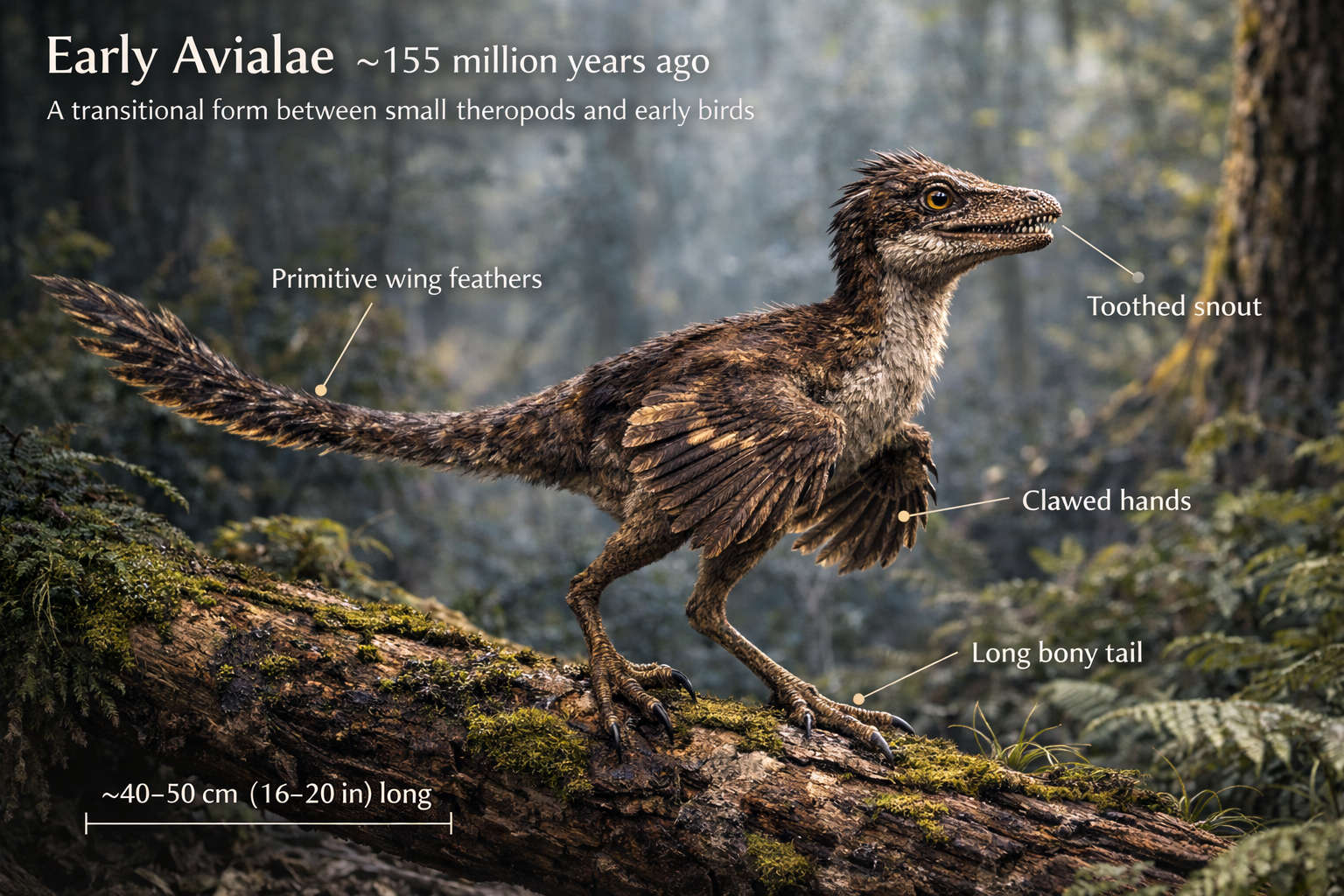
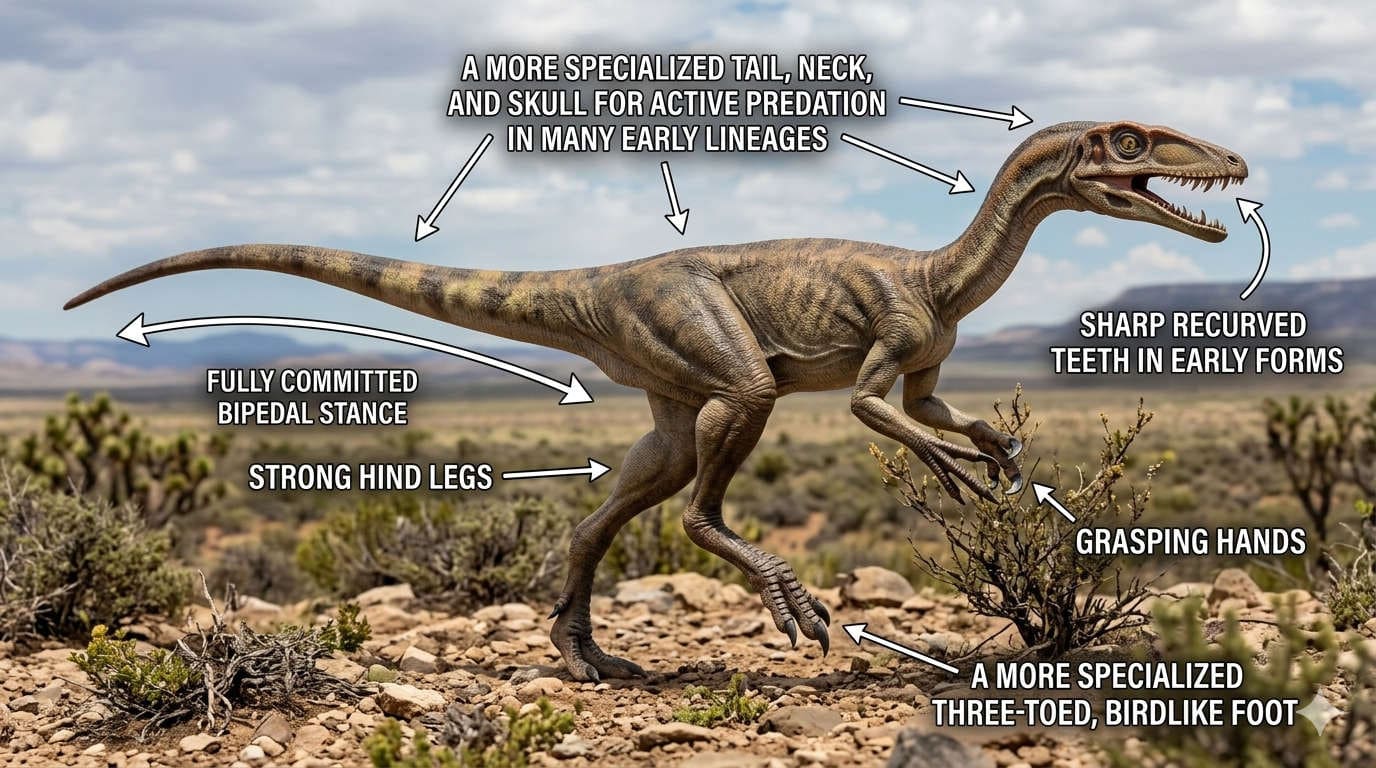
Birds are not “like” dinosaurs, they are dinosaurs. Birds evolved from the same branch that gave us T.Rex and Velociraptor.
Avialae: Bird Line Diverges Read More »
Master Timeline
Birds are not “like” dinosaurs, they are dinosaurs. Birds evolved from the same branch that gave us T.Rex and Velociraptor.
Avialae: Bird Line Diverges Read More »
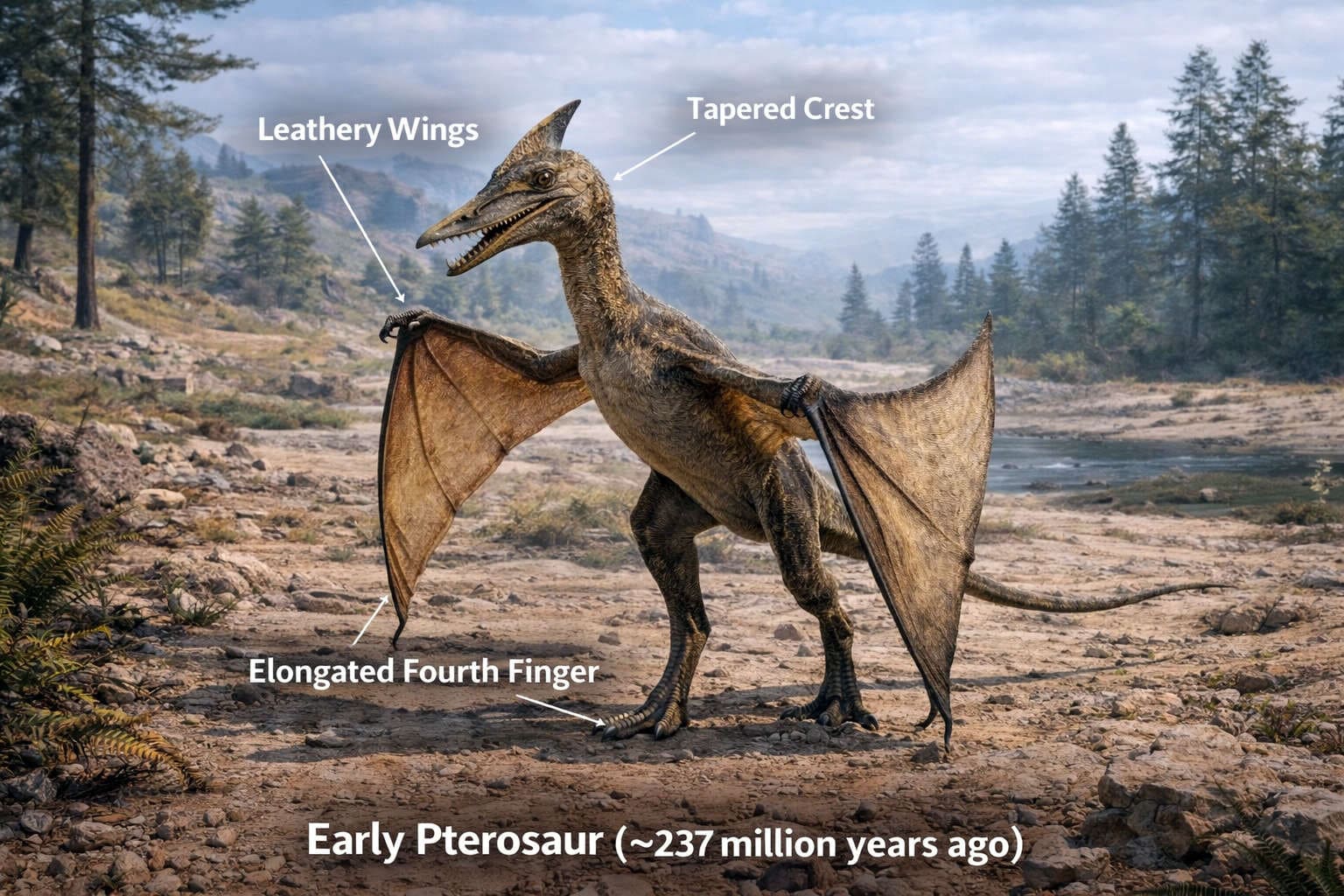
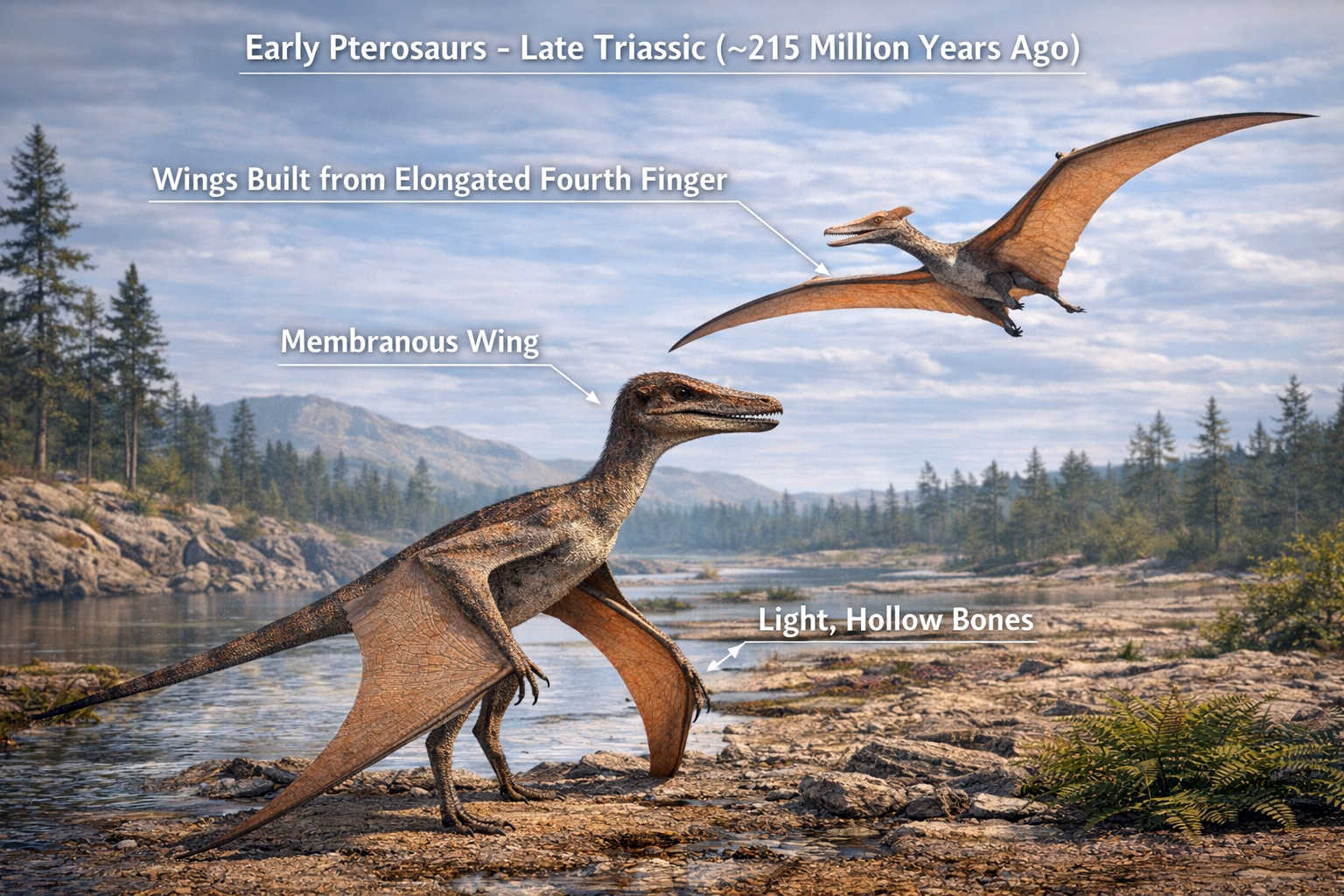
Pterosaurs were the first vertebrates to conquer the air, evolving a unique “finger-wing” anatomy that allowed them to dominate the skies for 160 million years.
Pterosaurs Diverge From Dinosaur Ancestors (within Ornithodira) Read More »
LCA of crocodiles and birds — the larger archosaur branch that later gave rise to crocodilians, pterosaurs, dinosaurs, and birds.
Archosauria Diverge Within Reptiles Read More »
Pterosaurs were the first vertebrates to achieve powered flight, but they were not dinosaurs.
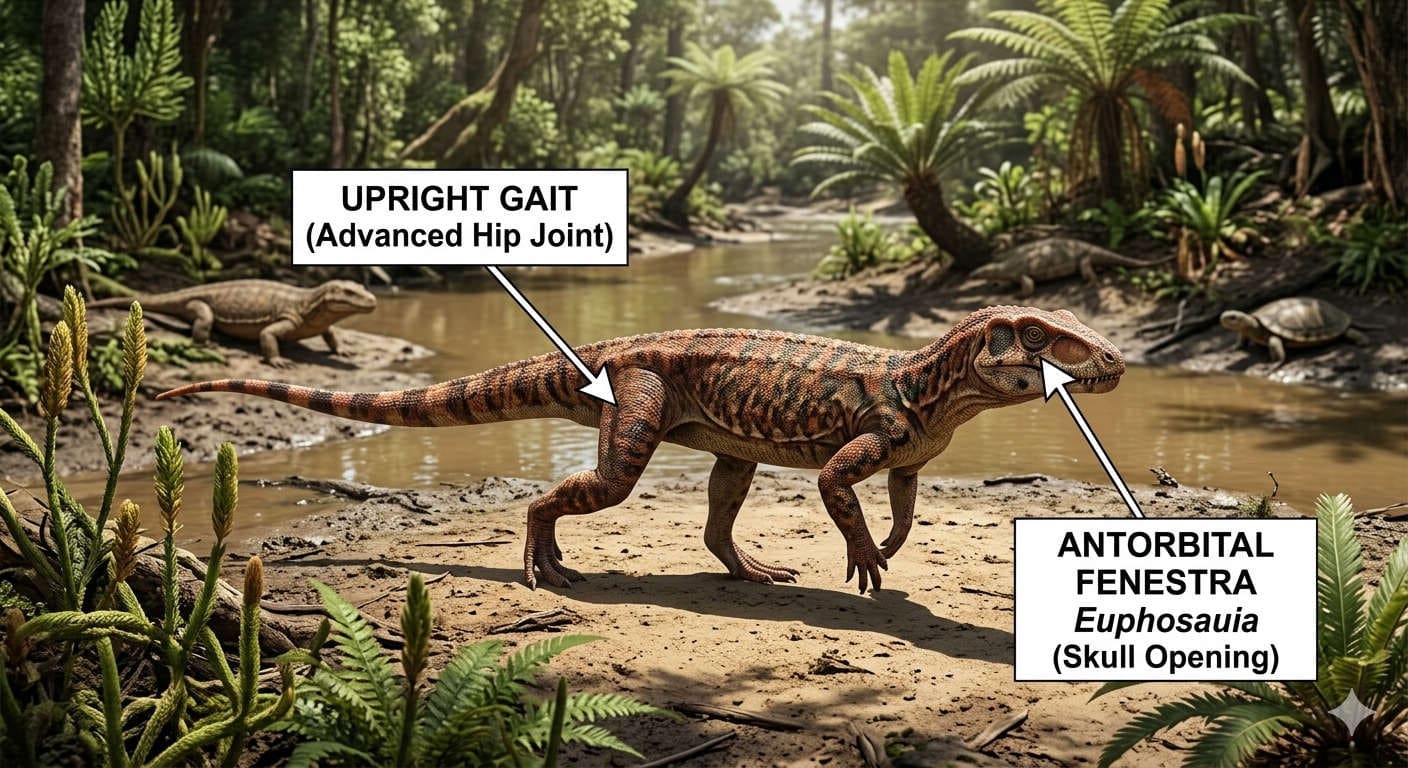
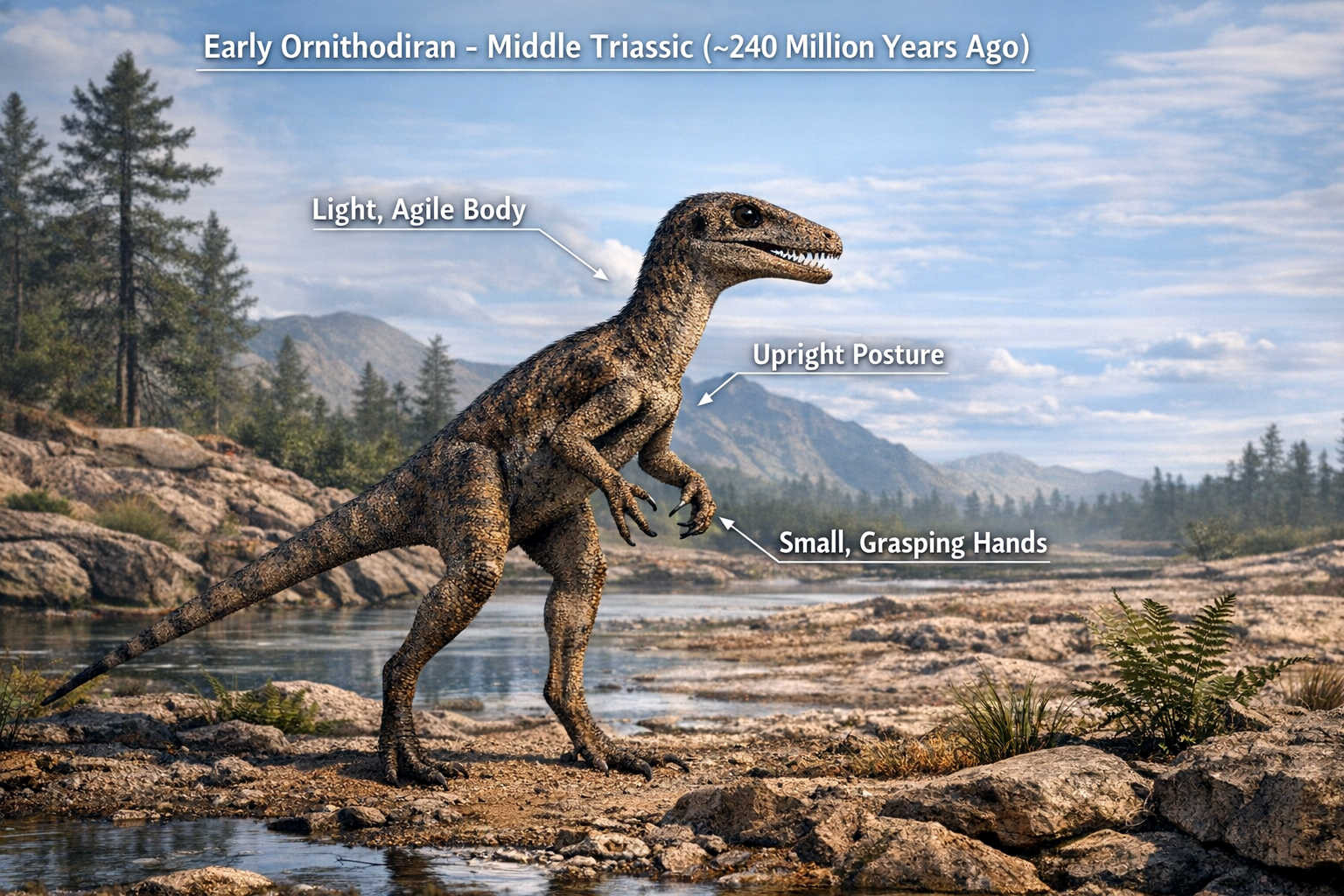
Ornithodirans were the early branch that later gave rise to both pterosaurs and dinosaurs, including birds.
Ornithischians Diverge Within Dinosauria “Bird Hipped” Read More »
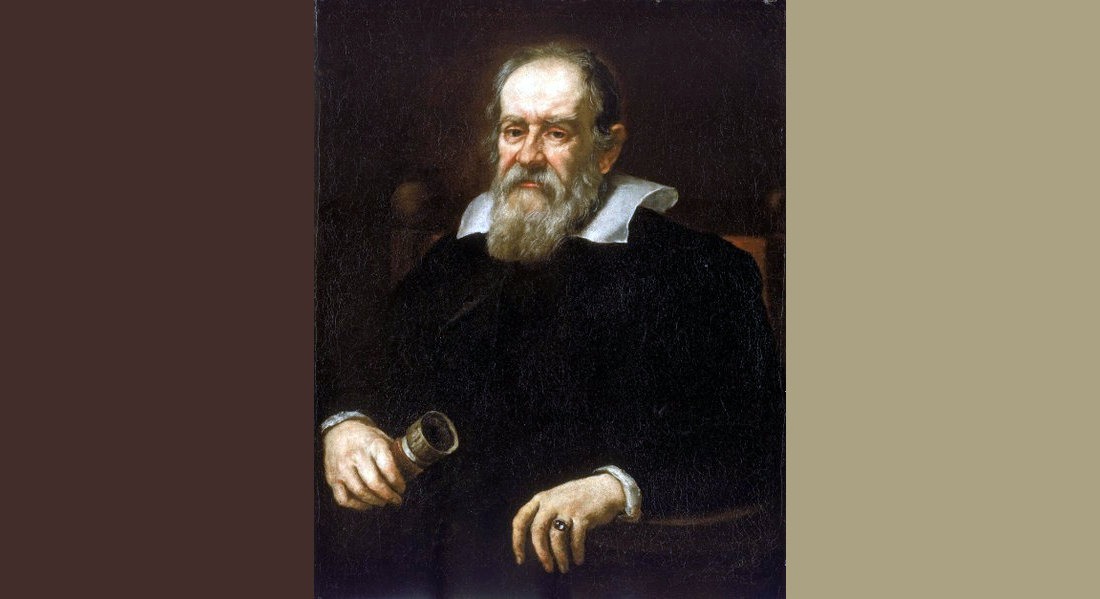
In 1610, Galileo set incorrect maps of the cosmos on the right path. Our mental model of Earth at the center of the universe had to evolve to match observations.
Galileo: Observation Corrects the Map Read More »
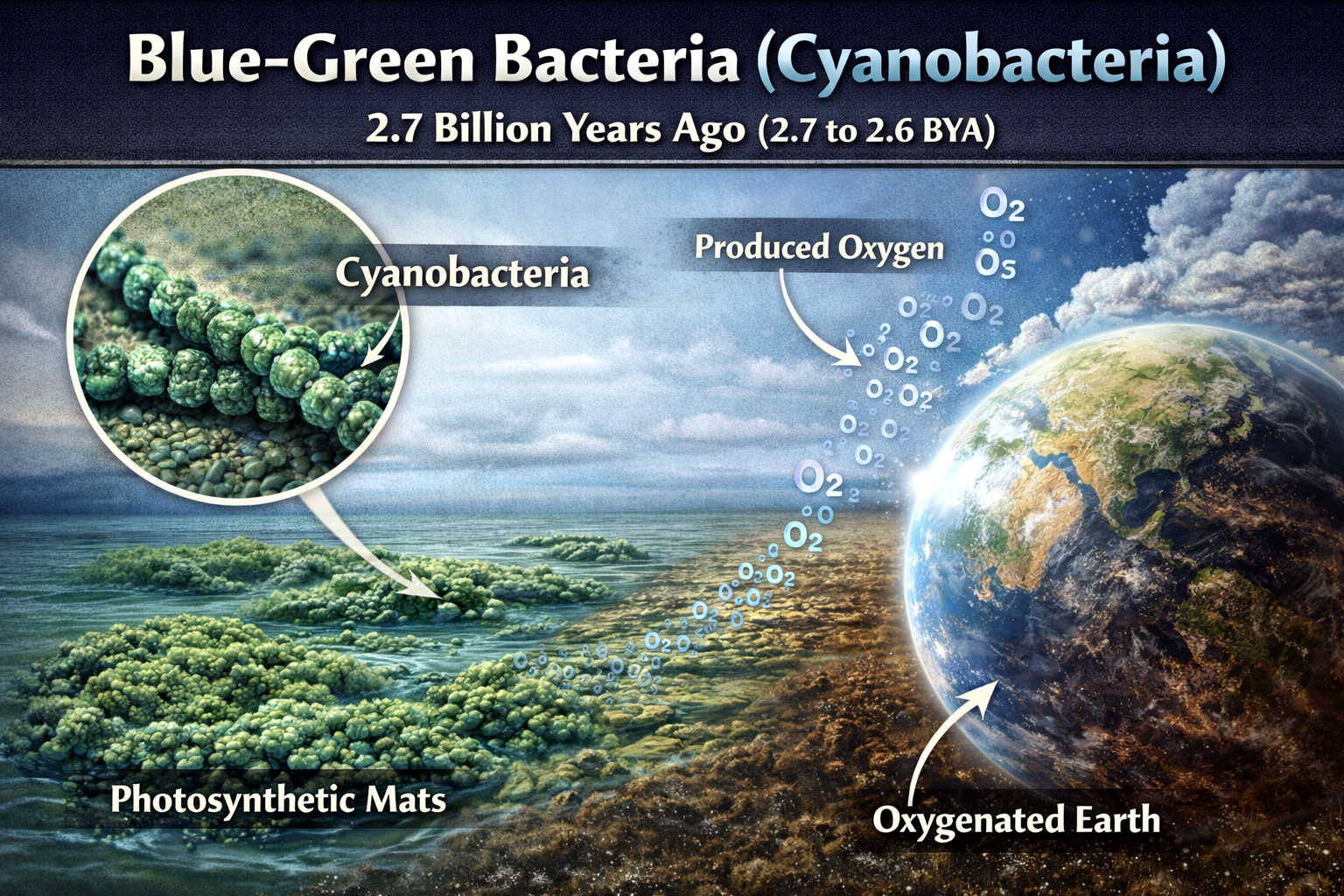
Blue-green “algae” are not algae at all. They are cyanobacteria — ancient photosynthetic bacteria that helped oxygenate Earth and reshape the history of life.
Blue-Green Bacteria (Not Algae) Read More »
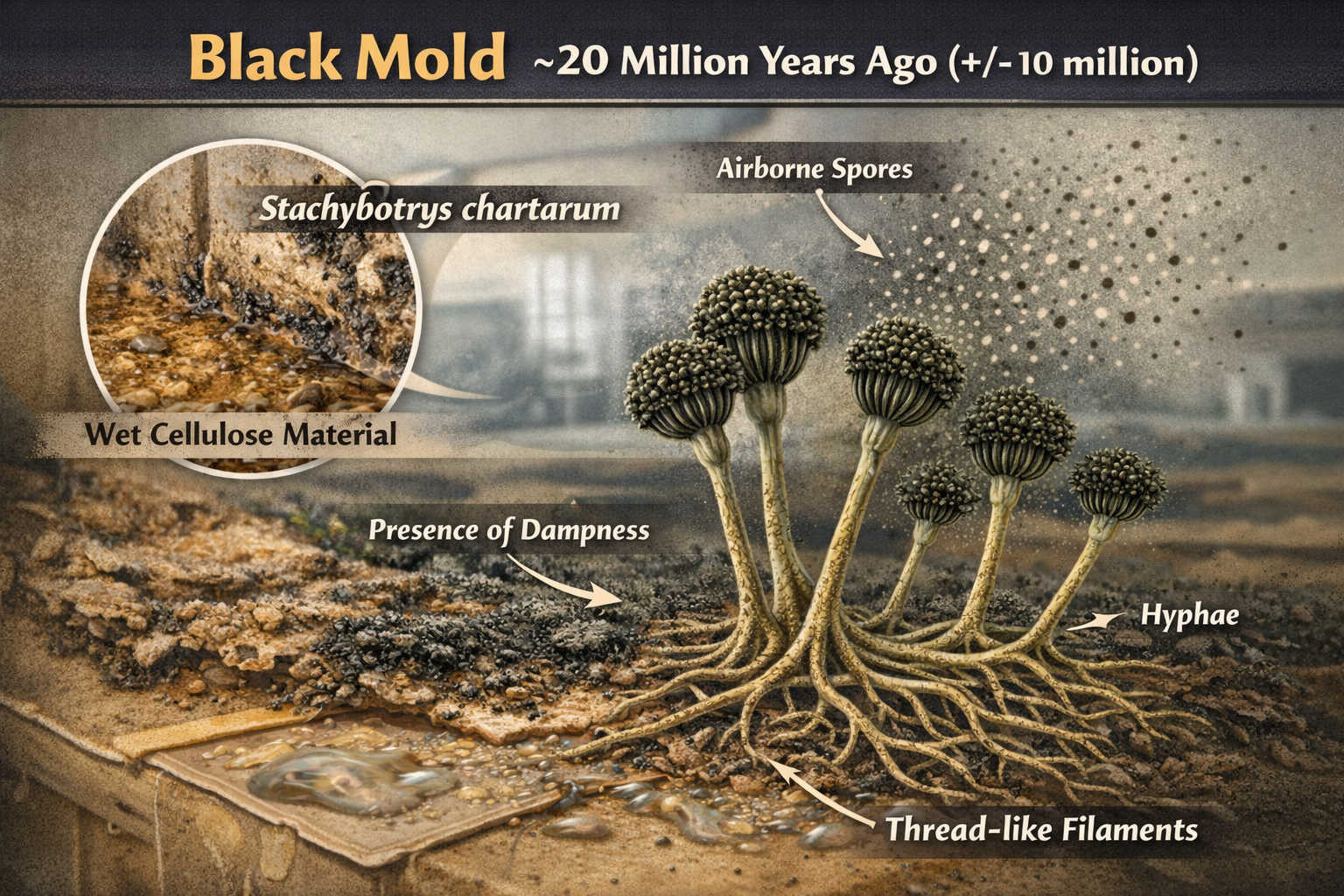
Black mold is part of the normal fungal world: usually a moisture-driven irritant and allergy problem, sometimes a more serious respiratory issue for sensitive or vulnerable people.
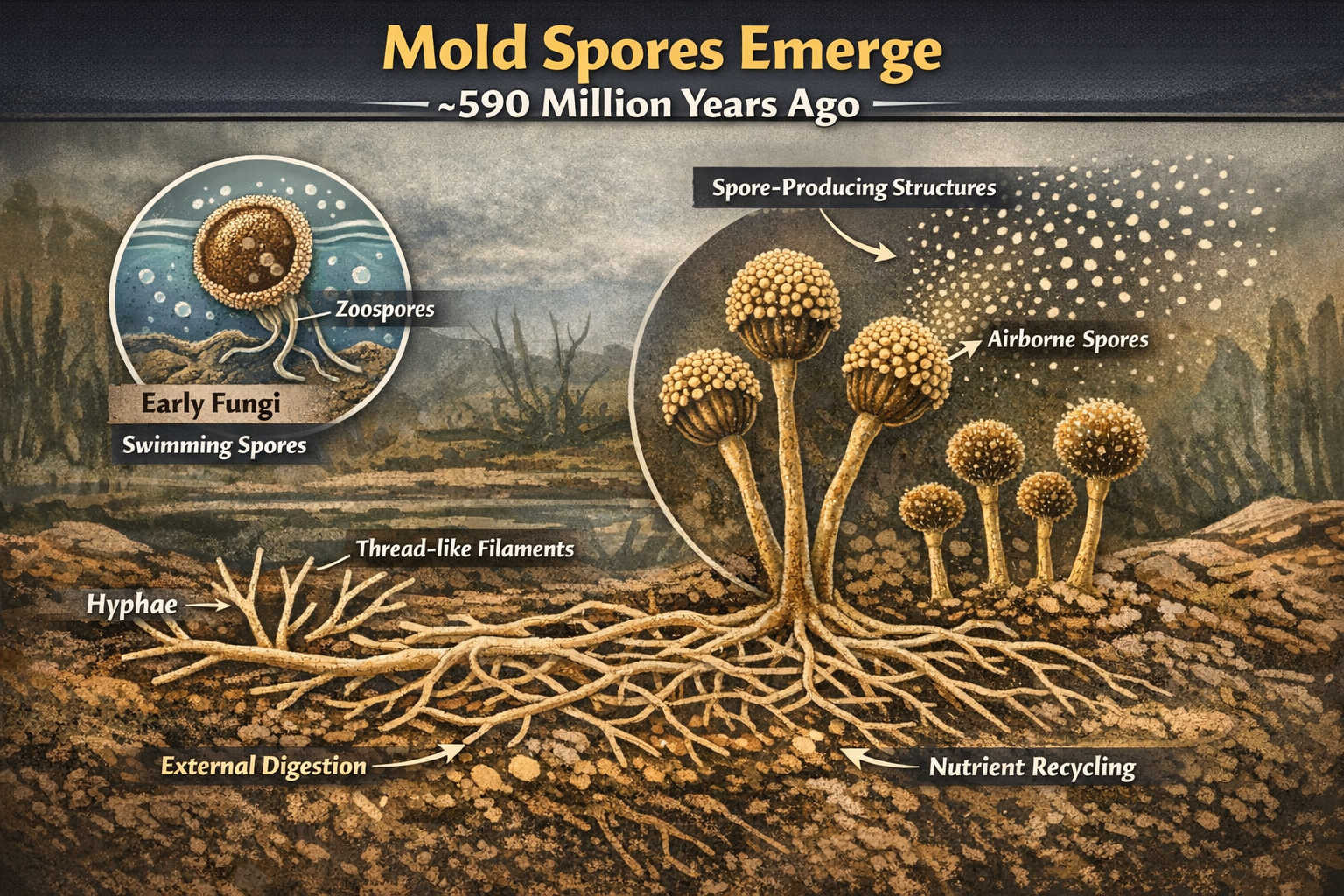
Mold spores helped early fungi spread farther, feed efficiently, and become some of Earth’s great recyclers.
Mold Spores Emerge Read More »
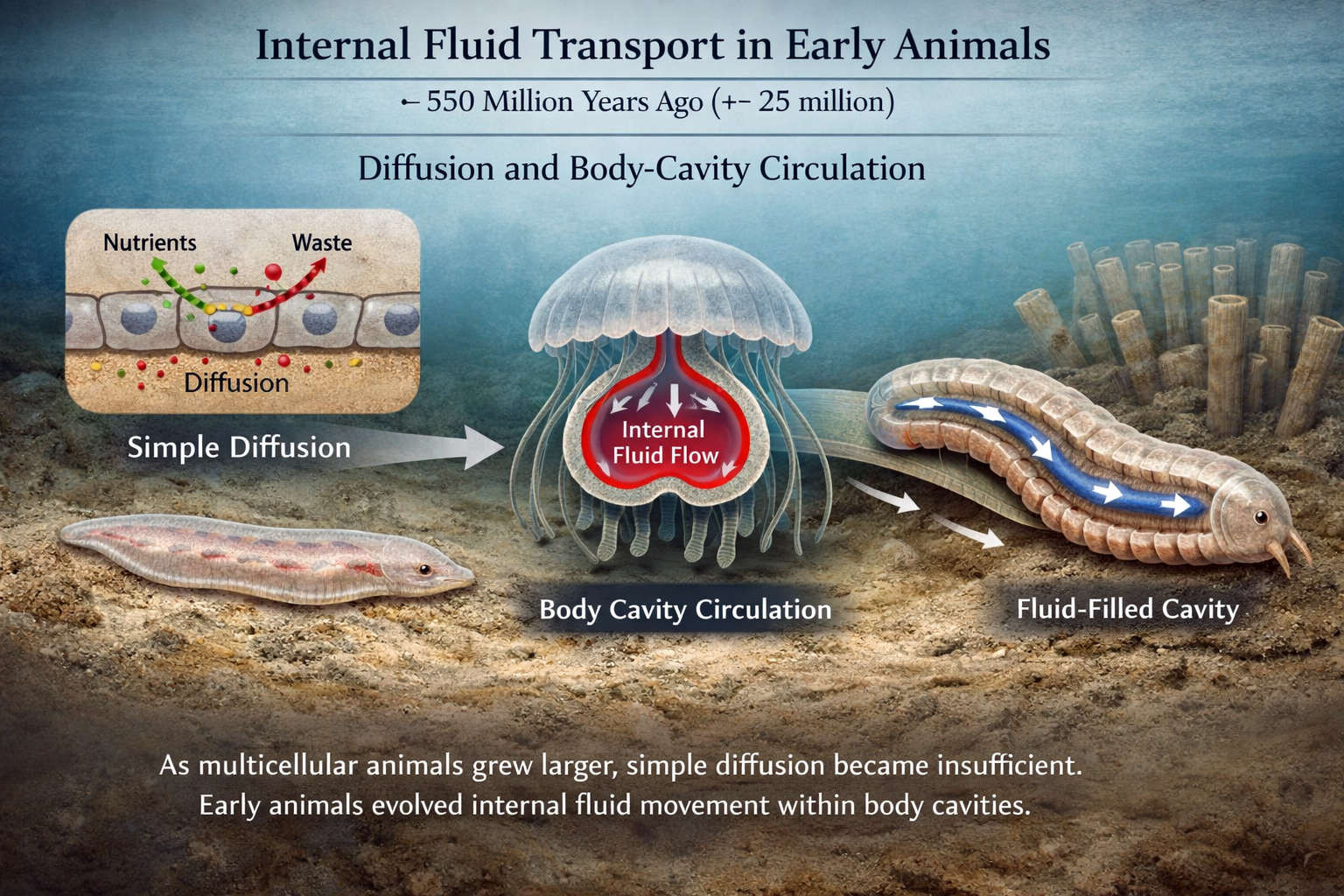
As animals grew larger, simple diffusion was no longer enough, so internal fluid movement evolved.
Internal Fluid Transport in Early Animals Read More »
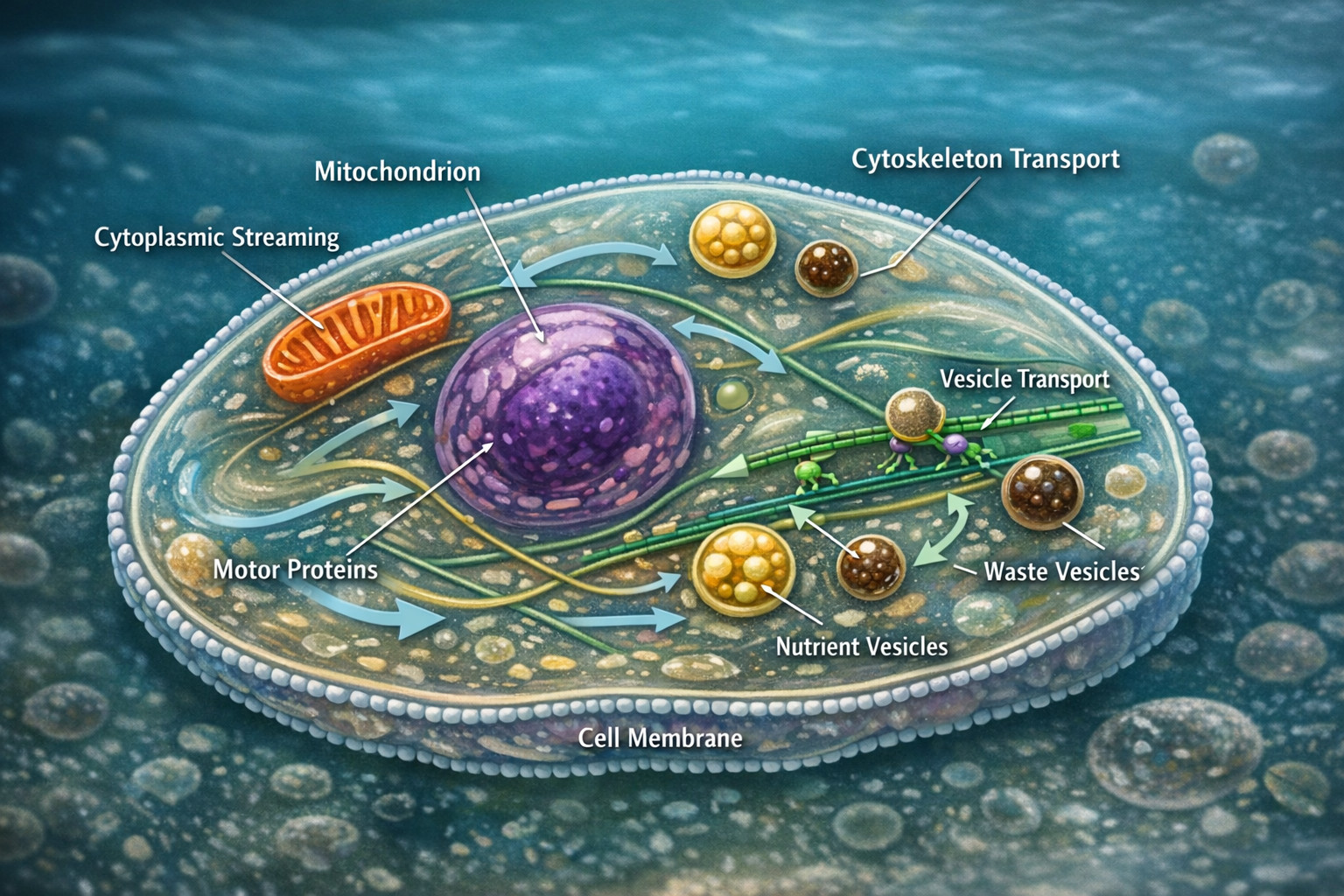
Before animals evolved circulatory and digestive systems, cells first evolved internal flow to move materials around inside themselves.
Intracellular Flow and Nutrient Exchange Read More »
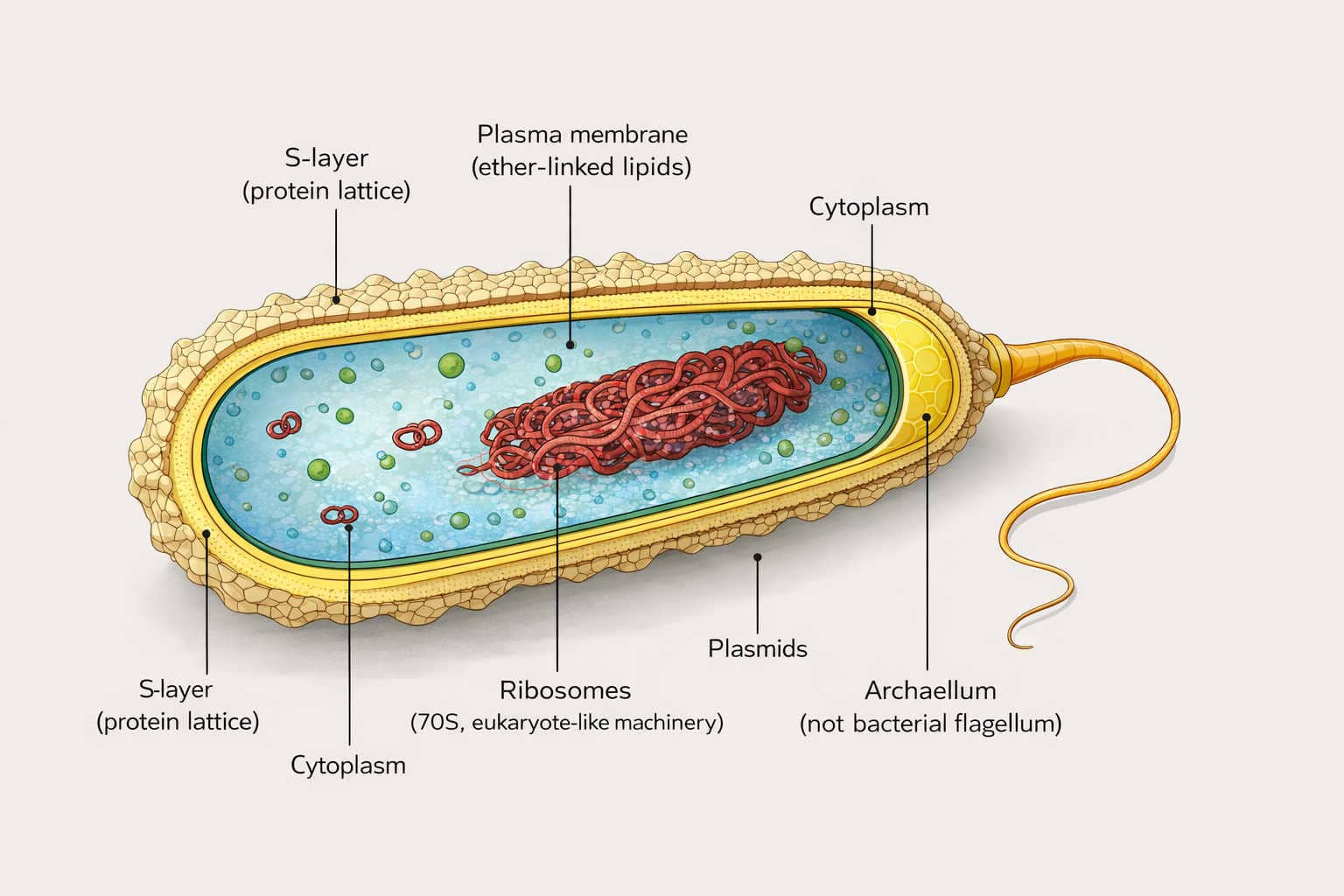
Archaea are a primary branch of early life, and eukaryotes emerged from within this archaeal lineage.
About 1 billion years ago, giant viruses evolved by “hoarding” cellular genes, expanding their genomes until they blurred the line between a simple virus and a living cell.
Giant viruses (within Varidnaviria) Read More »
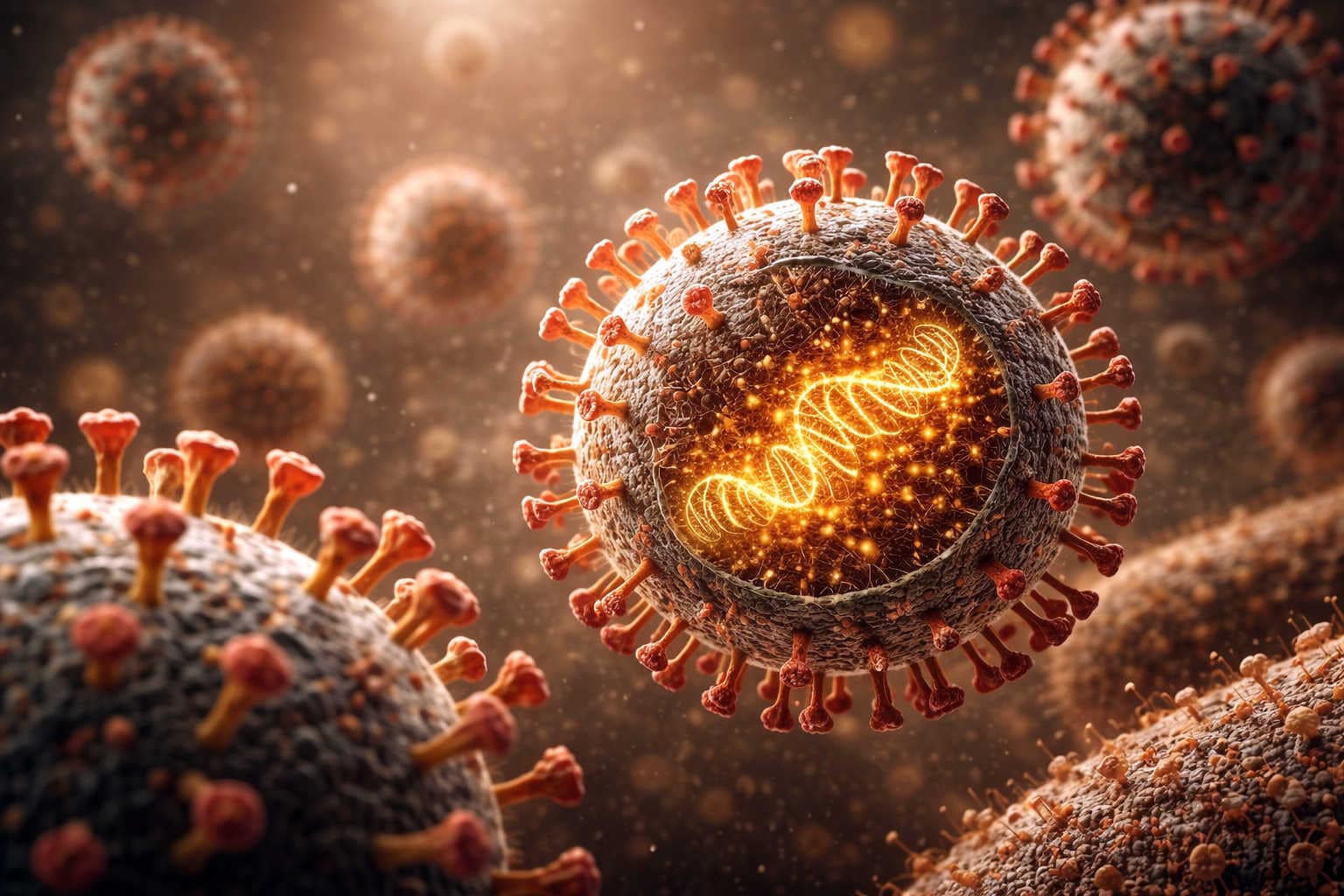
About 1.25 billion years ago, Retroviruses emerged by transforming “jumping genes” into infectious agents, mastering the ability to rewrite a host’s permanent genetic code.
Retroviruses (within Riboviria) Read More »
About 1.75 billion years ago, Monodnaviria evolved as “runaway” genetic loops (plasmids) that stole structural proteins from other viruses to become independent, single-stranded DNA parasites.
About 2.75 billion years ago, the Varidnaviria evolved a unique “Double Jelly-Roll” protein fold to build massive, diverse shells, allowing viruses to scale up from tiny parasites to “giant” viruses that mimic cells.
Virus: Varidnaviria Read More »
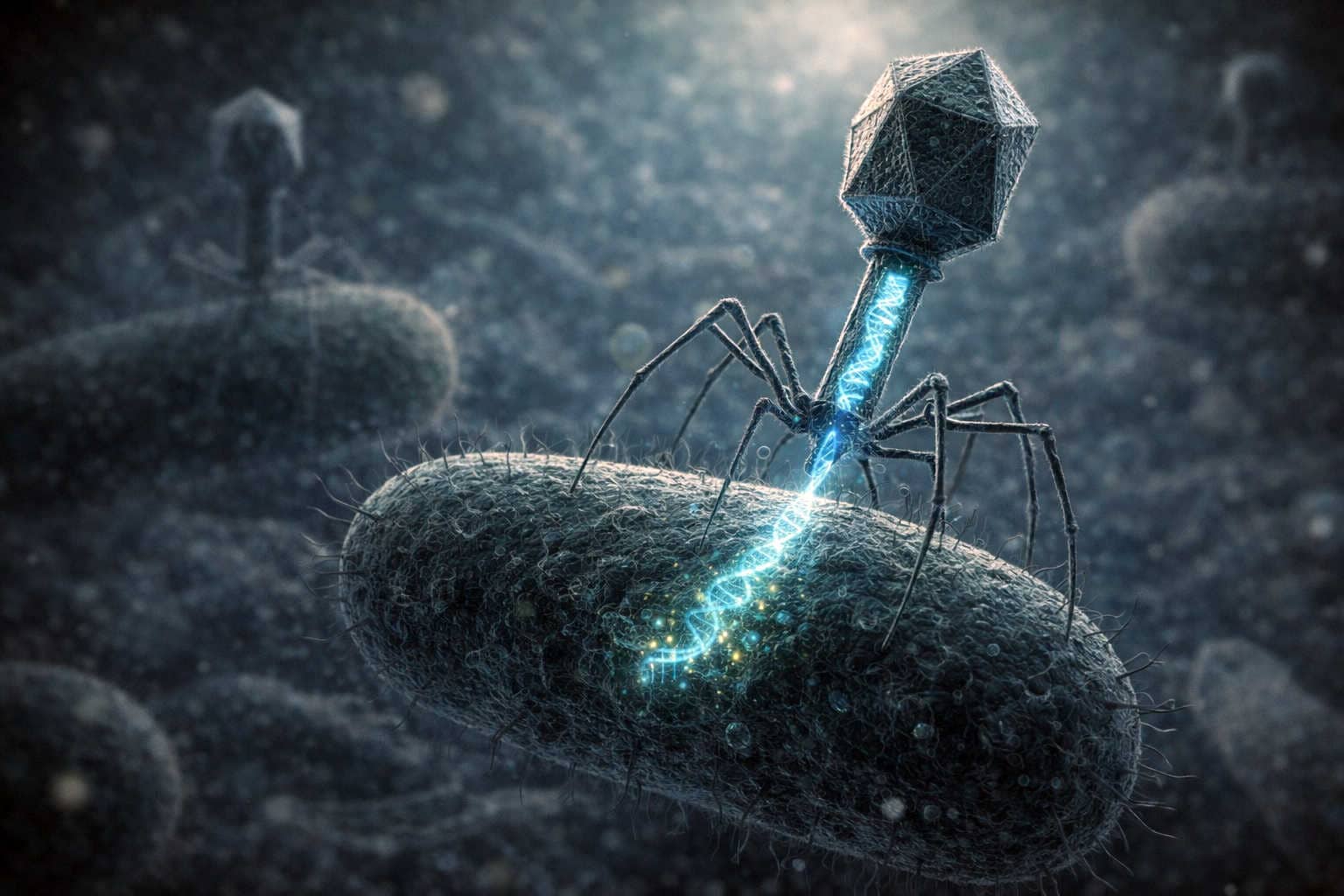
Around the time of the first bacteria, about 3.2 billion years ago and after LUCA, the Duplodnaviria evolved a high-pressure, icosahedral protein armor that turned viruses into biological syringes capable of injecting DNA into any domain of life.
Bacteriophage → Duplodnaviria Read More »
About 3.7 billion years ago, RNA virus ancestors may trace back to the RNA world, but we can’t prove whether they predate LUCA or arose just after.
Virus: Riboviria (Early RNA replicators) Read More »
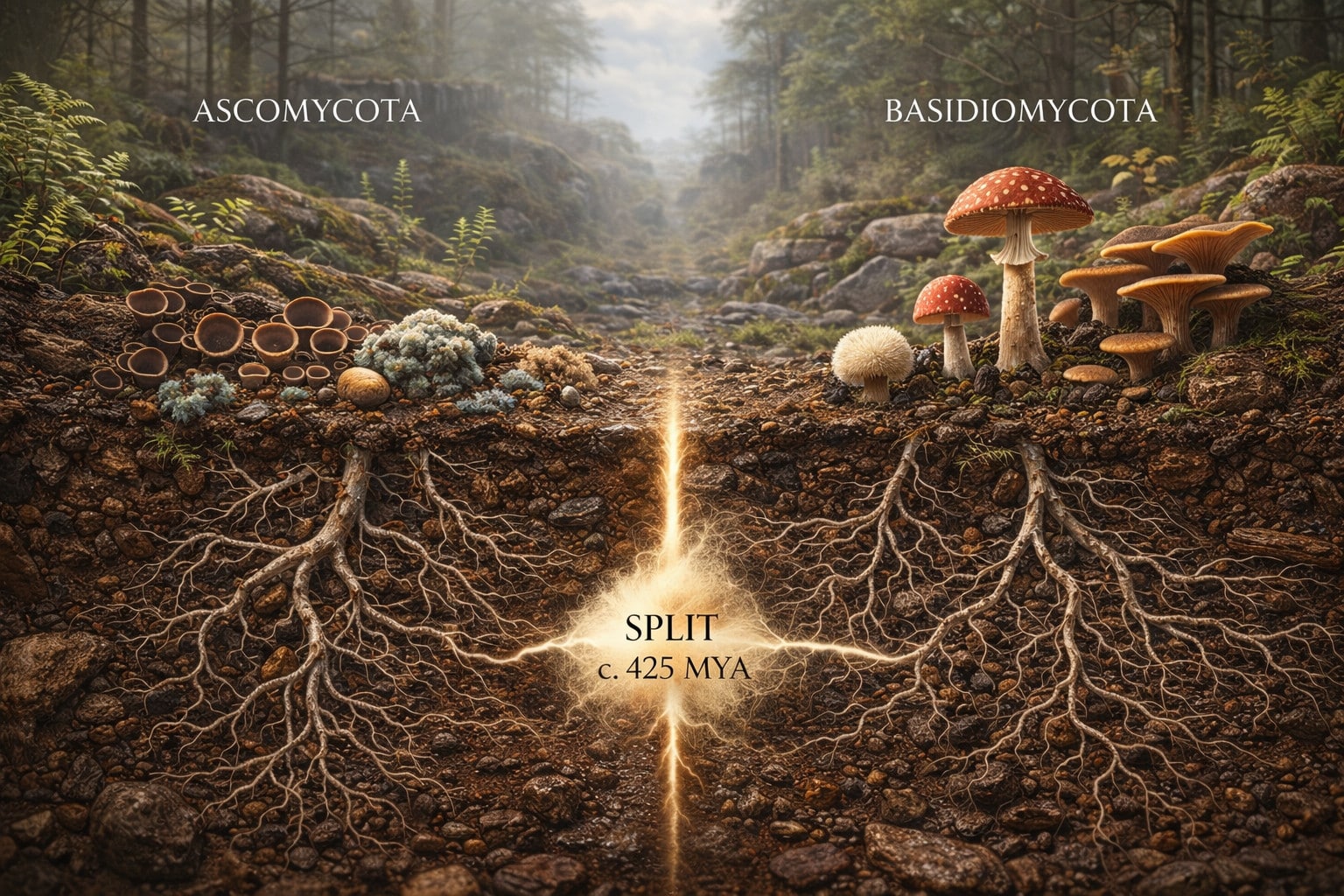
About 425 million years ago, modern fungi morphology emerges. Modern fungi are built on one ancient division.
Fungal Great Split: Ascomycota & Basidiomycota Read More »