Explore Science-first Philosophy

Philosophy

Natural philosophy includes dividing ideas into empirical, rational, and irrational as well as understanding their philosophical context. Philosophical context includes understanding the timing of discoveries and rediscoveries as well as the philosophers behind them and their publications.

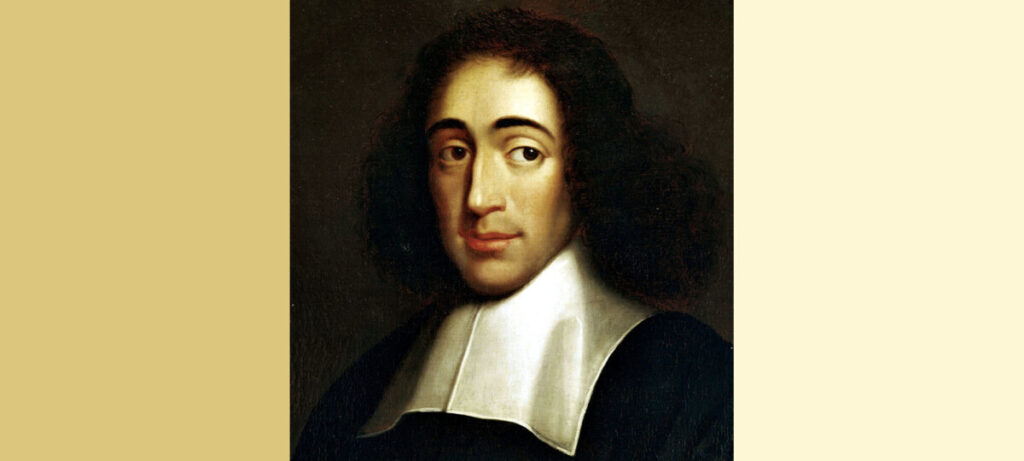
https://commons.wikimedia.org/wiki/File:Spinoza_(cropped).jpg

Baruch Spinoza

16 Generations Ago 30 Phil, Chapter 25: Spinoza and Monism The Dutch philosopher Spinoza was a lens grinder by profession, a proponent of Rationalism, and an early founder of Enlightenment. My favorite concept of Spinoza’s is that God is nature, and nature is God. For me, whenever I read God in prayers and such I […]

Baruch Spinoza Read More »

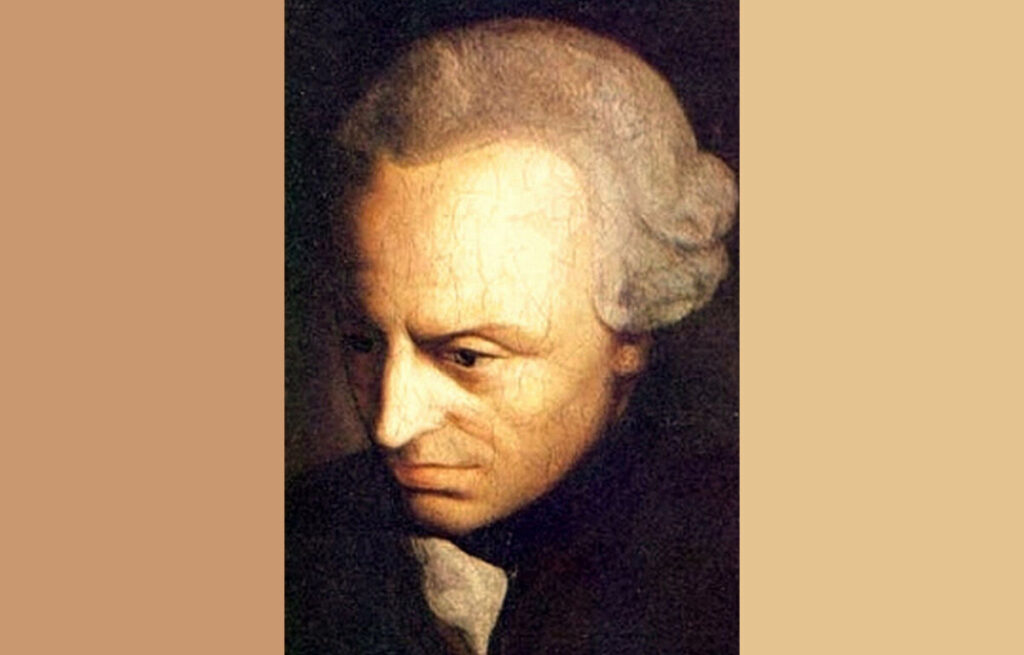
Immanuel Kant

12 Generations Ago 30 Phil, Chapter 28: Kant and Kantianism The German philosopher Immanuel Kant (22 April 1724 – 12 February 1804) was a central figure of the Enlightenment which put reason as the tool of choice when discussing God, nature, and humanity.  Some of my favorite translated quotes include: All our knowledge begins with

Immanuel Kant Read More »

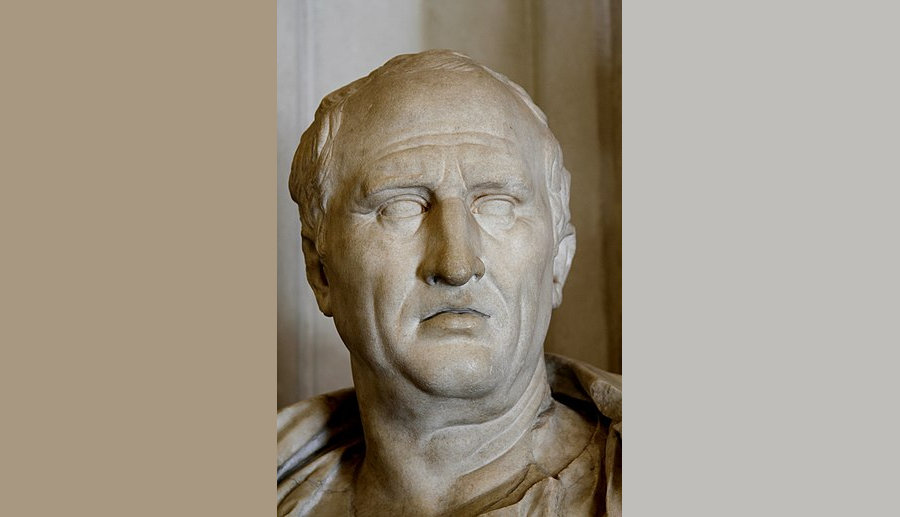
Cicero (106-43 BCE)

The stoic philosopher Marcus Tullius Cicero was one of Rome’s greatest orators and had an immense influence on the Latin language. Some of my favorite translated Cicero quotes: If you have a garden and a library, you have everything you need. Friendship improves happiness and abates misery, by the doubling of our joy and the

Cicero (106-43 BCE) Read More »

Epictetus (50-135 CE)

Epictetus stressed that philosophy is a way of life and not simply analytical. The stoic philosopher Epictetus was cited by Marcus Aurelius in his Meditations. Epictetus was one of the future emperor’s teacher’s during childhood up to the age of 14. Although no writings by Epictetus are known, his students documented his beliefs and sayings

Epictetus (50-135 CE) Read More »

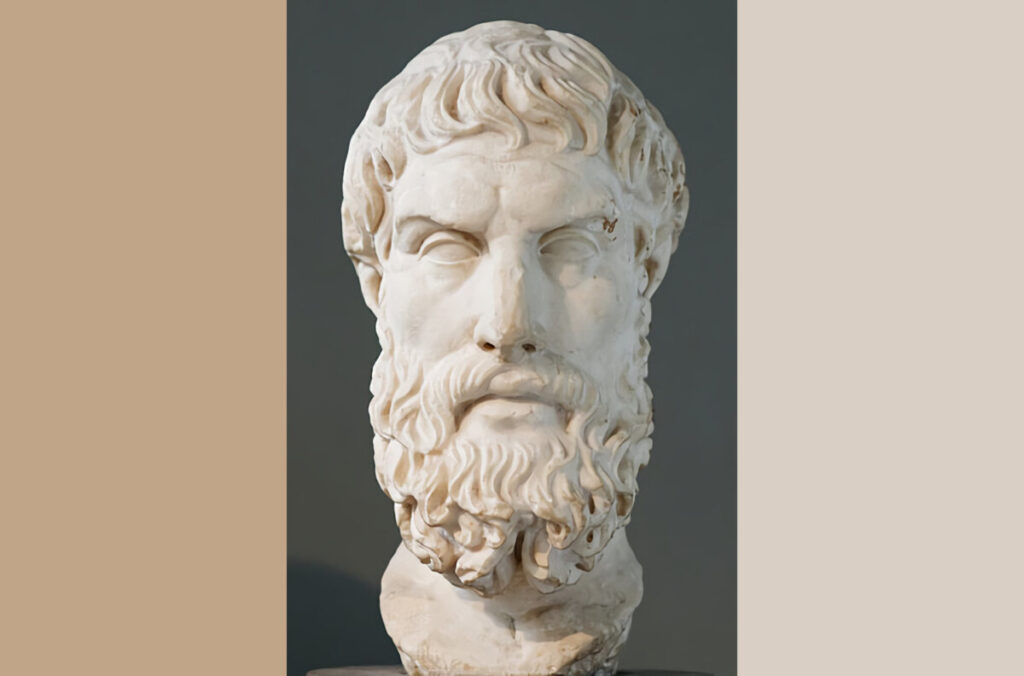
Epicurus

94 Generations Ago 30 Phil, Chapter 11: Epicurus and Epicureanism Epicurus founded Epicureanism in 307 BCE. The goal of Epicureanism is to help people attain a happy (eudaimonic), tranquil life characterized by ataraxia (free from fear) and aponia (free from pain). He authored over 300 books, scrolls, none of which survived the test of time. Some

Epicurus Read More »

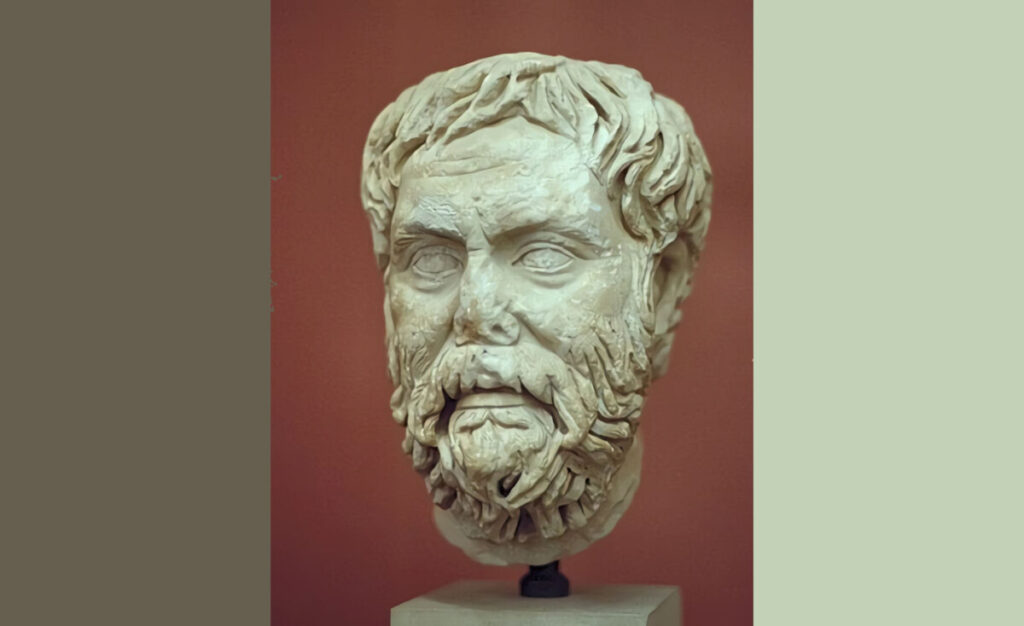
Pyrrho of Elis

95 Generations Ago 30 Phil, Chapter 10: Pyrrho of Elis and Skepticism   Pyrrho, the skeptic, believed no one knows anything. Everything can be questioned. The best approach is to keep an open mind. Like Socrates, Pyrrho himself left no writings. We know of his teachings through his students and later writers.  Phrases that best represent

Pyrrho of Elis Read More »

Realistic Earth Planet against the the star sky

Spherical Earth

The Greeks knew the Earth is spherical. For example, Pythagoras (570-495 BCE), Aristotle (384-322 BCE), and Euclid (circa 450 BCE) wrote about the Earth as a sphere. Eratosthenes (276-194 BCE) even calculated the circumference of the Earth to within 1%. He also wrote about the idea that India could be reached by sailing westward from

Spherical Earth Read More »

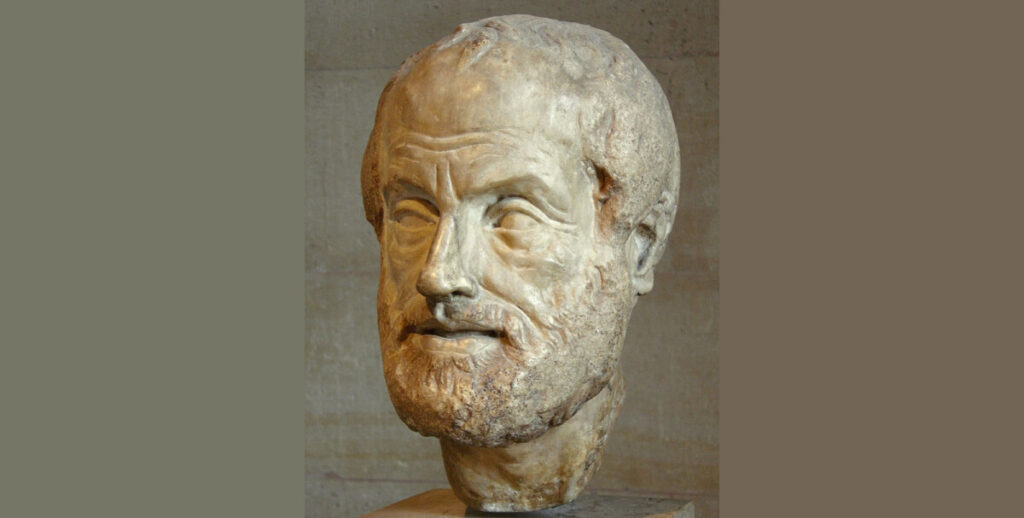
Aristotle

96 Generations Ago 30 Phil, Chapter 9: Aristotle and Empiricism Aristotle was the greatest Greek philosopher and covered nearly all subjects including physics, biology, zoology, metaphysics, logic, ethics, aesthetics, poetry, theatre, music, rhetoric, psychology, linguistics, economics, politics, meteorology, geology, and government. His Aristotelian philosophy characterized by deductive logic and an analytic inductive method. Some of

Aristotle Read More »

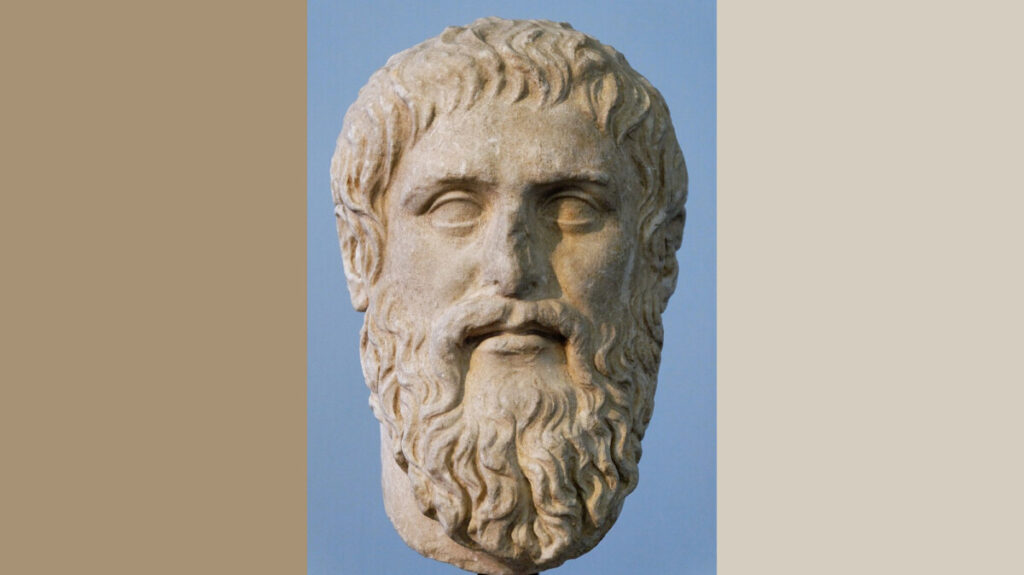
Plato

98 Generations Ago 30 Phil, Chapter 8: Plato and Rationalism Plato was a Greek philosopher born in Athens. He was a student of Socrates and a teacher of Aristotle. Plato’s Theory of Forms asserts that the reality is only a shadow, or image, of the true reality of the Realm of Forms — abstract, perfect,

Plato Read More »

Cuneiform Writing

Earliest known writing in Africa/Middle East zone. Human DNA today is the same as 50,000 BCE. There is no doubt there were many dozens and perhaps thousands of civilizations prior to the Sumer civilization, but Sumer is the earliest known, or at least the earliest well known. The Sumer civilization first established between 6500 and

Cuneiform Writing Read More »

Confucius

103 Generations Ago 30 Phil, Chapter 5: Confucius and Confucianism Confucius is remembered for his practical applied philosophy. His sayings are a reflection of many centuries of common sense sayings making his philosophy deeply Chinese. My favorite sayings: The man who knows he can, and the man who knows he cannot, are both correct. Real

Confucius Read More »

Scroll to Top