


Prehistory begins when our current cognitive abilities had largely settled, around 50,000 BCE—a date that will move as science refines our understanding. This period tells the early modern human story before written records. It ends at 4000 BCE, a deliberate marker placed near the midpoint of major creation narratives, separating mythic origin stories from recorded history.
Prehistory: This timeline uses the Holistic Paleolithic Framework, for details, go to Holistic Paleolithic Framework: A New Look at Prehistory.
World History: Prehistory
Extinction: Homo Erectus
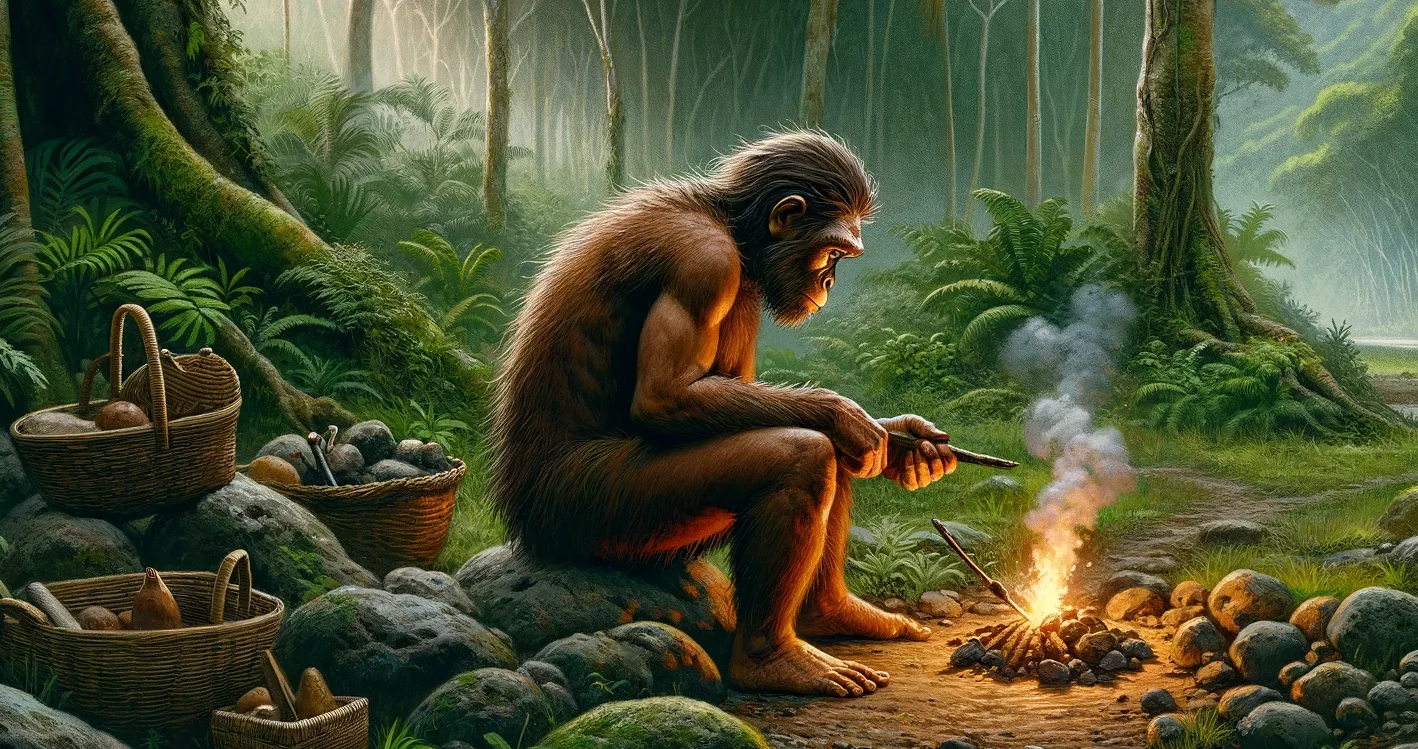
Imagined image of the last of the Homo erectus, circa 50,000 BCE. By this time, Homo erectus had lived in many parts of Africa, the Middle East, Europe, and Asia. Now, as their numbers keep dwindling, they are mostly in just a few spots in Asia.
112,000 Years (+/- 3000 years)
World Population: 1.5 Million
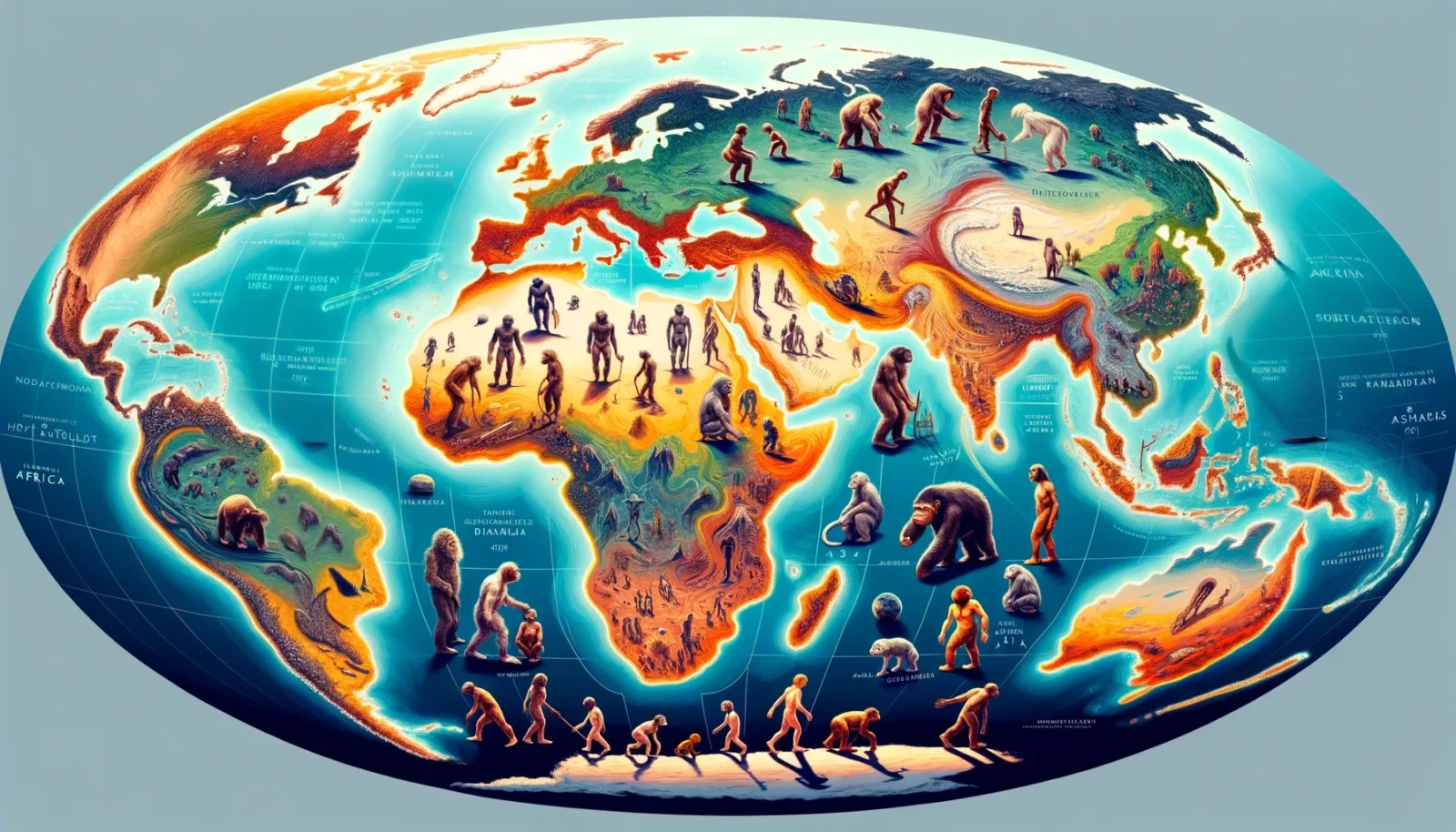
By 70,000 BCE
Cuban Underwater City: More Research Needed

50,000 BCE
Speculative: 20 to more than 50 thousand years ago.
Extinction: Homo floresiensis
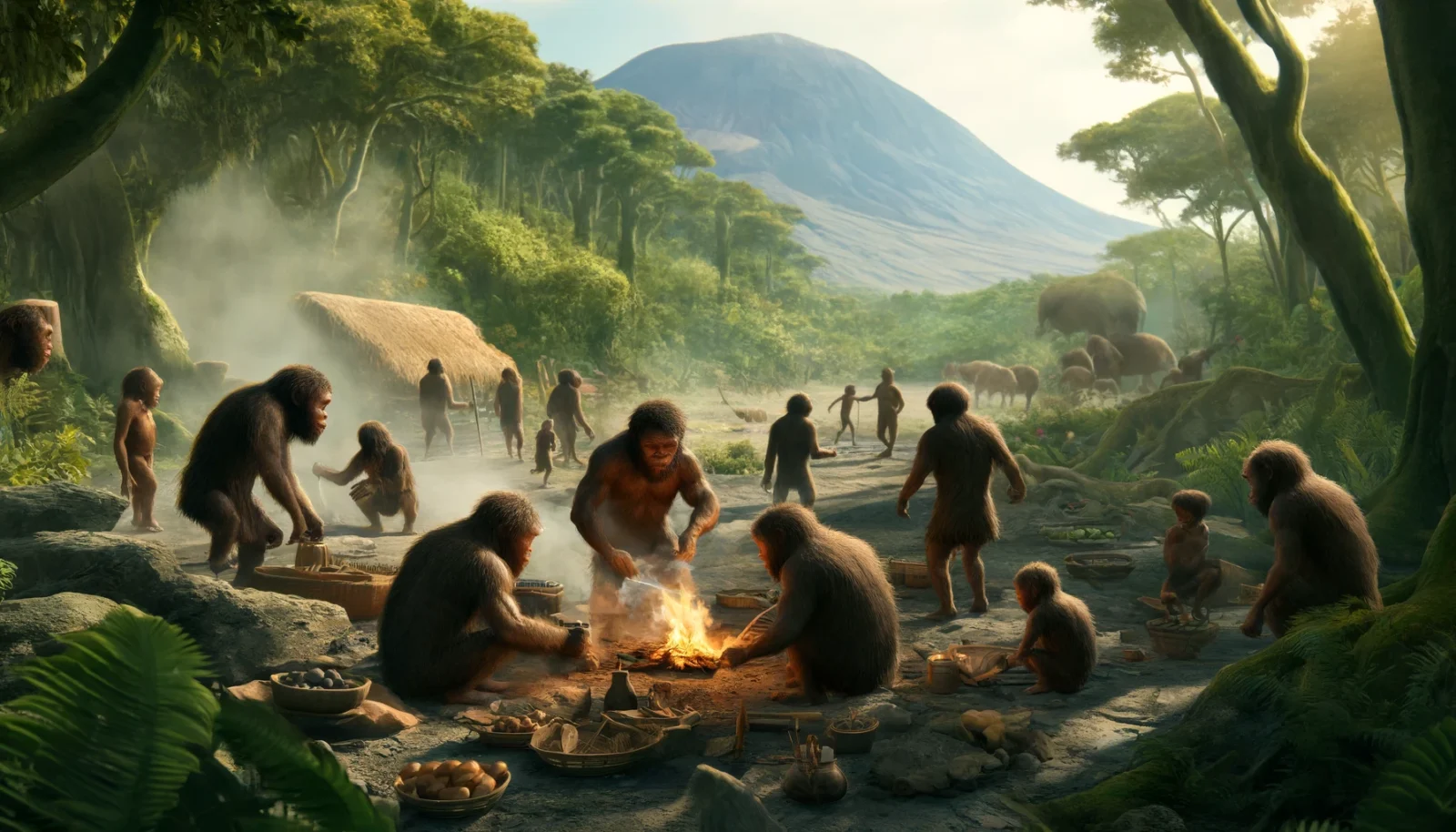
Imagined image: the last of the Homo floresiensis. This intriguing human species might have been the last descendents of Homo habilis or the Asian Homo erectus: the famed Dmanisi people.
48,000 BCE
58,000 to 48,000 BCE
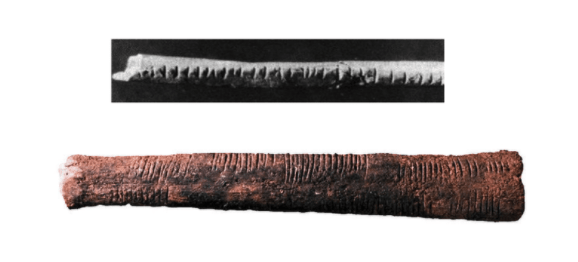
Lebombo bone: First Lunar Phase Counter
42,200 BCE
44,200 to 43,000 years old according to 24 radiocarbon tests
Sulawesi Cave Art
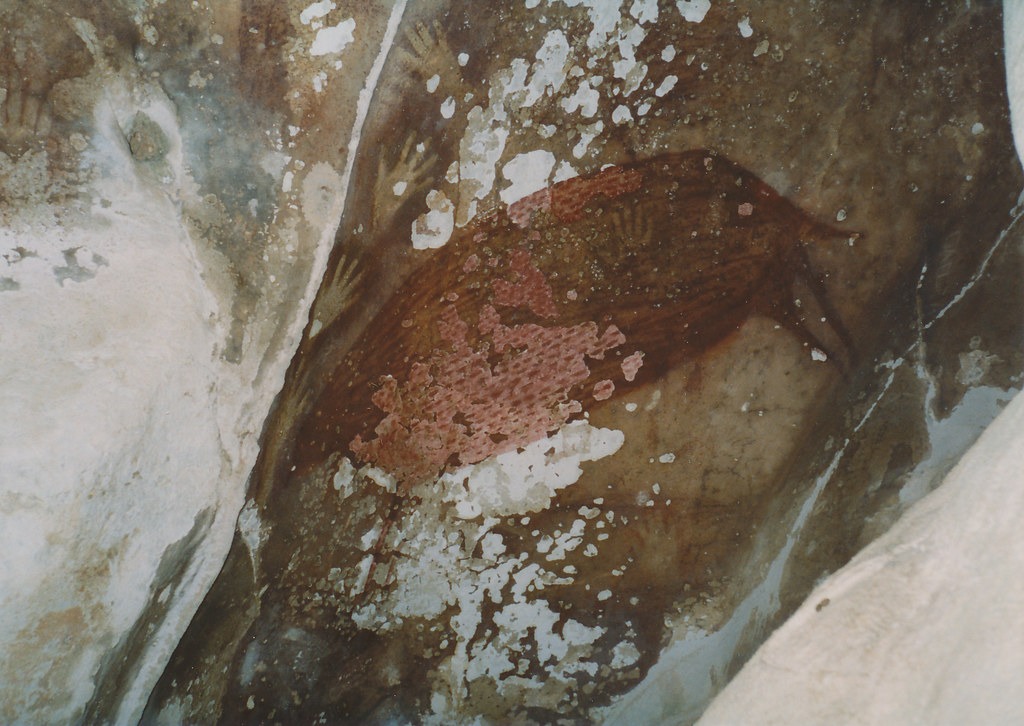
"<a href="https://www.flickr.com/photos/40295335@N00/4409150010" target="_blank" rel="noopener noreferrer">Cave painting of wild pig, Leang-Leang, South Sulawesi</a>" by <a href="https://www.flickr.com/photos/40295335@N00" target="_blank" rel="noopener noreferrer">Joel Abroad</a> is licensed under <a href="https://creativecommons.org/licenses/by-nc-sa/2.0/" target="_blank" rel="noopener noreferrer">CC BY-NC-SA 2.0</a>
circa 41,900 BCE
Phenotype Variation: Eye Shape and the Epicanthic Fold

circa 40,000 BCE
Upper Paleolithic Cave Art with Symbols
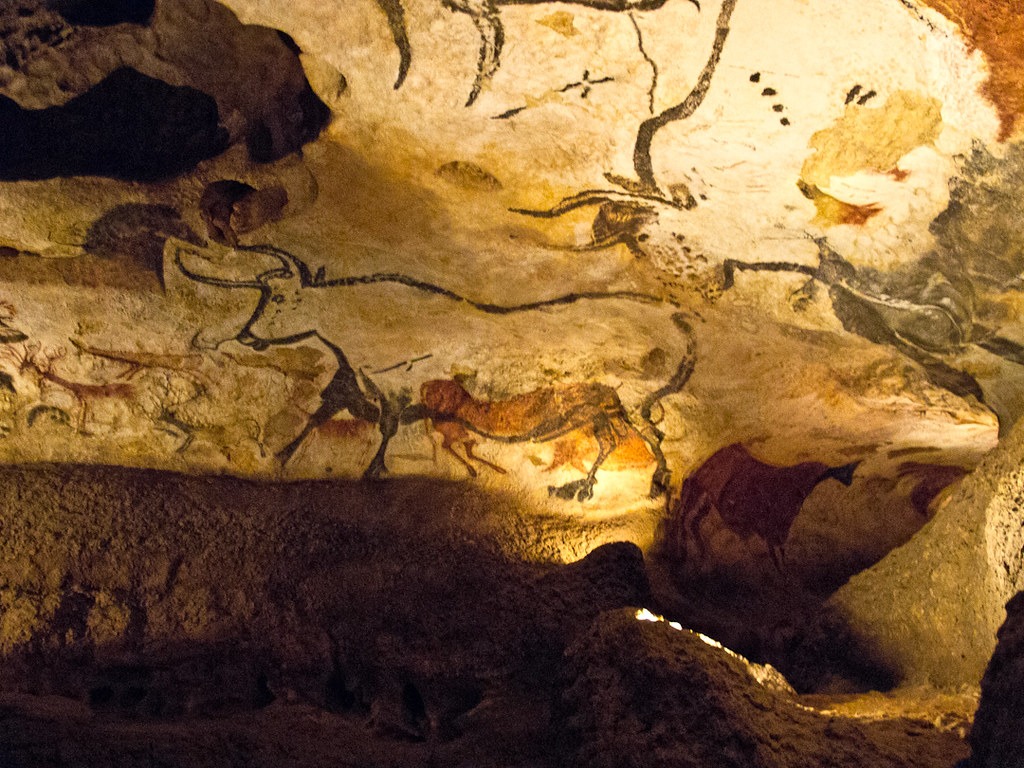
"<a href="https://www.flickr.com/photos/50193753@N02/5961953059" target="_blank" rel="noopener noreferrer">Lascaux II - Hall of The Bulls</a>" by <a href="https://www.flickr.com/photos/50193753@N02" target="_blank" rel="noopener noreferrer">Adibu456</a> is licensed under <a href="https://creativecommons.org/licenses/by-nc/2.0/" target="_blank" rel="noopener noreferrer">CC BY-NC 2.0</a>
circa 40,000 BCE
Spain & France
Extinction: Denisovans
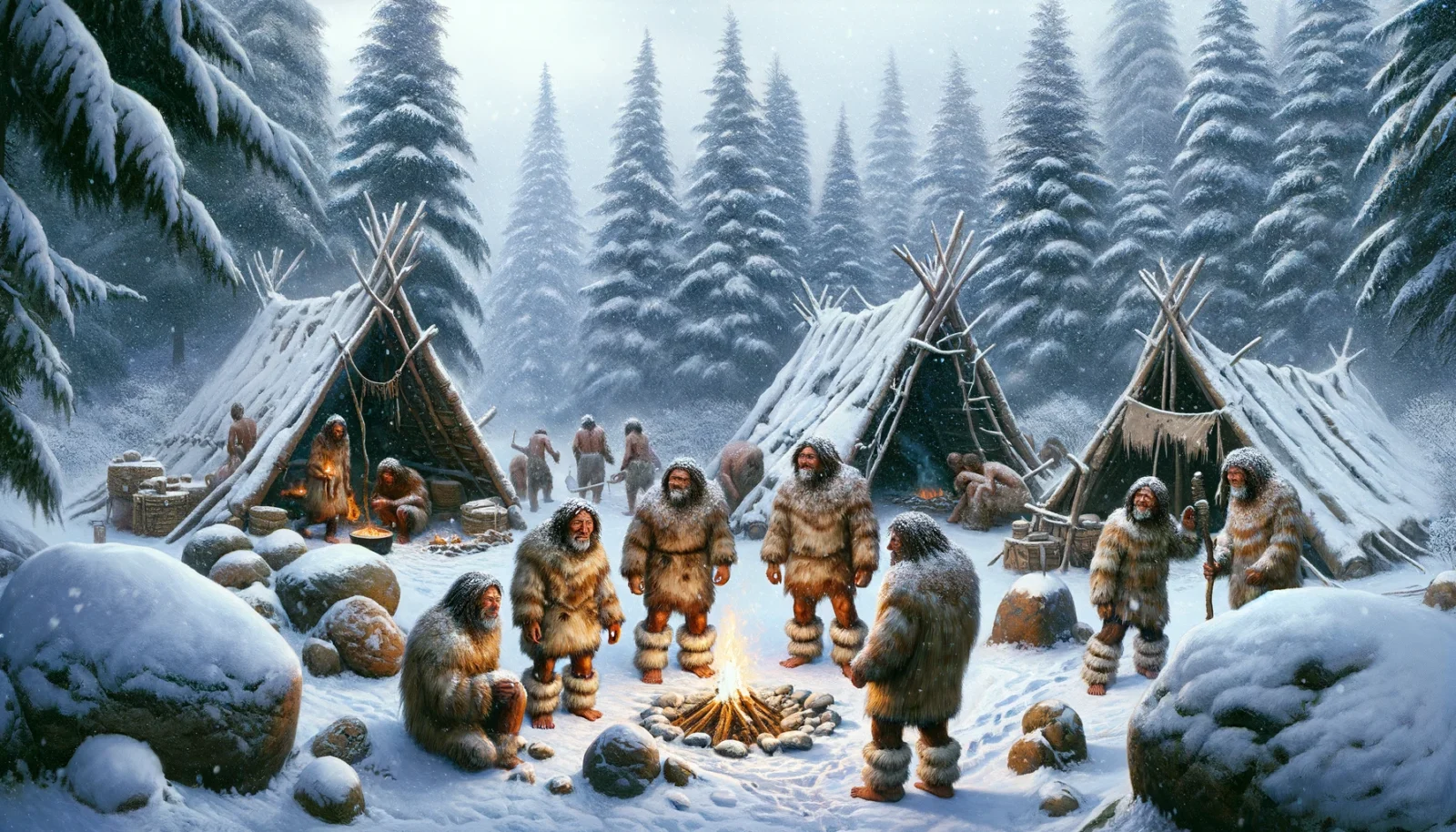
Imagined image of the last of the denisovans in Siberia, circa 40,000 BCE.
40,000
Venus of Hohle Fels
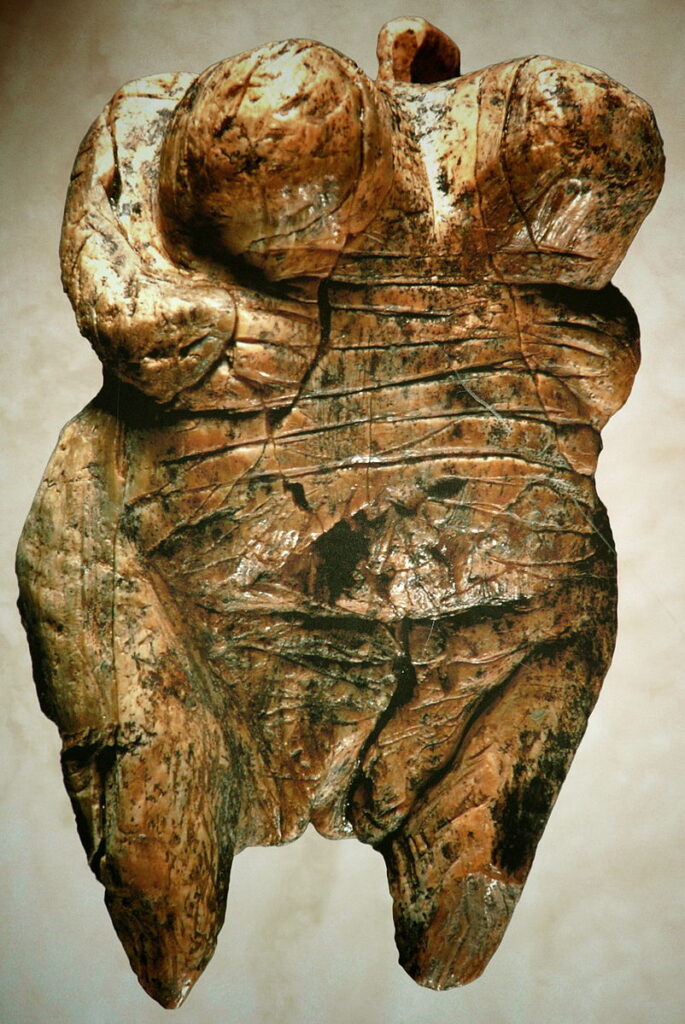
Venus of Hohle Fels figurine (height 6 cm (2.4 in)), which may have been worn as an amulet and is the earliest known, undisputed example of a depiction of a human being in prehistoric art.
38,000 BCE
38,000 to 33,000 BCE
Bone Flute
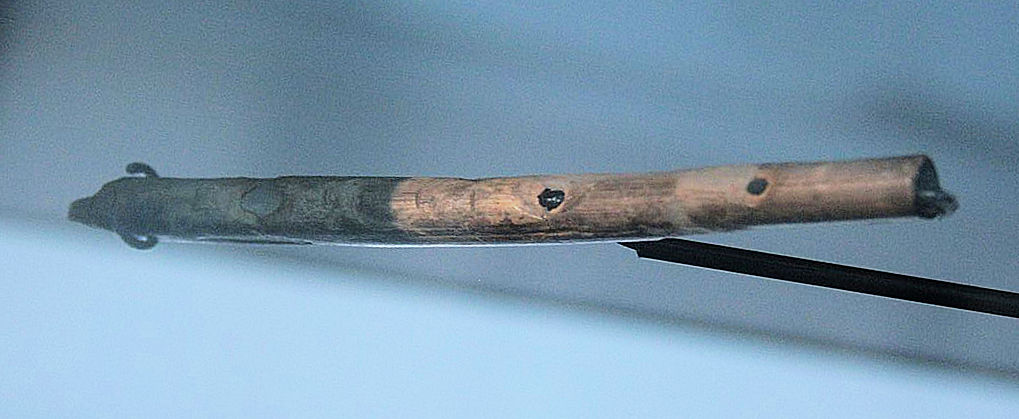
38,000 BCE
38,000 to 33,000 BCE
Extinction: Neanderthals
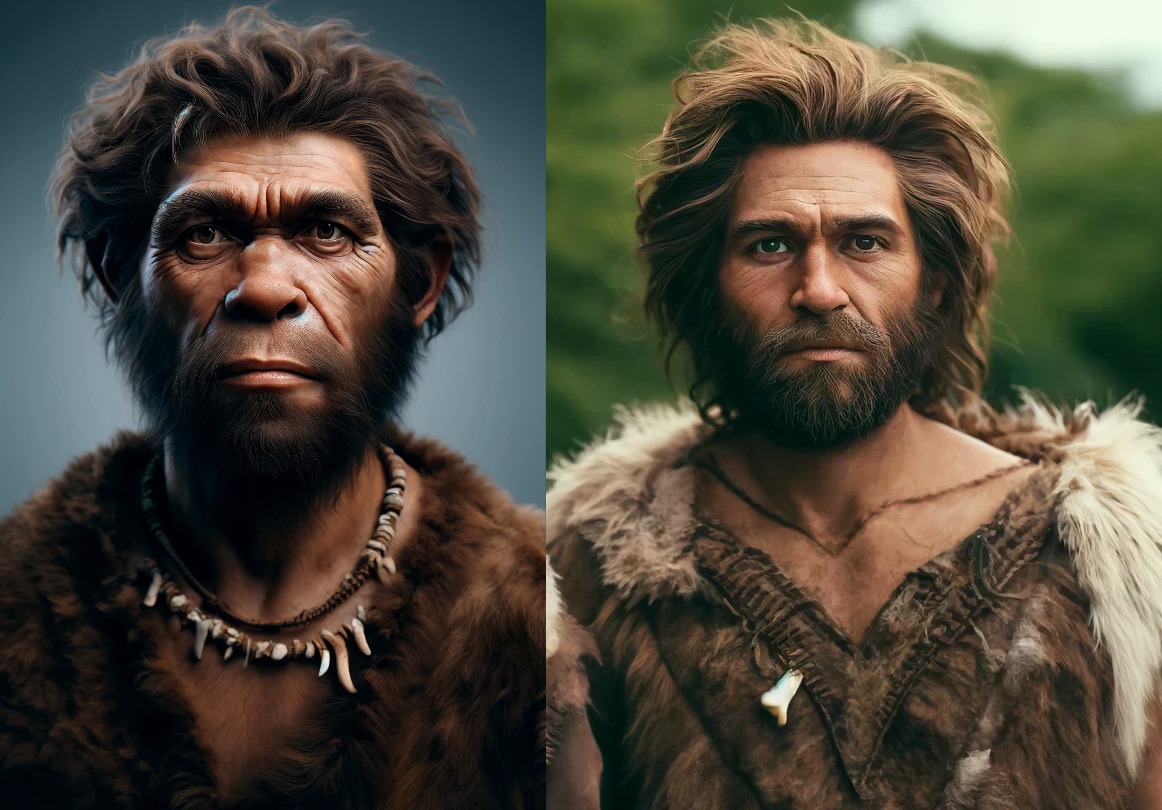
Imagined image, circa 29,000 BCE. Left is a neanderthal; right is a Homo sapien.
38,000 BCE
Extinction range: 38,000 BCE to 22,000 BCE
Chauvet Cave Paintings
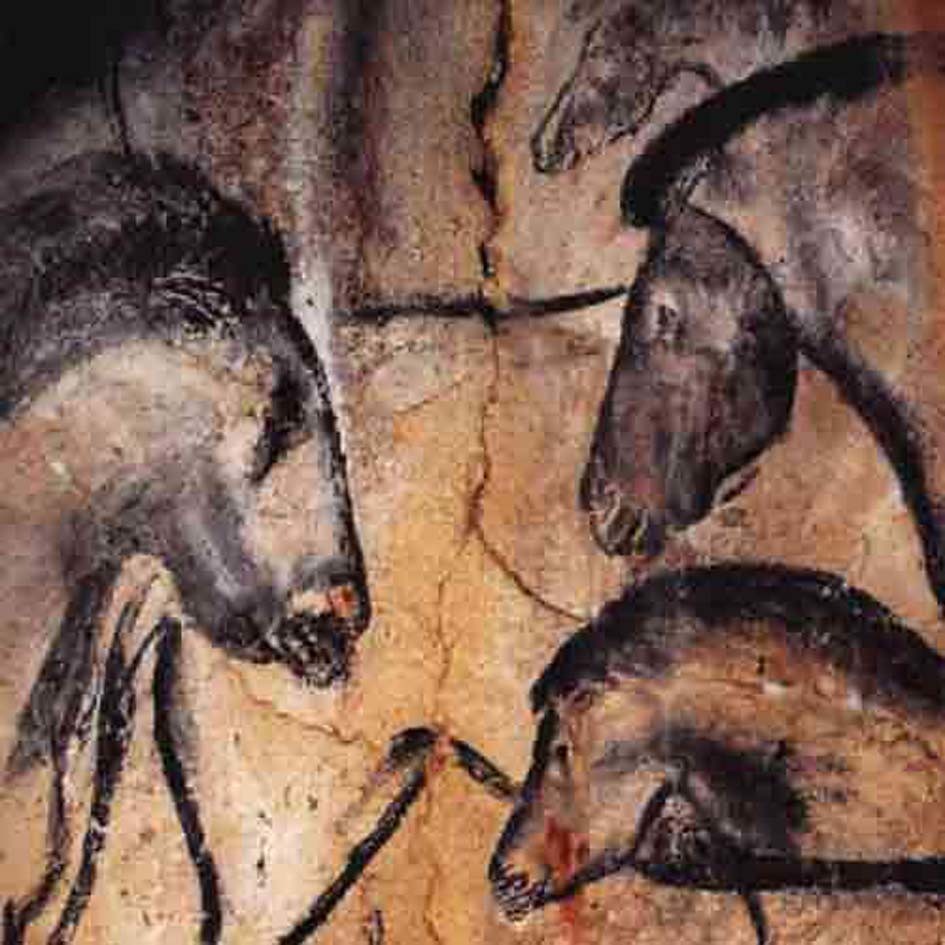
"<a href="https://www.flickr.com/photos/78953420@N00/988861704" target="_blank" rel="noopener noreferrer">Chavet cave horses</a>" by <a href="https://www.flickr.com/photos/78953420@N00" target="_blank" rel="noopener noreferrer">jimforest</a> is licensed under <a href="https://creativecommons.org/licenses/by-nc-nd/2.0/" target="_blank" rel="noopener noreferrer">CC BY-NC-ND 2.0</a>
30,000 BCE
Czeck: Dolní Věstonice Community

Around 30,000 years ago, the Dolní Věstonice community in the Czech Republic thrived. They built huts from mammoth bones and animal hides, crafted ceramic figurines, and engaged in hunting and daily activities.
30,000 BCE
29 to 32 thousand years ago.
Sunghir Burial Site

30,000 BCE
32,000 Years Ago
Advanced Sewing Needles
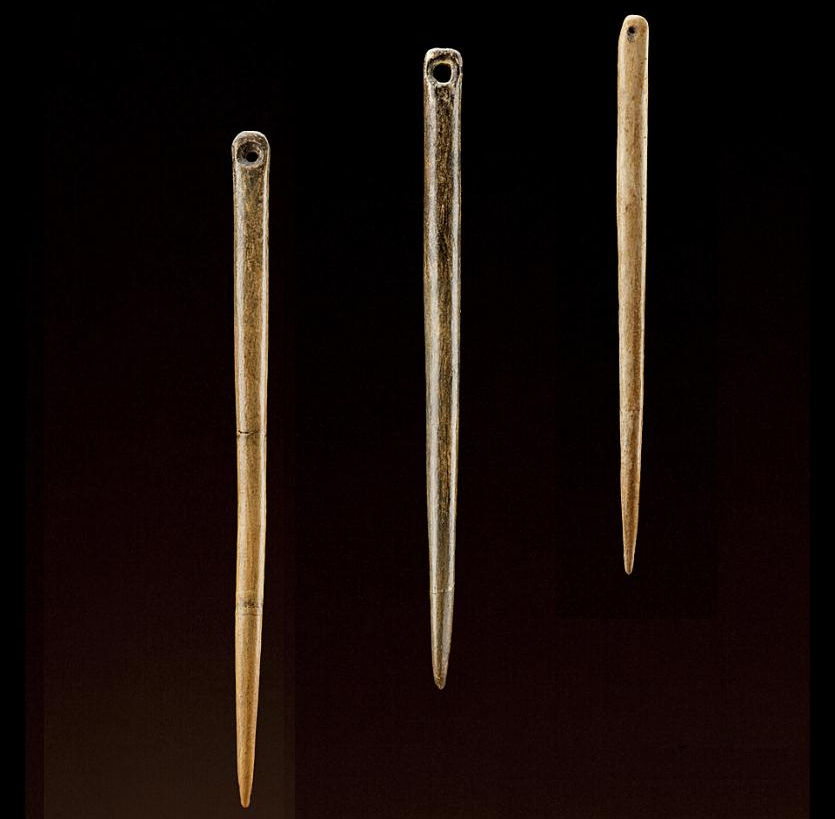
28,000 BCE
28,000 to 21,000 BCE
Modern Skin Color Variety Emerges

By 25,000 Years Ago (+/- 10,000 years)
Seasonal Settlements at Franchthi Cave
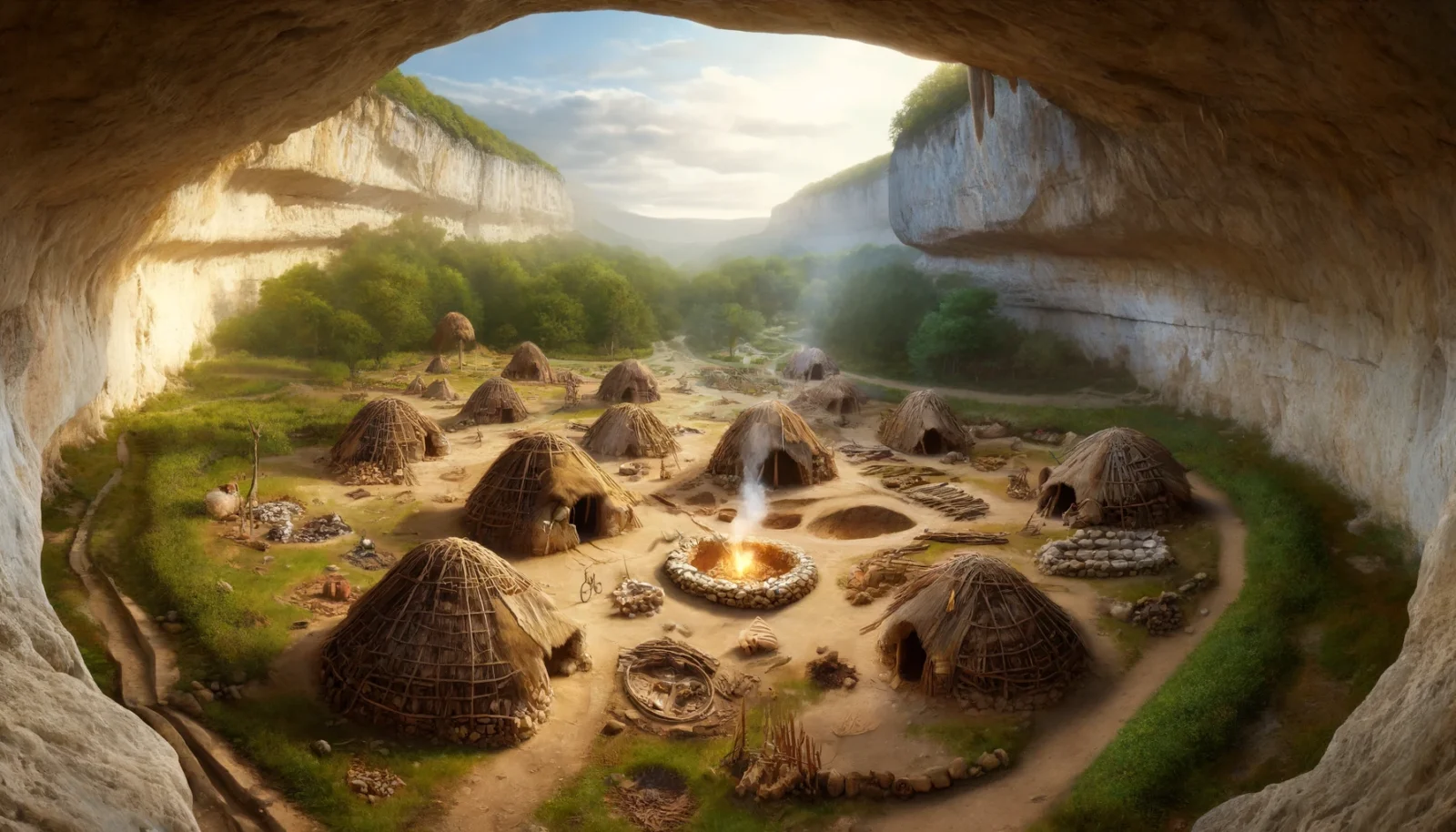
20,000 BCE
From circa 20,000 to 3,000 BCE
Earliest Known Domesticated Animal: Dogs
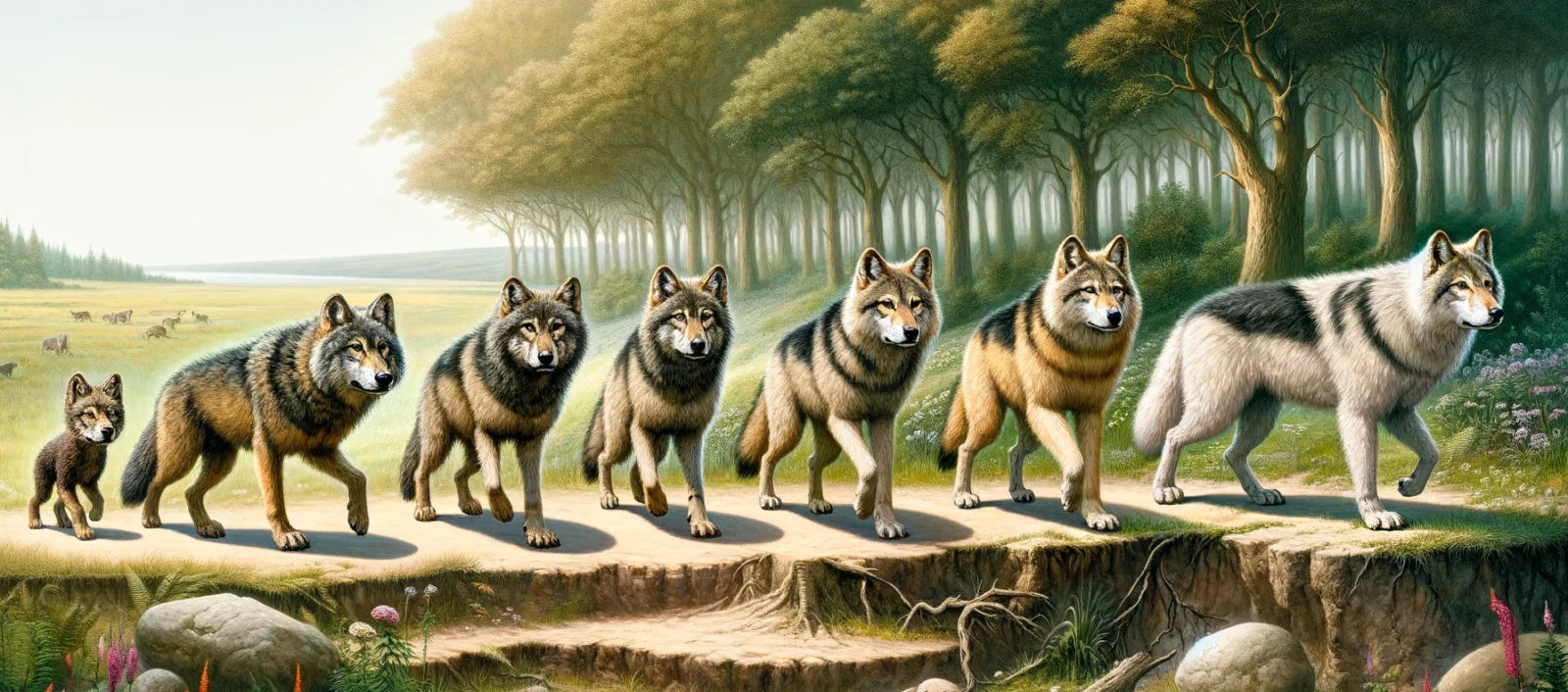
Wolves were domesticated between 15 to 40 thousand BCE and evolved to a subspecies. Dogs (Canis lupus familiaris) are generally considered the same species as wolves (Canis lupus) but are classified as a subspecies.
By 20,000 BCE
Ukraine: Mezhyrich Community

Mezhyrich archaeological site, 15 to 20 thousand years ago.
18,000 BCE
15 to 20 Thousand Years Agao
Seasonal Settlements at Monte Verde
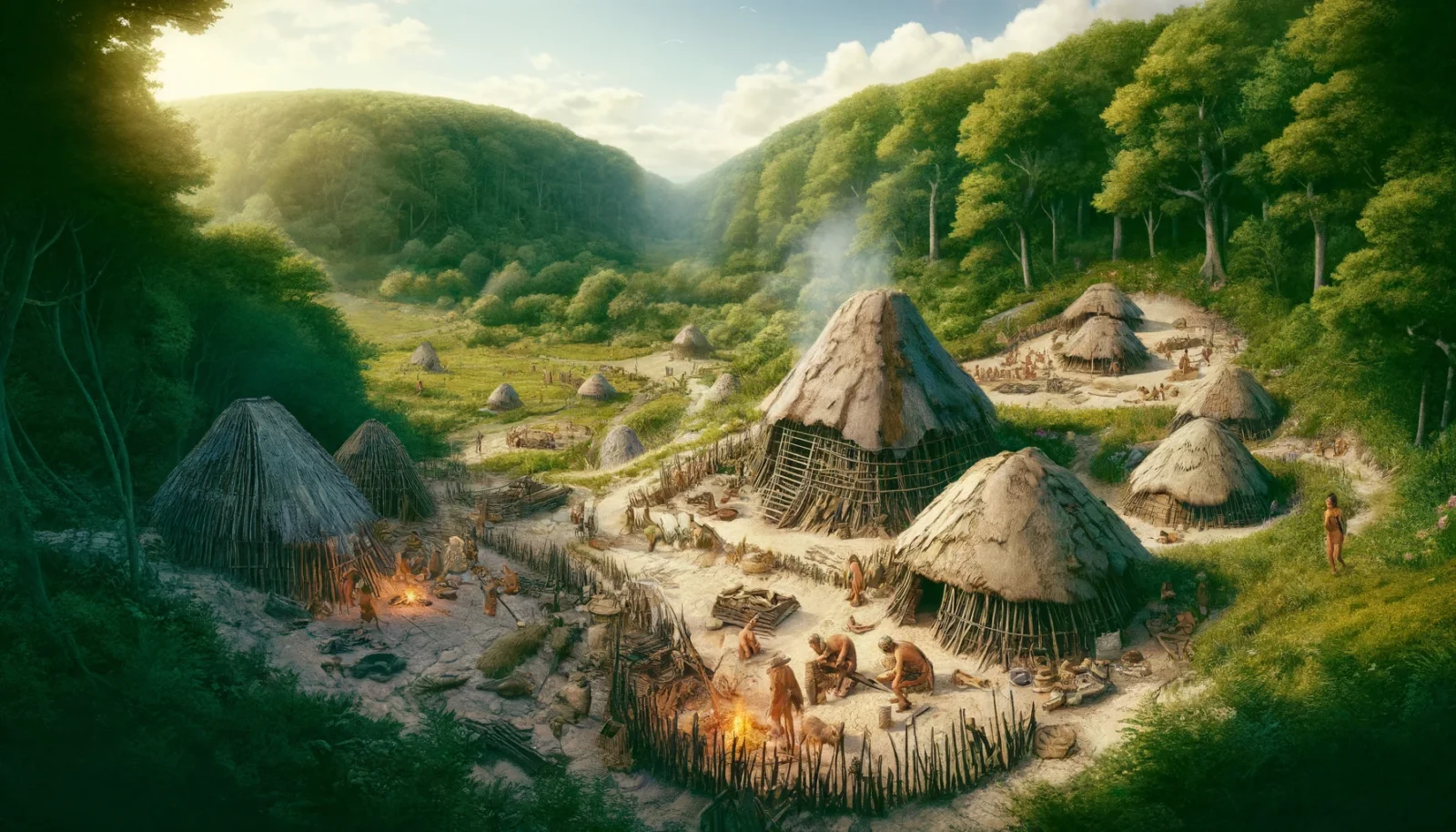
circa 14,800 BCE
The Clovis Culture
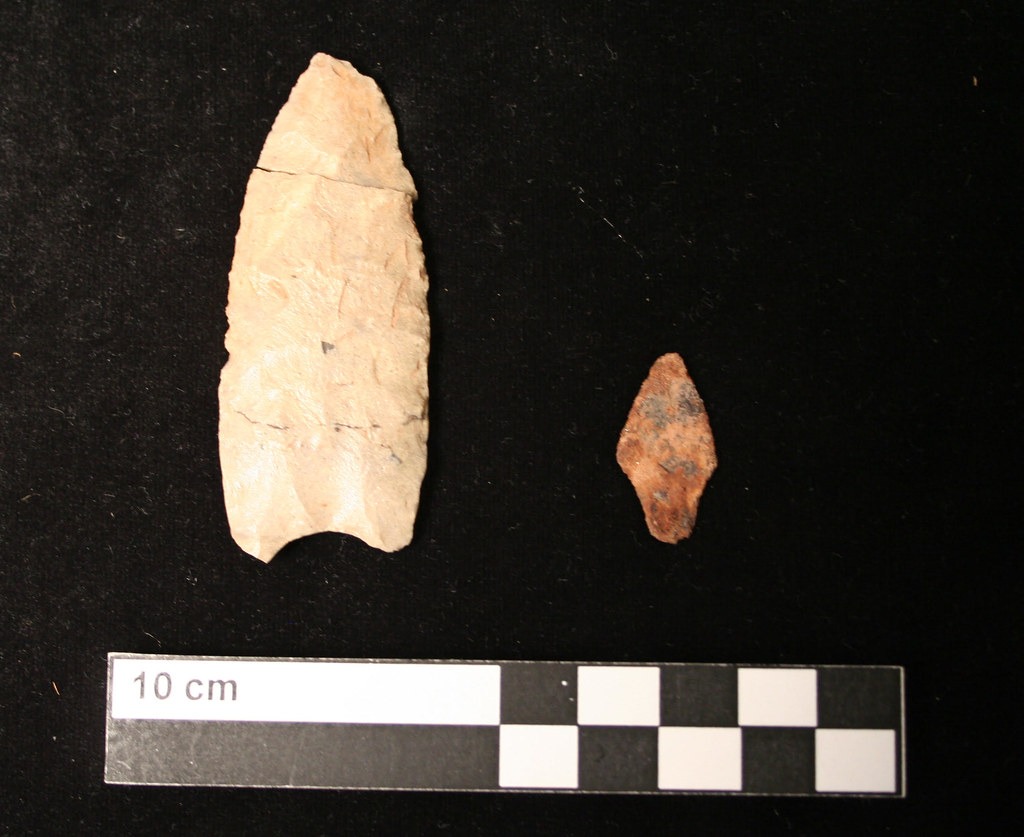
"<a href="https://www.flickr.com/photos/76340031@N02/26453695844" target="_blank" rel="noopener noreferrer">Edge of the Cedars State Park Museum</a>" by <a href="https://www.flickr.com/photos/76340031@N02" target="_blank" rel="noopener noreferrer">BLMUtah</a> is licensed under <a href="https://creativecommons.org/publicdomain/mark/1.0/" target="_blank" rel="noopener noreferrer">CC PDM 1.0</a>
circa 13000 BCE
The Invention of Bread

Assortment of baked bread
Before 14,400 BCE
Middle East
Tell Abu Hureyra
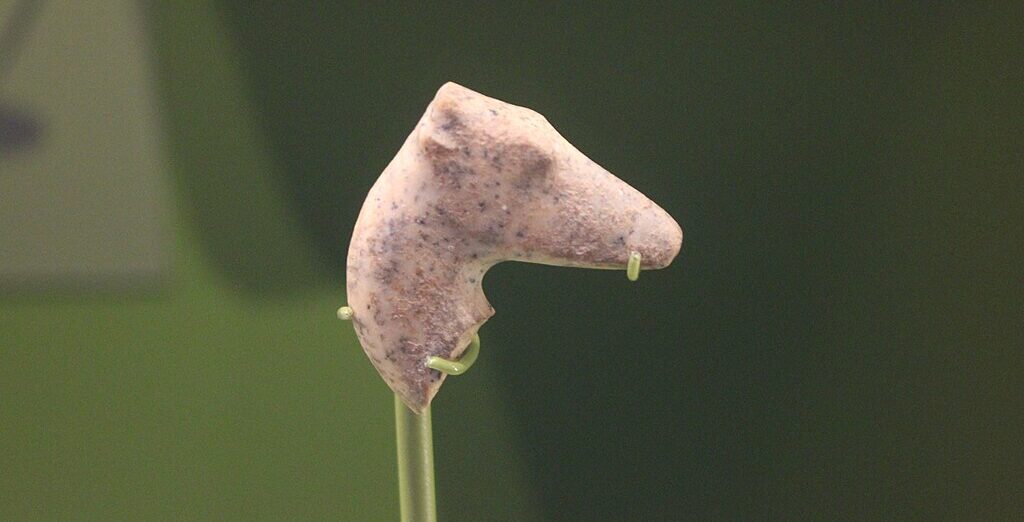
circa 11,500 BCE
Evidence of farming: rye seeds
World Population: 4 Million
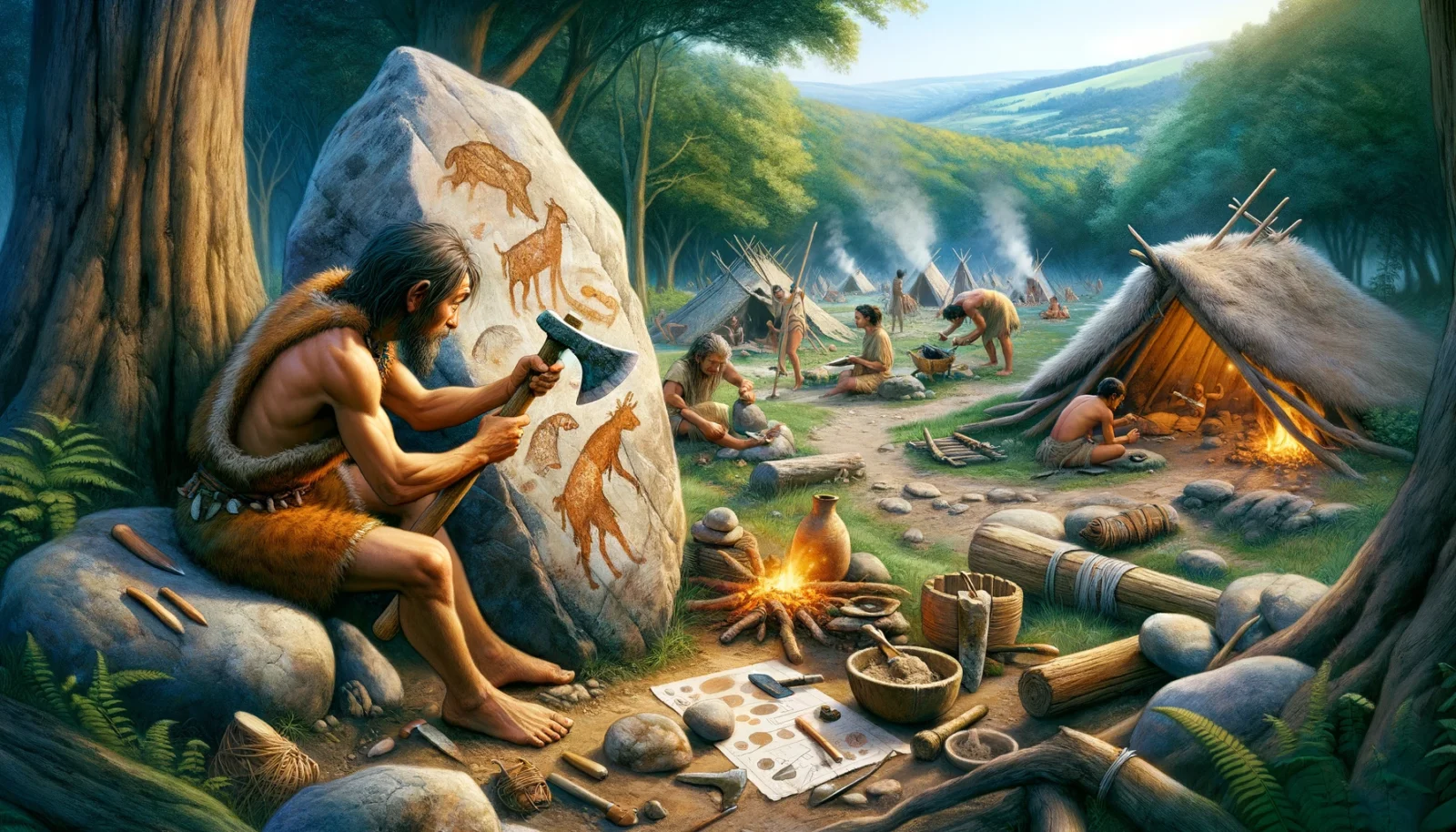
10,000 BCE
Estimates range from 2 to 5 million
Neolithic Revolution
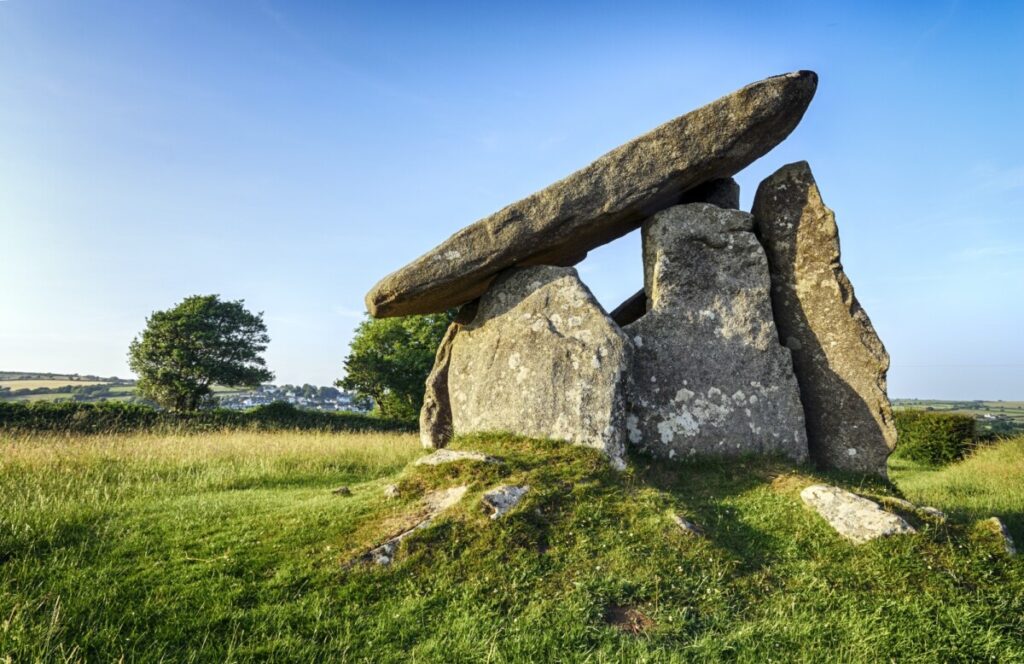
Trevethy Quoit a Portal Dolmen in Cornwall
9,700 BCE
Start of "our" Holocene geological epoch
Göbekli Tepe Culture (11000 BCE to 8000 BCE)
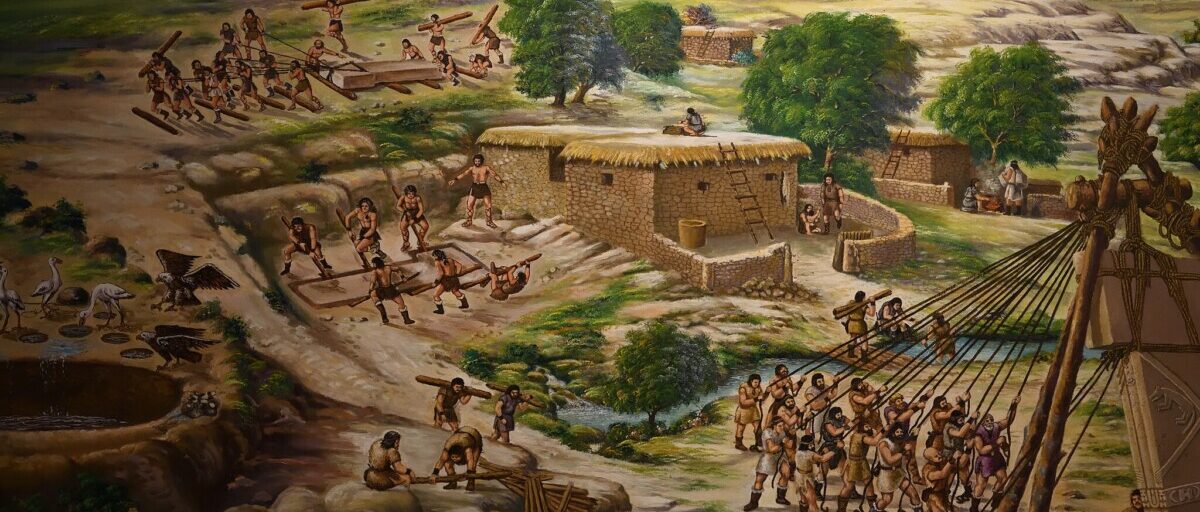
Start of heyday: circa 9600 BCE
Initial construction circa 11,000 BCE (13,000 years ago)
Jericho Founded
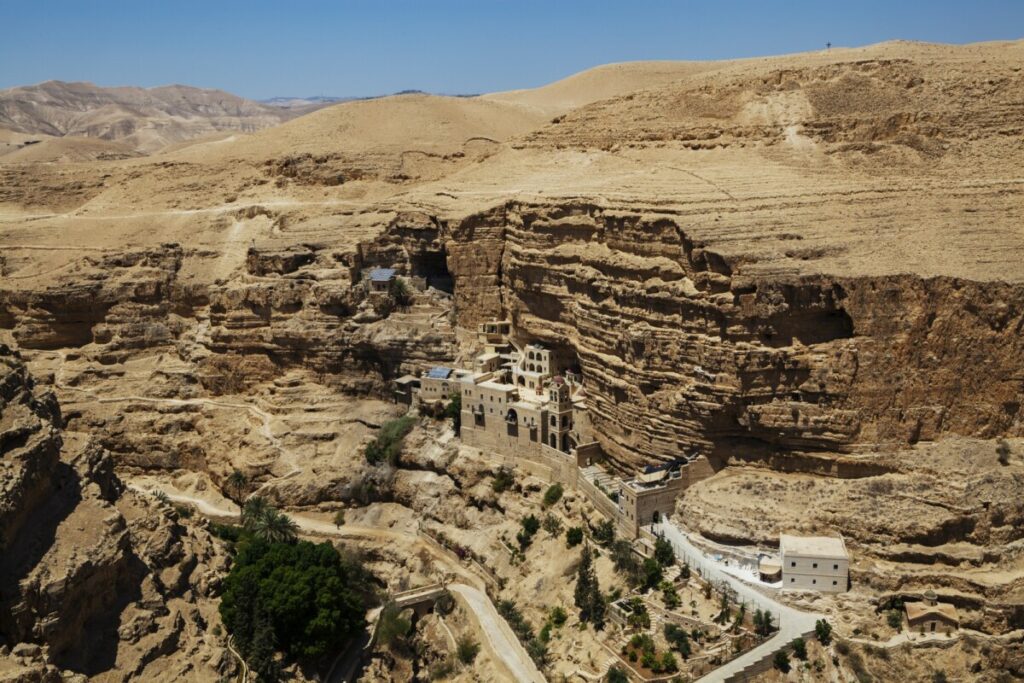
St Geaorge Monastery Desert
9000 BCE
Corn

Glass Gem Flint Corn
Before 9000 BCE
Mexico
Plaster Invented

Photo by <a href="https://pixabay.com/users/rikwebco-452946/?utm_source=instant-images&utm_medium=referral" target="_blank" rel="noopener noreferrer">rikwebco</a> on <a href="https://pixabay.com" target="_blank" rel="noopener noreferrer">Pixabay</a>
before 9000 BCE
The Domestication of Rice

Bali Rice Fields
circa 8000 BCE
China
Phenotype Variation: Blue Eyes

Photo by <a href="https://www.pexels.com/@valeriya?utm_source=instant-images&utm_medium=referral" target="_blank" rel="noopener noreferrer">Valeria Boltneva</a> on <a href="https://pexels.com" target="_blank" rel="noopener noreferrer">Pexels</a>
8000 BCE
Genetic Mutation from the Neolithic Era
Under Investigation: Yonaguni Monument

Yonaguni Monument Terraces midpart NWW
circa 8000 BCE (speculative)
Mexico: Guilá Naquitz (Agrarian)
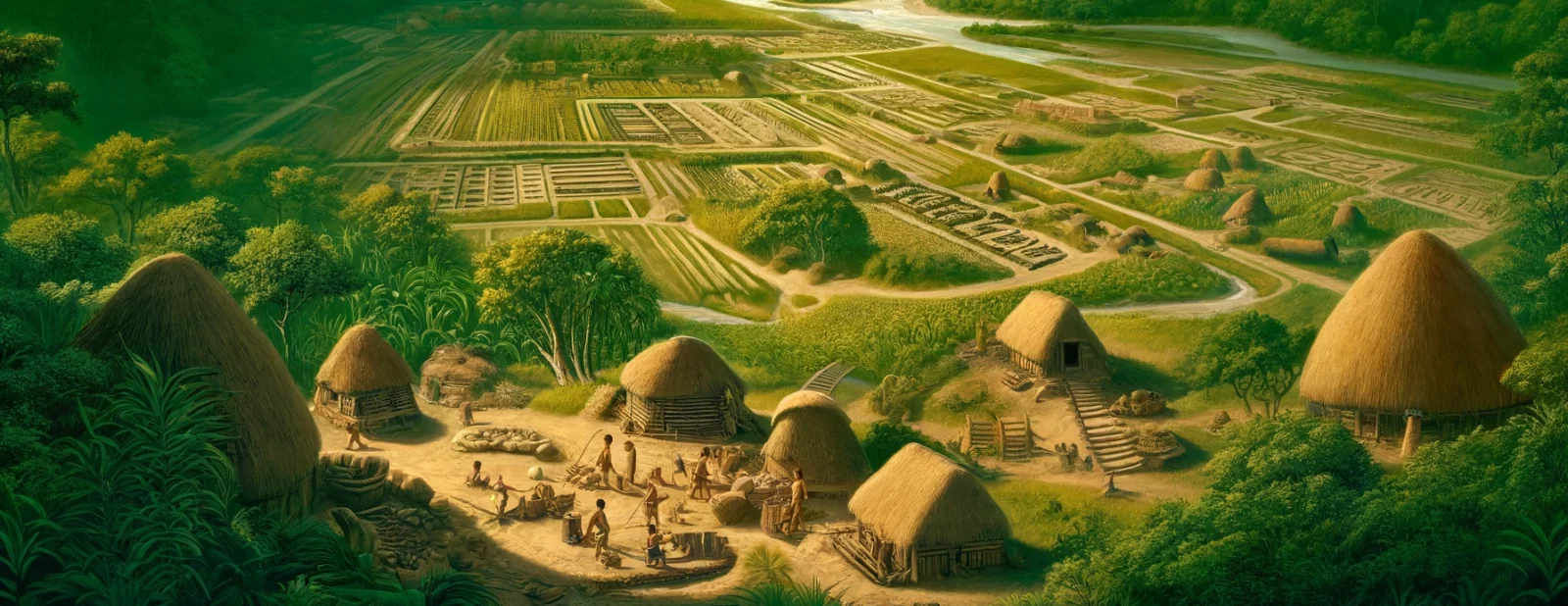
circa 8000 BCE
Americas Agrarian Society
Phenotype Variation: Lactose Tollerance

7500 BCE
Egypt: Nabta Playa (Agrarian)
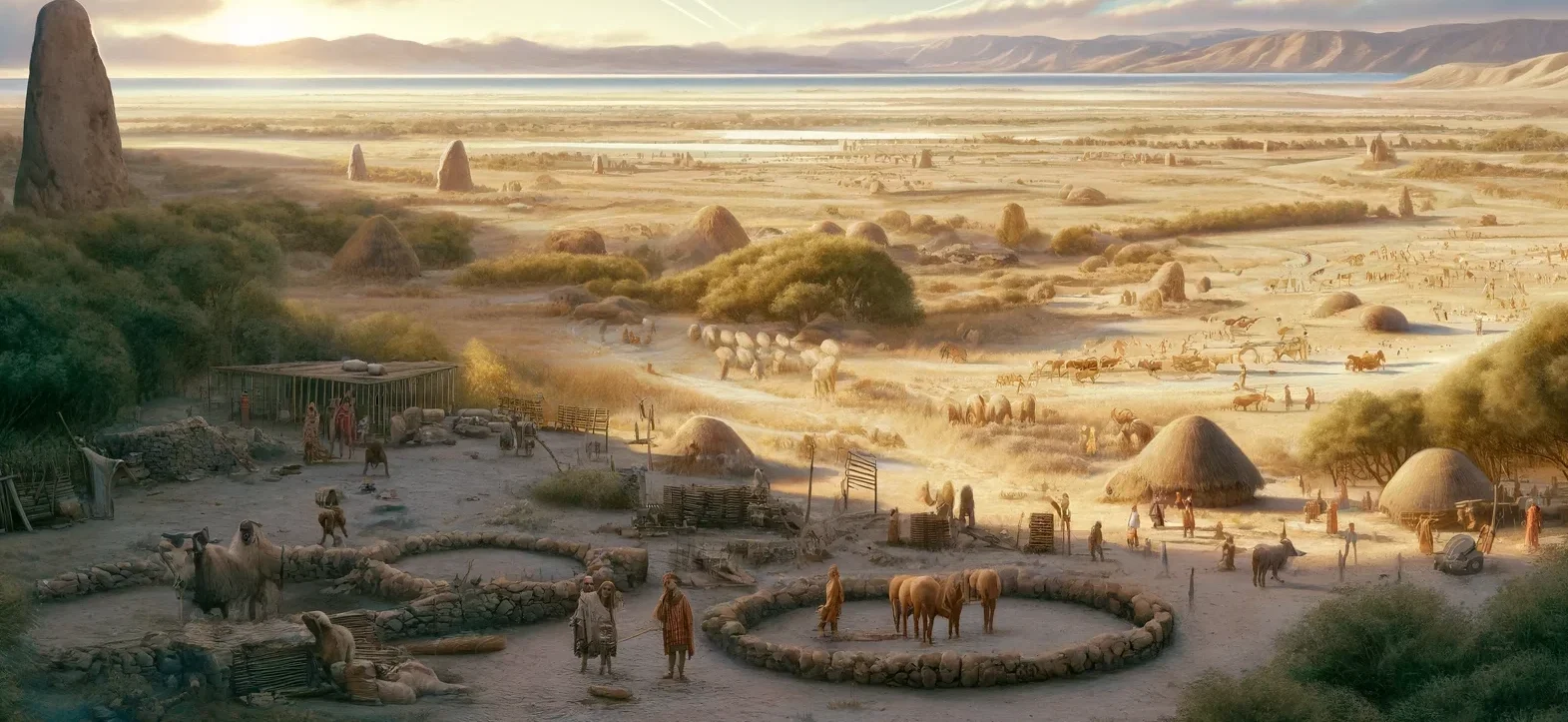
circa 7500 BCE
Middle East Agrarian Society
Greece: Sesklo Culture (Agrarian)
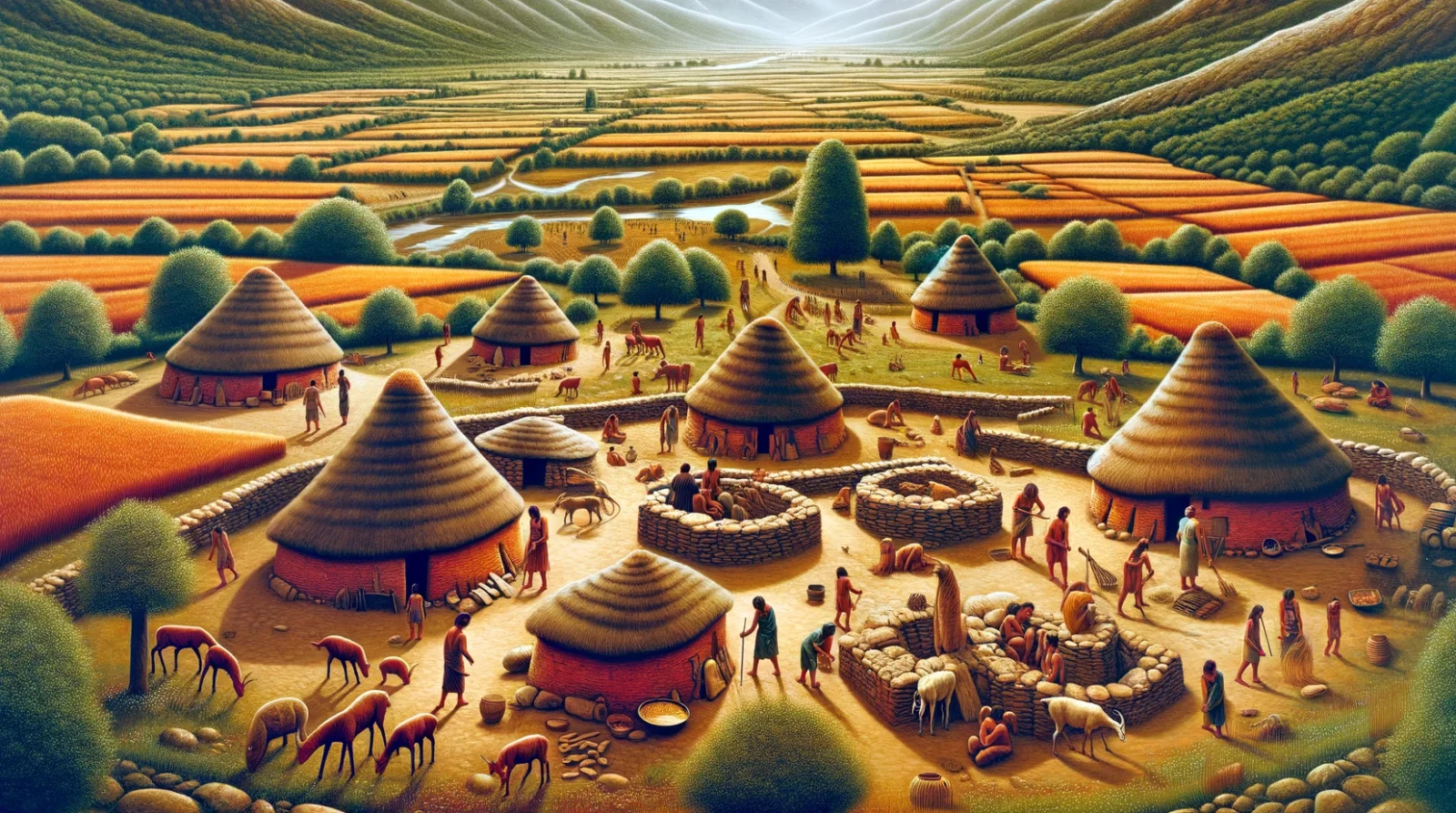
circa 7500 BCE
Europe/Mediterranean Agrarian Society
Ain Ghazal Statues: Early Plaster Art
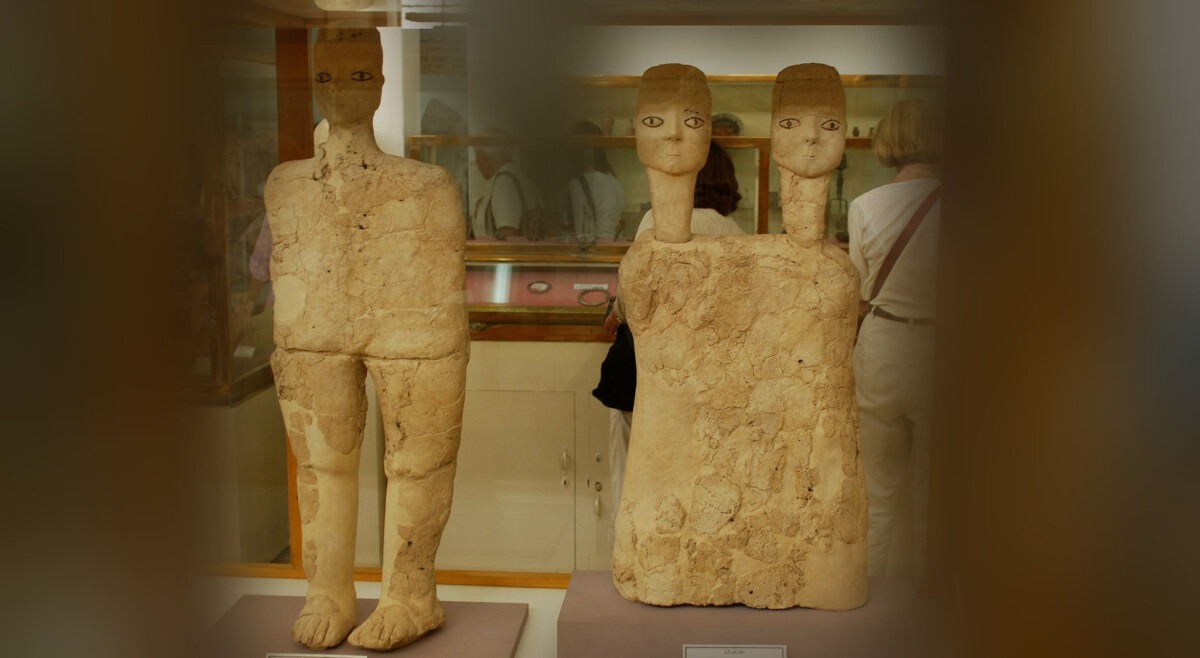
circa 7200 BCE
Jordan
City of Catalhoyuk
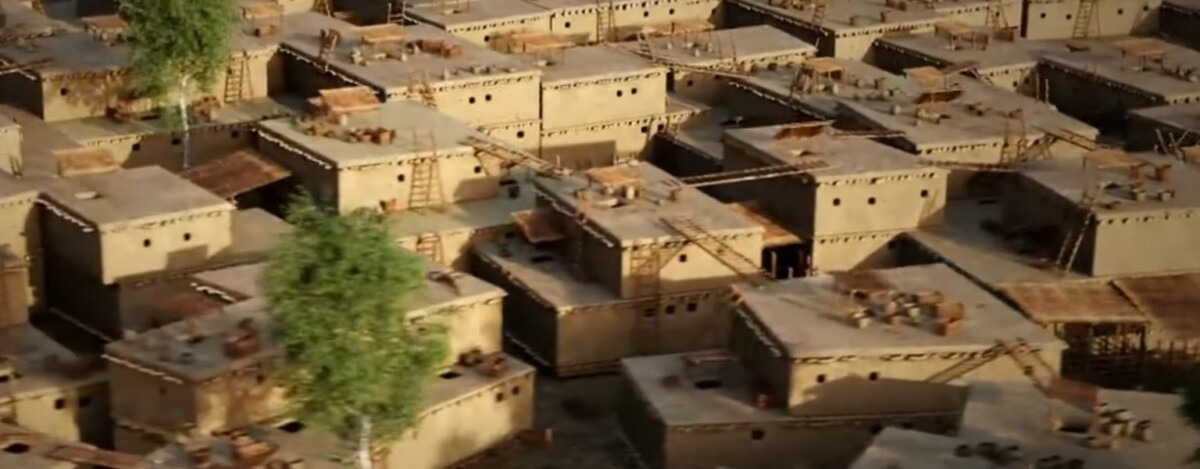
7,100 BCE
7,100 to 5,700 BCE
Neolithic Symbols: China

7000 BCE
7000-6001 BCE
Zoroastrian Universe Creation Date

circa 7000 BCE
12,000 to 9,000 BCE (representing the start of 12,000 years)
China: Jiahu Settlement (Agrarian)
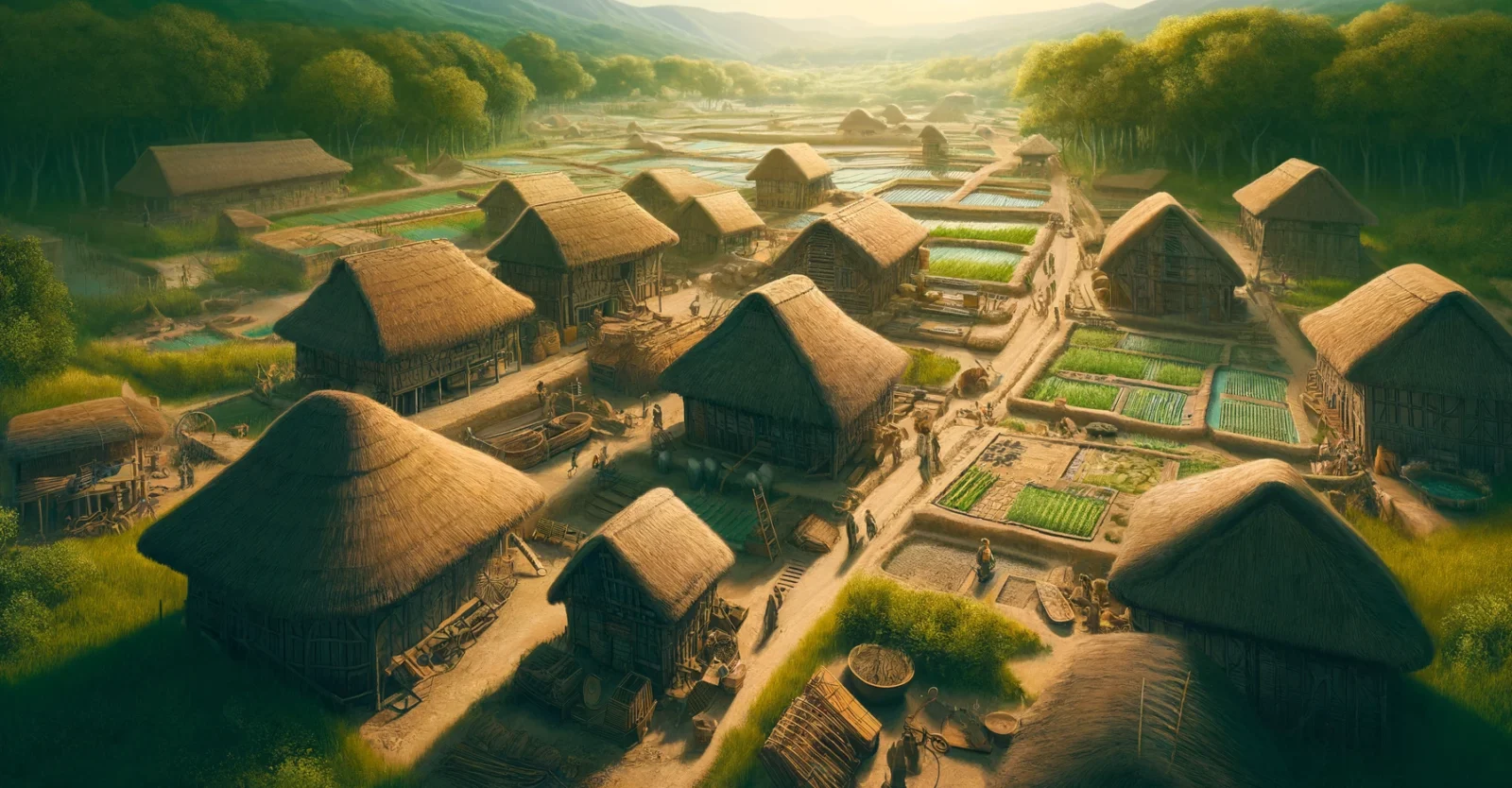
Imagined image: This panoramic image presents the Jiahu Settlement around 7000 BCE, capturing a vibrant Neolithic village in Henan, China. It features typical mud and wood homes with thatched roofs, nestled in a lush landscape where inhabitants are engaged in the early cultivation of rice, illustrating the dawn of agriculture in ancient China.
circa 7000 BCE
Asia Agrarian Society
New Guinea: Kuk Early Agricultural Site (Agrarian)

circa 7000 BCE
Oceana-Australasia Agrarian Society
Atlit Yam Neolithic Village

"<a href="https://www.flickr.com/photos/149617375@N05/31523297470" target="_blank" rel="noopener noreferrer">megalithic-atlit-yam</a>" by <a href="https://www.flickr.com/photos/149617375@N05" target="_blank" rel="noopener noreferrer">dionisosolympian</a> is licensed under <a href="https://creativecommons.org/publicdomain/mark/1.0/" target="_blank" rel="noopener noreferrer">CC PDM 1.0</a>
6900 to 6300 BCE
Origins over 9,000 Years Ago
Early Sumer Civilization
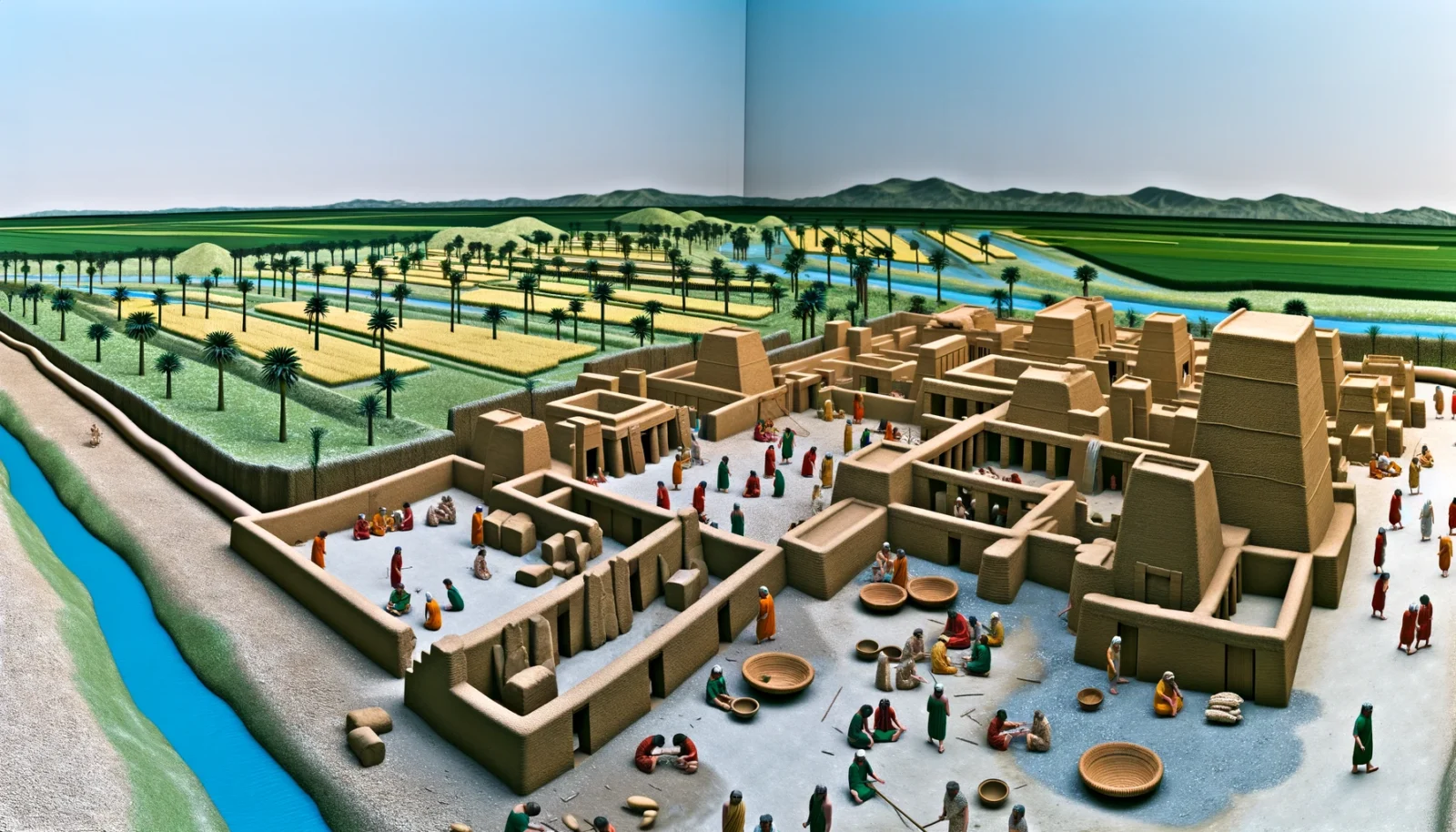
6500 BCE
6500 through 1900 BCE
Oldest Known Flute in China
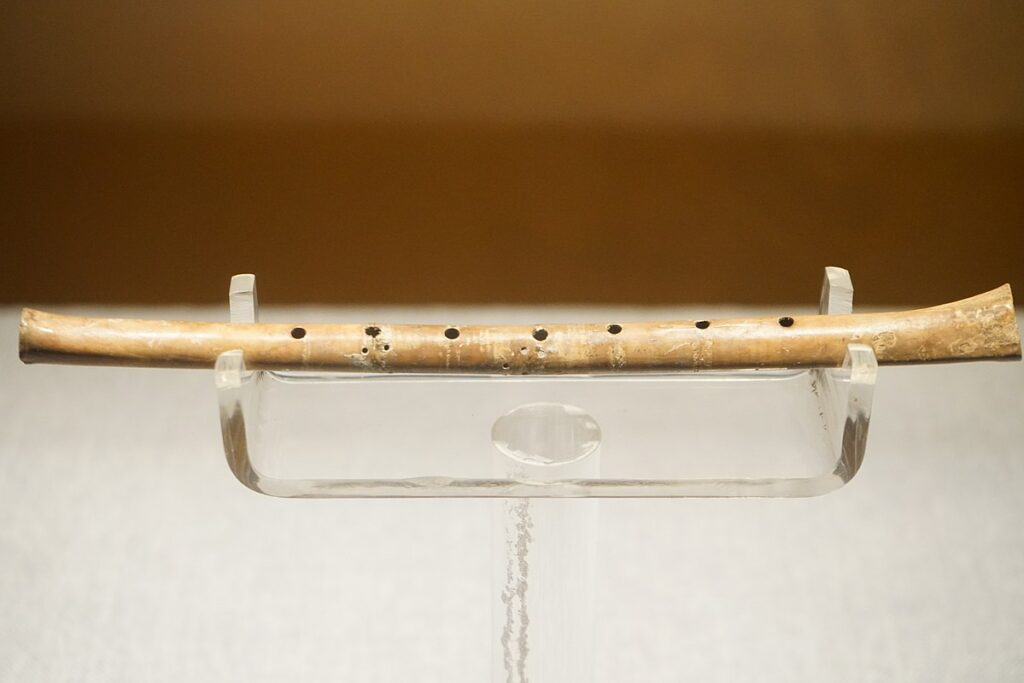
6,000 BCE
Cheese

Delicious Cheese board. Assortment of cheese, camembert, brie, Gorgonzola, parmesan, olives
Before 5500 BCE
Poland
Dispilio Tablet: European Proto-Writing

This ancient wooden tablet, etched with intricate symbols, dates back over 7,000 years, making it one of the oldest examples of proto-writing ever found.
circa 5,260 BCE
7,260 Years Ago
Vinor Circular Building: a roundel

Roundel, the Vinor Circular Building, featuring a modest height typical of Neolithic construction, a thatched roof, and entrances appropriate for the time. The image includes a cutaway to reveal the interior details.
4900 BCE
Up to 7,900 Years Ago (Neolithic)
Proto-Inca People

Pre-Inca People Village Around 4000 BCE: A hunter-gatherer village in the Andean highlands, depicting daily activities and simple huts harmoniously integrated with the mountainous terrain.
circa 4500 BCE
6,500 Years Ago
4004 BCE, The Bible’s Earth Creation Date

4,004 BCE
Sunday, October 23, 4004 BCE
3761 BCE, Judaic Earth Creation Date

3761 BCE
Proto-Maya People

Pre-Mayan People Village Around 3000 BCE: A hunter-gatherer camp with natural-material huts, illustrating the communal lifestyle and activities in a tropical forest environment.
circa 3500 BCE
5,500 Years Ago
3114 BCE: Mayan Earth Creation Date
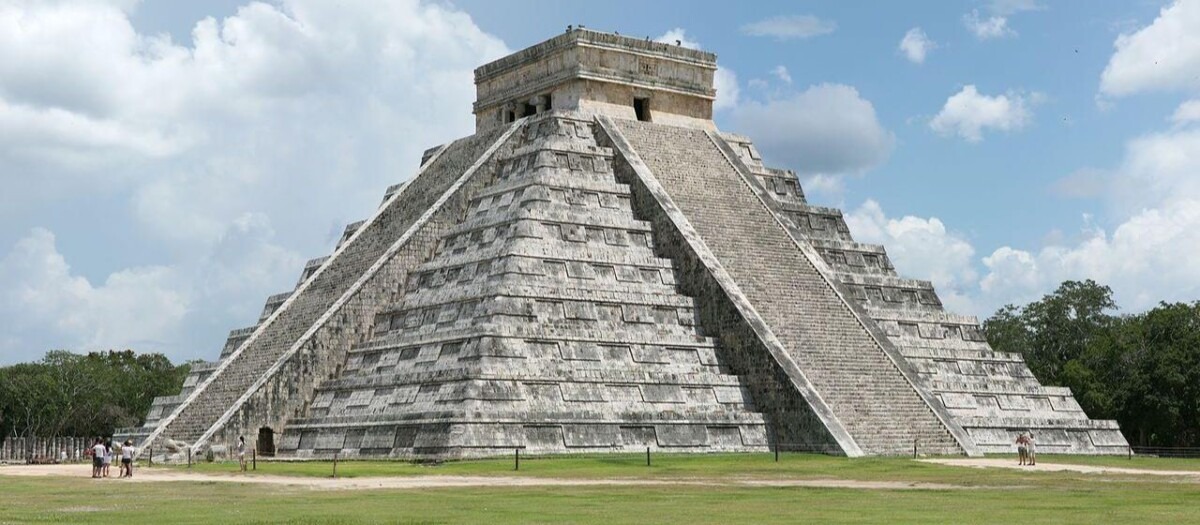
3114 BCE
August 11, 3114 BCE