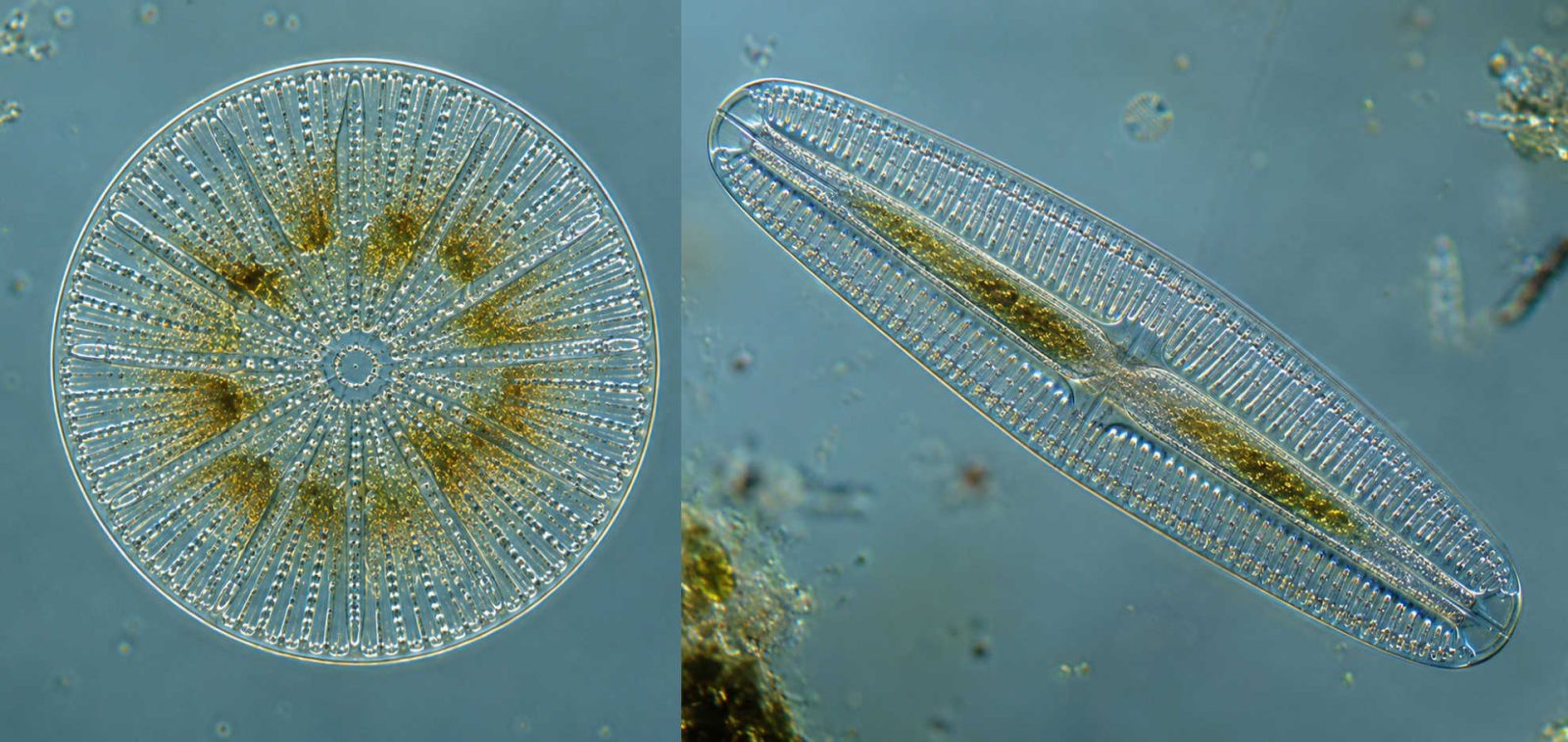
Diatoms Emerge
Diatoms began as tiny glass-shelled “silica” algae, with round centric forms appearing first and elongated pennate forms later adding direction, symmetry, and movement to the microscopic world.


Diatoms began as tiny glass-shelled “silica” algae, with round centric forms appearing first and elongated pennate forms later adding direction, symmetry, and movement to the microscopic world.
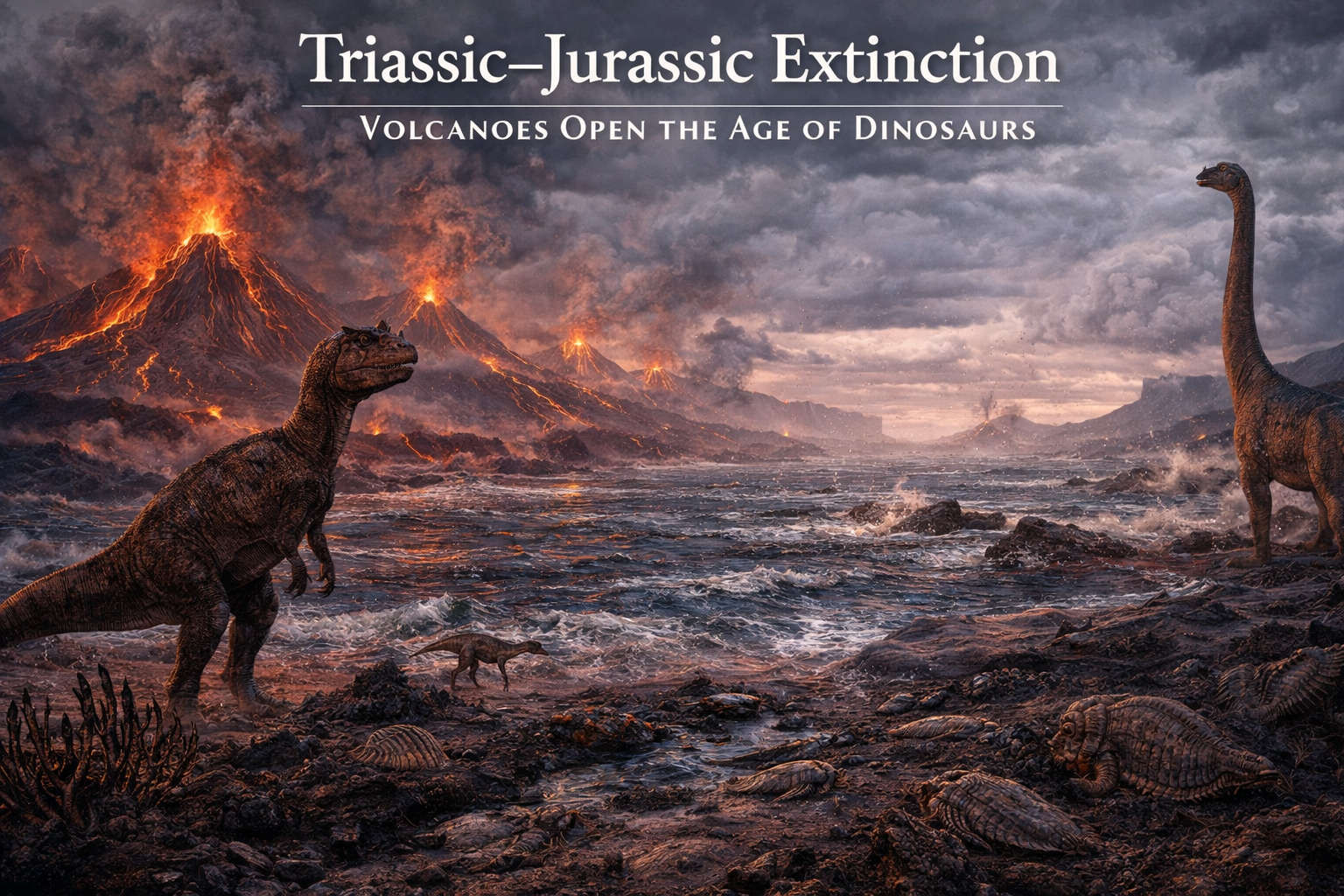
The Triassic–Jurassic extinction cleared ecological space for dinosaurs to become the dominant land animals of the Jurassic.
Triassic–Jurassic Extinction: Volcanoes Open the Age of Dinosaurs Read More »
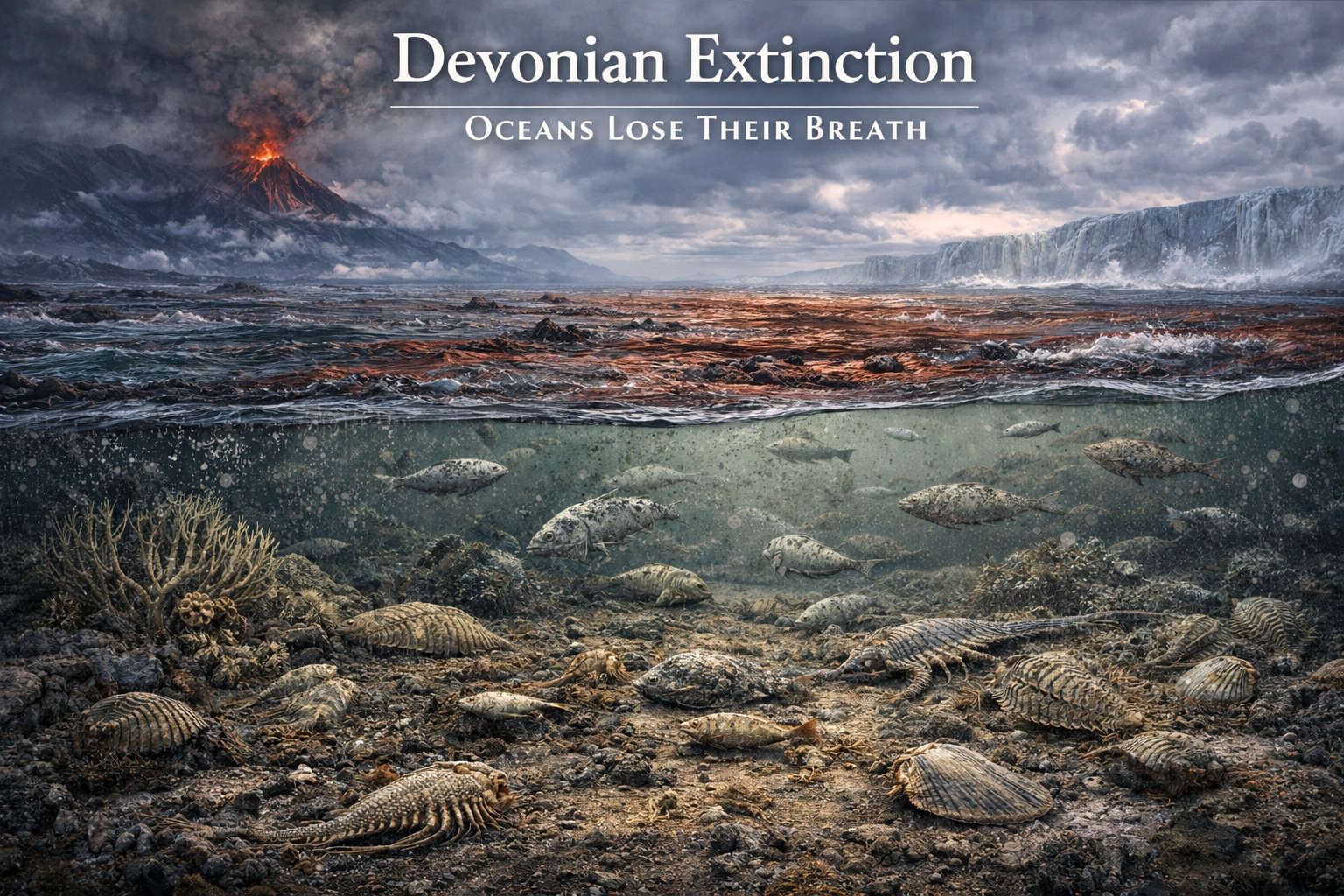
The Devonian extinction shows that evolution can be reshaped not by one sudden blow, but by a long collapse in ocean health.
Oceans Lose Their Breath Read More »
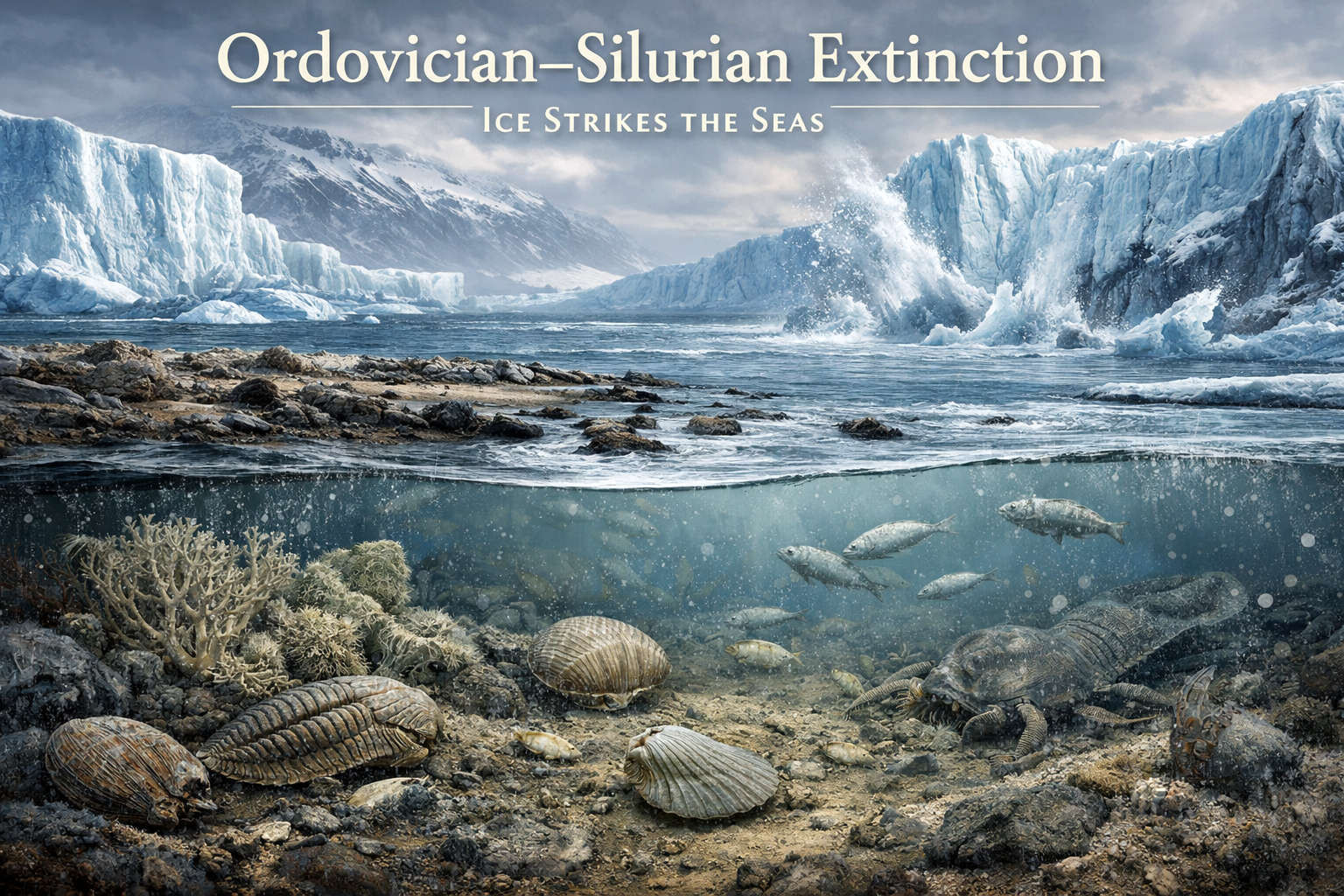
The Ordovician–Silurian extinction shows how climate change can reshape evolution by collapsing old ecosystems and opening space for new life.
Ordovician–Silurian Extinction: Ice Strikes the Seas Read More »
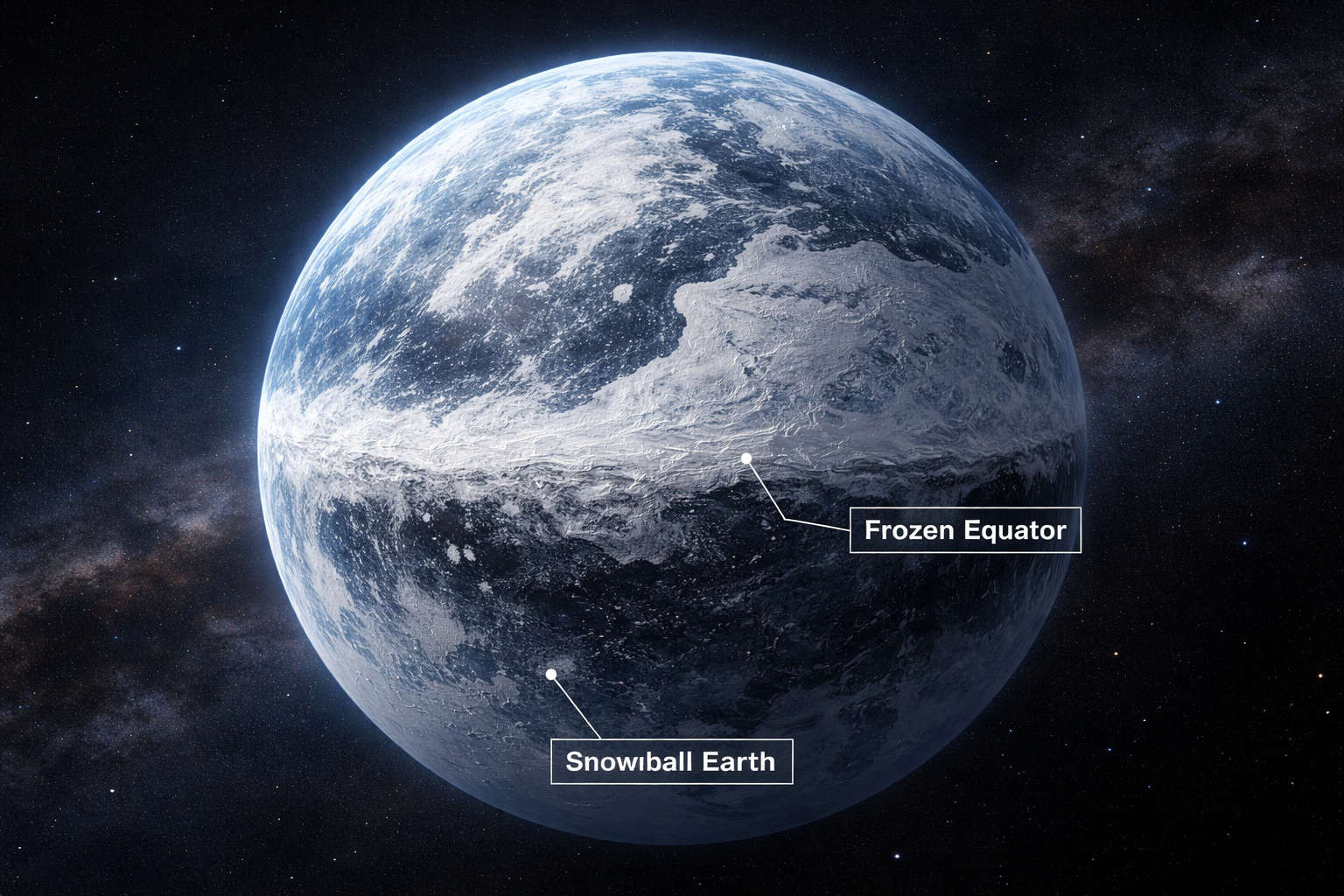
Snowball Earth was a time when our planet may have frozen nearly from pole to pole, testing life and setting the stage for later biological change.
Snowball Earth: When Ice Reached the Equator Read More »
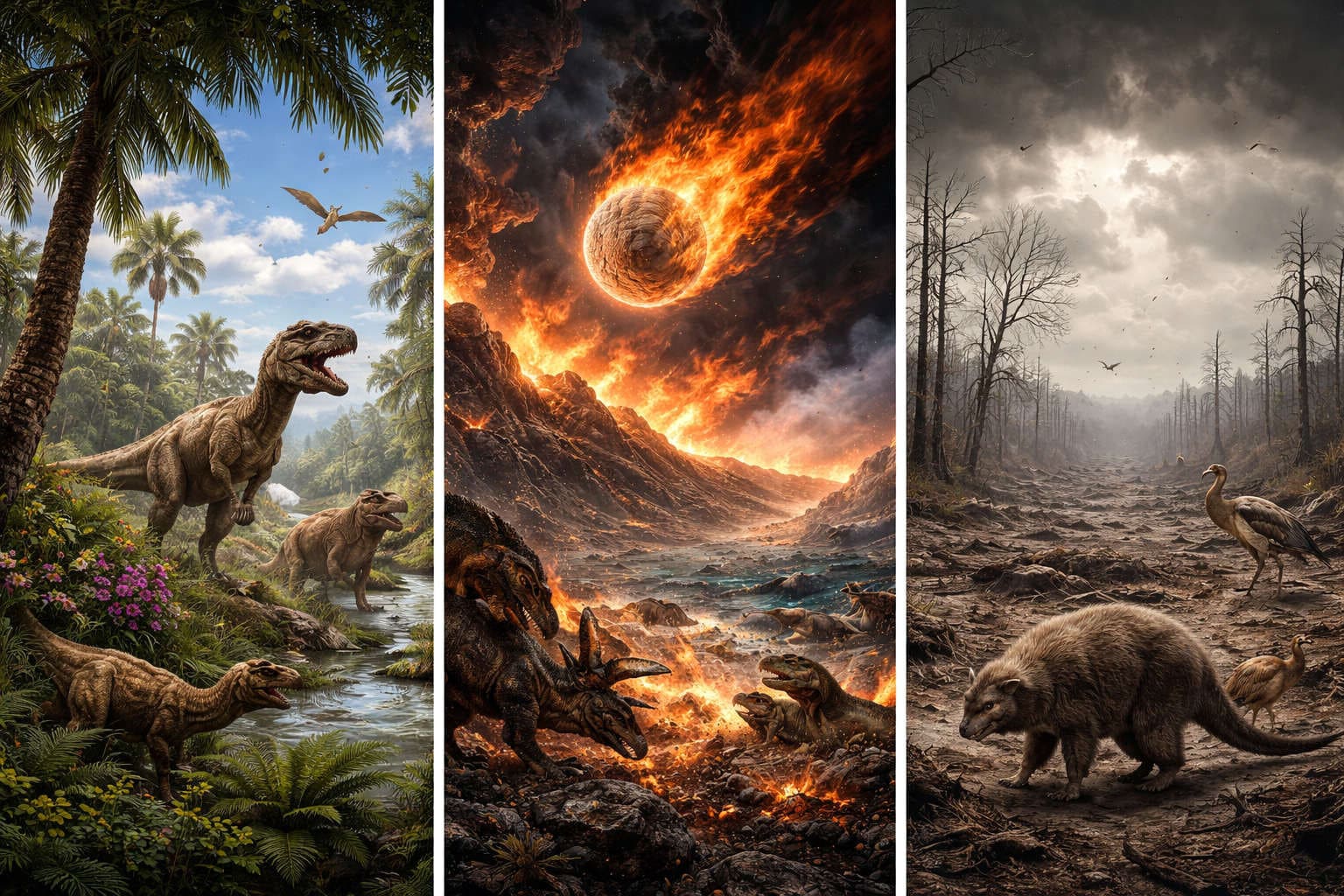
Before, during, and after the K–Pg extinction: a thriving Late Cretaceous world of dinosaurs, pterosaurs, birds, and flowering plants gives way to the asteroid strike and global collapse that ended the age of non-avian dinosaurs.
The K-Pg Extinction Read More »
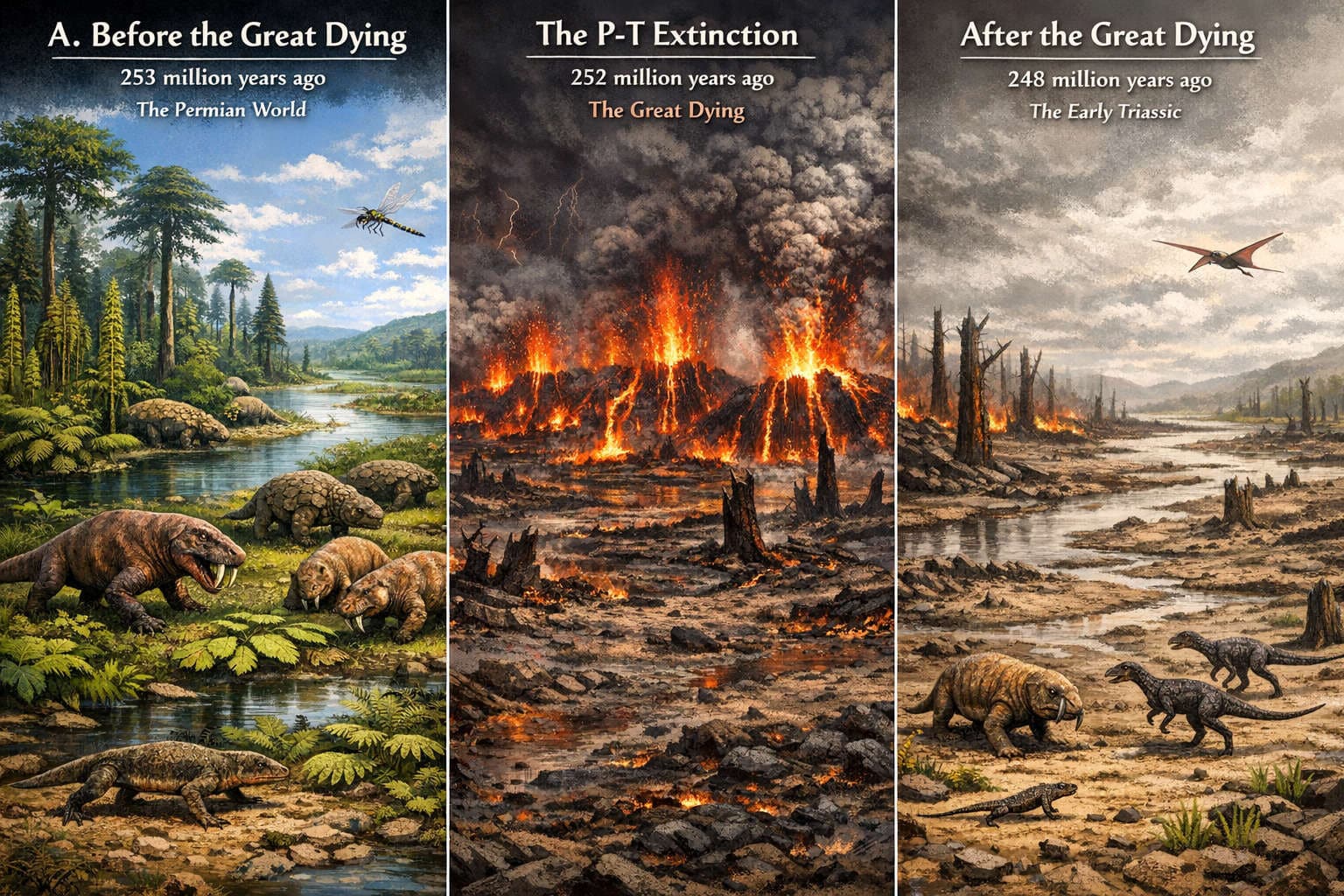
The Permian-Triassic extinction was not just the end of many species. It was a planetary reset that destroyed the old synapsid-dominated world and opened the door for the archosaur line that would later give rise to dinosaurs.
The P-T Extinction Read More »
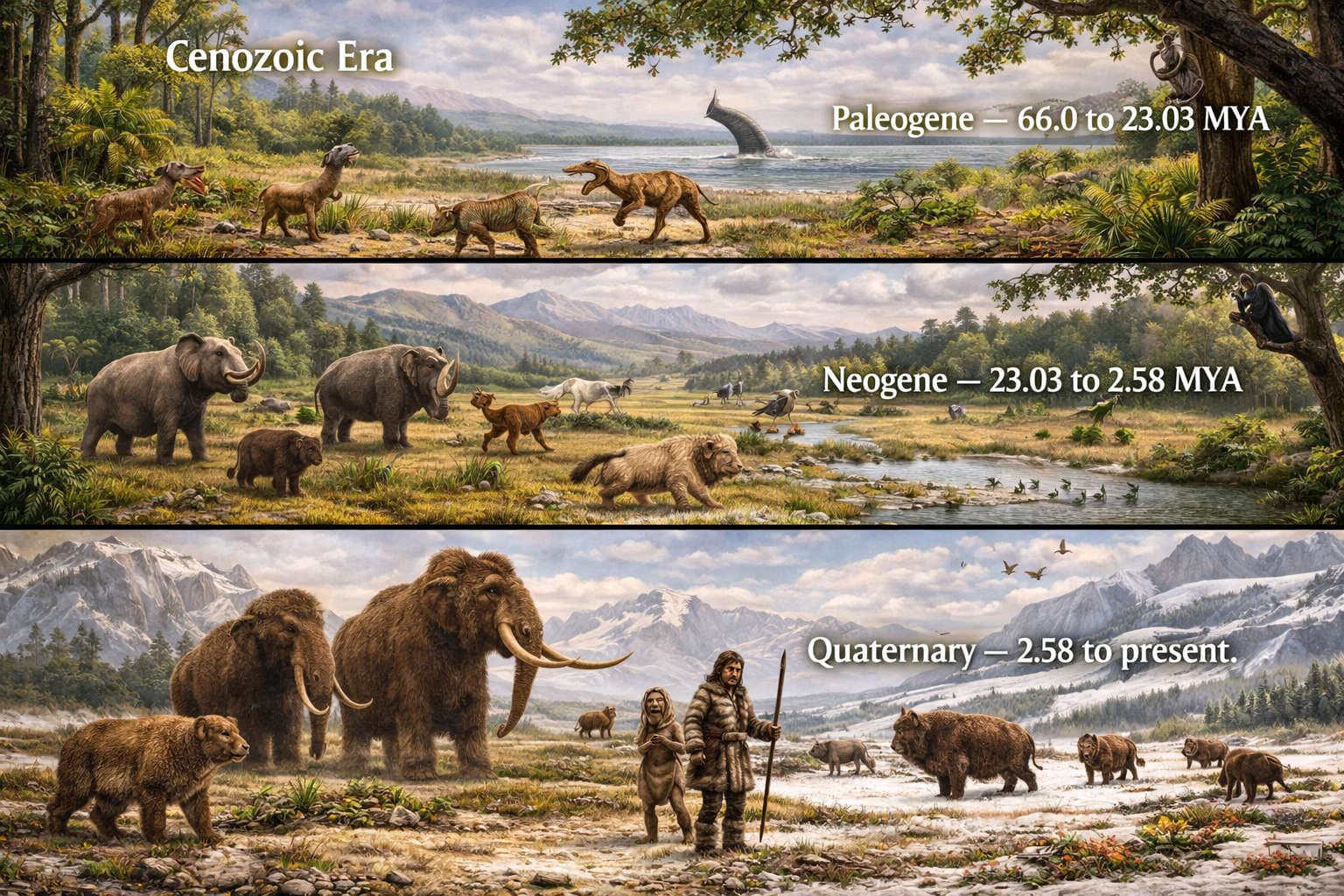
The Cenozoic era starts with the K–Pg extinction 66 million years ago. That event marks the sudden end of the reign of dinosaurs and the rise of mammals and birds.
Cenozoic Era: Age of Mammals & Birds Read More »
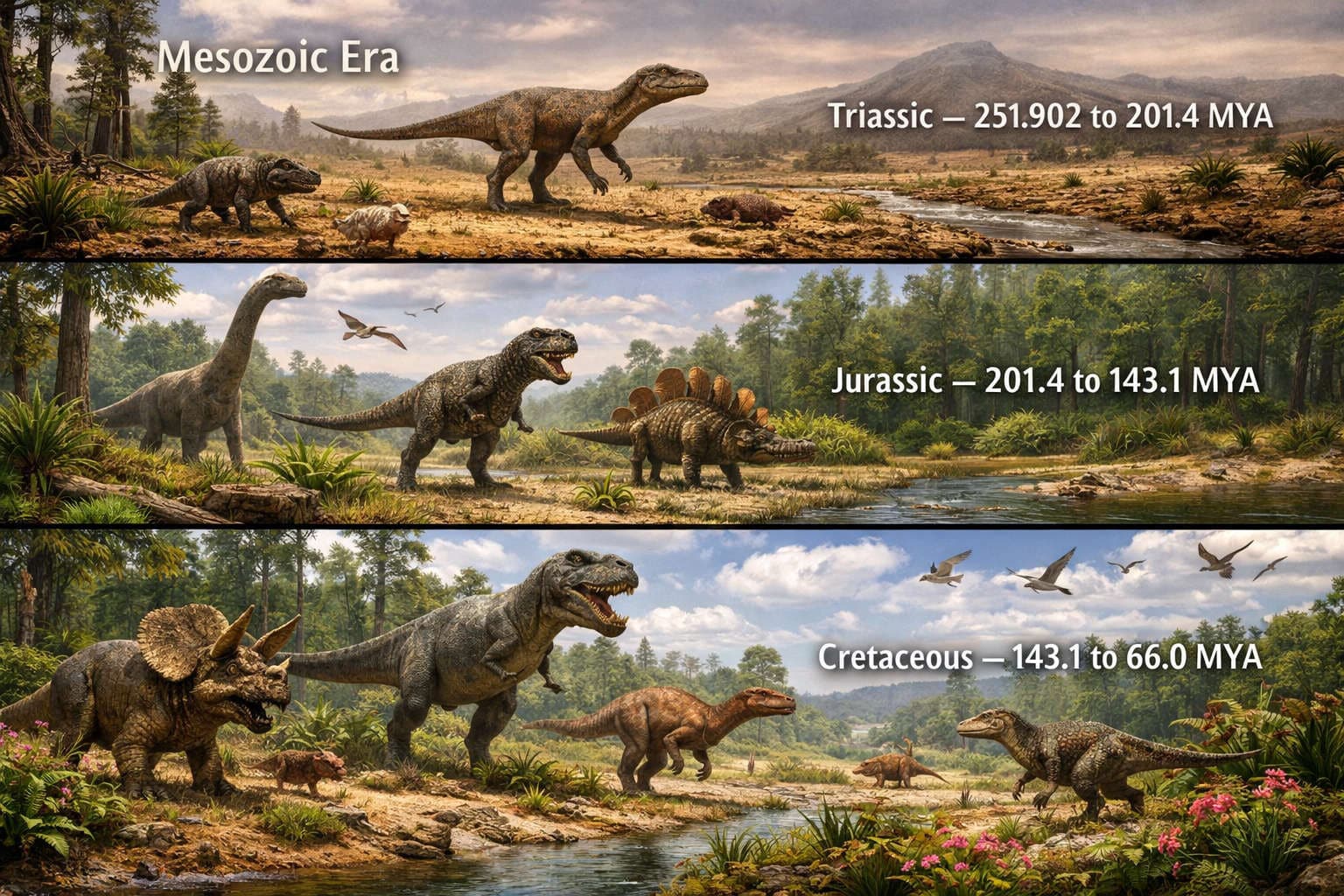
The Mesozoic era starts with the end-Permian mass extinction 252 million years ago. Dinosaurs ruled over all, including us. It ends the reign of dinosaurs with the K–Pg extinction 66 million years ago.
Mesozoic Era: Age of Dinosaurs Read More »
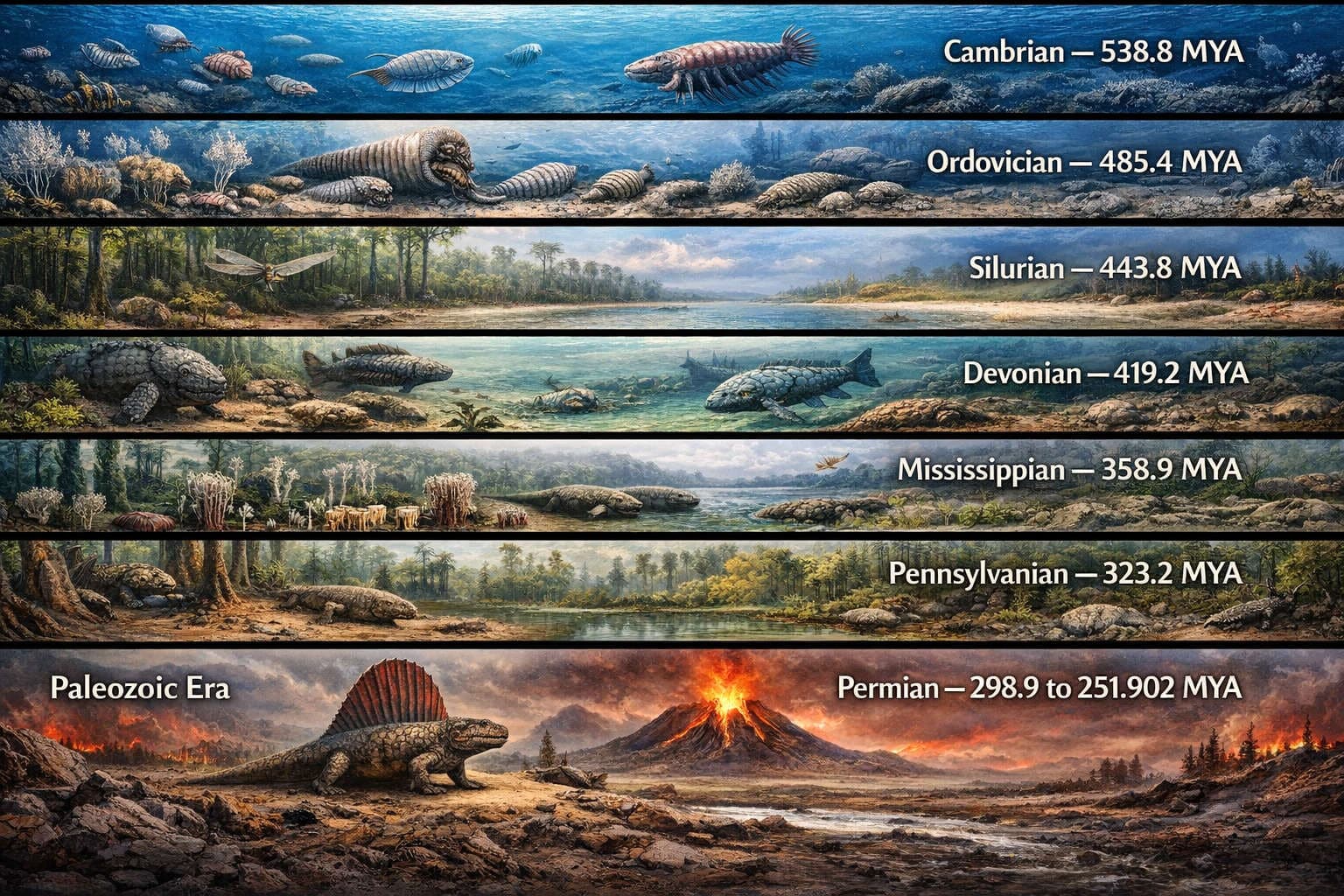
The start of the Paleozoic era is marked by burrowing life 538.8 million years ago. The era includes the dominant rise of our ancestors. It ends 252 million years ago with the end-Permian mass extinction, a volcanic cascade global warming event.
Paleozoic Era: The Age of Synapsids Read More »
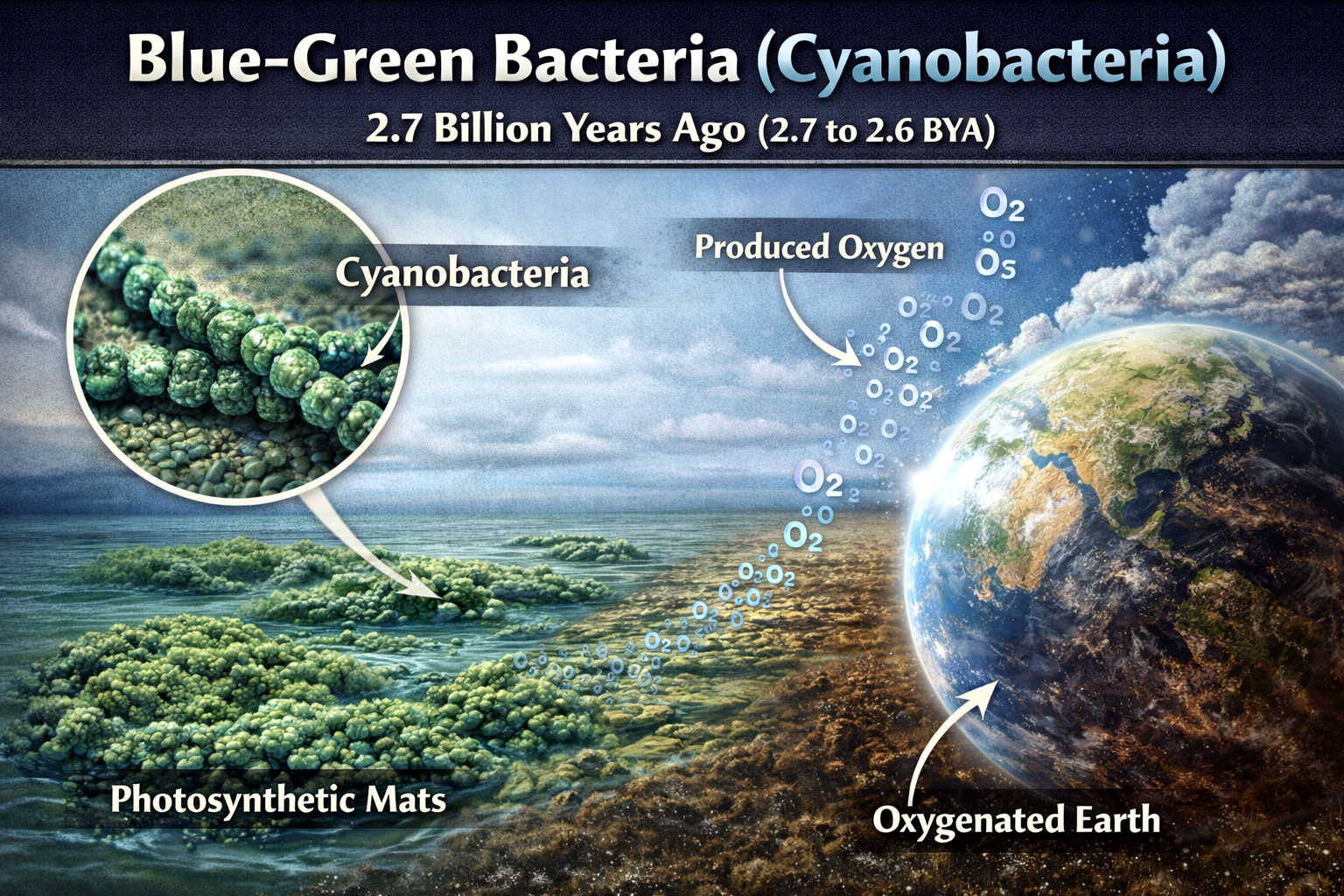
Blue-green “algae” are not algae at all. They are cyanobacteria — ancient photosynthetic bacteria that helped oxygenate Earth and reshape the history of life.
Blue-Green Bacteria (Not Algae) Read More »
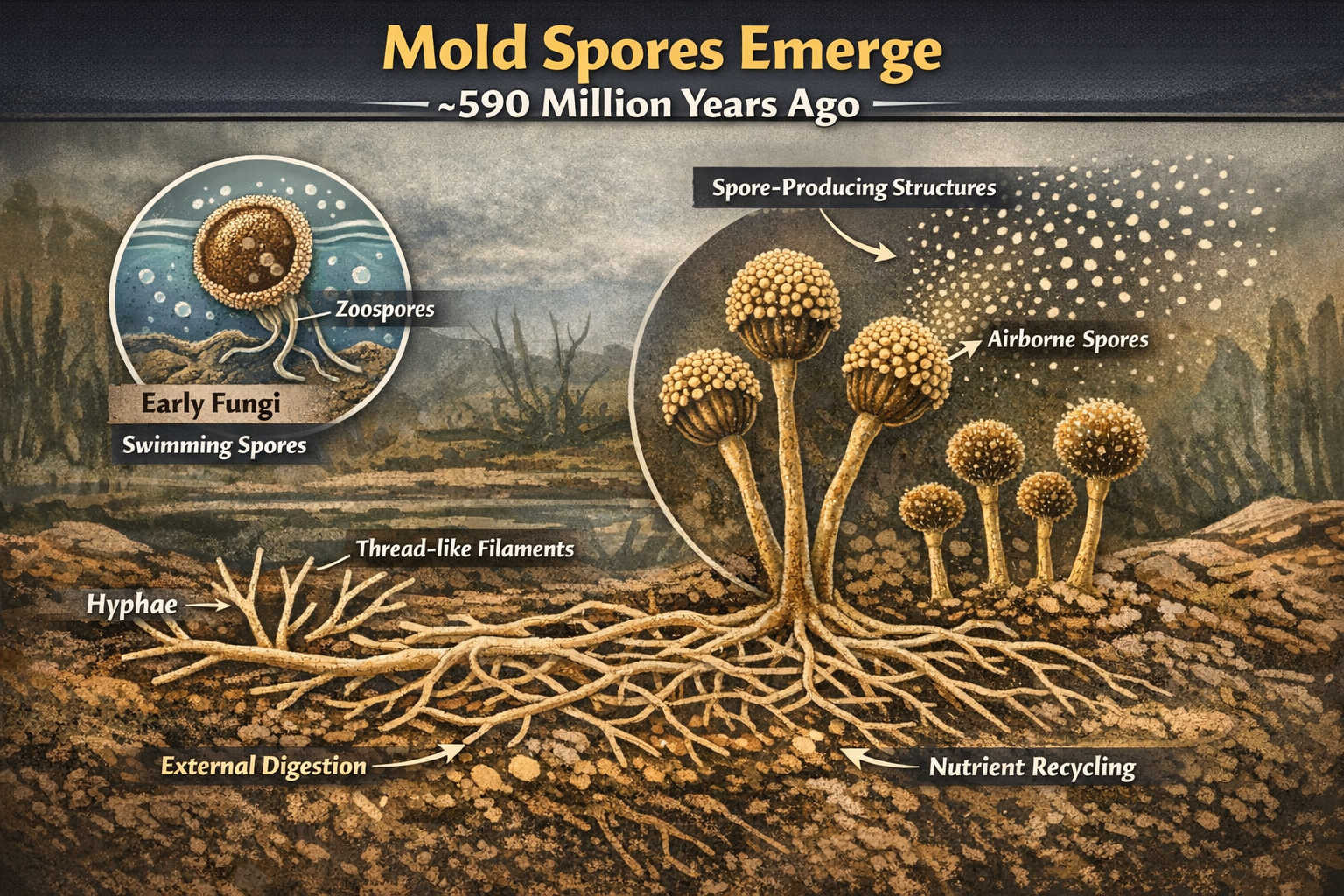
Mold spores helped early fungi spread farther, feed efficiently, and become some of Earth’s great recyclers.
Mold Spores Emerge Read More »
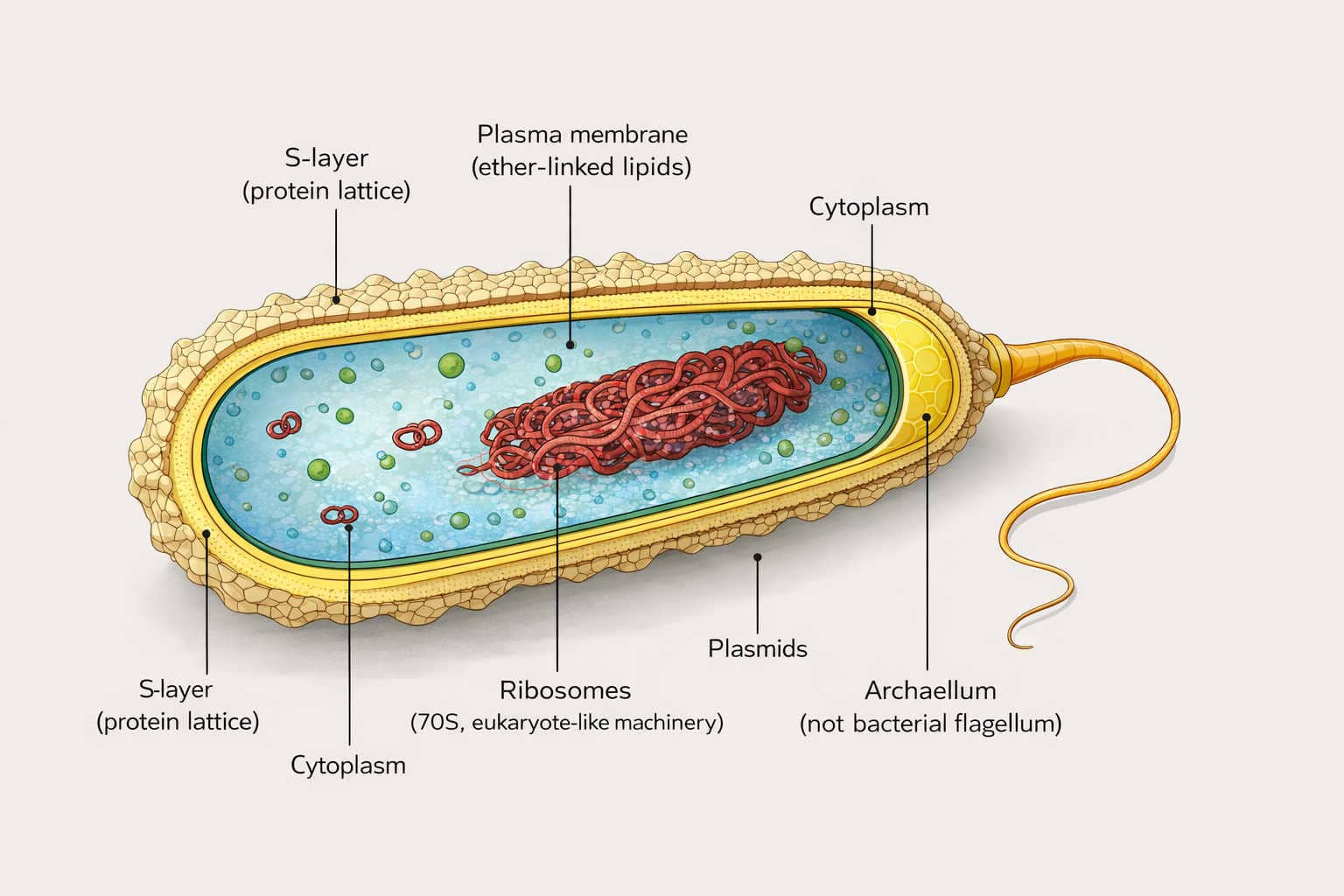
Archaea are a primary branch of early life, and eukaryotes emerged from within this archaeal lineage.

About 2.4 billion years ago, Cyanobacteria “hacked” the sun to split water, releasing oxygen as a byproduct and triggering the first global environmental catastrophe and subsequent biological reset.
Great Oxidation Event: Third Atmosphere Read More »
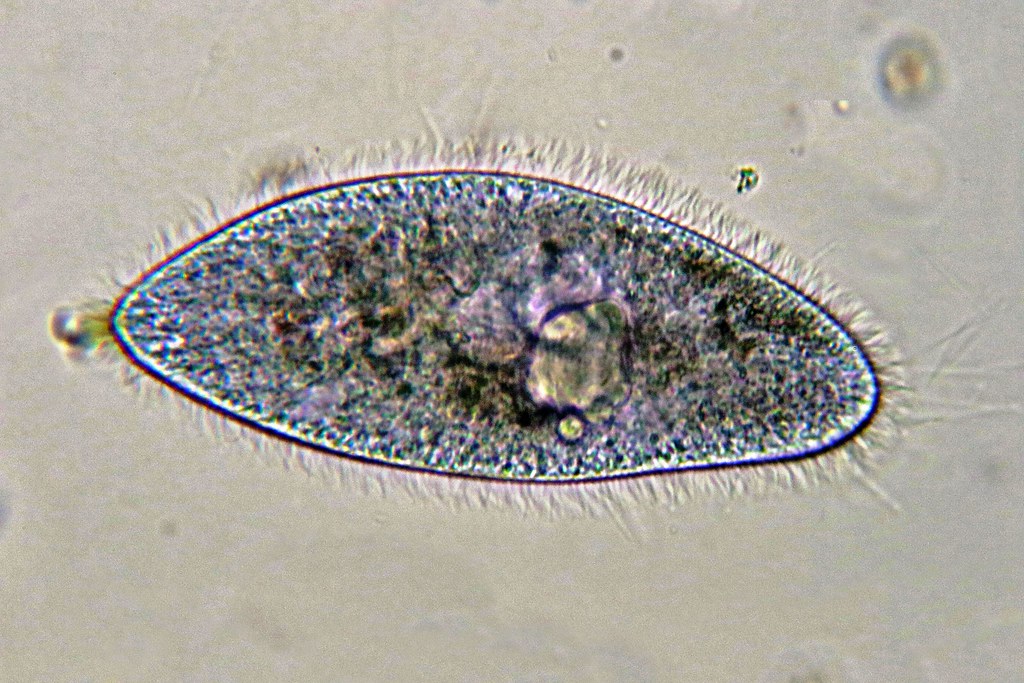
About 3.72 billion years ago, right after LUCA, when cells emerged, touch became the most ancient form of biological sensing: required to physically navigate reality.
Touch: Life Learns to Feel Force Read More »
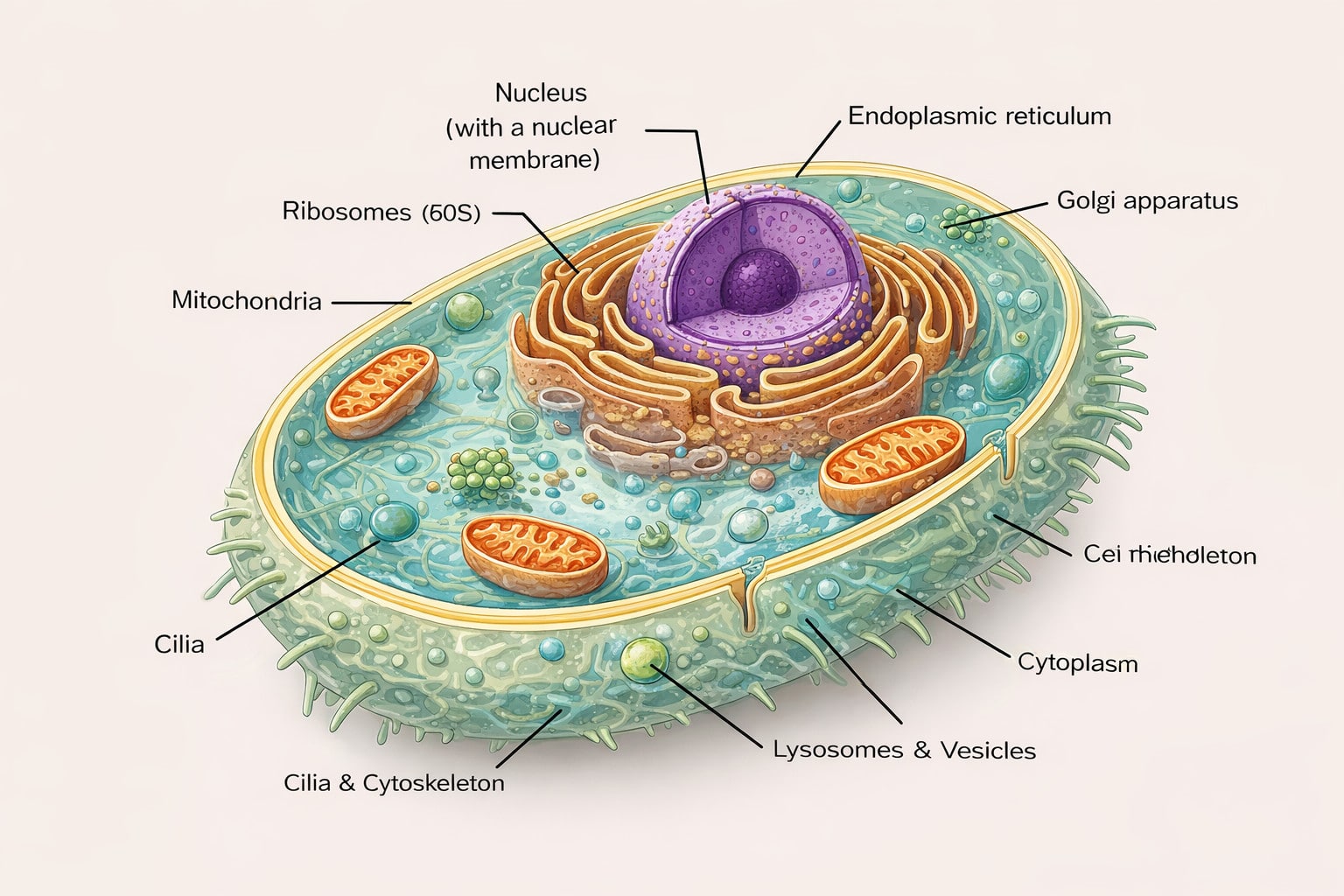
All life today are either Prokaryote or Eukaryote. Around 2 billion years ago, Eukaryotes evolved from Prokaryotes. The evolutionary leap to eukaryotes introduced cells with a nucleus and membrane-bound organelles, a complex architecture derived from prokaryotic predecessors through endosymbiosis. This process, crucial for eukaryotic evolution, involved the incorporation of prokaryotic cells into the cytoplasm of
The First True Eukaryotes Read More »
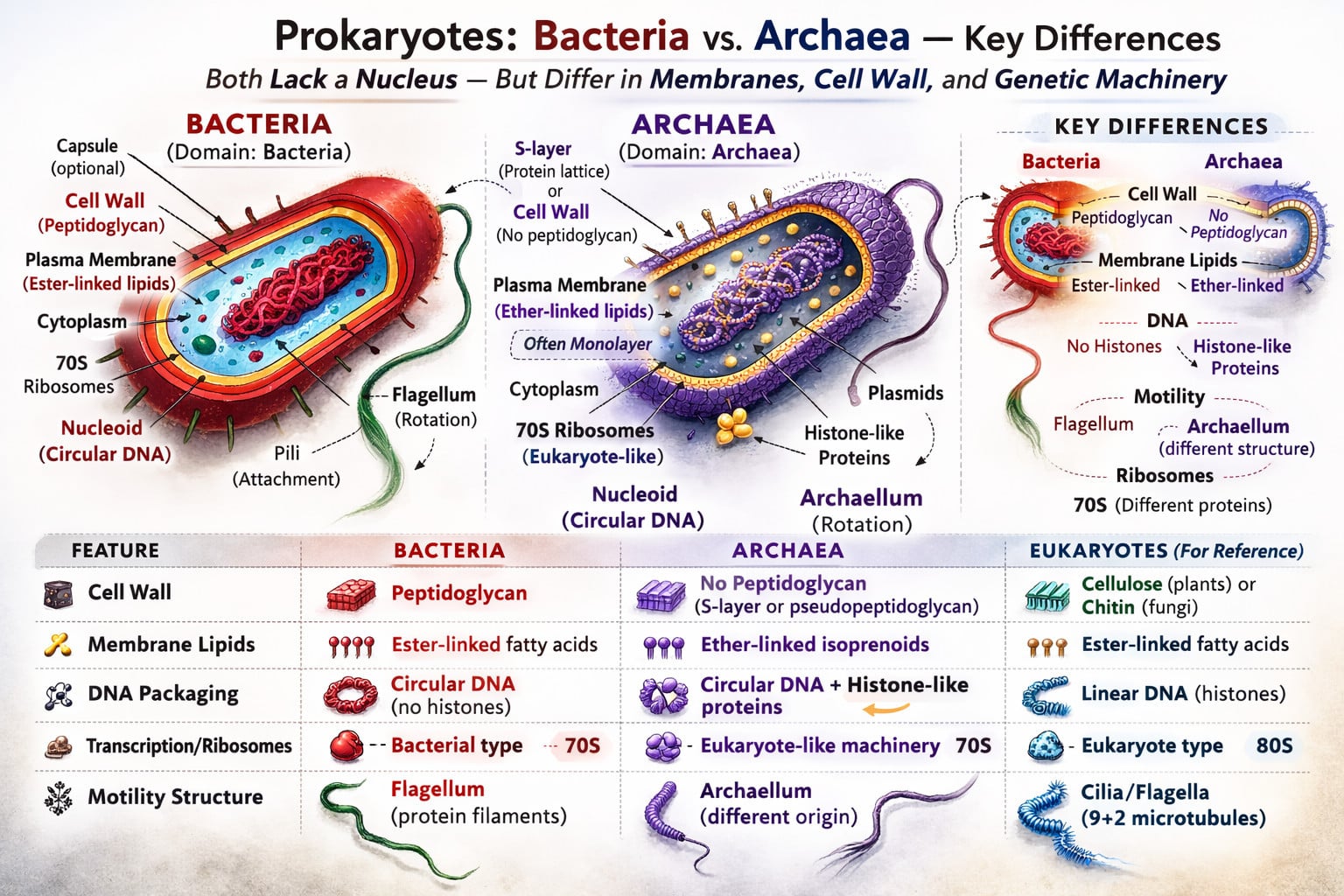
Prokaryotes are nucleus-free cells that include both bacteria and archaea — the two lineages that split shortly after LUCA.