

Evolution TL: March to Life > Evolution > Great Apes > Human > Consciousness > All to Us
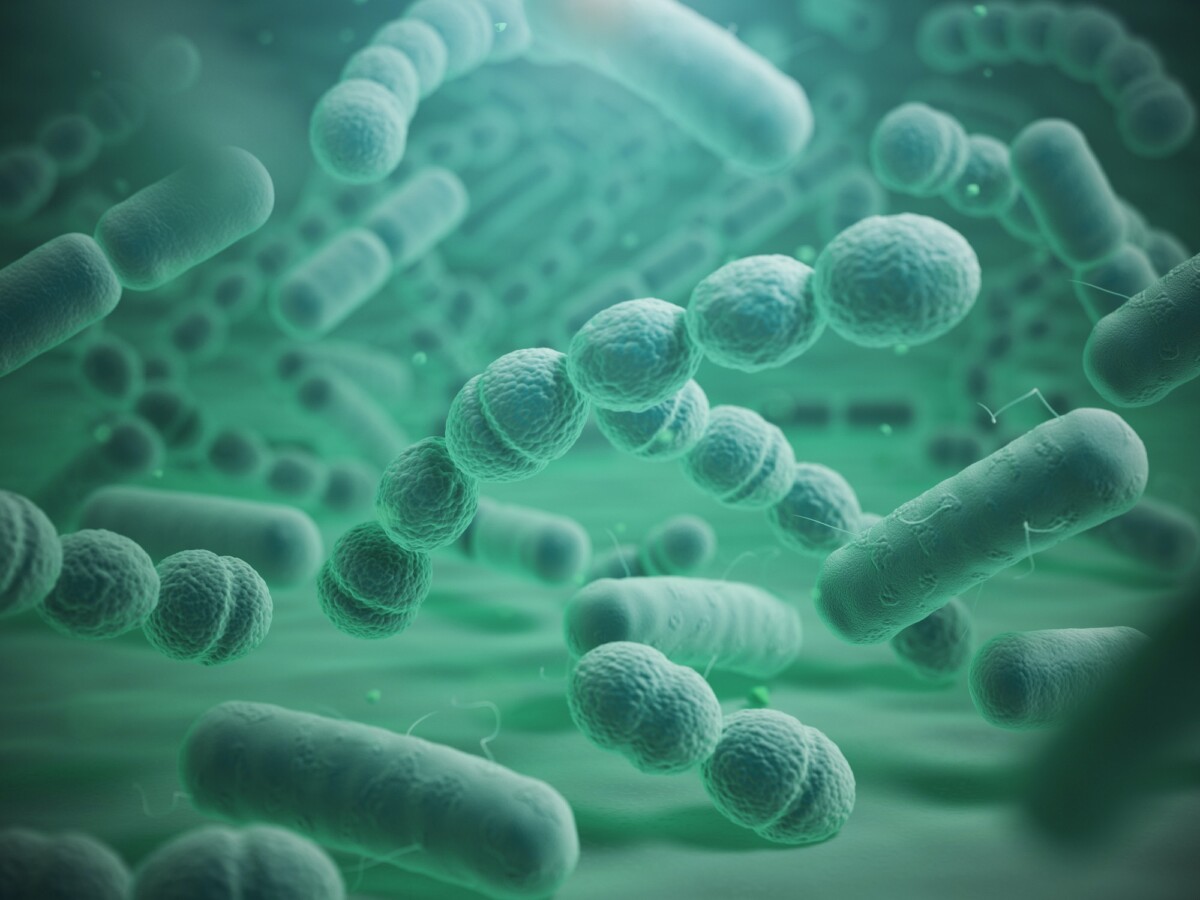
LUCA was neither bacteria nor archaea and this group does not have a nucleus (prokaryotes). Over time, LUCA’s population drifted apart genetically until one lineage became true bacteria and the other became true archaea. This group predates the branch that ultimately leads to eukaryotes then plants, fungi, and animals.
LUCA lived about 3.75 bya
Bacteria Evolution Starts 3.7 bya
Bacteria Evolution Starts 3.7 bya
Prokaryotic Life
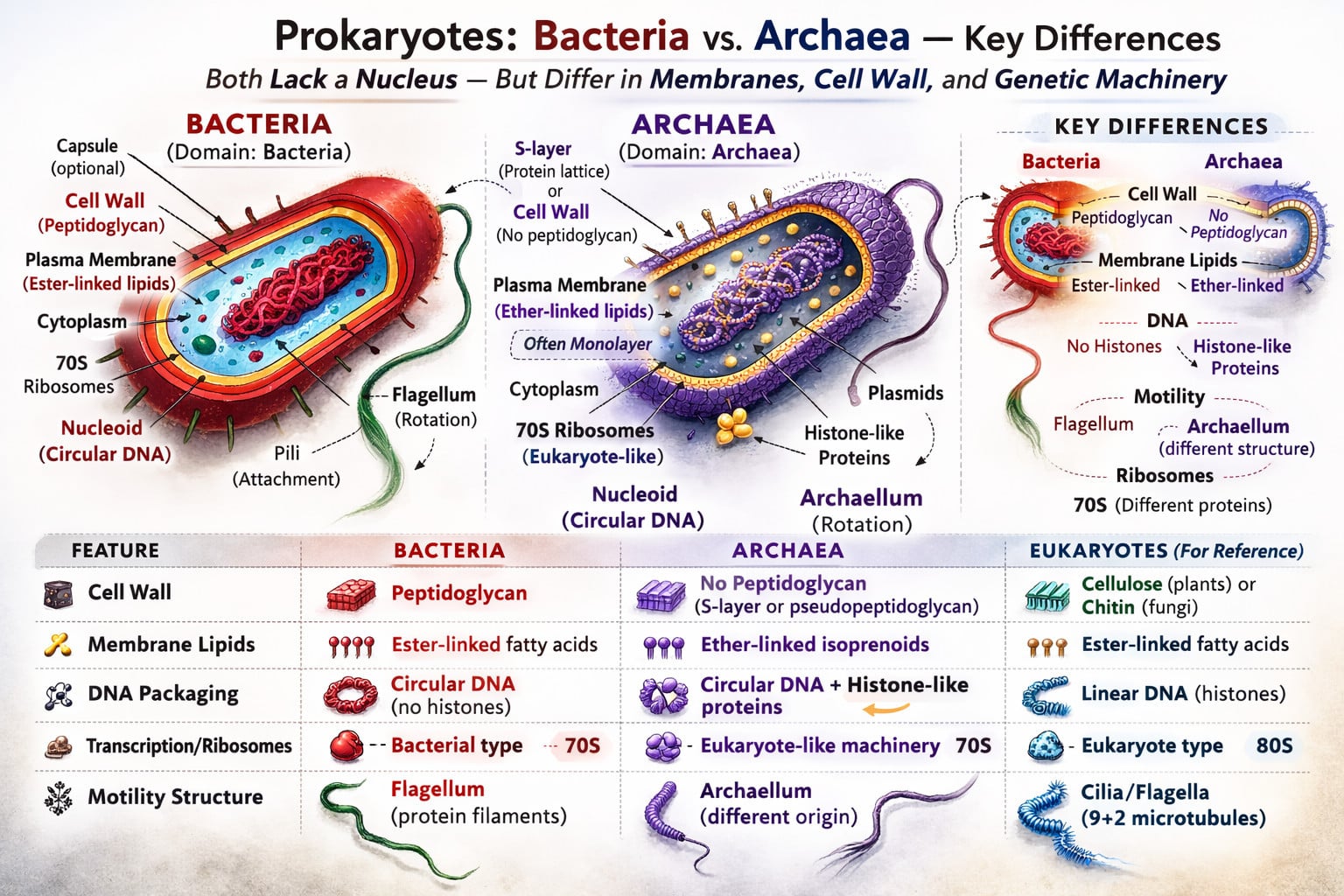
Archaea look like bacteria at first glance — small, simple, and lacking a nucleus. But they are fundamentally different.
3.73 Billion Years Ago (after LUCA)
Membrane and metabolic diversity.
Touch: Life Learns to Feel Force
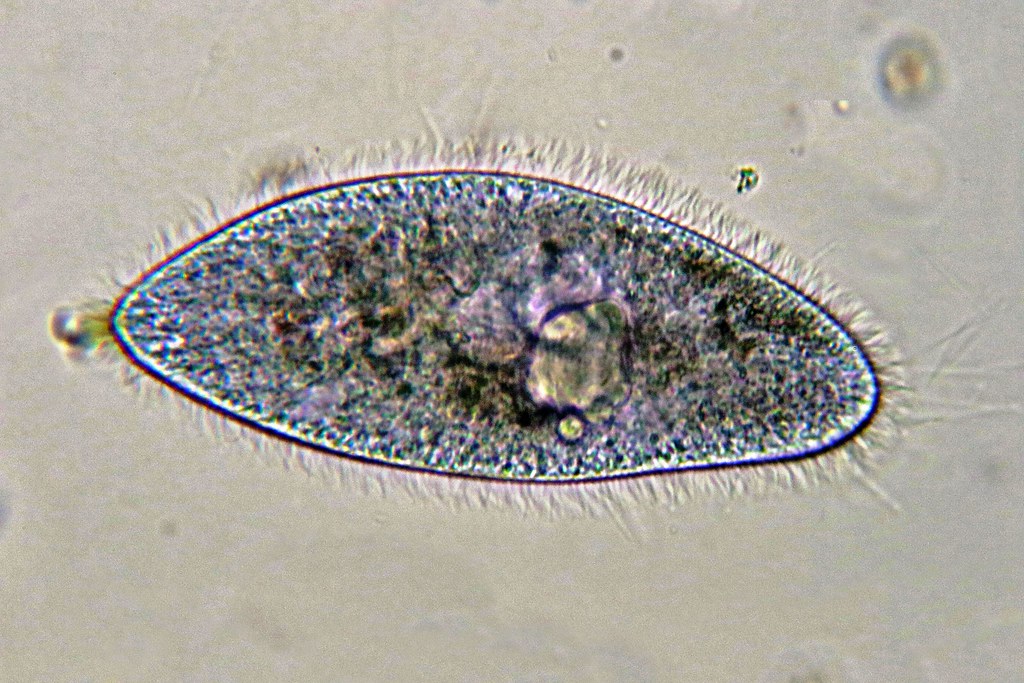
About 3.72 billion years ago, right after LUCA, when cells emerged, touch became the most ancient form of biological sensing: required to physically navigate reality.
~3.72 Billion Years Ago (after prokaryotes)
Mechanical sensitivity to pressure and membrane stretch
First True Bacteria
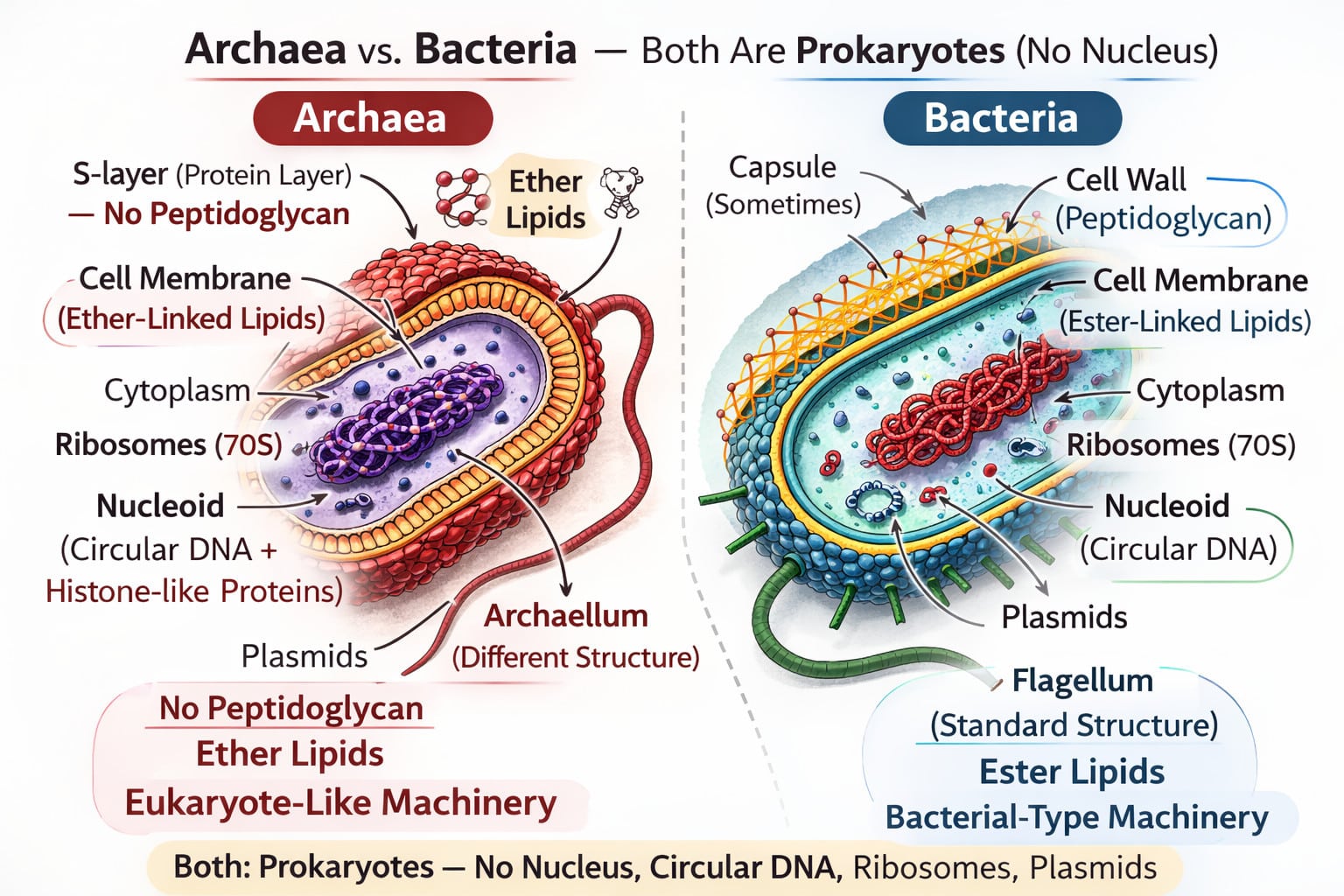
Bacteria and archaea are both prokaryotes, but archaea’s membrane chemistry and genetic machinery are fundamentally different — and archaeal ancestry gave rise to eukaryotic cells.
~3.7 Billion years ago (shortly after LUCA)
Peptidoglycan cell wall and Ester-linked lipids
Blue-Green Bacteria (Not Algae)
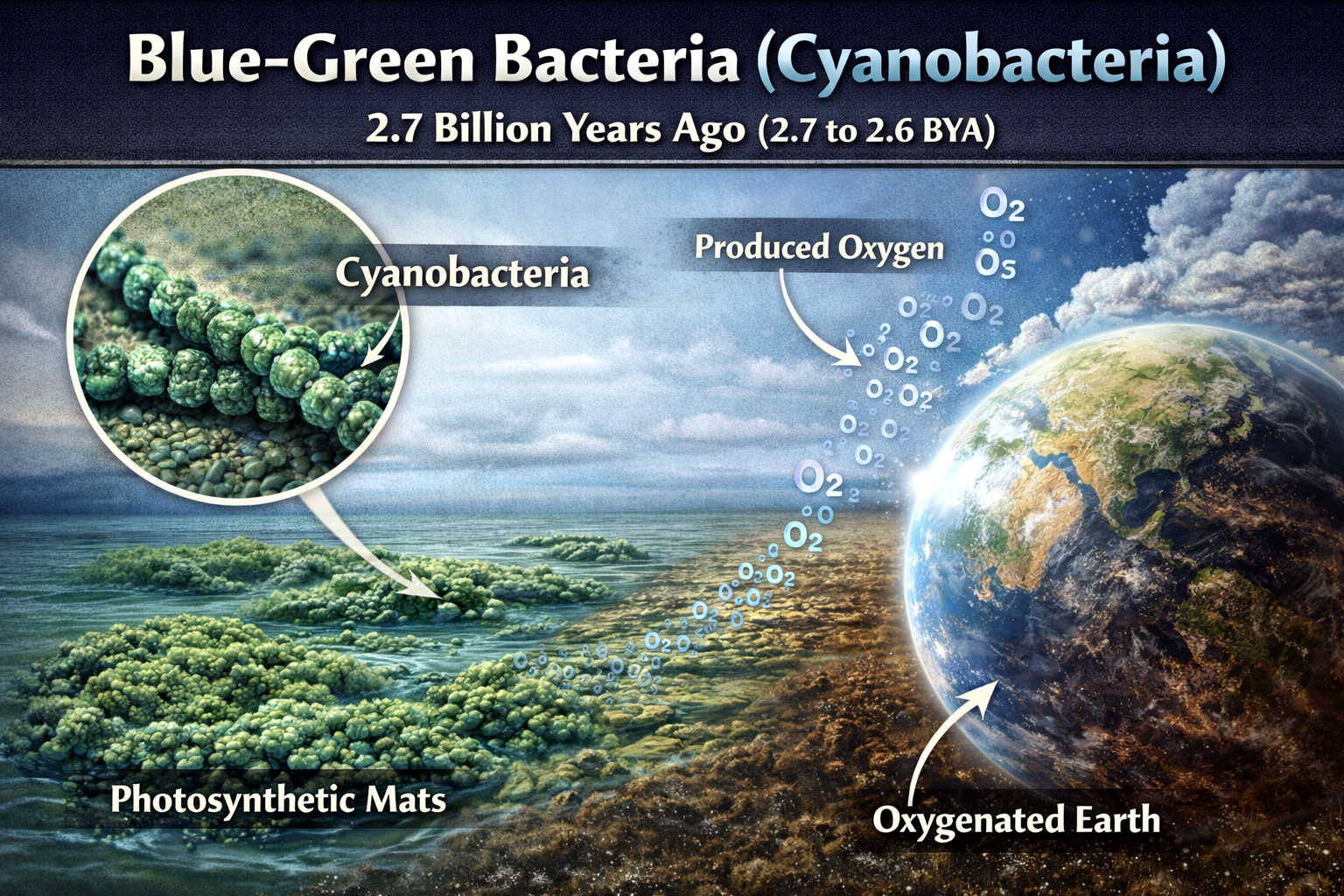
Long before plants covered the land, cyanobacteria were already harvesting sunlight. In doing so, they slowly helped change Earth’s oceans and atmosphere, preparing the way for more complex life.
2.65 Billion years ago (+/- 50 million years)
Great Oxidation Event: Third Atmosphere
Cyanobacteria released oxygen faster than Earth could absorb it, changing the oceans, atmosphere, and future of life.
~2.4 Billion Years Ago
Cause: Cyanobacteria Produce Oxygen
Bacteria Aerobic metabolism expands
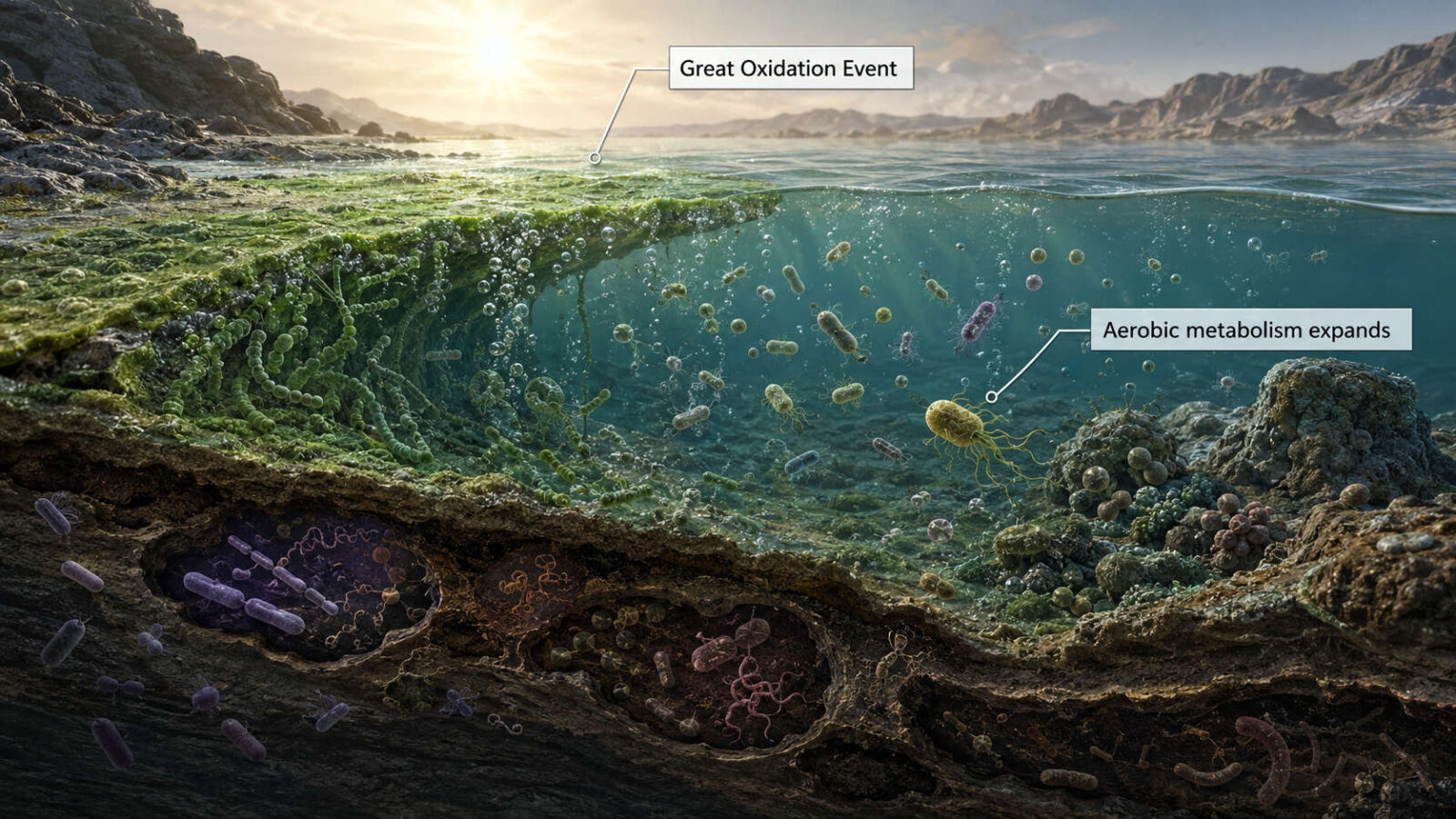
Cyanobacteria caused the oxygen crisis. Aerobic bacteria were among the survivors that learned how to use the poison.
~2.2 Billion years ago (+/- 200 million)
Oxygen-respiring bacteria diversify
Bacterial Endosymbiosis: Origin of Eukaryotes
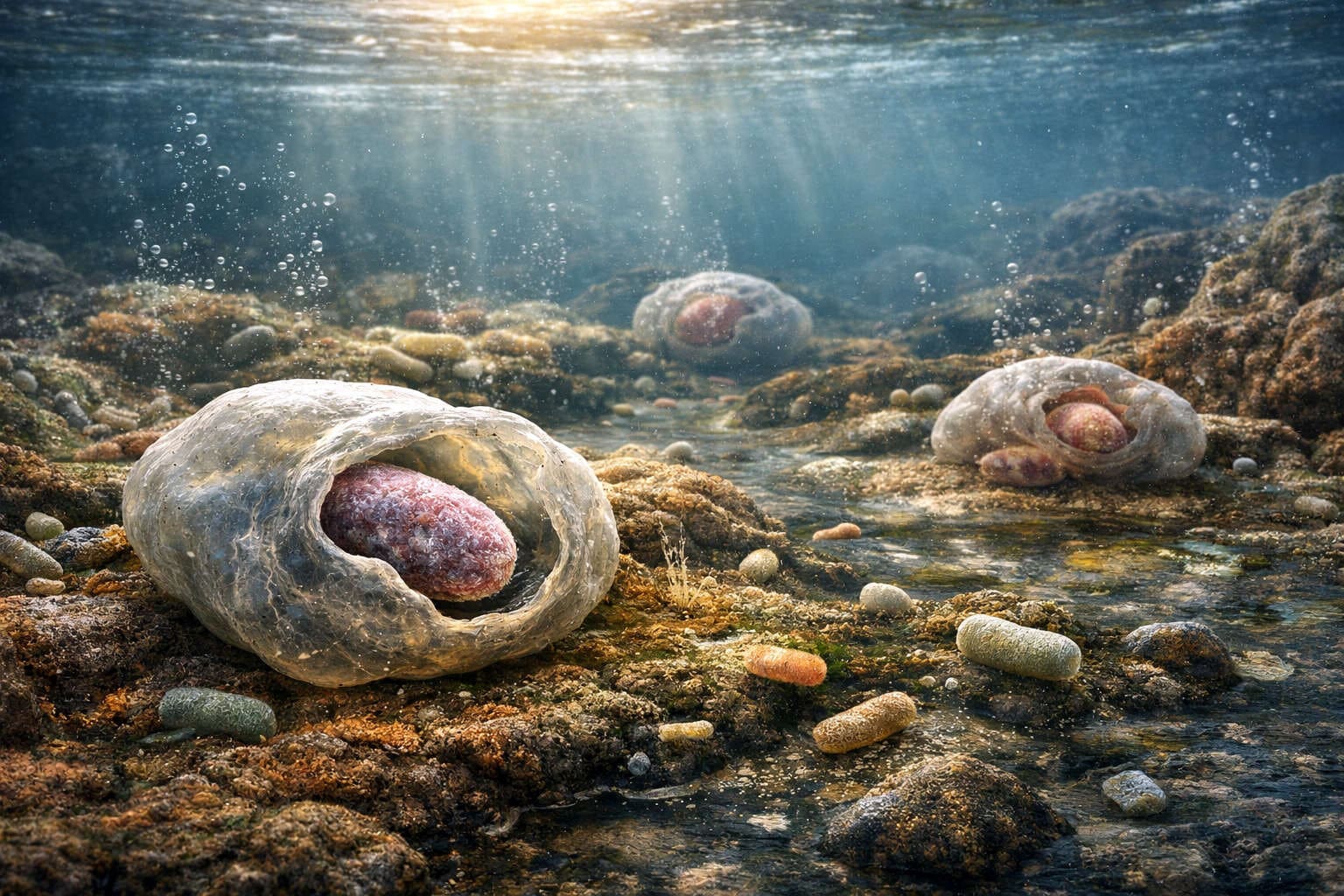
About 2 billion years ago, bacteria are added to cells and that group leads to eukaryotes. You are a walking chimera ecosystem made of an Archaea host and trillions of Bacterial power-plants.
~1.9 Billion years ago (+/- 100 million)
Bacteria are added to eukaryote ancestor cells
Bacteria Diversify: Major modern phyla
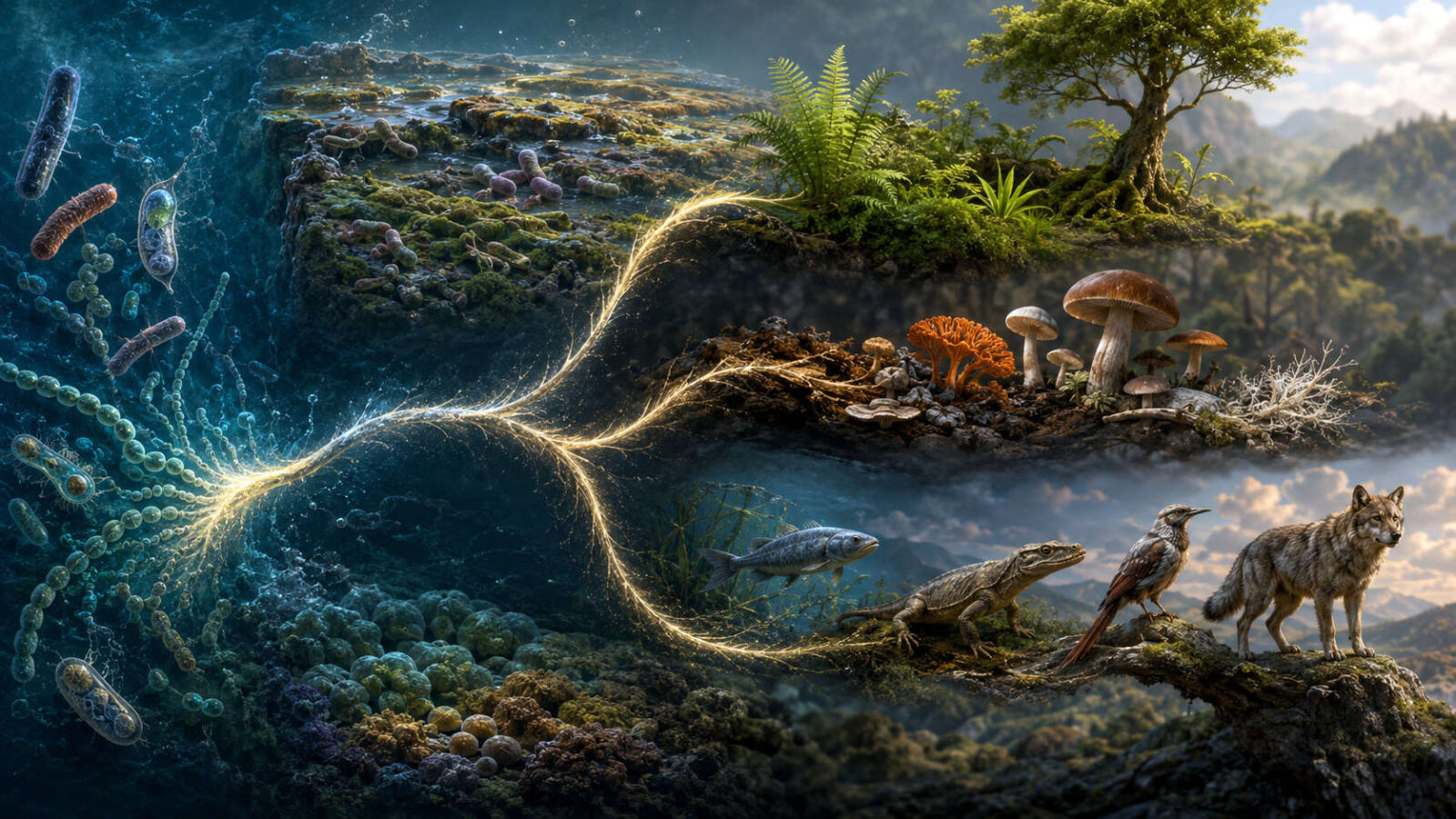
After the "Great Oxidation Event," all life, including the bacterial world settled into modern lineages, the foundational "Ecological Cast" of all major life today.
~1.3 Billion years ago (+/- 200 million)
The ecological cast takes shape.
Snowball Earth: When Ice Reached the Equator
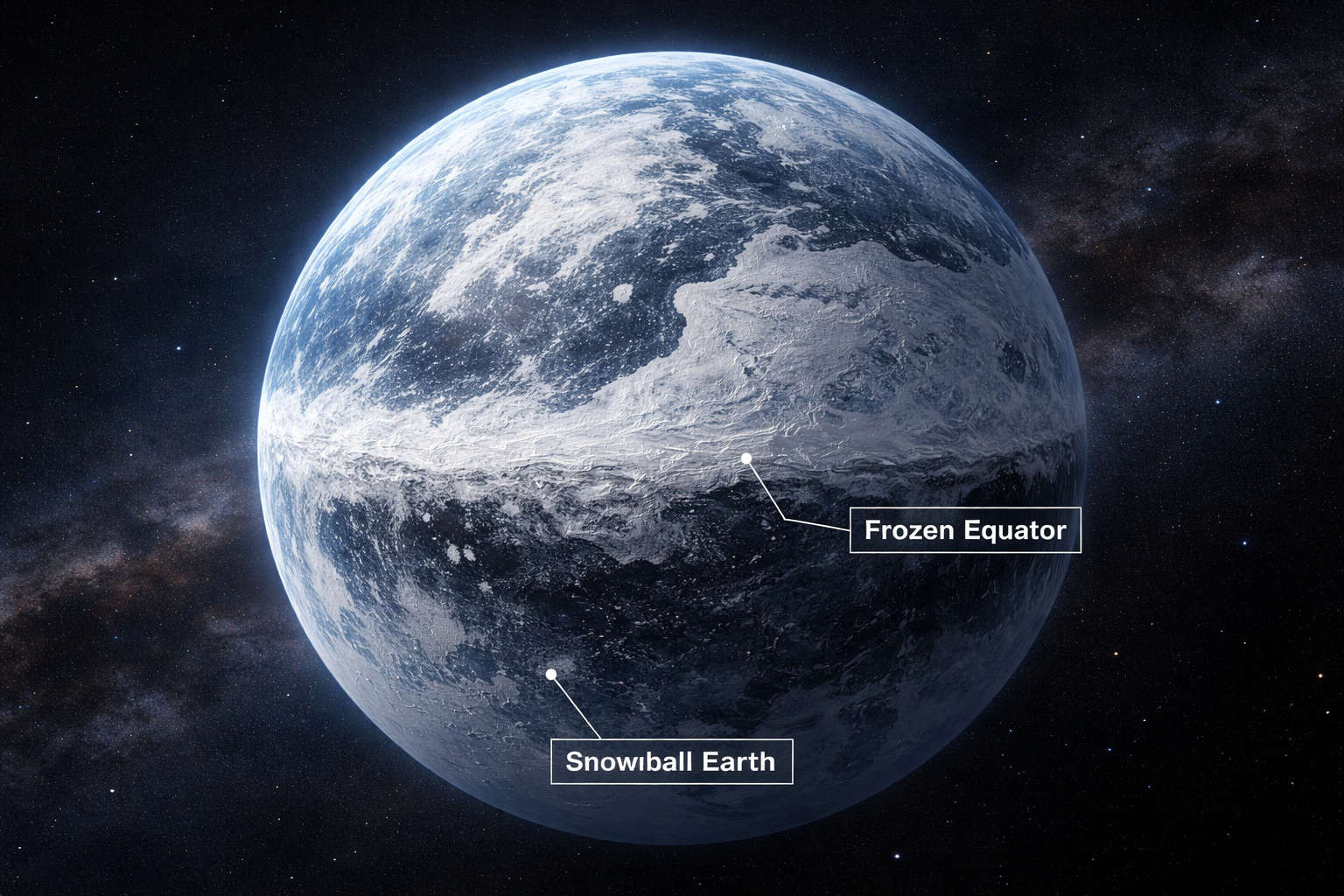
For tens of millions of years, Earth plunged into its deepest known freeze. Ice sheets reached sea level at low latitudes, perhaps even the equator, turning the planet into a near-global ice world and reshaping the path toward complex life.
From 717 million years ago through 635.
Cause: Continental Drift, Falling CO₂
Paleozoic Era: The Age of Synapsids
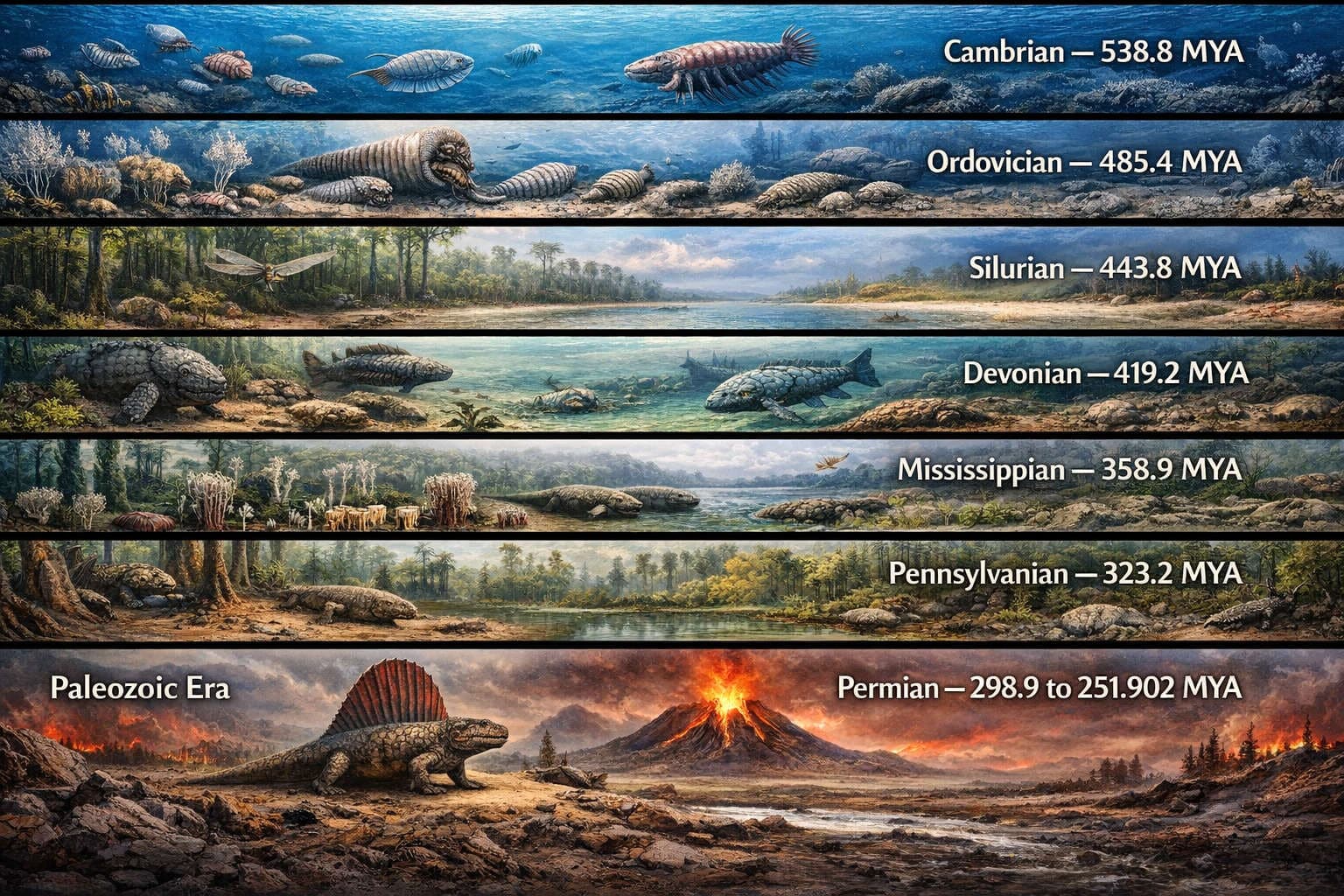
The Paleozoic era is marked by the rise of complex animal life 538.8 million years ago. It ends with the end-Permian mass extinction 252 million years ago. A volcanic cascade global warming event.
From 538.8 to 251.902 million years ago.
287 Million years: From burrowing to extinction.
Ordovician–Silurian Extinction: Ice Strikes the Seas
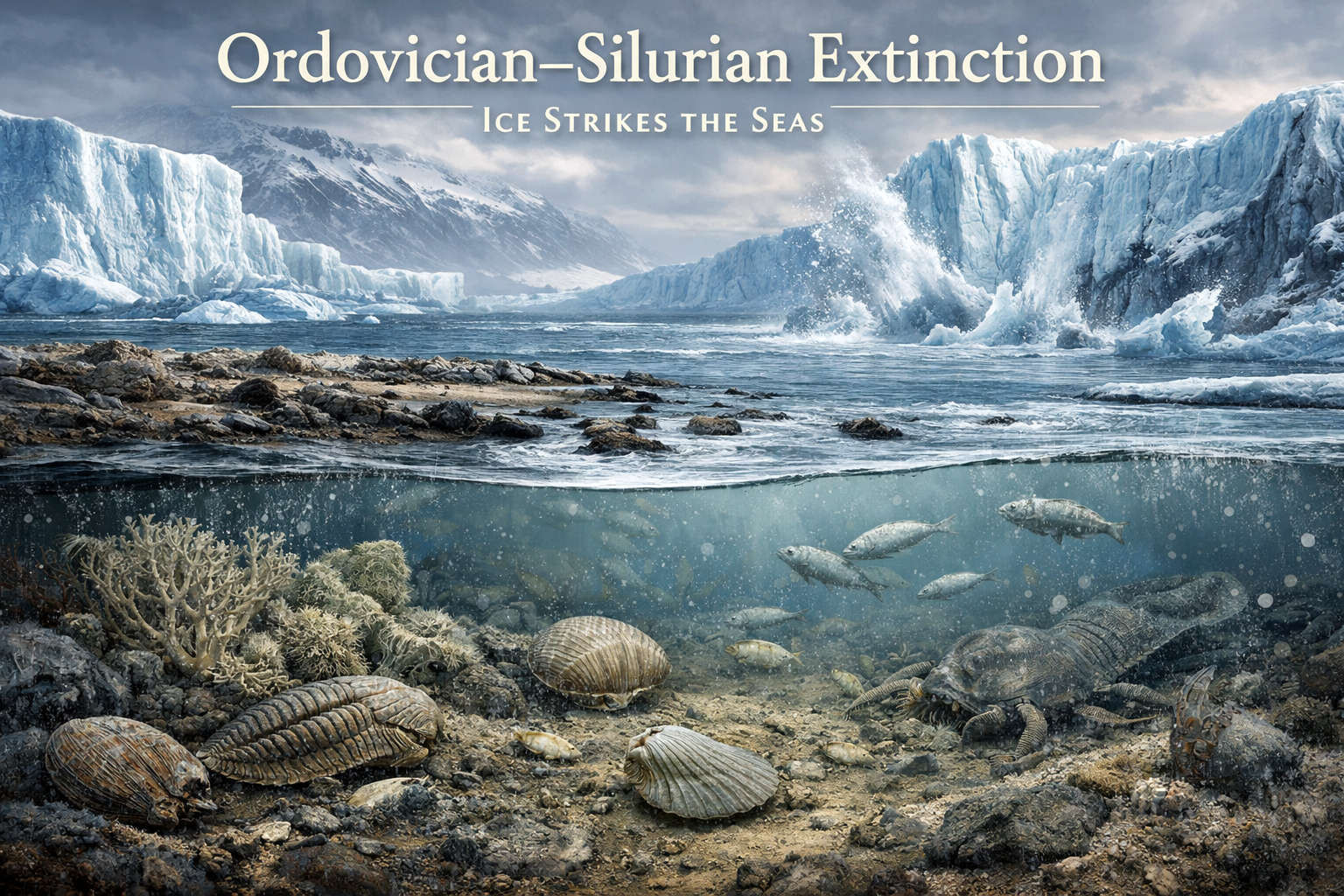
The Ordovician–Silurian extinction shows how climate change can reshape evolution by collapsing old ecosystems and opening space for new life.
~444 Million Years Ago
Cause: Global Cooling and Falling Seas
Oceans Lose Their Breath
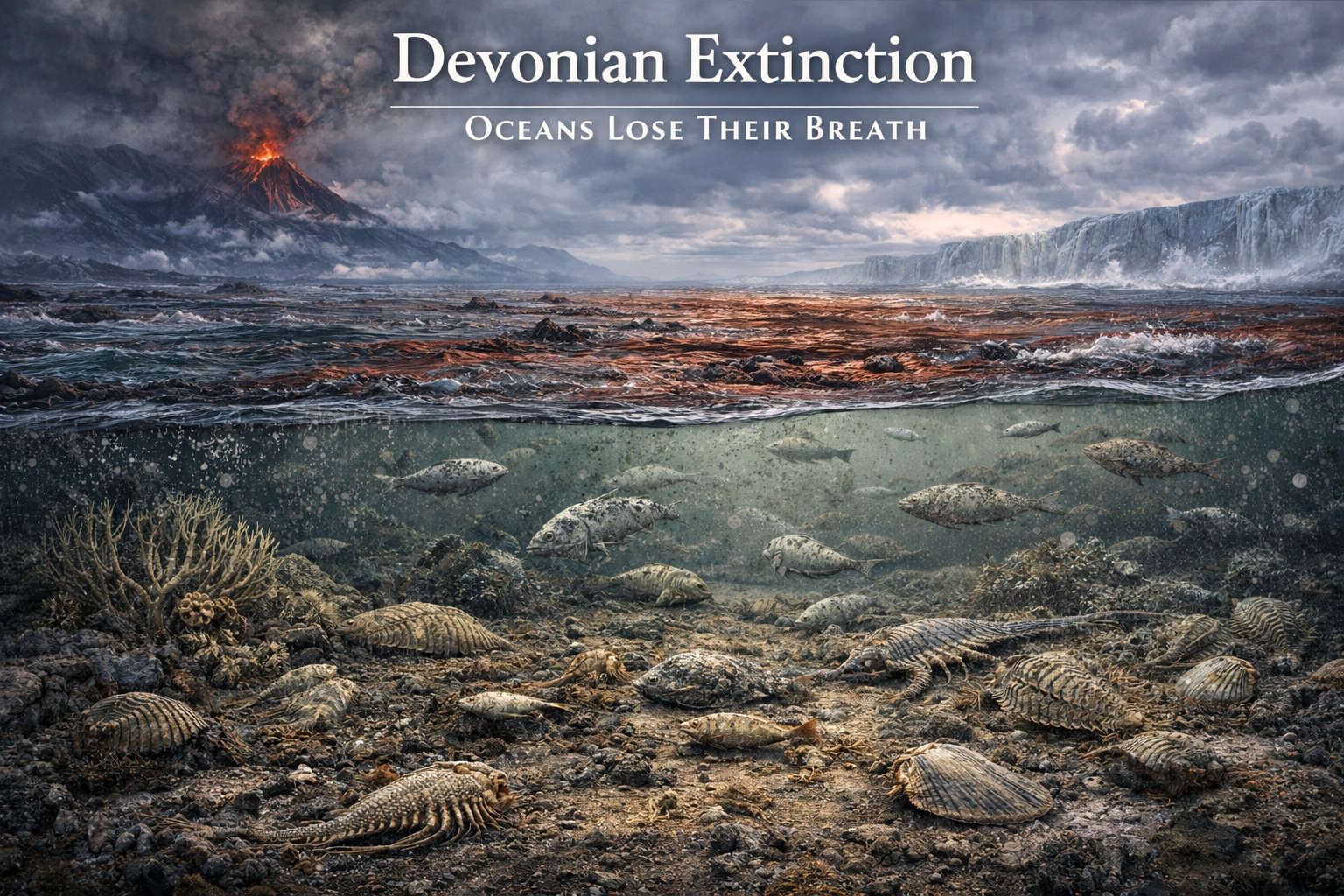
The Devonian extinction shows that evolution can be reshaped not by one sudden blow, but by a long collapse in ocean health.
~372–359 Million Years Ago
Cause: Ocean Anoxia
The P-T Extinction
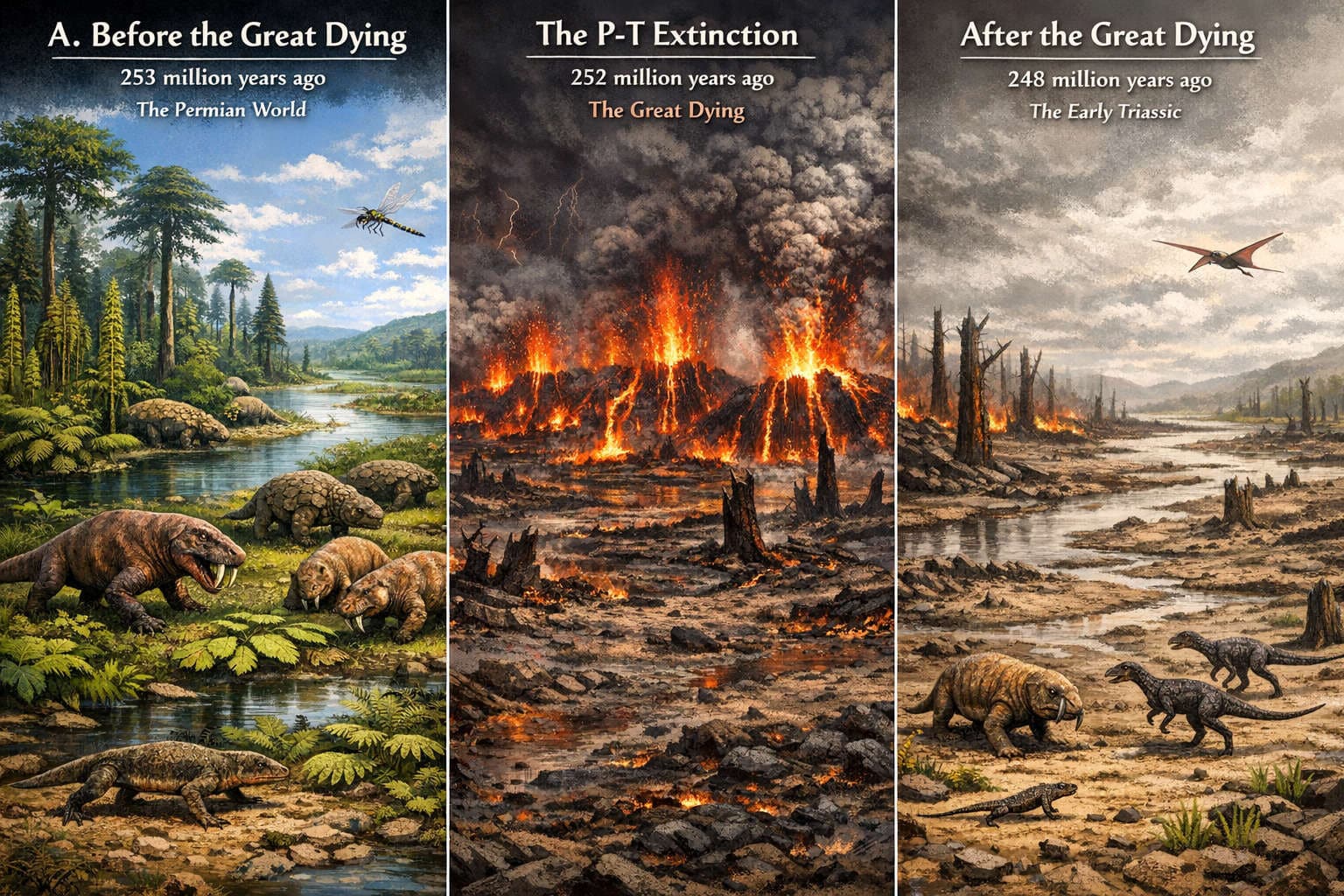
The Permian-Triassic extinction was not just the end of many species. It was a planetary reset that destroyed the old synapsid-dominated world and opened the door for the archosaur line that would later give rise to dinosaurs.
251,902,000 years ago (+/- 900 years).
Cause: Massive Volcanic Eruptions in Siberia
Mesozoic Era: Age of Dinosaurs
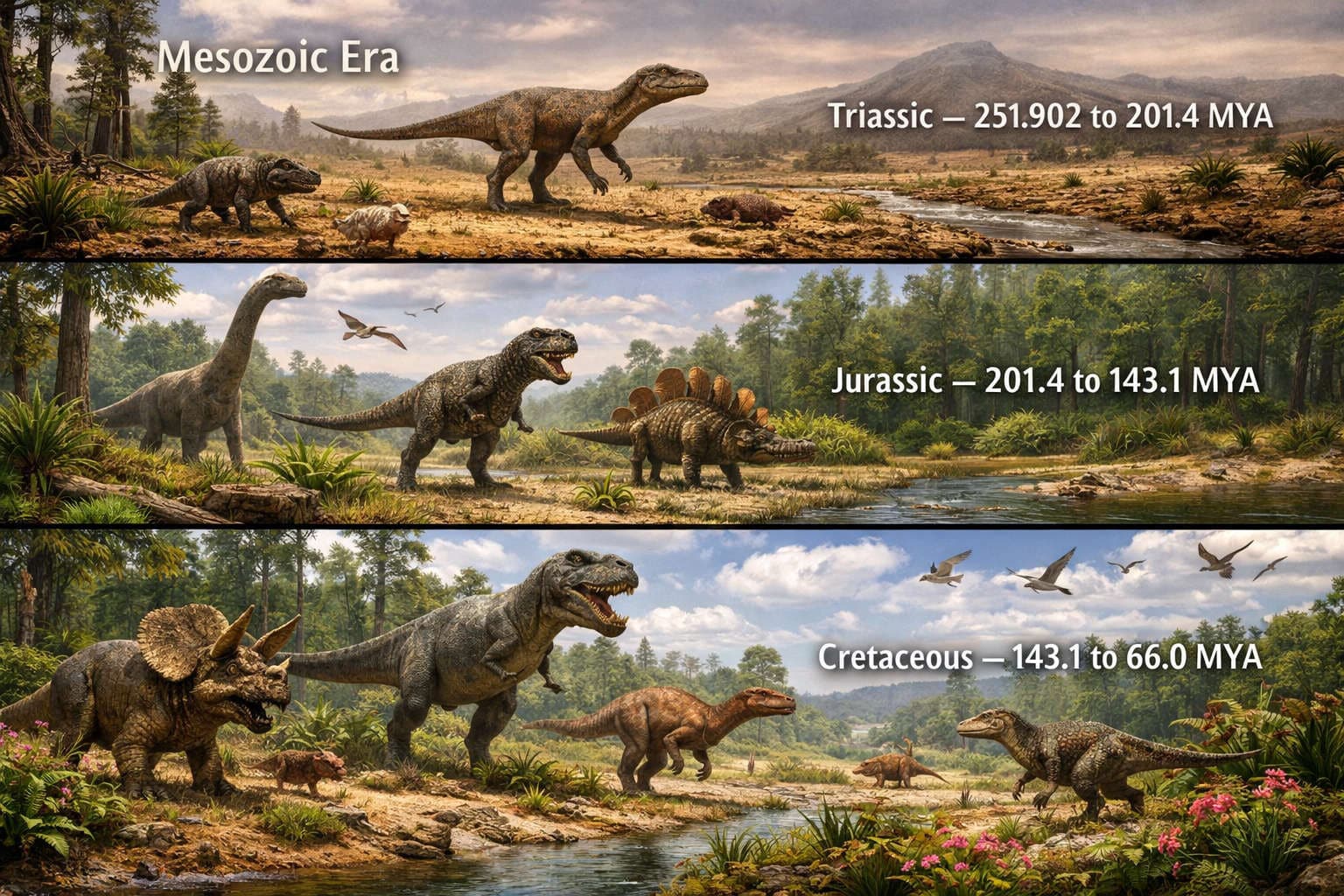
The Mesozoic era starts with the end-Permian mass extinction 252 million years ago. It ends the reign of dinosaurs with the K–Pg extinction 66 million years ago.
From 251.902 to 66.0 million years ago.
186 Million years: Dinosauria reigned from extinction to extinction.
Triassic–Jurassic Extinction: Volcanoes Open the Age of Dinosaurs
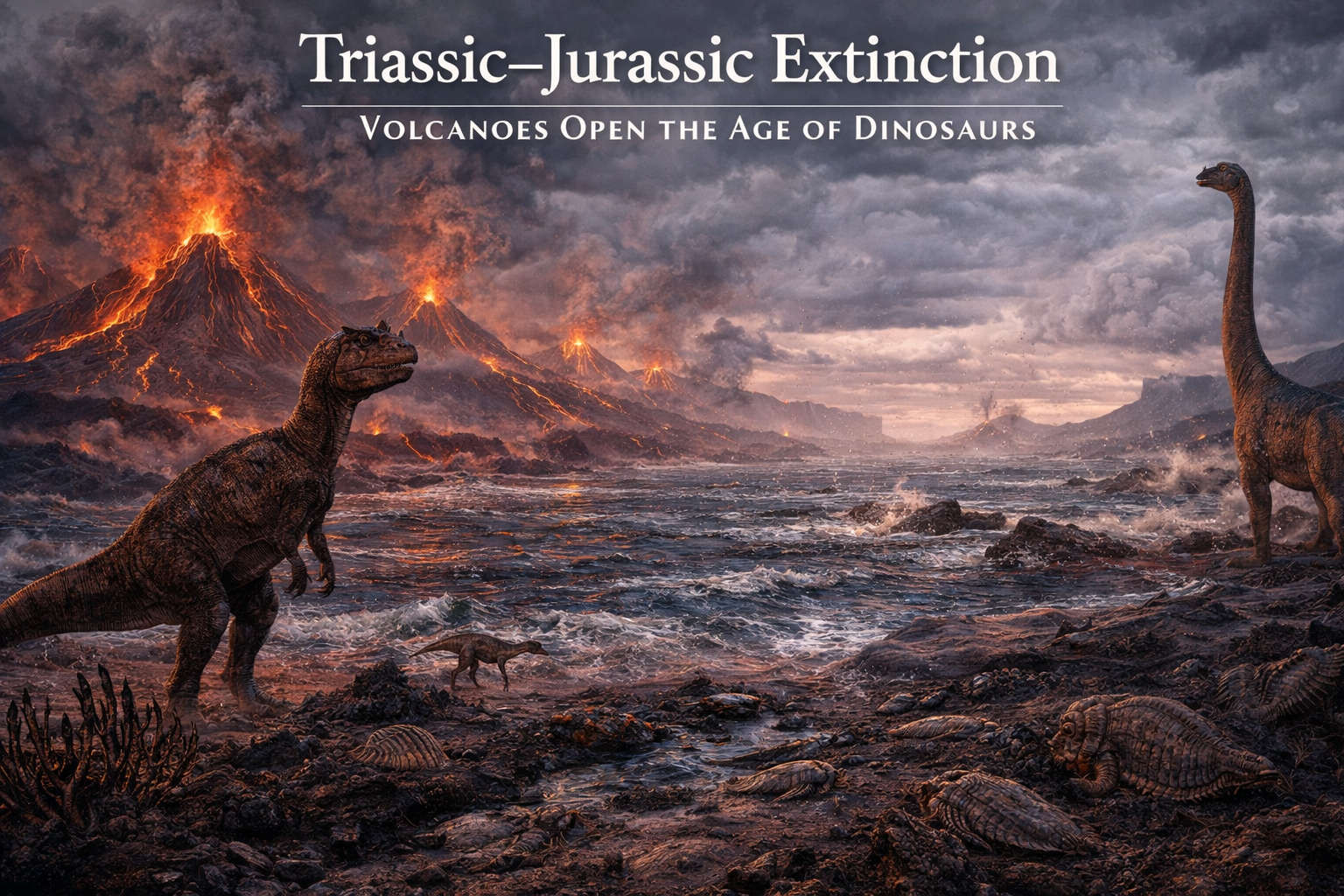
As Pangea cracked apart, massive volcanic eruptions poisoned air and oceans. This image includes early dinosaurs as foreshadowing: survivors waiting in the smoke before their Jurassic rise.
~201 Million Years Ago
Cause: Massive Volcanic Eruptions
The K-Pg Extinction
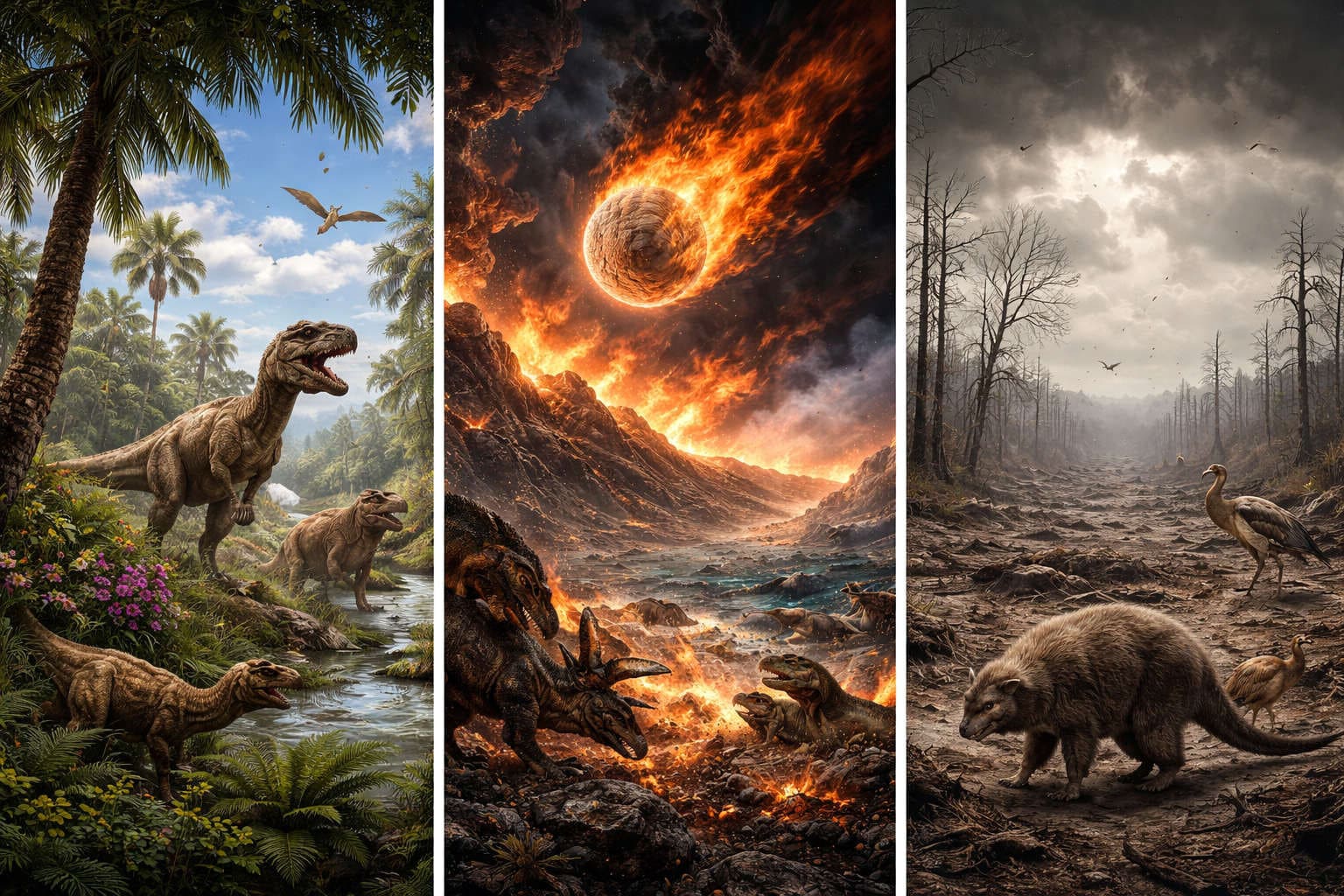
The K–Pg extinction was a sudden global catastrophe that ended the long dominance of non-avian dinosaurs and opened the way for mammals and modern birds to expand into a transformed world.
66.04 million years ago (+/- 900 years).
Cause: Massive Meteor
Cenozoic Era: Age of Mammals & Birds
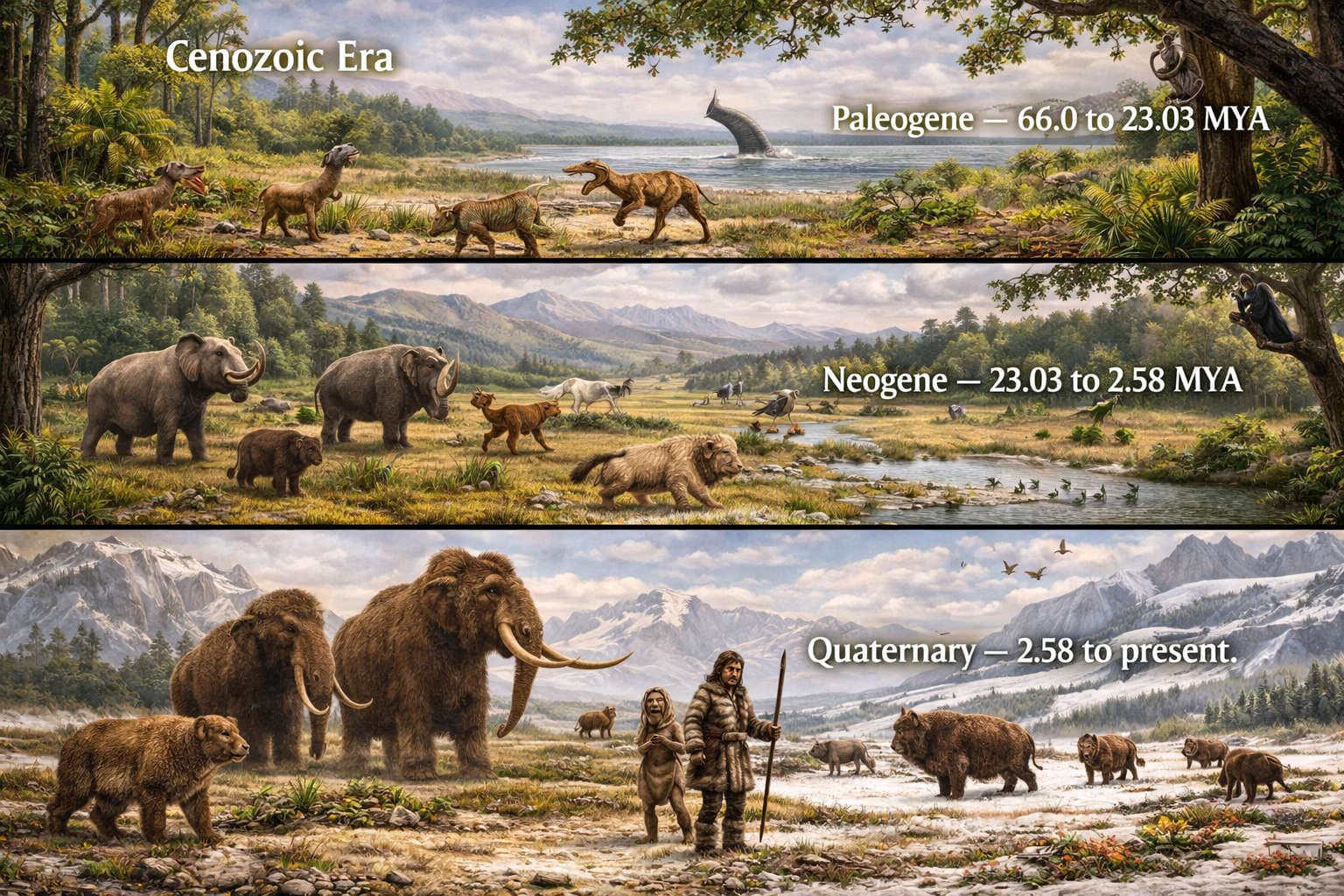
The Cenozoic era starts with the K–Pg extinction 66 million years ago. That event marks the sudden end of the reign of dinosaurs and the rise of mammals and birds.
66.04 million years ago to the present.
66 Million years: From extinction to society.