


Human Evolution: This timeline picks up our story with the evolution of Homo sapiens within the greater Great Ape story. Explore Hominids to explore our greater Great Ape story; explore hominins to explore our story after the chimp-human split.
- Hominidae Family: The Great Apes (all hominids and hominins including genus Homo).
- Hominid: Us=direct ancestor from the Great Apes LCA to Homo habilis.
- Hominin: Us=direct ancestor back to CHLCA or genus Homo.
- Homo sapiens: our specific species.
Human Evolution
Chimpanzees Branch Off (CHLCA)
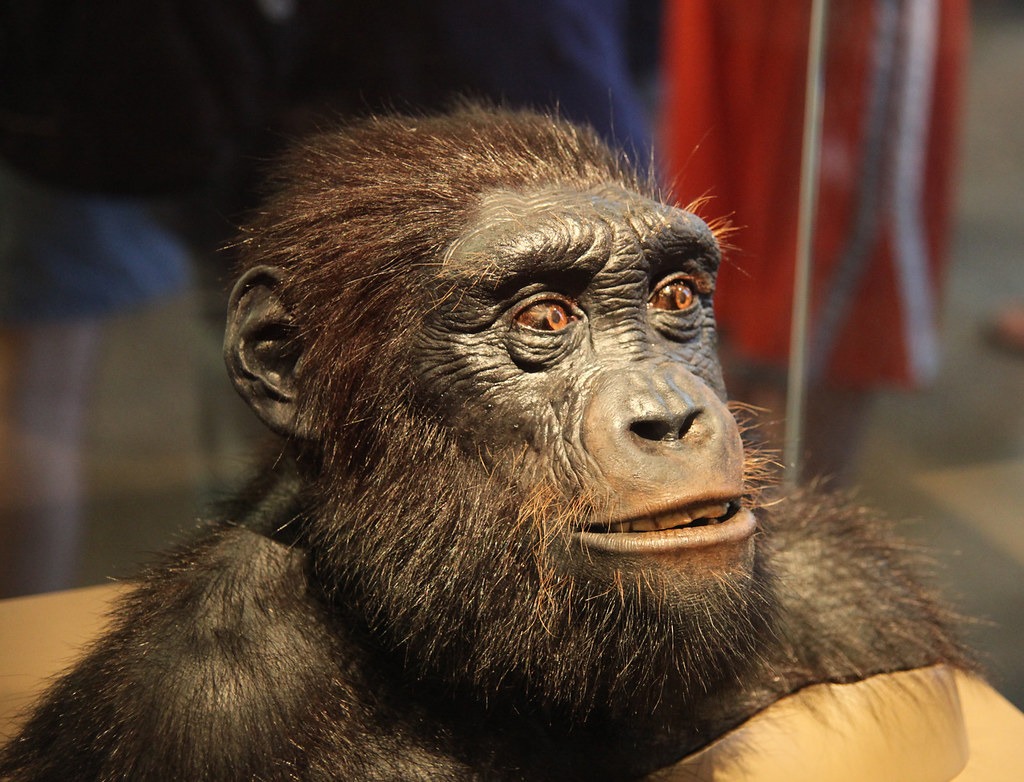
"<a href="https://www.flickr.com/photos/23165290@N00/7283201268" target="_blank" rel="noopener noreferrer">Sahelanthropus tchadensis adult male - head model - Smithsonian Museum of Natural History - 2012-05-17</a>" by <a href="https://www.flickr.com/photos/23165290@N00" target="_blank" rel="noopener noreferrer">Tim Evanson</a> is licensed under <a href="https://creativecommons.org/licenses/by-sa/2.0/" target="_blank" rel="noopener noreferrer">CC BY-SA 2.0</a>
7.5 Million Years Ago
Advanced coalition politics and tool precursors
Genus: Sahelanthropus (Walking Upright)
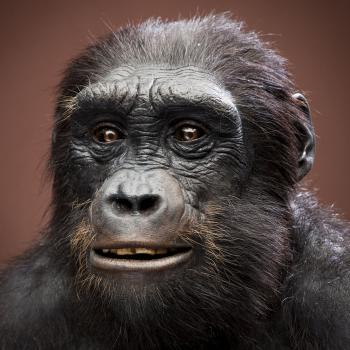
7 Million BCE
Partial bipedal posture + visual reorientation
Genus: Orrorin
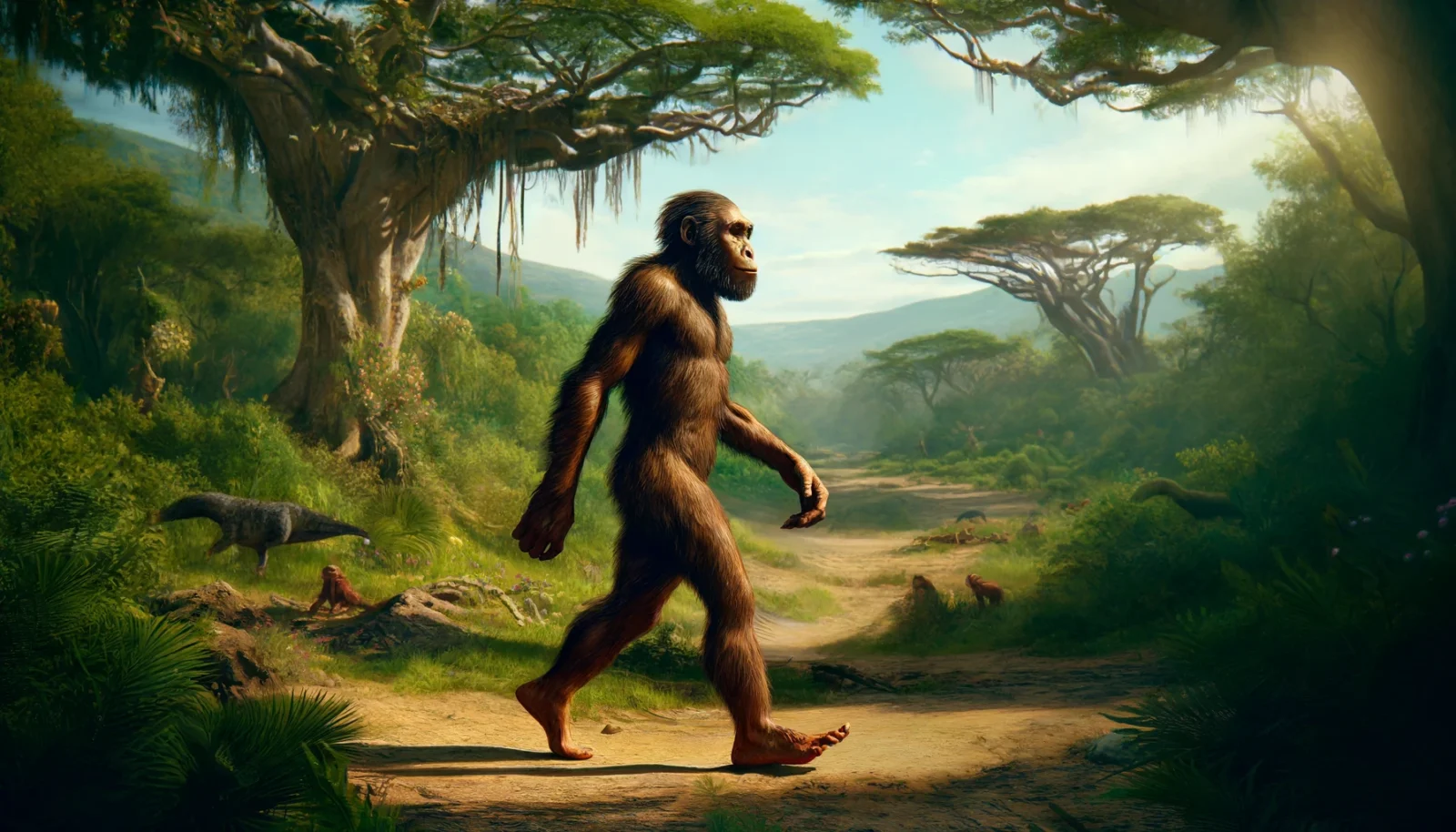
Imagined image of Orrorin tugenensis in a natural landscape, approximately 6 million years ago. The scene captures this early human ancestor walking upright, showcasing its bipedal nature in a lush, prehistoric African forest setting.
6 Million Years Ago (Maybe Us)
Femoral adaptation, Motor cortex recalibration
Genus: Ardipithecus
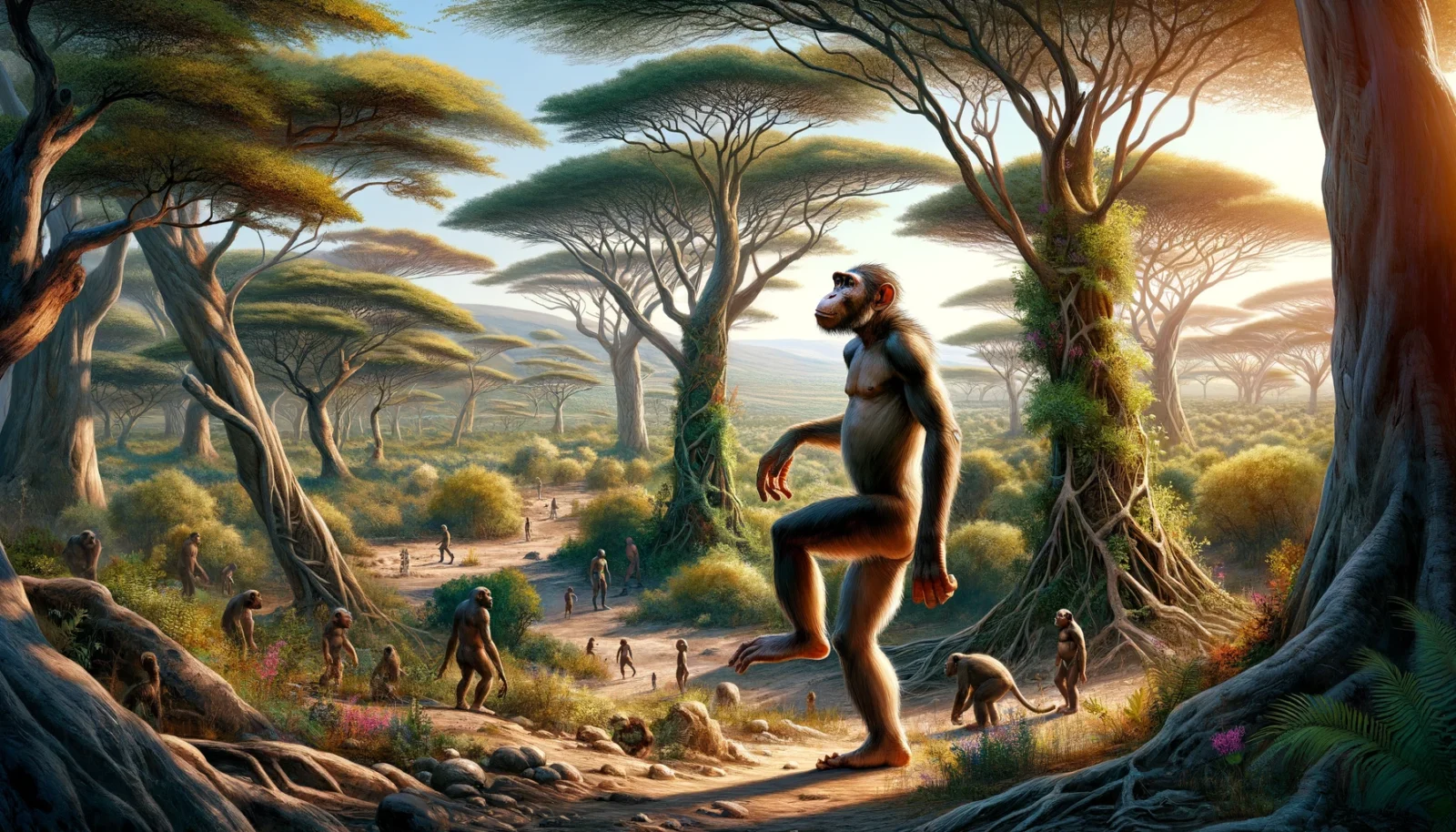
Imagined image depicting the genus Ardipithecus in an ancient African landscape. The scene captures the dual adaptations for upright walking and tree-climbing.
Lived 5.8 to 4.4 Million Years Ago (Maybe Us)
Reduced aggression, Reduced canine dimorphism
Echoes of Early Steps: The Laetoli Footprints

Imagined image: Captured in ancient volcanic ash at Laetoli, Tanzania, these 3.66 million-year-old footprints belong to Australopithecus afarensis, showcasing one of the earliest strides toward bipedalism in our evolutionary history.
3.66 Million Years Ago
Hominin
Early Wood tools
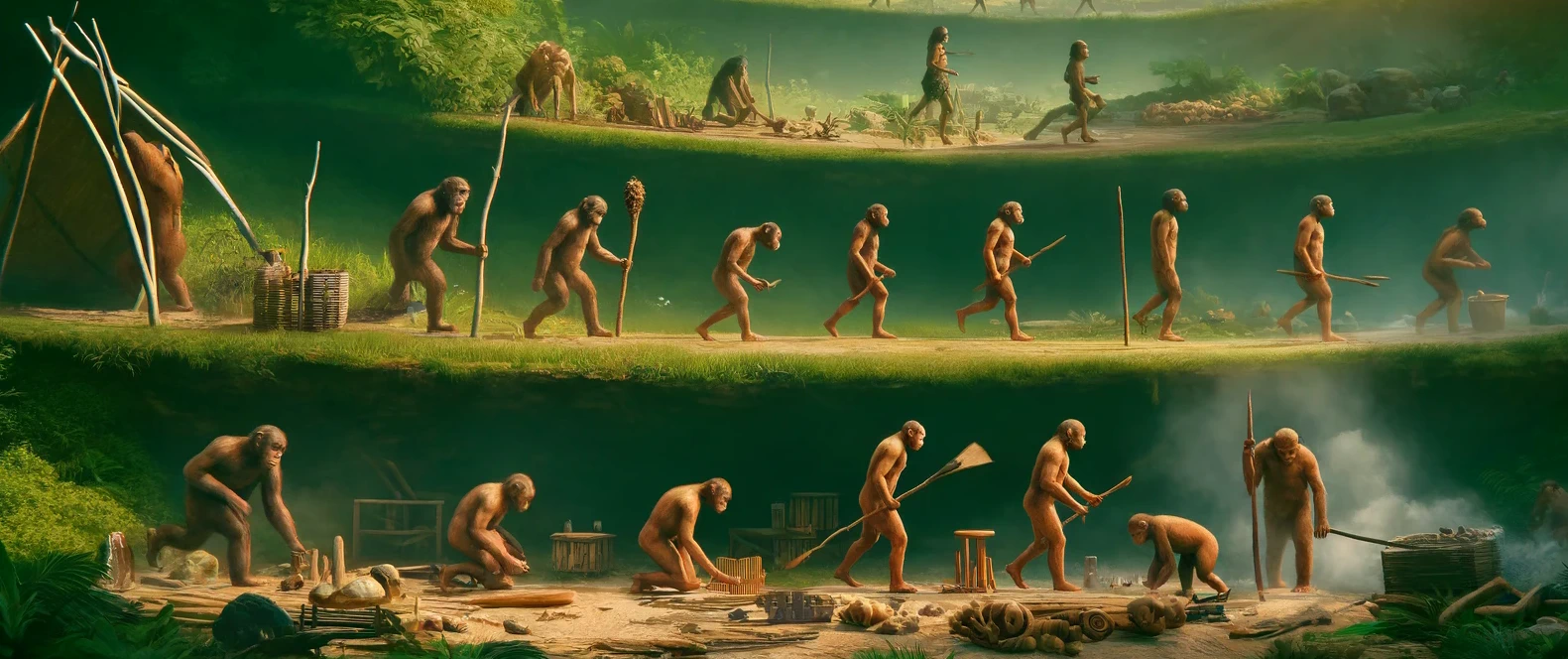
Imagined Image: The evolution of wooden tool use by early hominins. A walking stick around 3.3 million years ago, aiding mobility and providing defense. Small, sharpened sticks used for intricate tasks like termite extraction around 2.6 million years ago. Spears and digging sticks around 1.76 million years ago, vital for hunting and foraging. Advanced wooden constructs such as shelter frames and simple rafts emerge around 500,000 years ago. Hafted tools with stone-tipped spears around 300,000 years ago.
3.4 Million Years Ago
cognitive sequencing + motor precision + future modeling
Early Stone Tools
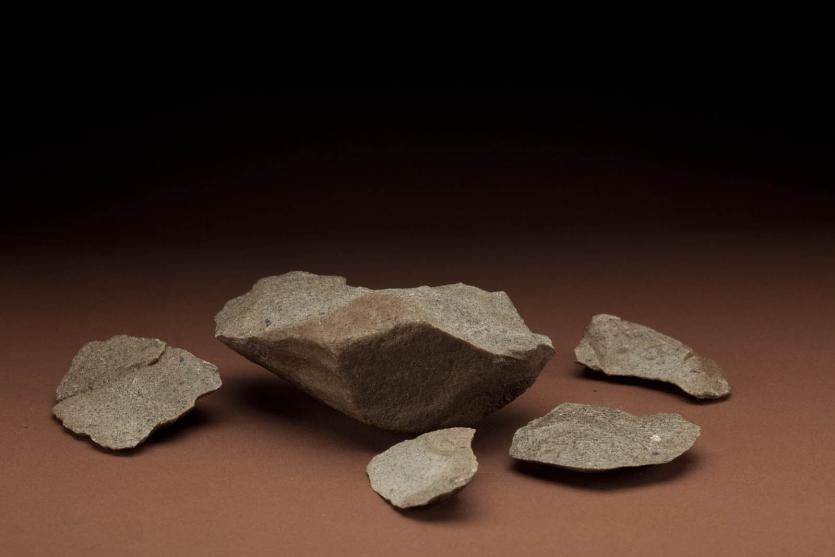
3.3 Million BCE (Hominins)
Prefrontal Cortex Expansion, Internal 3D modeling
Collective Learning Emerges
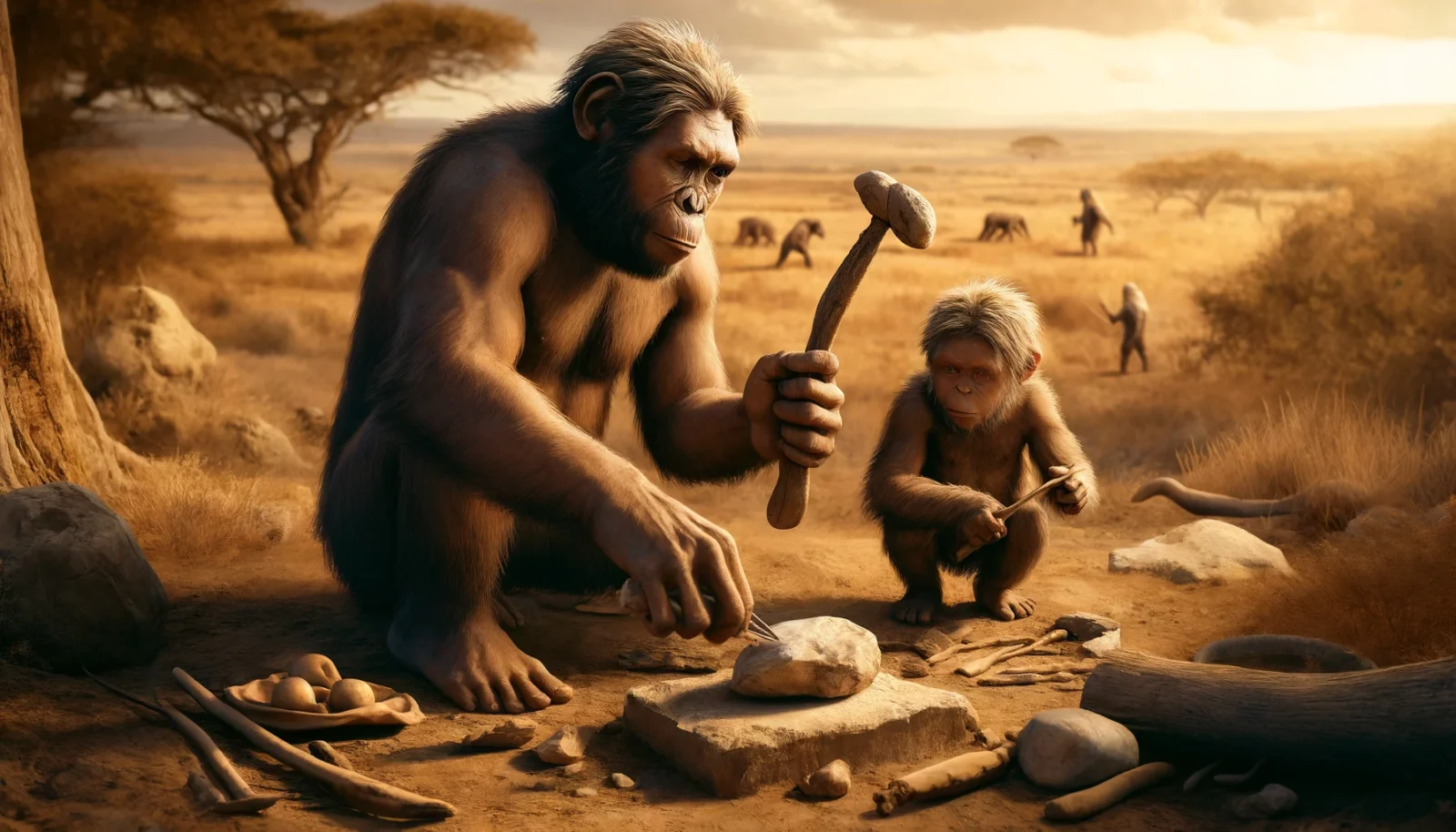
Collective learning, where a parent teaches a child, started long before primates, but something like our modern approach to showing our young how to live likely started about 3 million years ago, perhaps wit a species like australopithecus in a place like Kenya, Africa.
3.3 Million Years Ago
Human Thumb Evolves
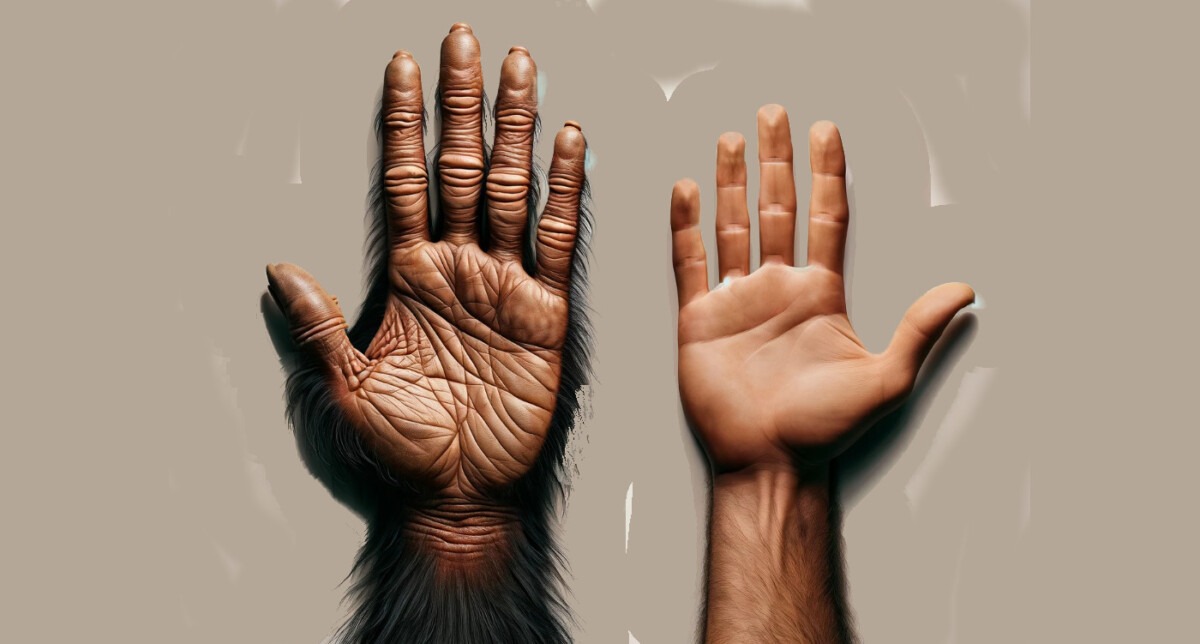
3 Million Years Ago (+/- 400,000 years)
Human Laughter Emerges

Cheerful children's laughter
3 Million Years Ago
+/- 1 million years
Genus: Australopithecus
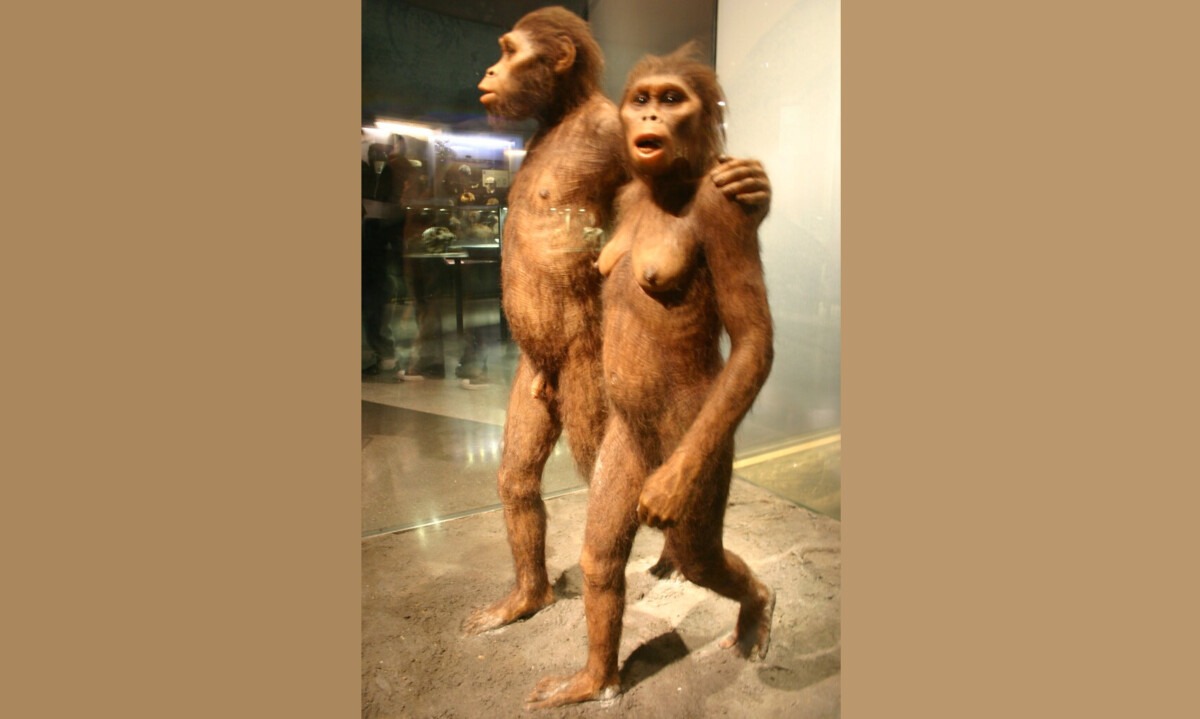
2.9 Million BCI
Hominin, Us, From 4.2 to 2 MYA
Homo habilis: Our Intelligence Settles.
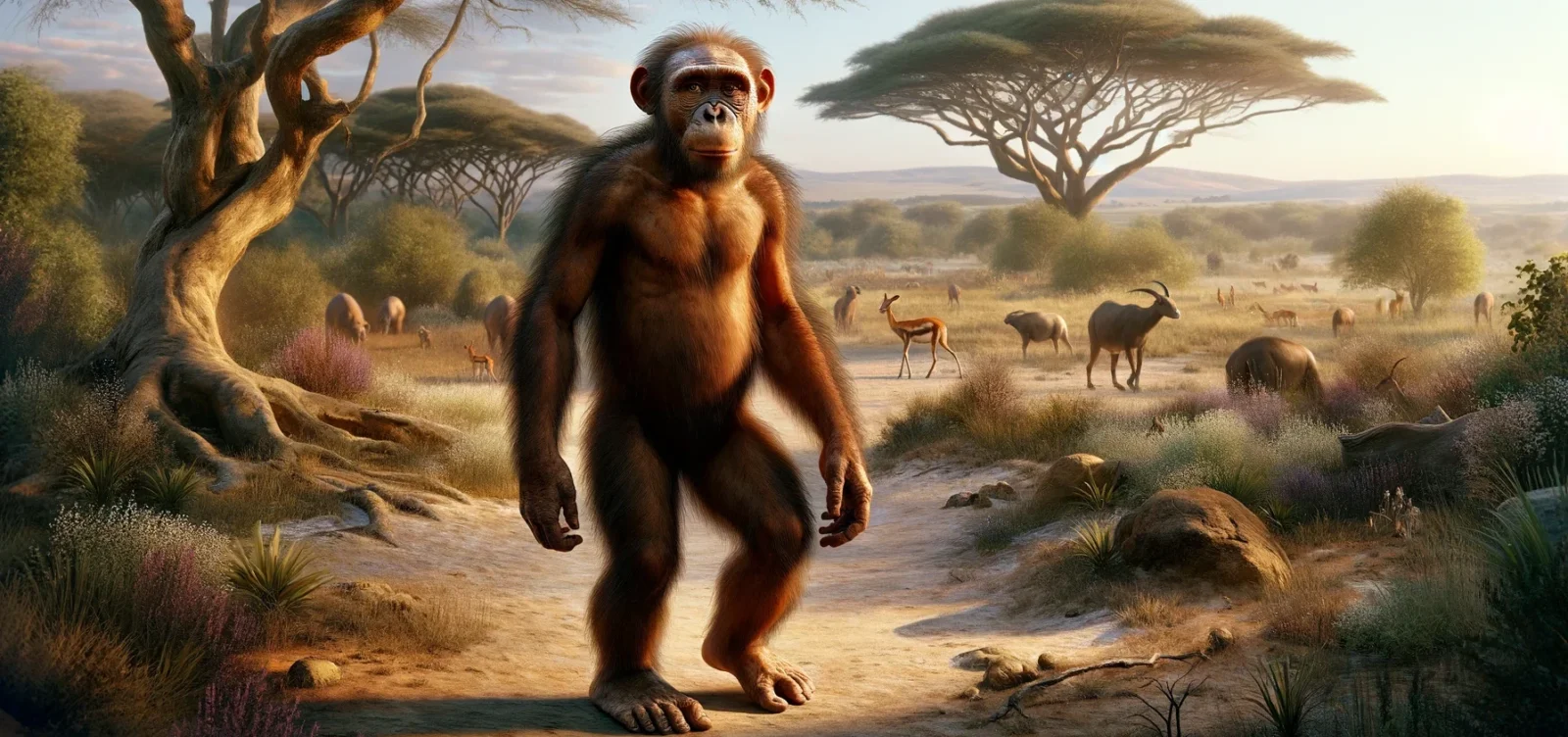
Image depicting an artistic reconstruction of Homo habilis in a prehistoric landscape of East Africa during the Pleistocene epoch about 2.3 million years ago.
2.3 Million BCE
First Proto-Containers
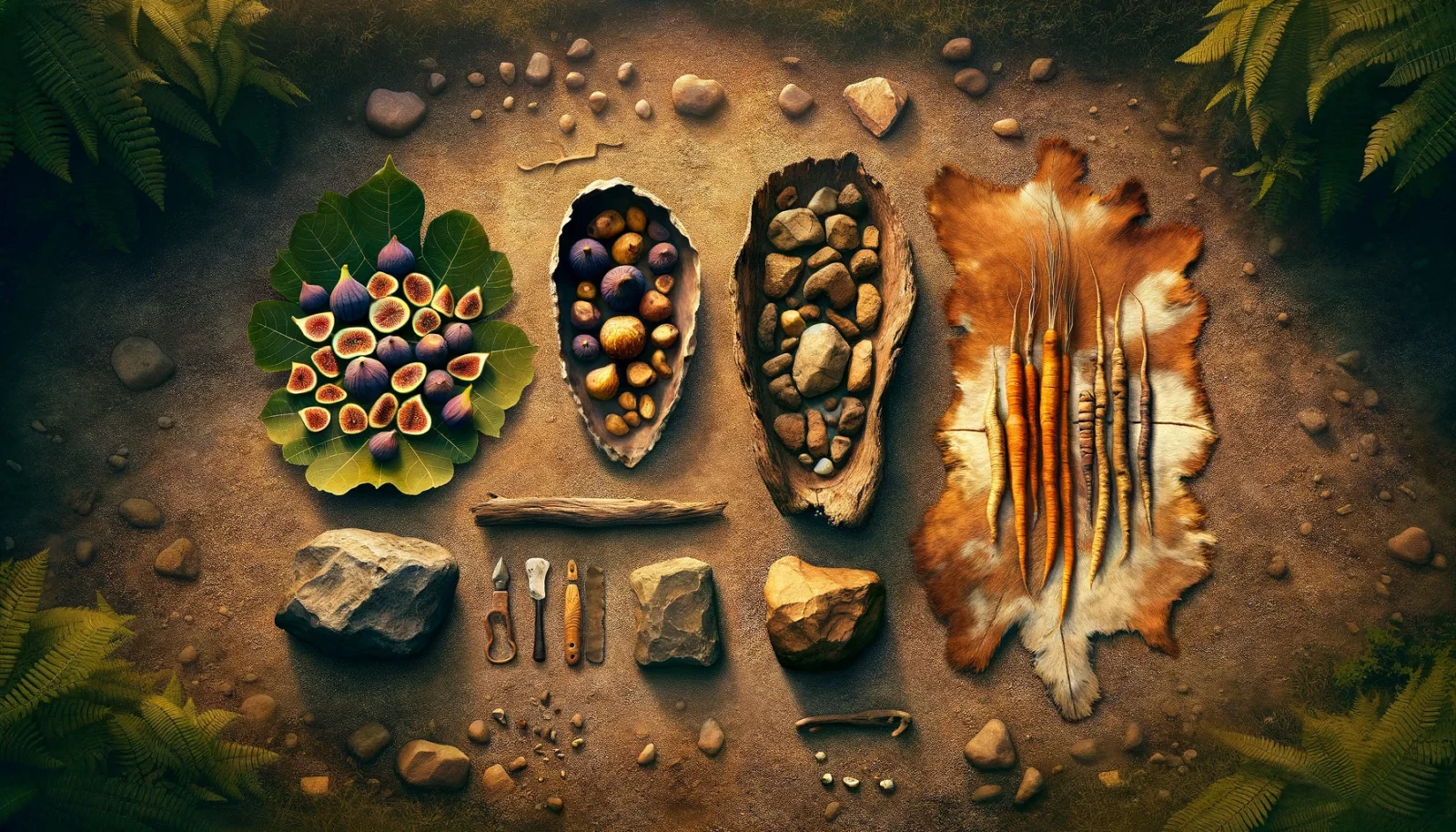
Imagined Image: A collection of early hominin tools and natural containers showing primitive ingenuity. Items like this may have been used as early as 2 million years ago. From left to right: 1) A large leaf used to carry figs, symbolizing the earliest forms of portable storage. 2) A large shell serving as a collector of small items, highlighting the use of found objects for gathering. 3) A naturally hollowed-out piece of wood filled with root vegetables, demonstrating the use of natural formations as functional tools. 4) A piece of animal hide displaying simple tools like flint and a sharpened stick, illustrating the early development of tool-making and preparation skills.
2 Million Years Ago
Homo erectus: A True Omnivore
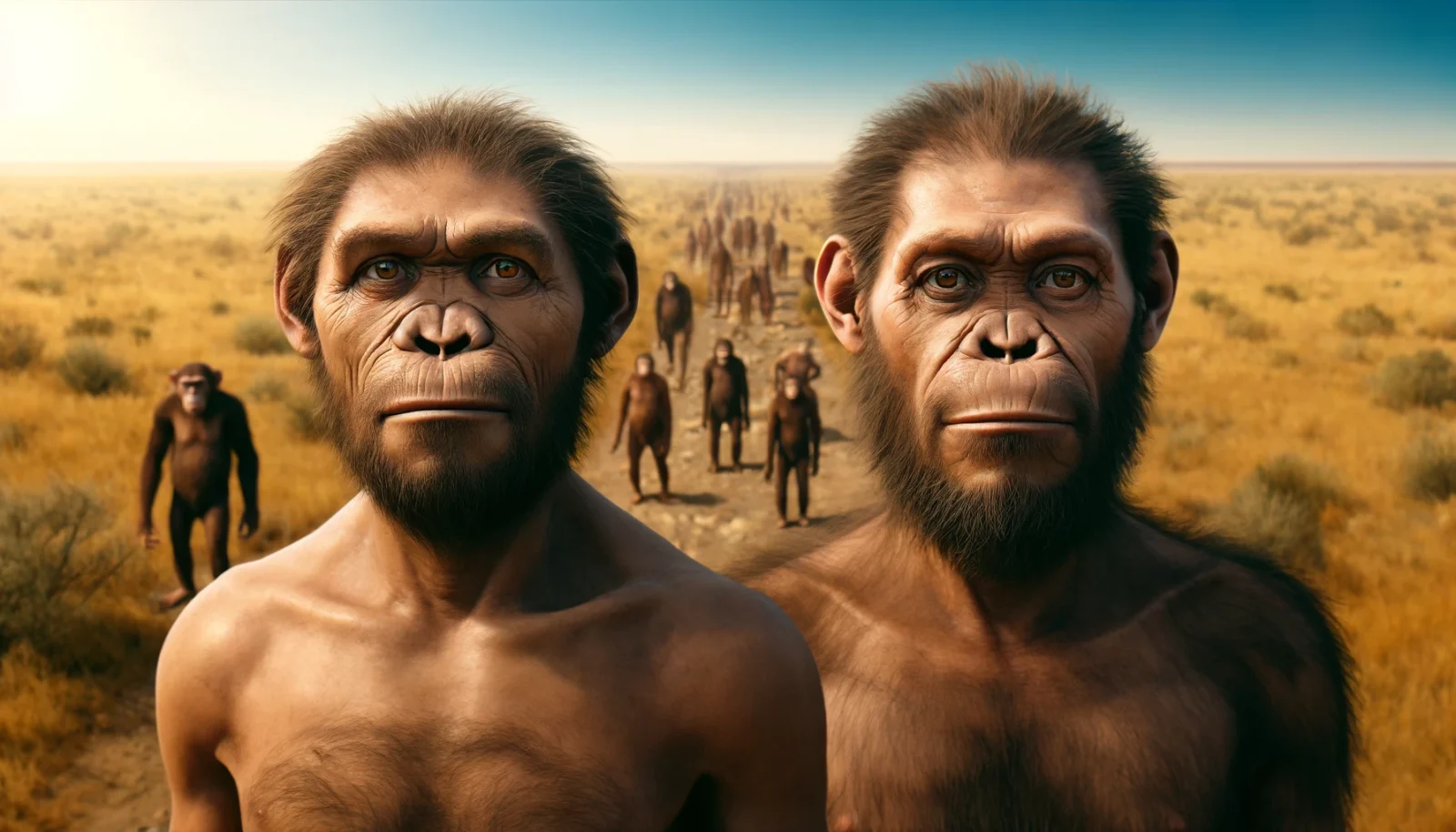
Image depicting two Homo erectus individuals at different stages of their evolutionary timeline. The first individual represents what Homo erectus might have looked like around 1.8 million years ago, and the second shows the species' features around 700,000 years ago, just before the transition towards Homo heidelbergensis.
1.9 Million BCE
Emergence of Early Hominin Shelters
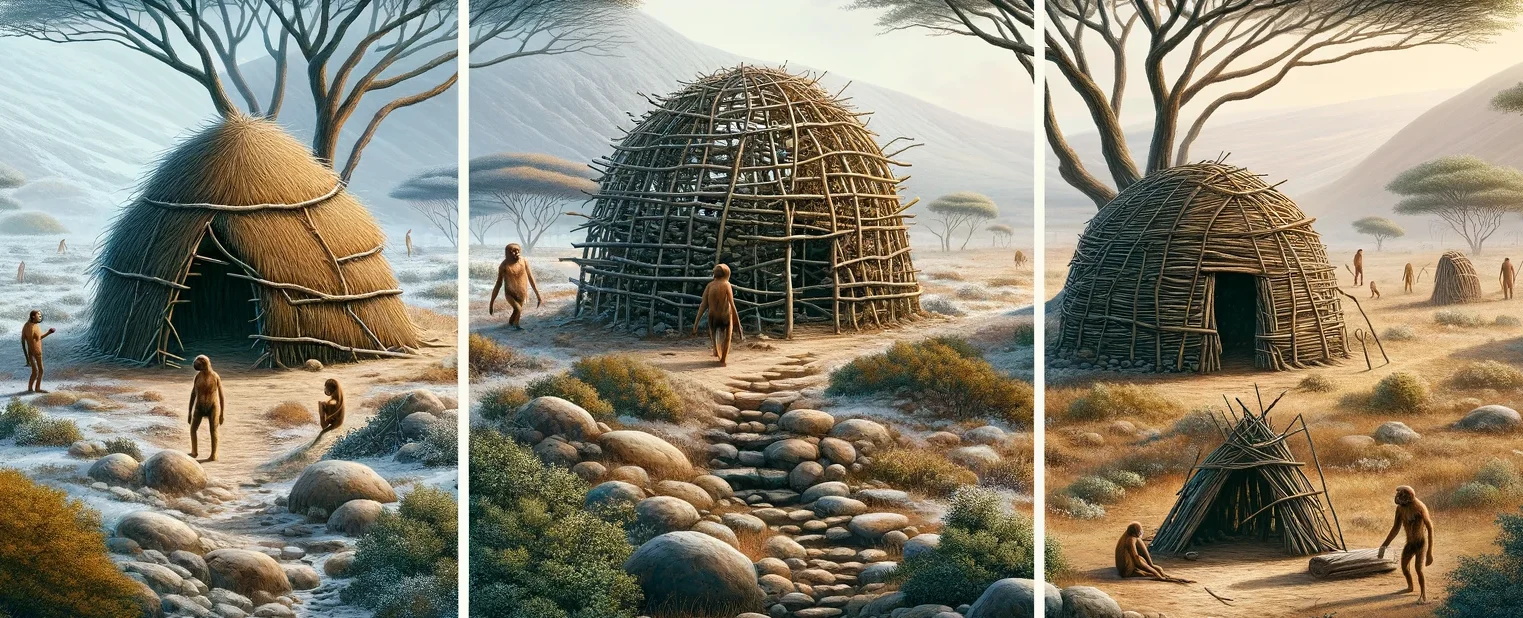
Imagined image: three types of early shelters that Homo erectus might have constructed. 1) Simple Lean-to: Made from branches and large leaves, providing basic protection against elements. 2) Structured Windbreak: Constructed with tightly packed branches and possibly covered with animal hides for better insulation.
3) Rudimentary Hut-like Structure: Using interwoven branches and vines, with a base of large stones to anchor it.
1.8 Million Years Ago (+/- 500,000 years)
Oldest Modern Human-like Footprints
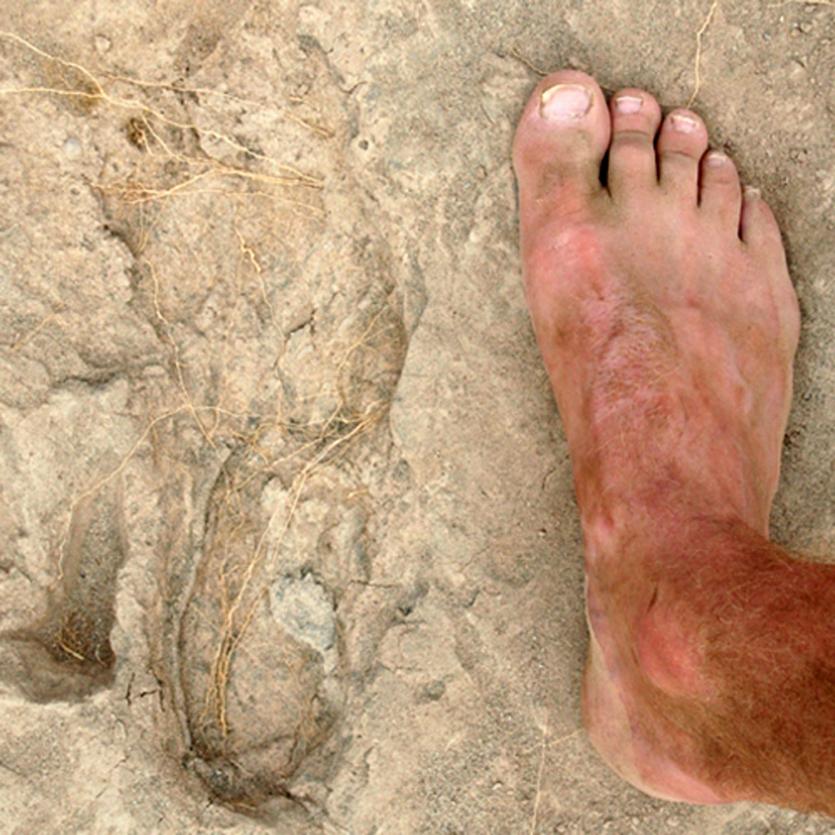
1.52 Million BCE
1.53 to 1.51 Million BCE
Less Body Hair Emerges in Homo erectus
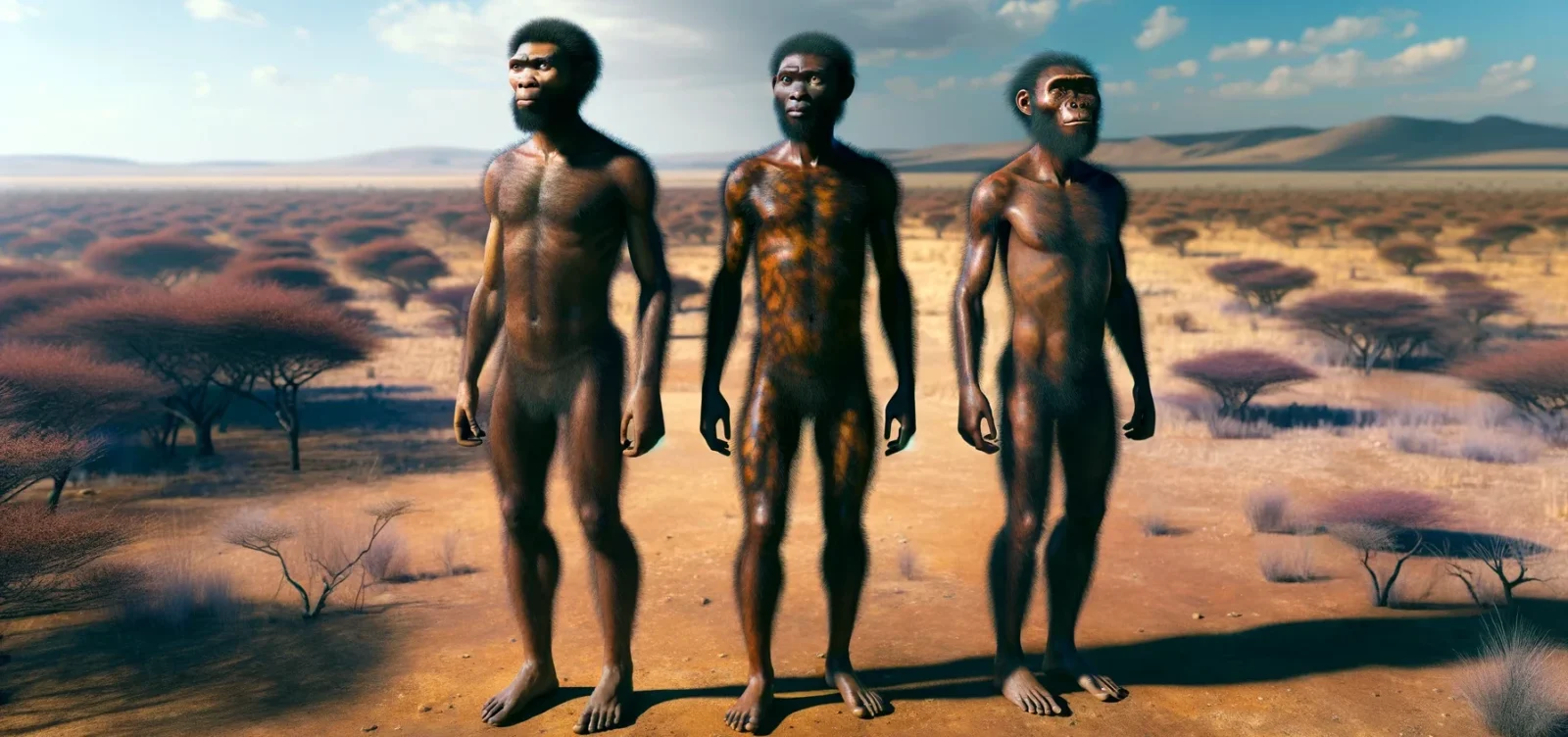
Imagined image of Homo erectus about 1 million years ago shortly after evolving to have less hair.
1.2 Million BCE
Supported by DNA evidence.
Homo antecessor: Earlier Modern Looks
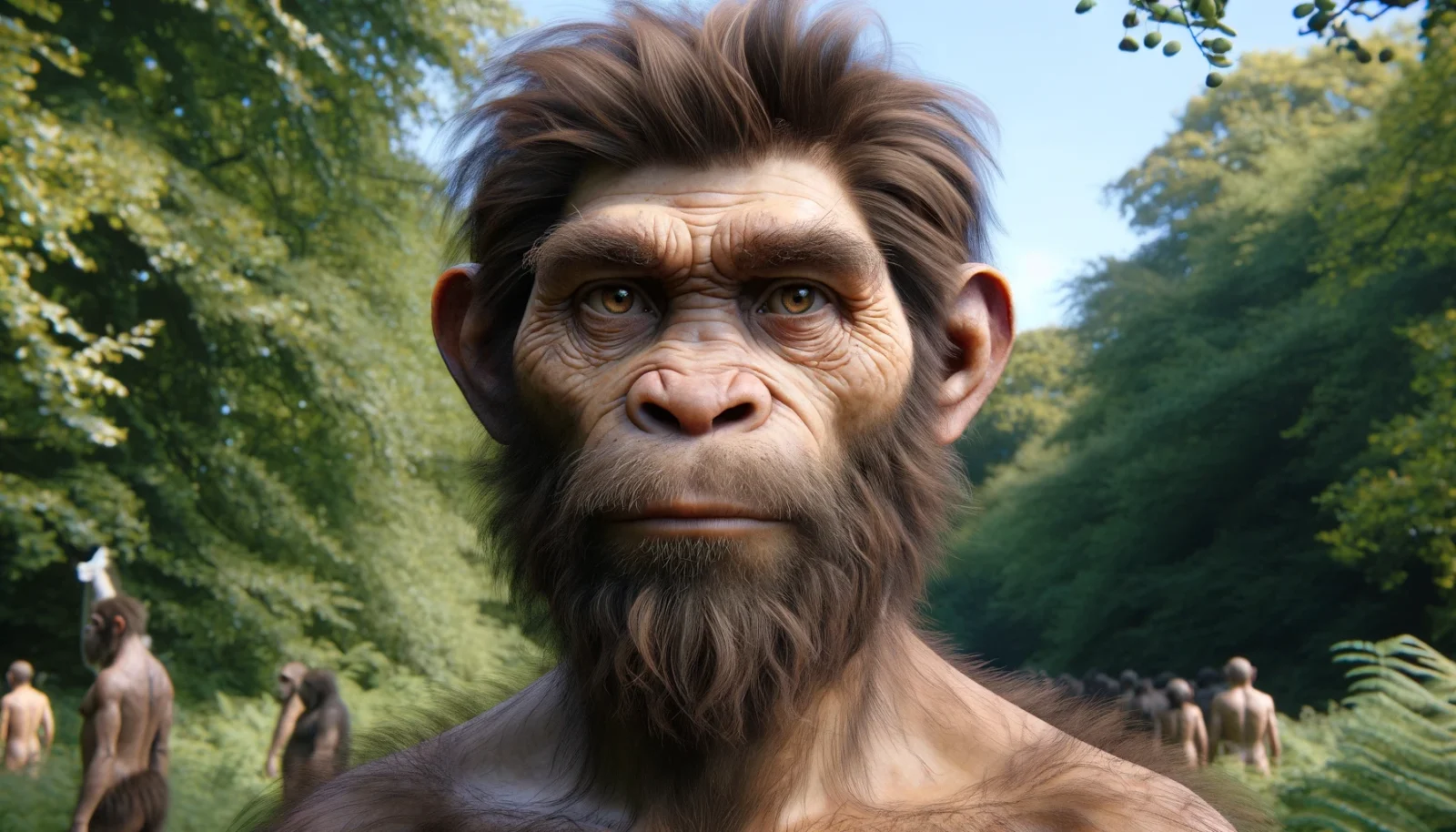
1.2 Million BCE
Rapid Brain Growth

800,000 BCE
800,000 to 200,000 BCE
Fire-Altered Stone Tools
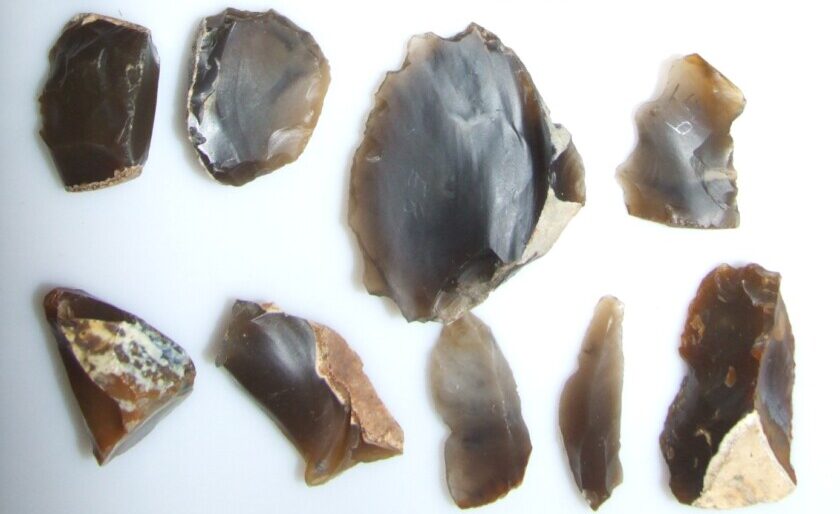
"<a href="https://commons.wikimedia.org/w/index.php?curid=55942692" target="_blank" rel="noopener noreferrer">File:Flint tools, Numbers 41-64 (Top left to bottom right) (FindID 132815).jpg</a>" by The Portable Antiquities Scheme, Adam Daubney, 2006-05-17 10:54:28 is licensed under <a href="https://creativecommons.org/licenses/by-sa/2.0/" target="_blank" rel="noopener noreferrer">CC BY-SA 2.0</a>
790,000 BCE
Genus Homo
Hyoid Bone: Speach Emerges
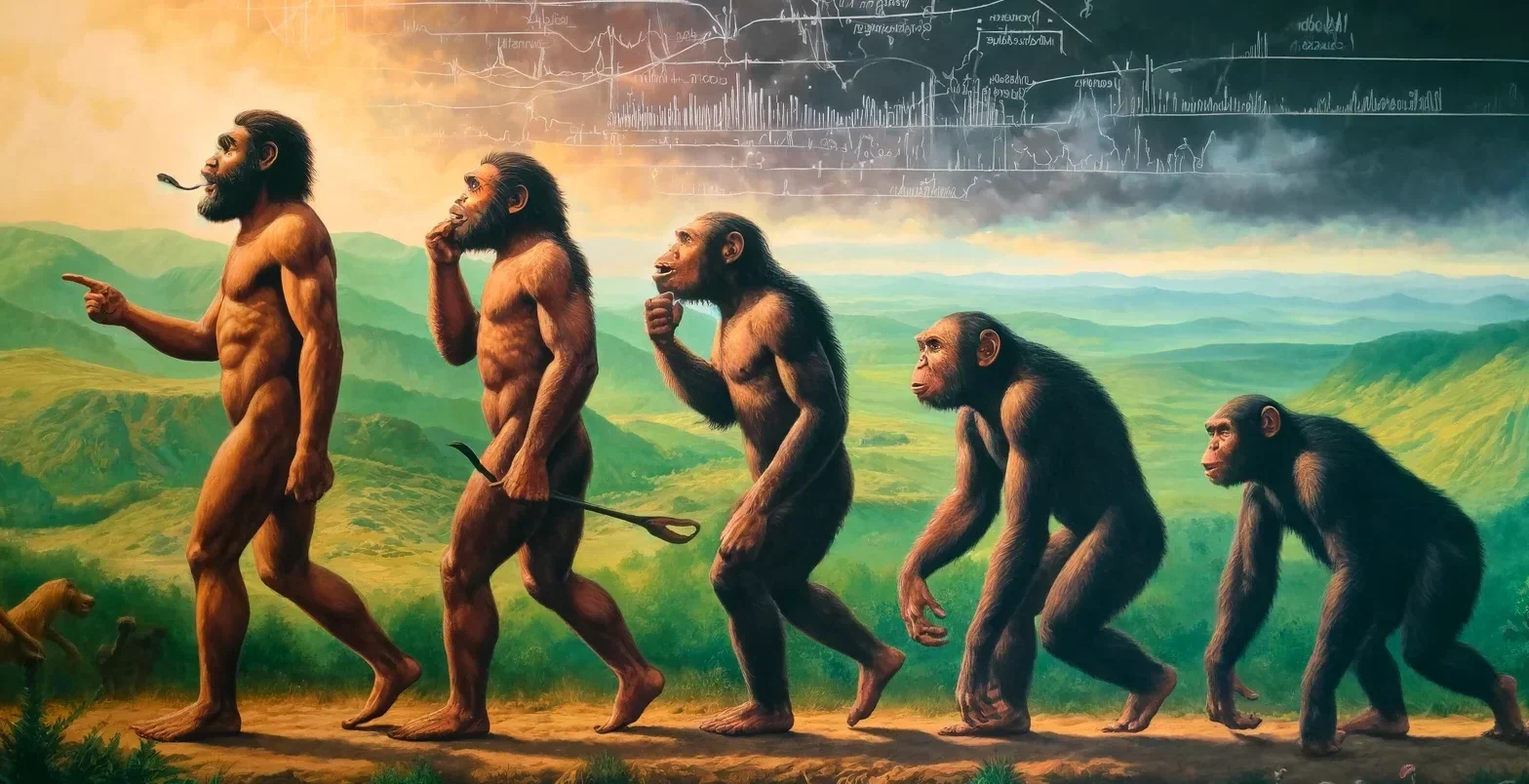
Imagined image depicting the evolution of vocalization and early speech in hominins. The illustration features Homo habilis, Homo erectus, and Homo heidelbergensis, each represented in a context that corresponds to their stage of communication development. This visual captures the progression from simple vocal sounds to more structured speech-like communications as these species evolved.
700,000 BCE
Full Emotional Intelligence Emerges
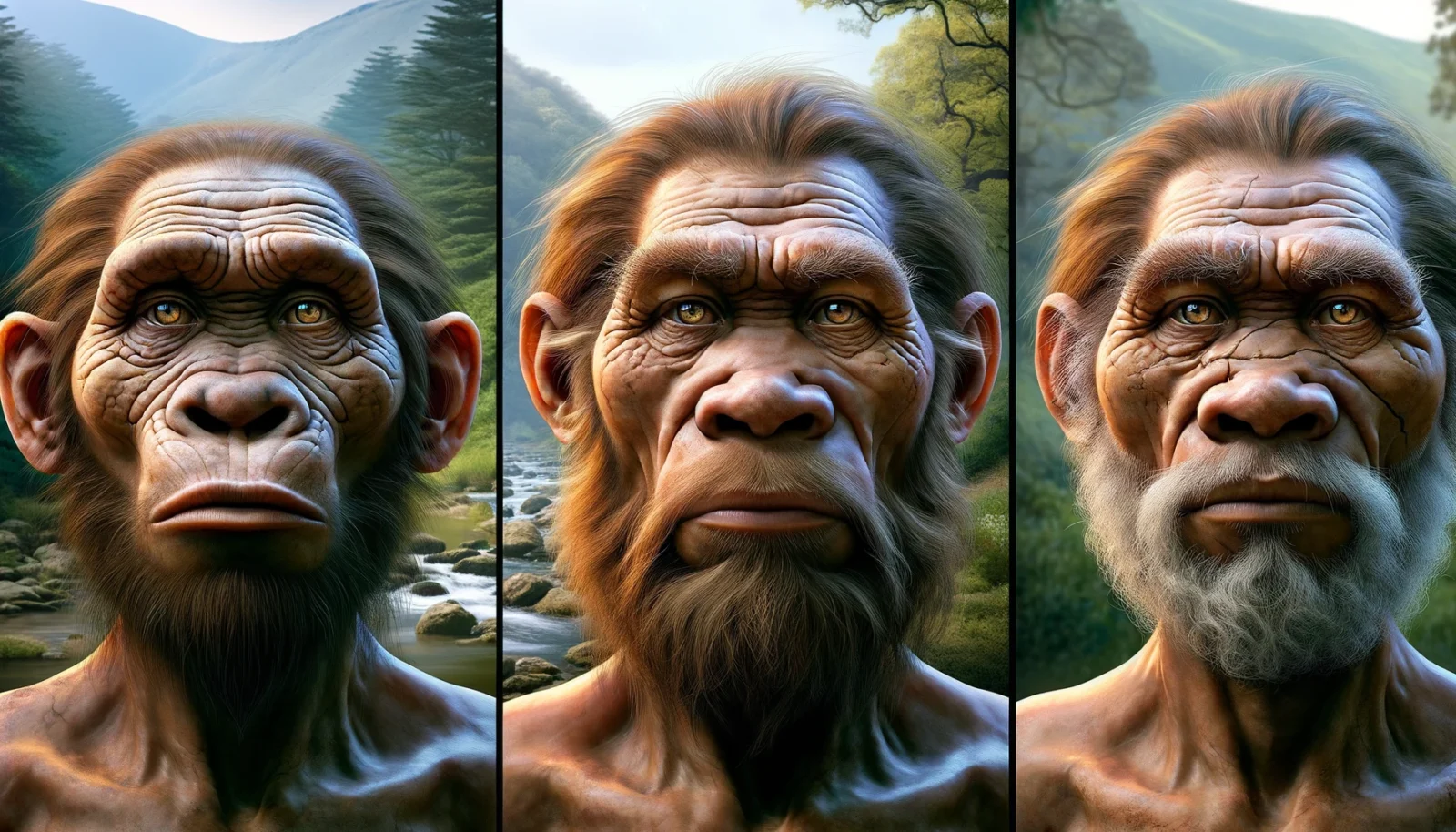
700,000 Years Ago
Homo heidelbergensis
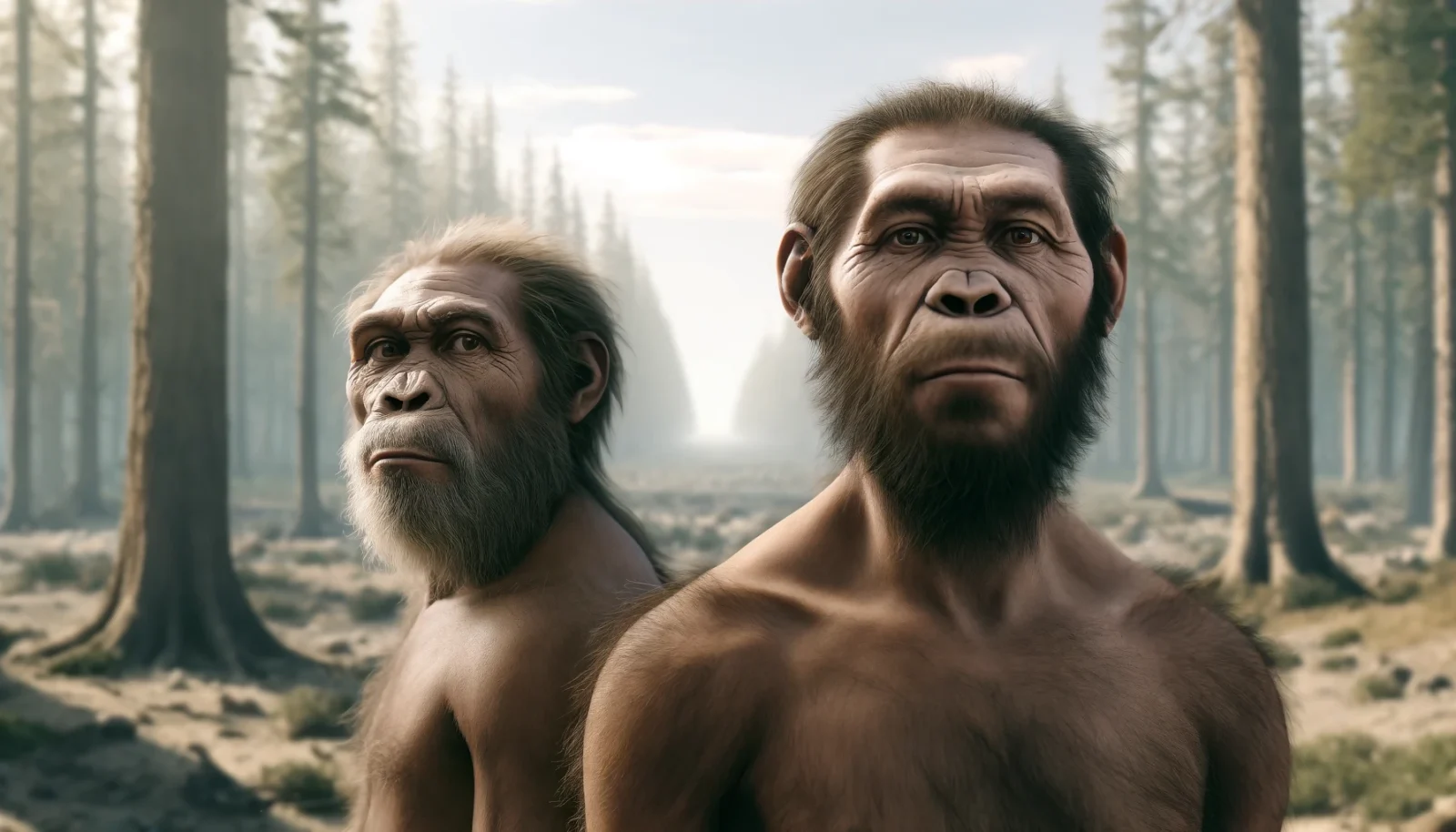
Imagined image depicting two Homo heidelbergensis individuals at different stages of their evolutionary timeline. The first individual represents what they might have looked like around 650,000 years ago, and the second shows them around 440,000 years ago, just before the transition towards Homo sapiens and Neanderthals.
Circa 640,000 Years Ago
Homo heidelbergensis on Earth from about 640,000 to 200,000 BCE.
First Clothes: Proto-Clothing and the Advent of Garments
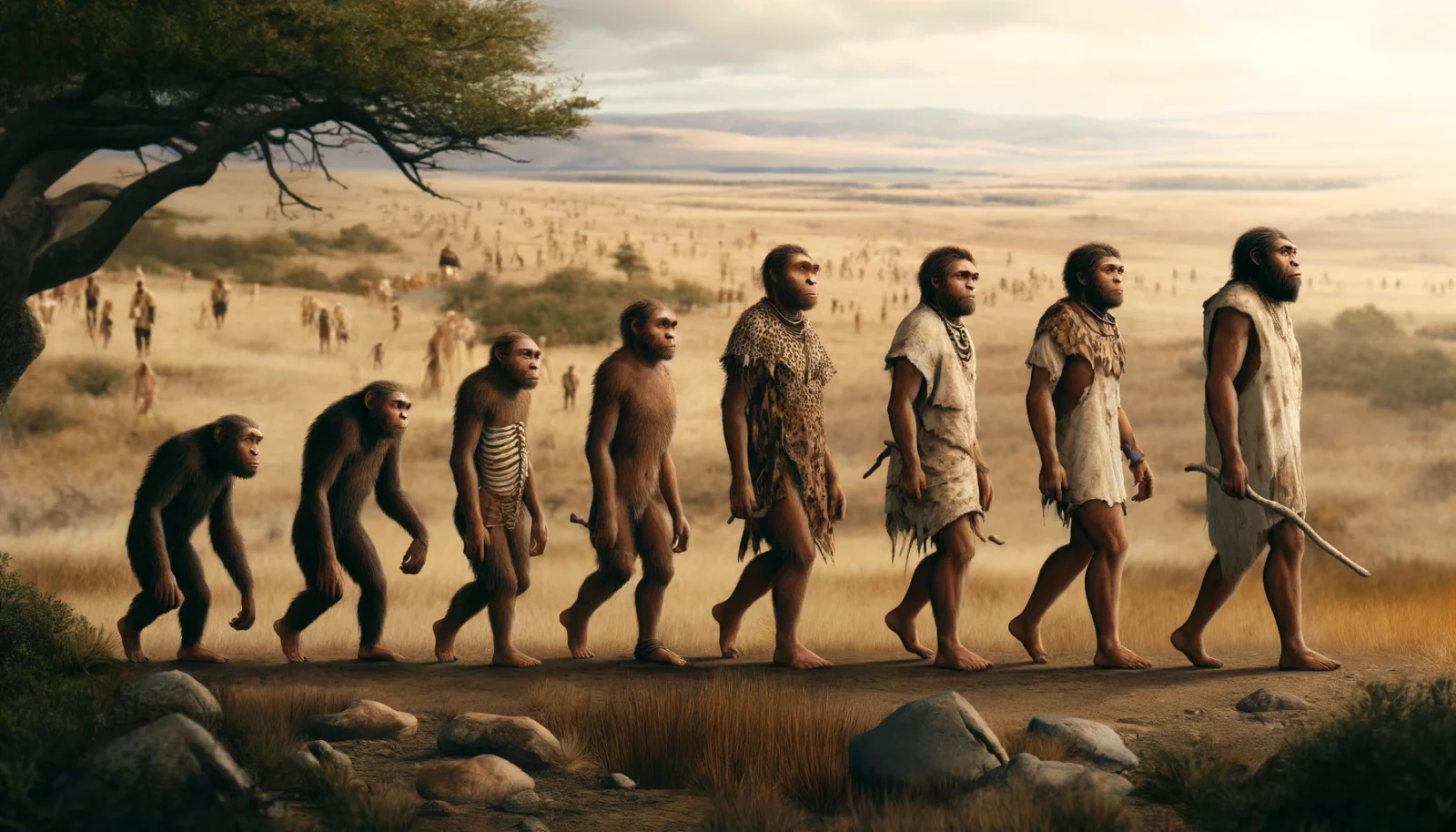
Imagined image depicting the evolution of early clothing among hominins. The image starts with a Homo erectus wearing very simple proto-clothing, such as basic animal skins or a simple decorative element like a bone or shell necklace. Progressing through the scene, an earlier Homo heidelbergensis or Homo antecessor is shown with slightly more advanced but still rudimentary clothing.
600,000 Years Age
Transcendental Intelligence Emerges
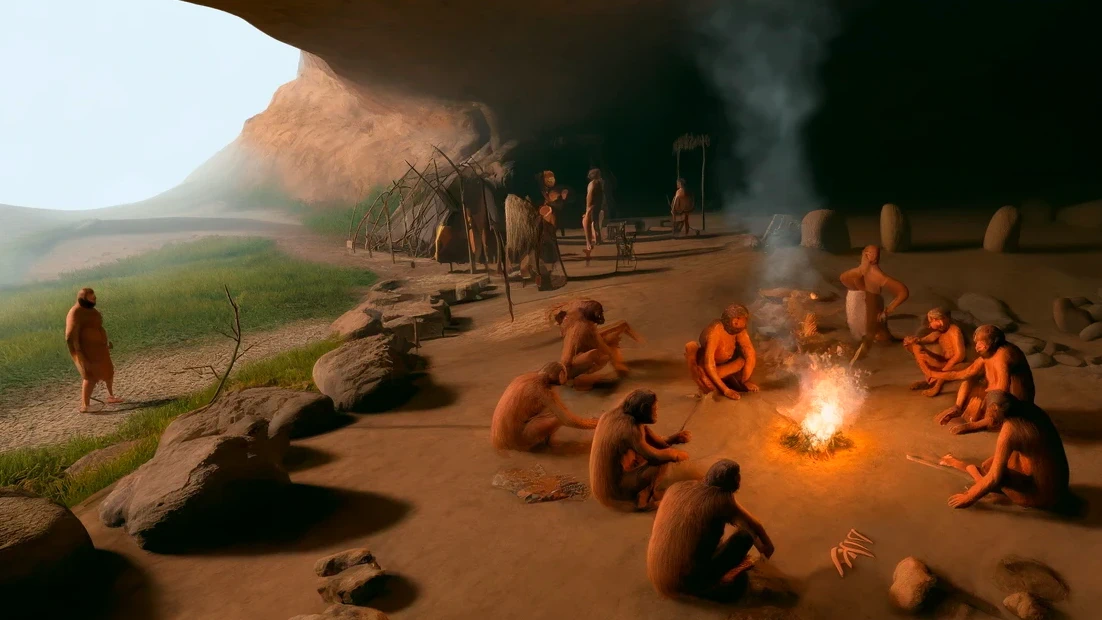
475,000 Years Ago
Neanderthal-Sapien LCA
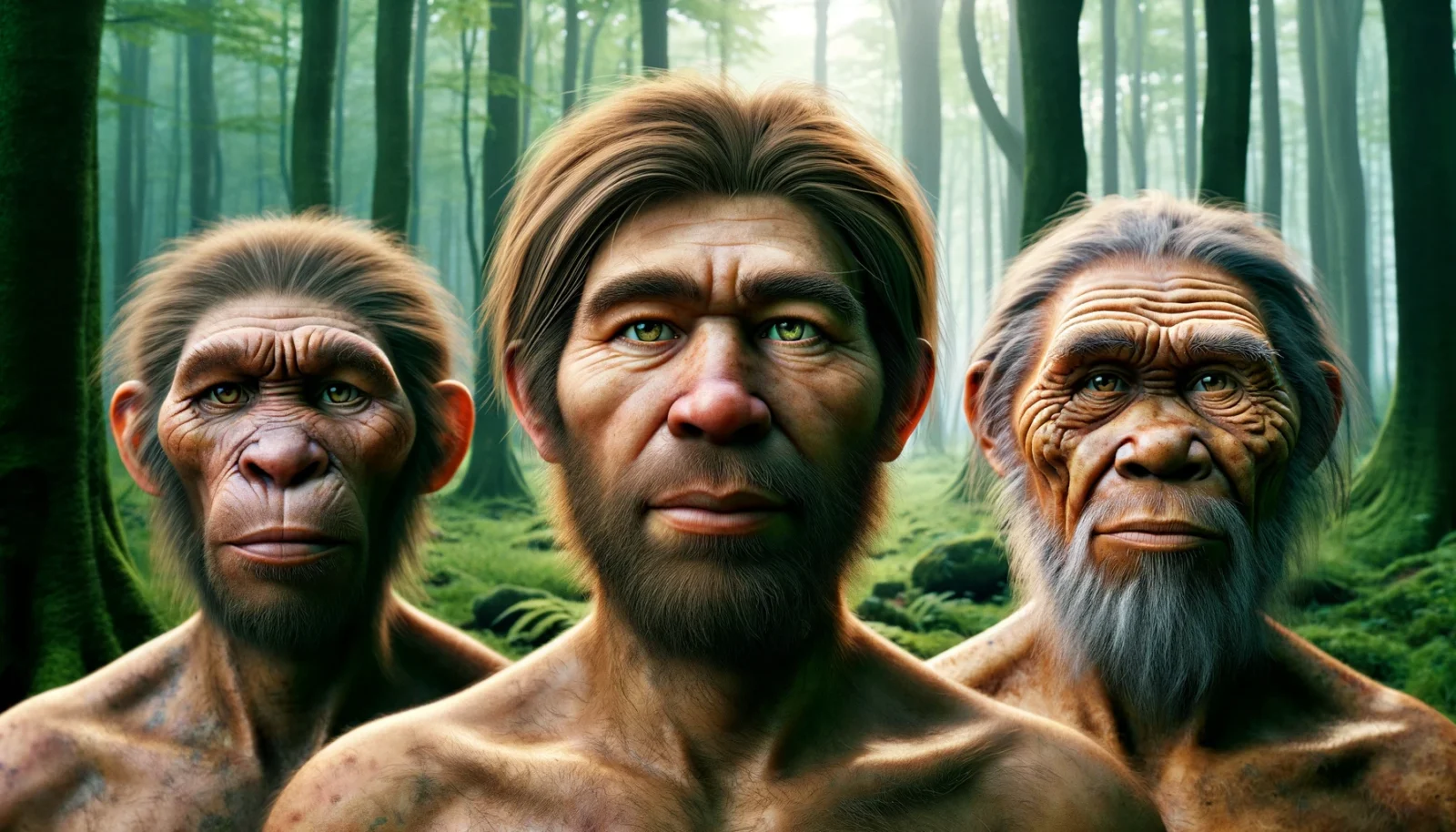
Imagined image: Homo sapiens (center) might be a hybrid of two extict human species: Homo heidelbergensis and Homo antecessor. Left is heidelbergensis with its protruding jaw. Right is antessor with his small brain and flatter face.
440,000 Years Ago (+/- 40,000 years)
Homo neanderthalensis: Verified True Symbolic Thought
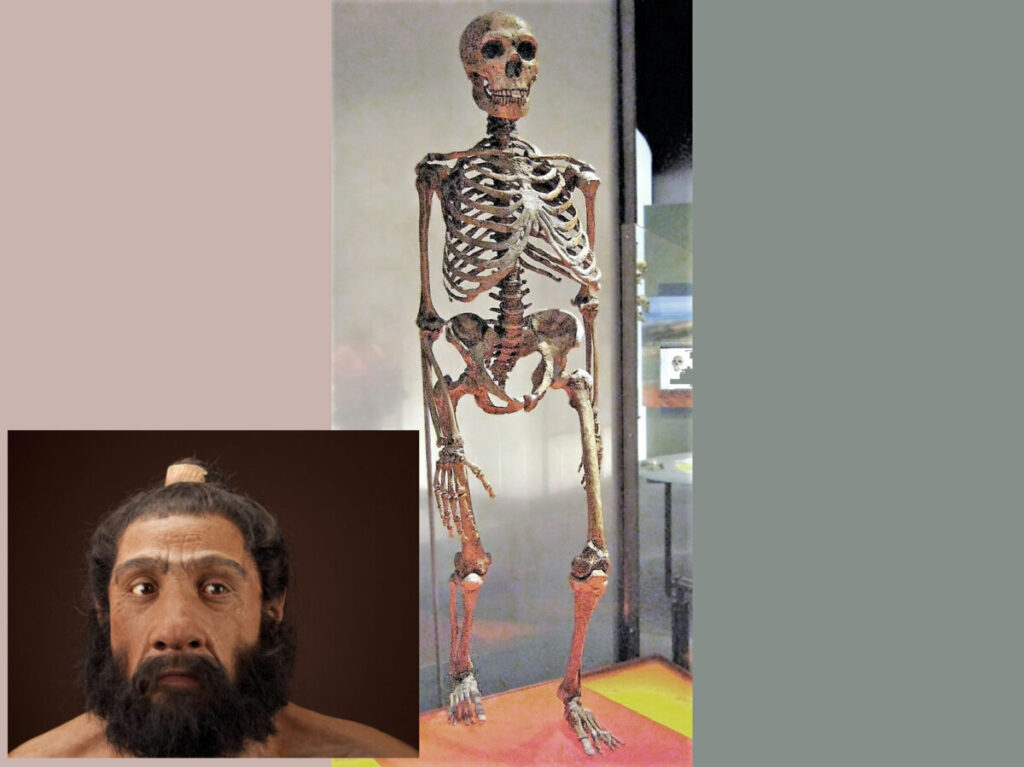
Neanderthals and Homo sapiens had a common Homo heidelbergensis ancestor about 440 millennia ago or a common Homo antecessor ancestor about 900 millennia ago.
430,000 BCE
On Earth from 430,000 to 29,000 BCE
Terra Amata Site, France
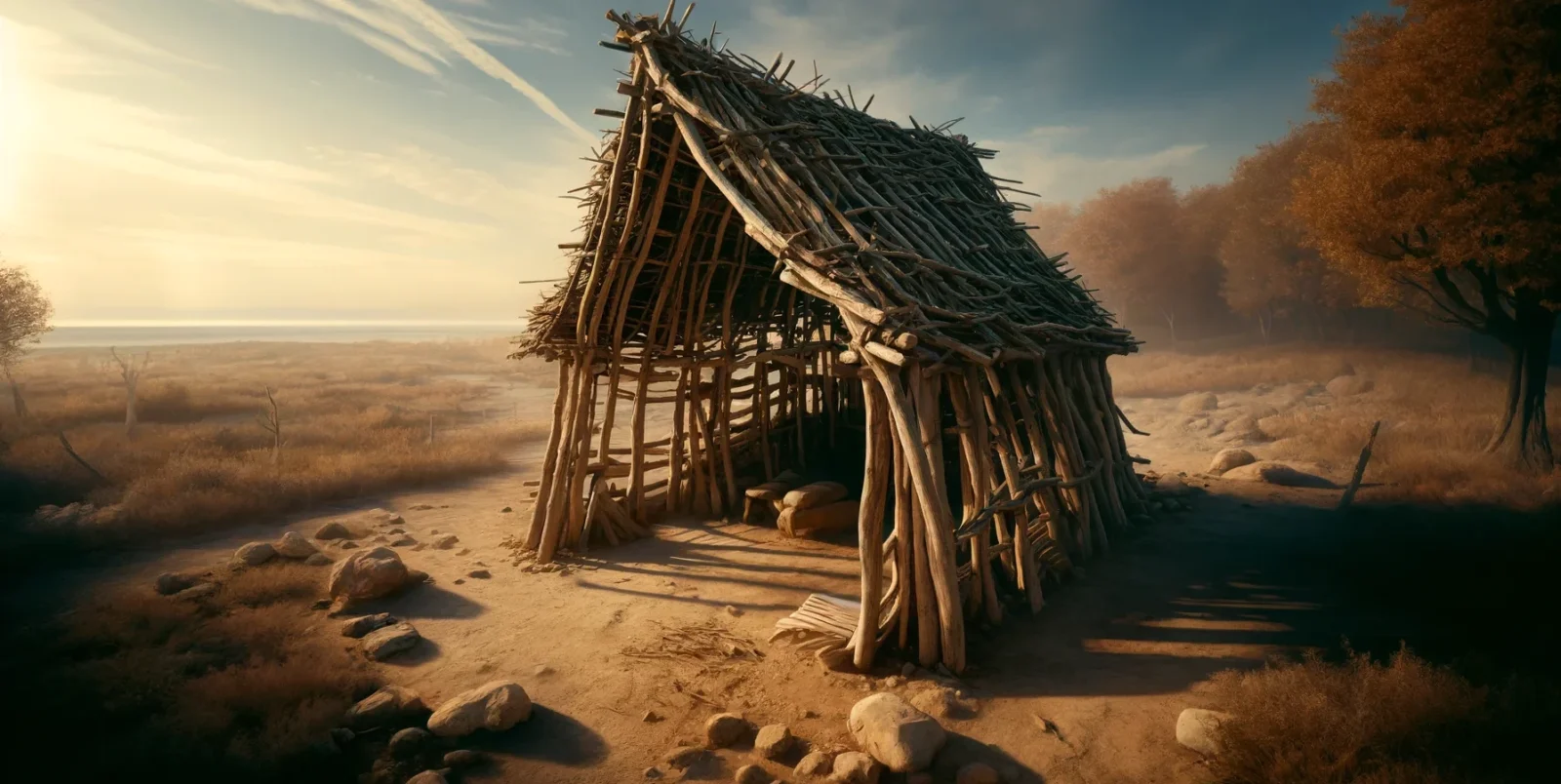
Imagined imaged of the 400,000-year-old structure likely built by Homo heidelbergensis in France located on the coast at the Terra Amata site in Nice, France. The shelter is estimated to be around 4-5 meters (13-16 feet) wide and 6-7 meters (20-23 feet) long. It's believed to have been constructed using a simple framework of wooden posts, with branches and leaves used to create a roof and walls.
circa 400,000 Years Ago
Nice, France
Oldest Surviving Spear
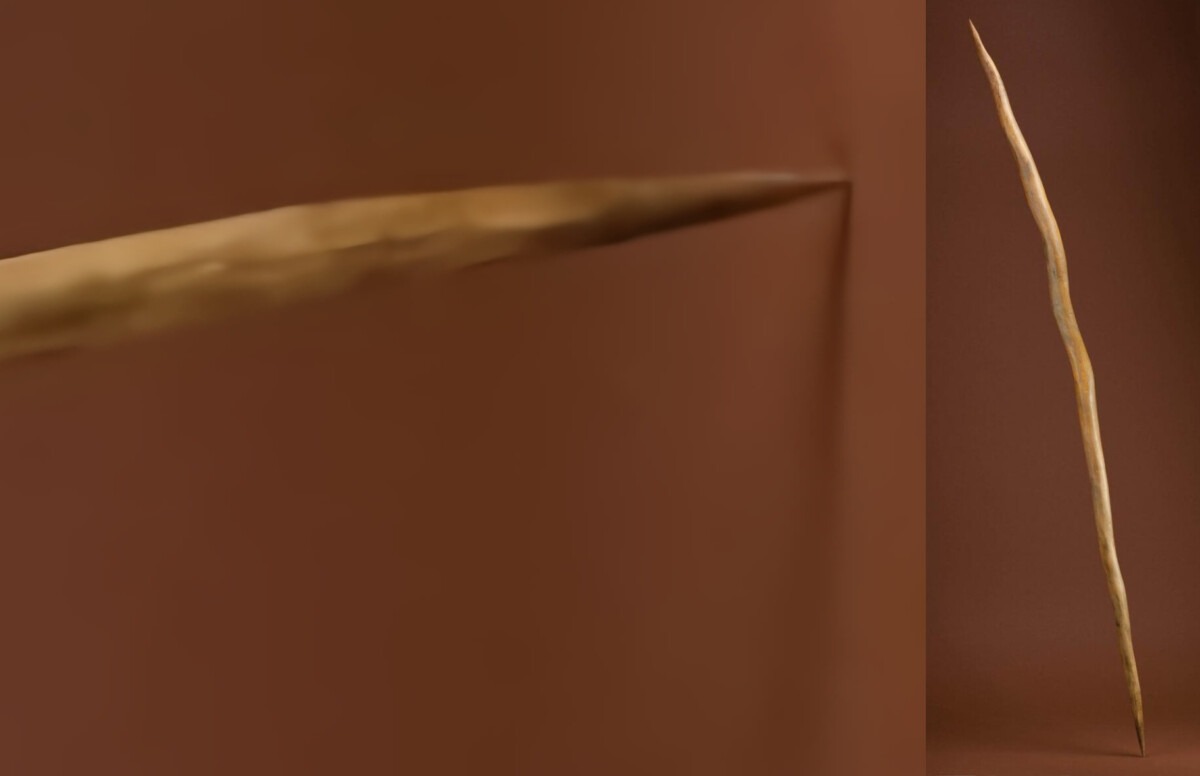
350,000 BCE
400,000 to 300,000 BCE
Homo naledi: A Likely Hybrid
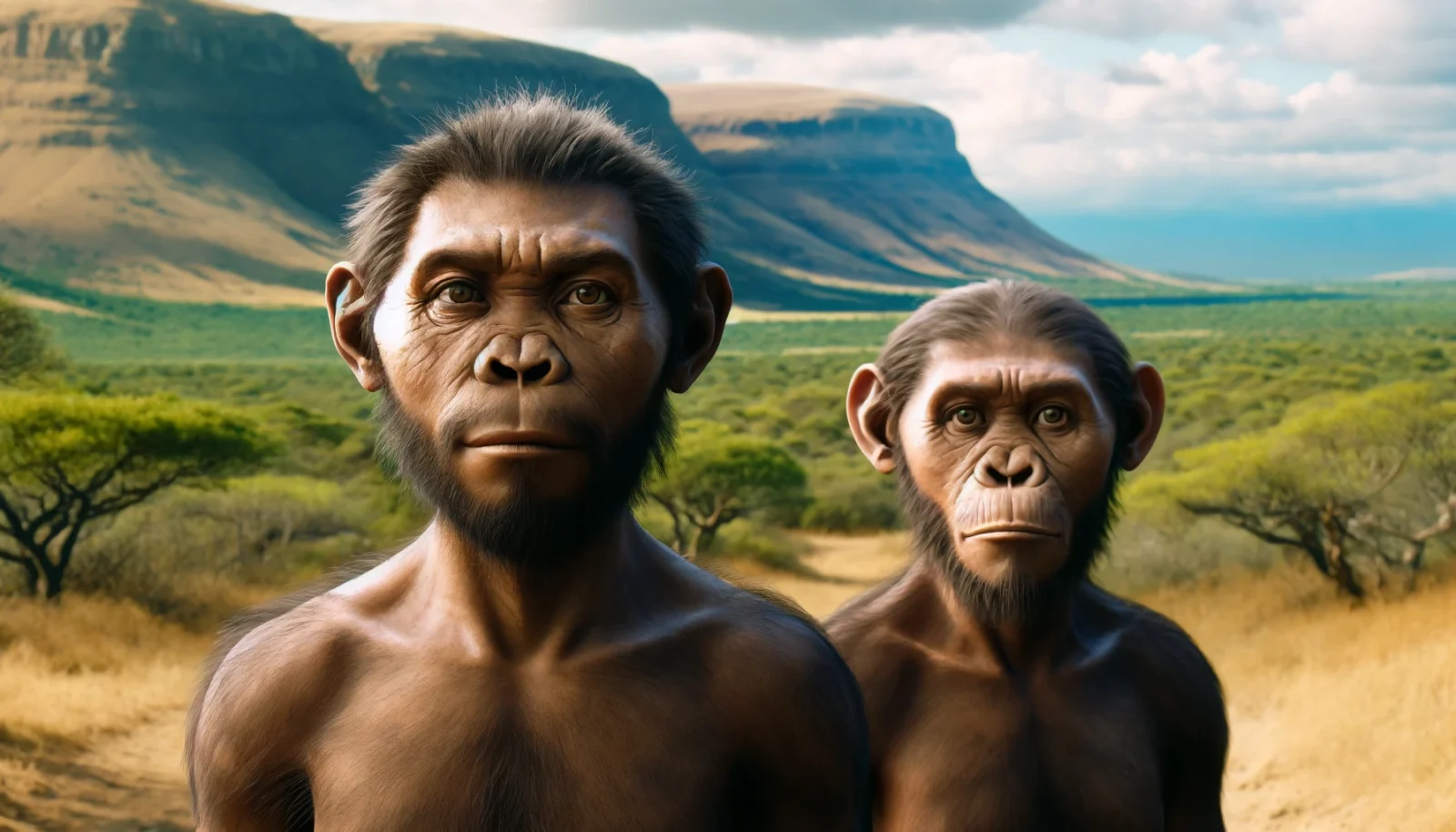
Imagined image: Homo naledi. Left is circa 250,000 BCE. Right is circa 335,000 BCE. The later Homo naledi individual as appearing more human-like is somewhat speculative but can be supported by the evidence of their anatomical features and behaviors.
335,000 BCE
Human, but probably not our human branch.
Homo Sapiens: Advanced Transcendental Intelligence
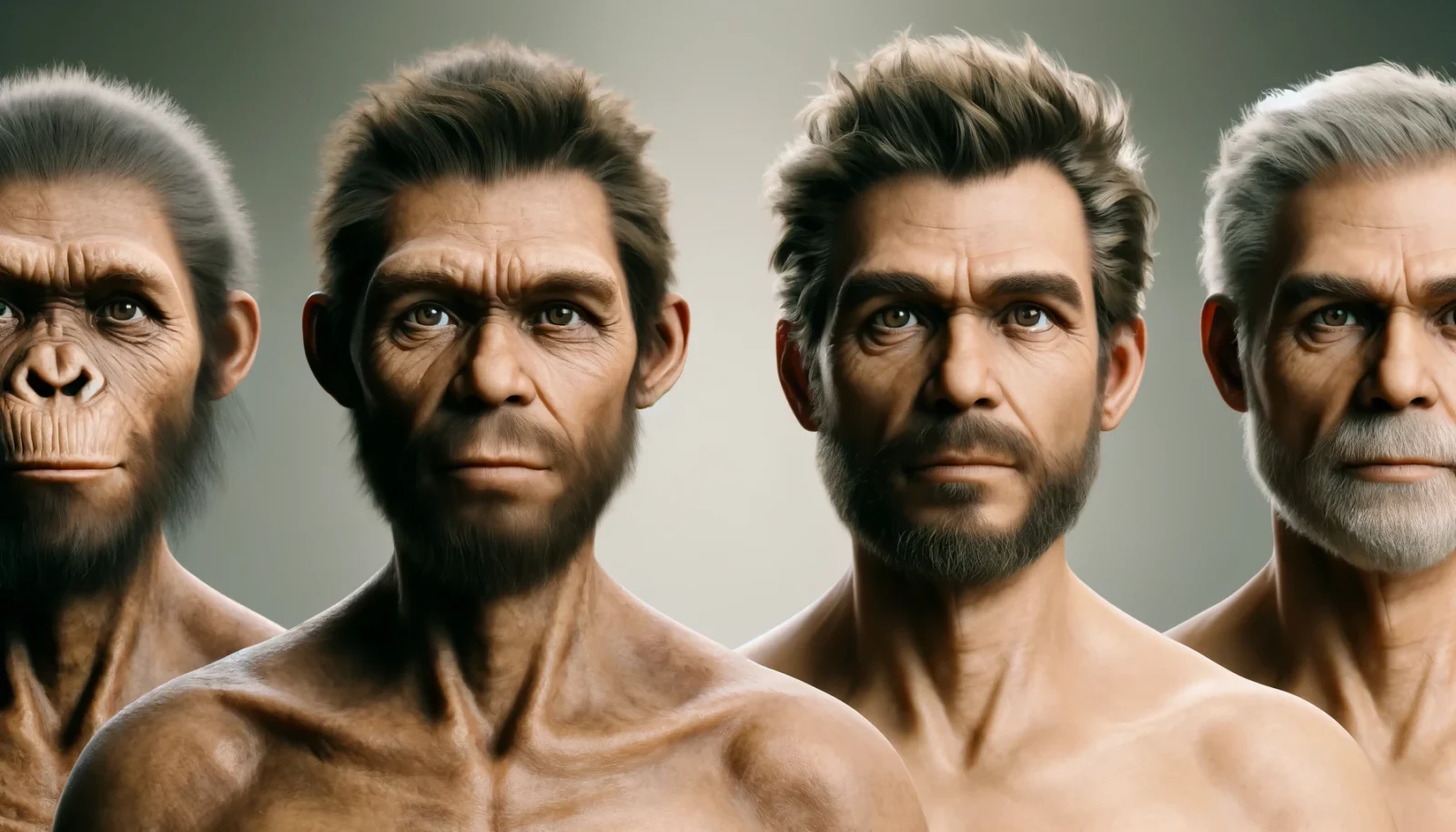
Imagined image: two Homo sapiens males from different stages of human evolution are featured. The first figure represents Homo sapiens from about 300,000 years ago, and the second from about 100,000 years ago, each with distinct features representative of their times.
315,000 BCE
Neanderthal-Denisovan Split
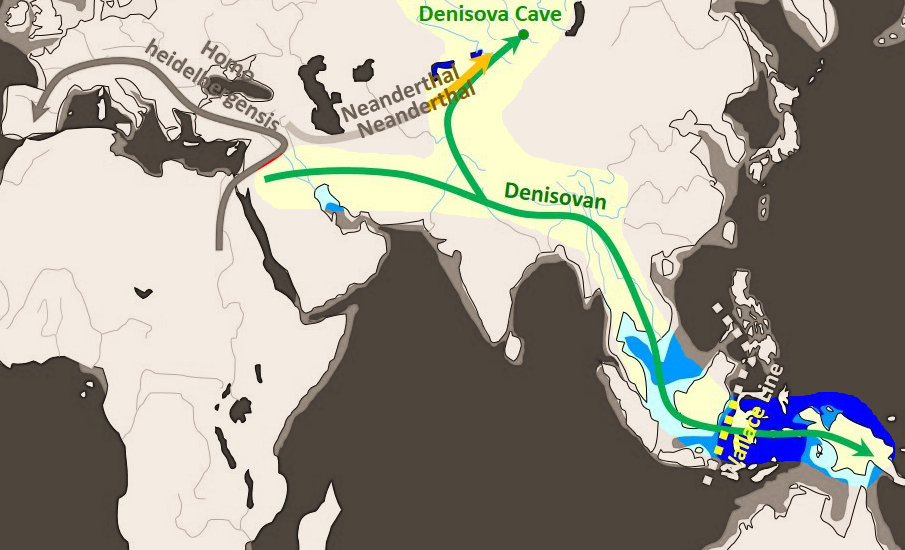
300,000 BCE
500 to 30 Thousand BCE
Venus of Tan-Tan
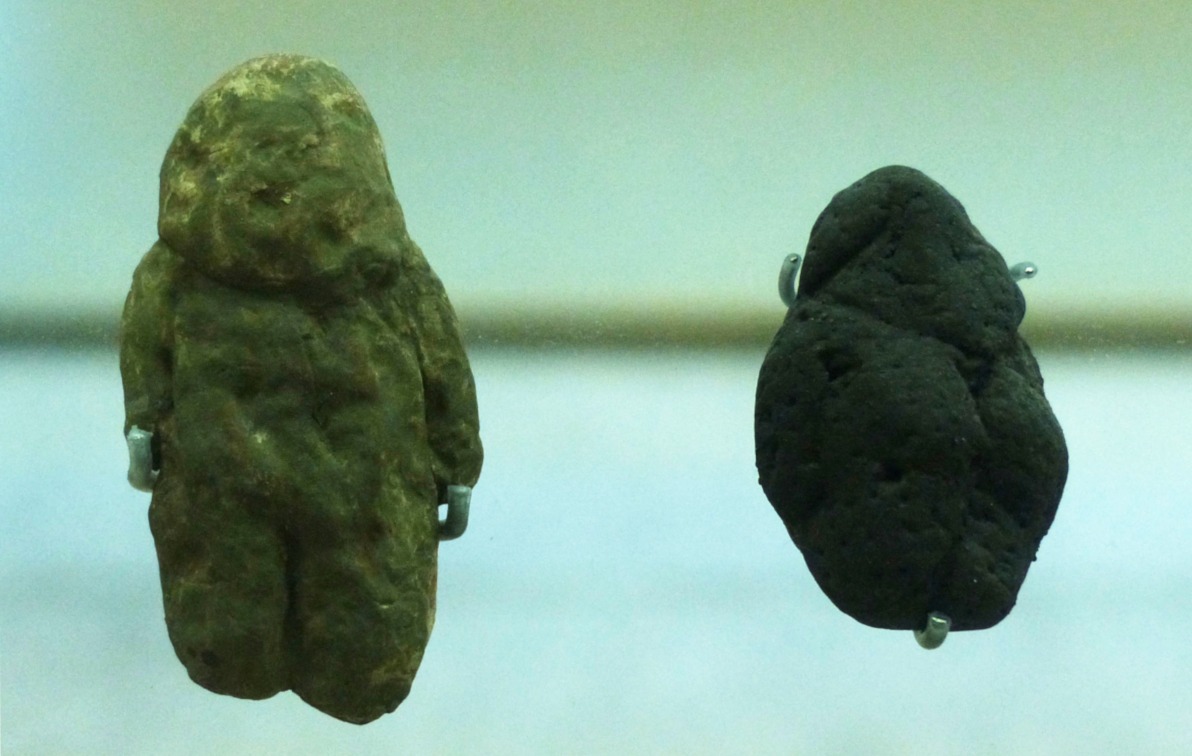
"<a href="https://commons.wikimedia.org/w/index.php?curid=72180942" target="_blank" rel="noopener noreferrer">Museo de la Evolucion Humana Burgos - Tan Tan and Berekhat Ram Pebbles</a>" by Own work is licensed under <a href="https://creativecommons.org/licenses/by-sa/4.0/" target="_blank" rel="noopener noreferrer">CC BY-SA 4.0</a>
300,000 BCE
Africa; 300,000 to 500,000 years ago
Hominin World Population: 2 Million (maybe)
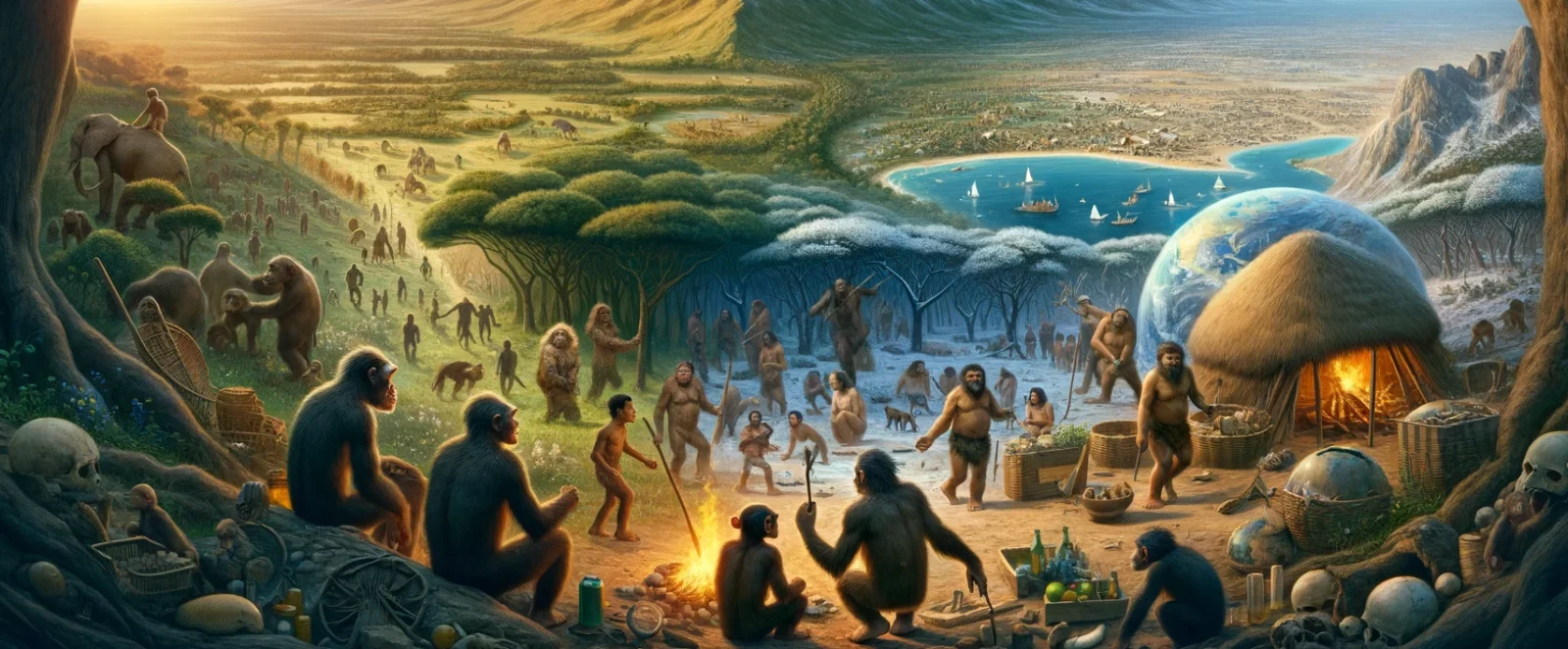
300,000 BCE
Very speculative.
Homo rhodesiensis: A Hybrid Lesson

Imagined Image: Homo rhodesiensis portrayal based on the limited skeletal remains from Kabwe, blends established fossil data with speculative reconstruction of soft tissues, reflecting an interpretative visualization of this ancient human species leaning toward modern facial features.
300,000 Years Ago
Survived from about 300,000 to 125,000 years ago.
Bhimbetka Petroglyphs, Cupules
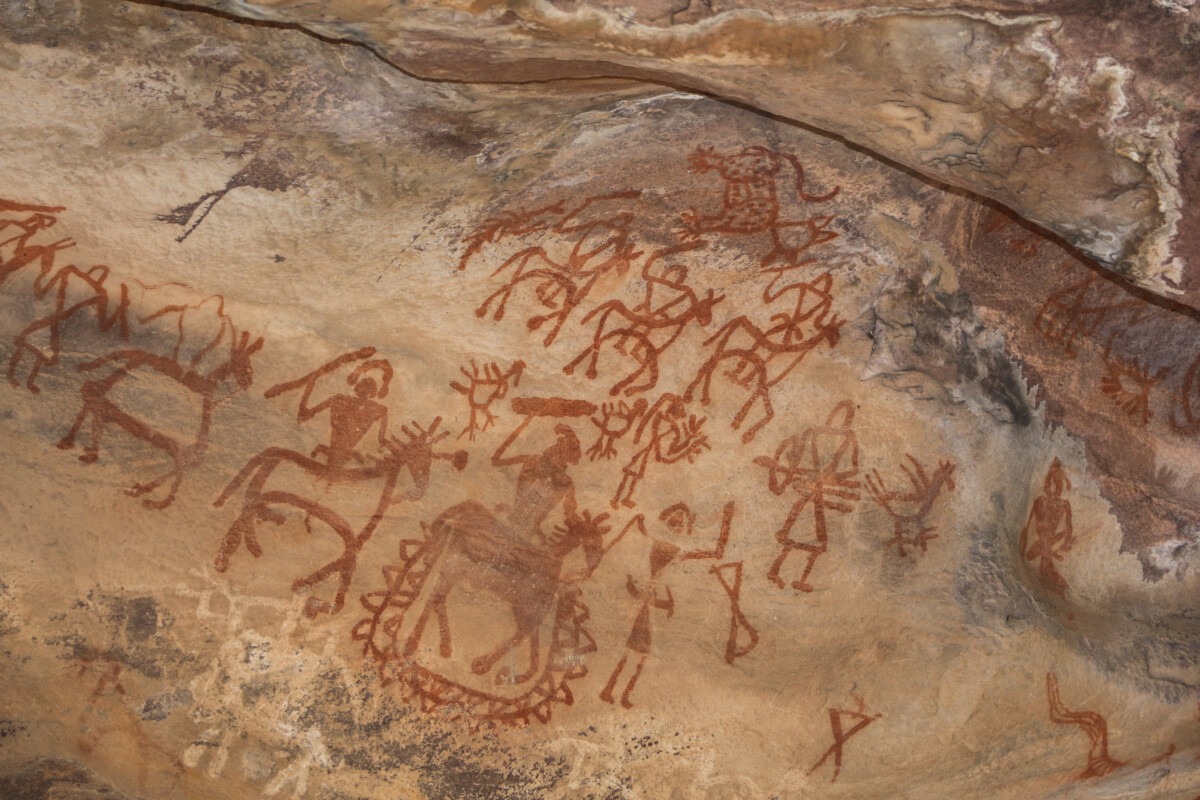
Cave are found in central India dated back to 290 thousand years ago has significant implications for the evolution of the human brain.
Before 290,000 BCE
Hominins; 290,000 to 700,000 years ago
Adam: Haplogroup A
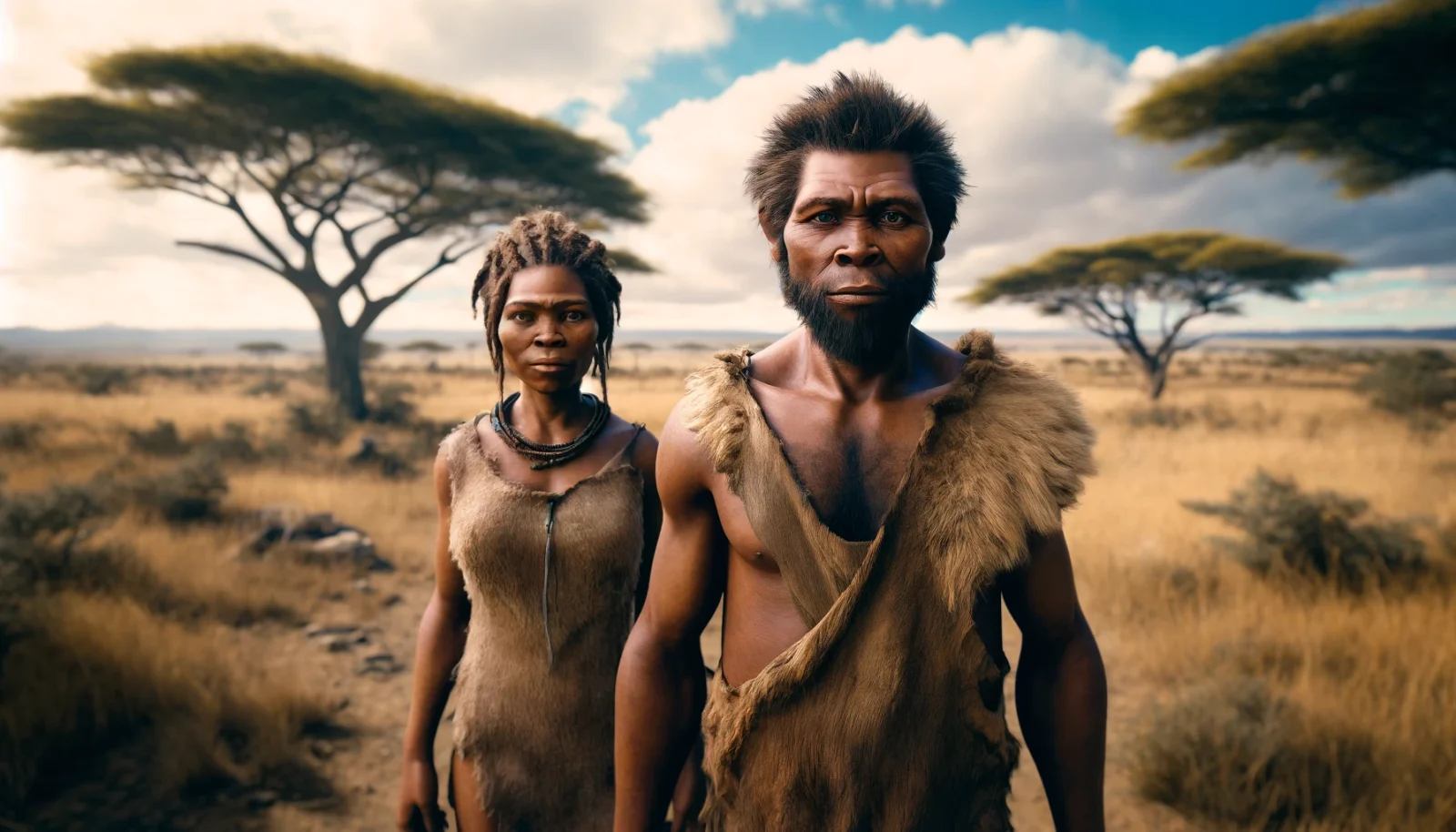
Imagined image: Homo sapien couple, circa 275,000 years ago. Even as early as this, humans all over Africa, the Middle East, Europe, and Asia essentially looked like we look now.
275,000 BCE
Extinction: Homo naledi
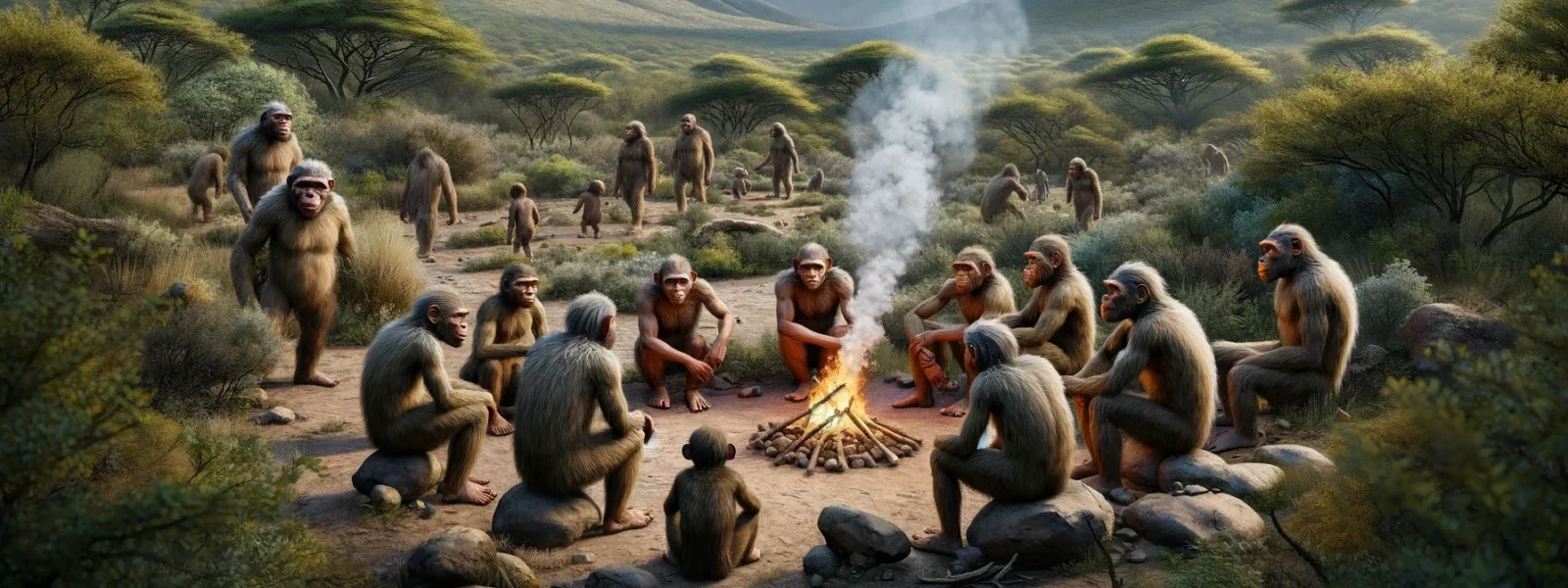
236,000 Years Ago
Extinction: Homo heidelbergensis
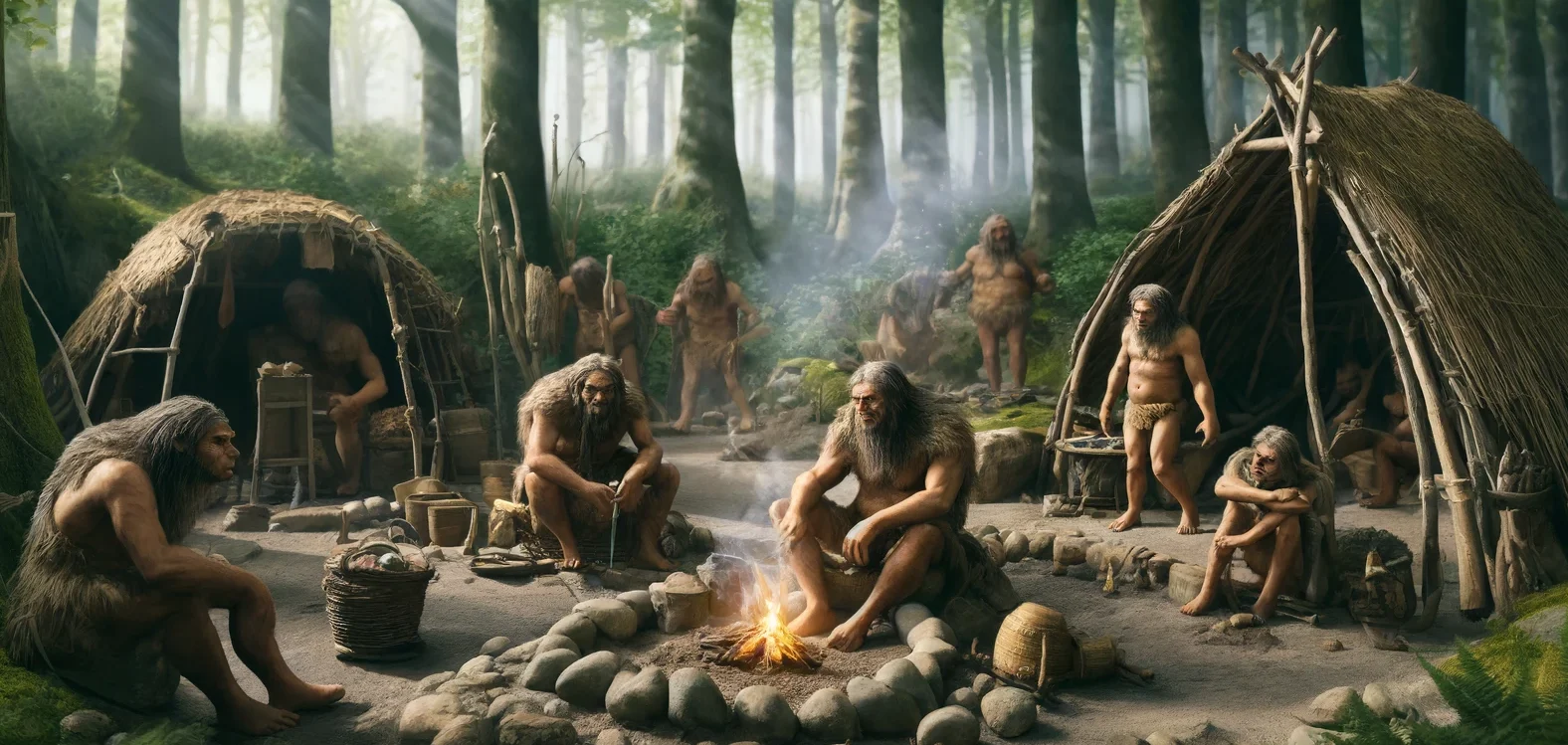
Imagined image: the last of the Homo heidelbergensis, circa 200,000 BCE.
200,000 Years Ago
Eve: Haplogroup L
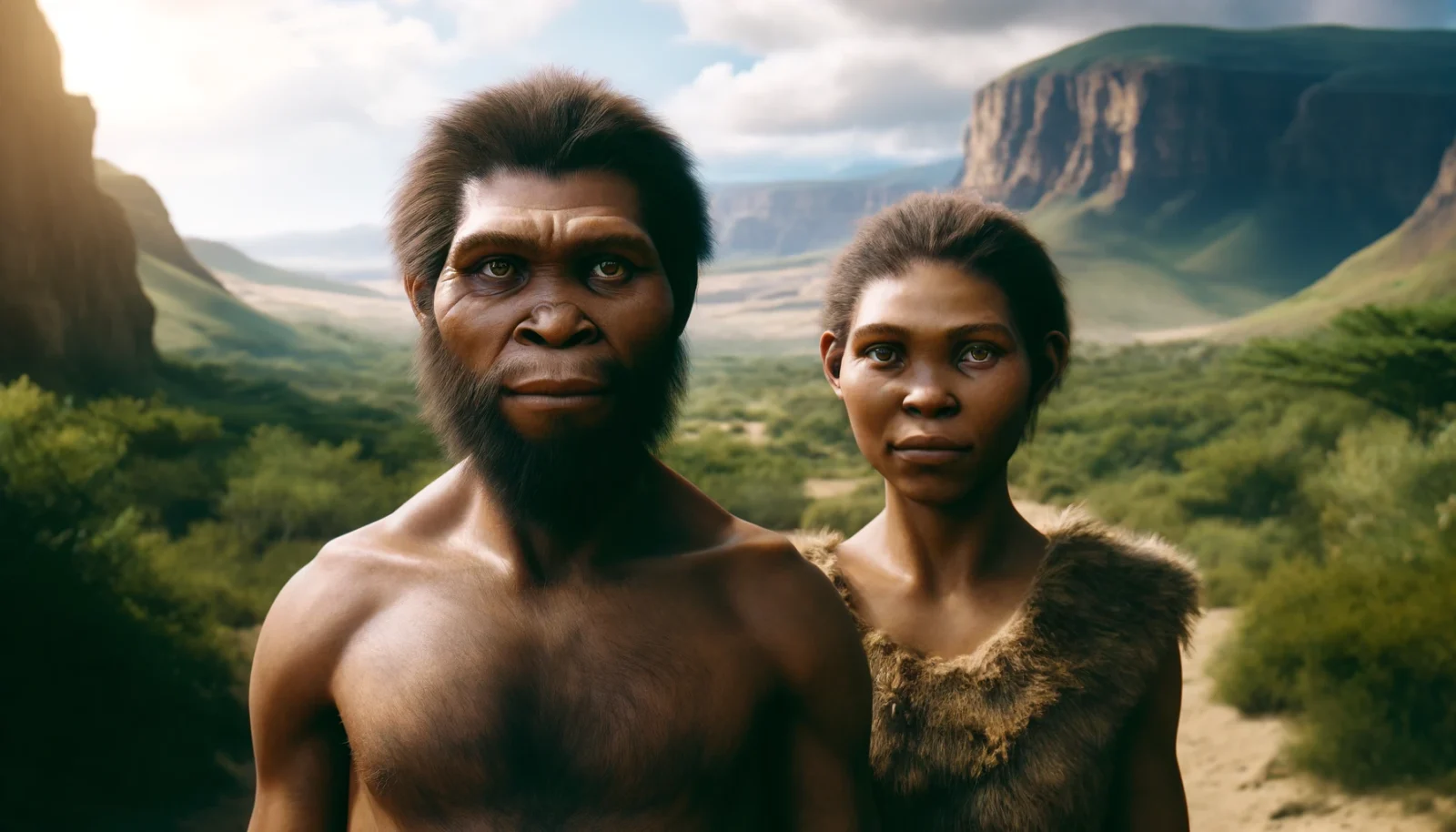
Imagined image: Homo sapien couple, circa 175,000 years ago. By this time, humans all over Africa, the Middle East, Europe, and Asia essentially looked like we look now.
175,000 BCE
200,000 to 150,000 BCE
Modern Human Looks and Brains

lover couple of caucasian male and female lay down at the beach relaxing
150,000 BCE
200,000 to 150,000 BCE
Homo longi: Rewriting Human Migration Narratives
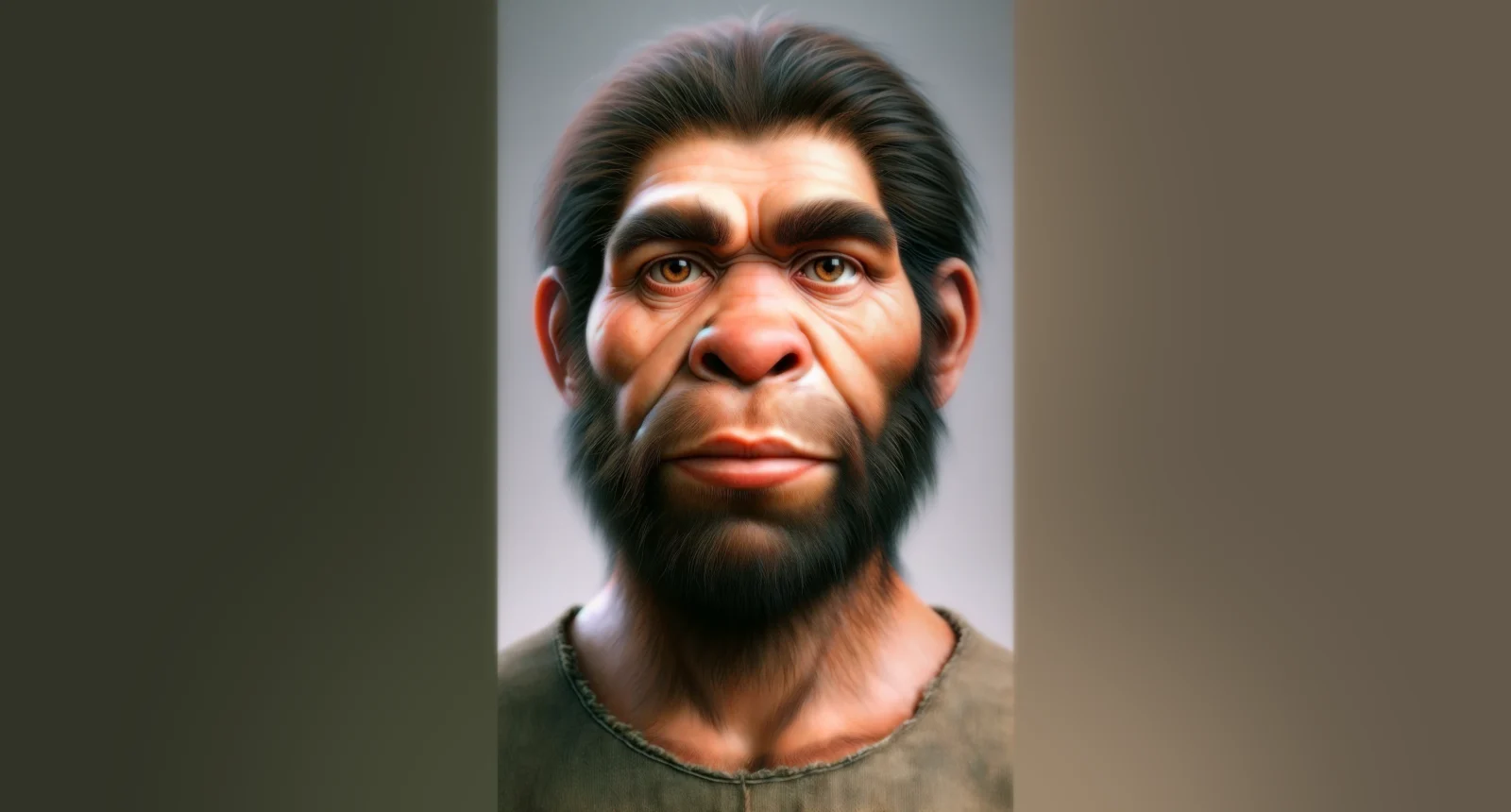
Imagined image: Homo longi man with a modern Neanderthal-sapien appearance, featuring characteristic traits such as a large and broad face, pronounced brow ridges, and a big nose. This look is to reflect an earlier migration out of Africa.
146,000 Years Ago
Extinction: Homo rhodesiensis
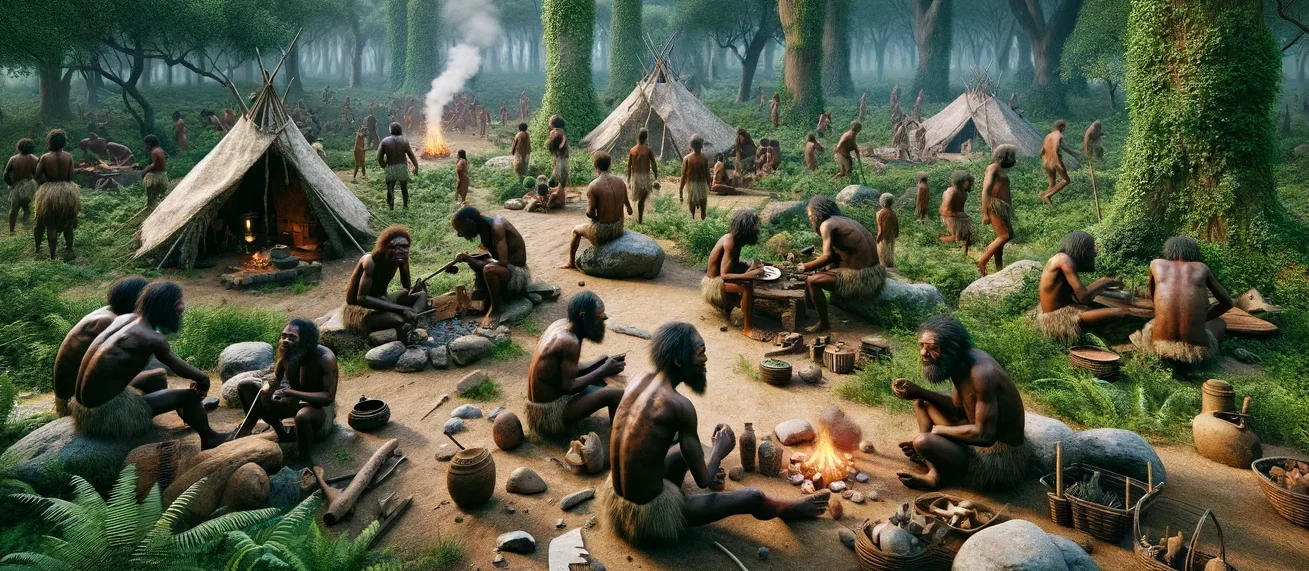
Imagined Image: Camp of Homo rhodesiensis around 125,000 years ago, set in a woodland area.
125,000 Years Ago
Many Early Out of Africa Migrations
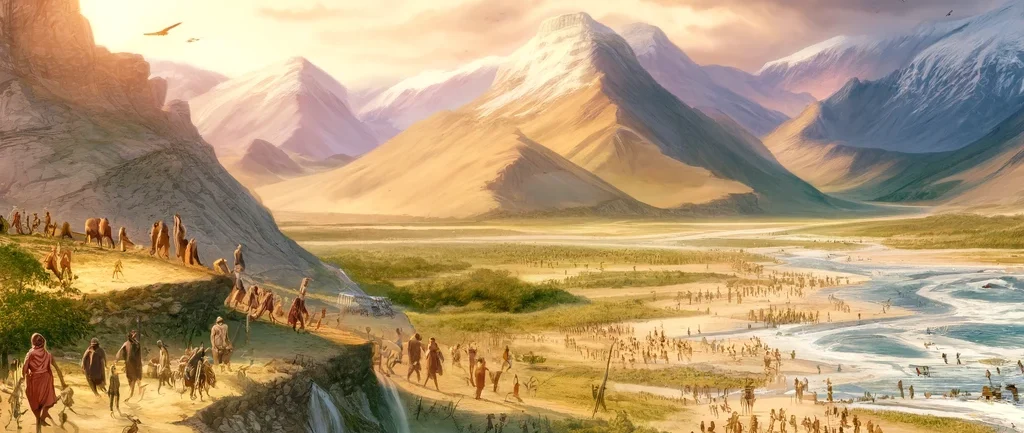
120,000 BCE
130,000 to 100,000 BCE
Extinction: Homo Erectus
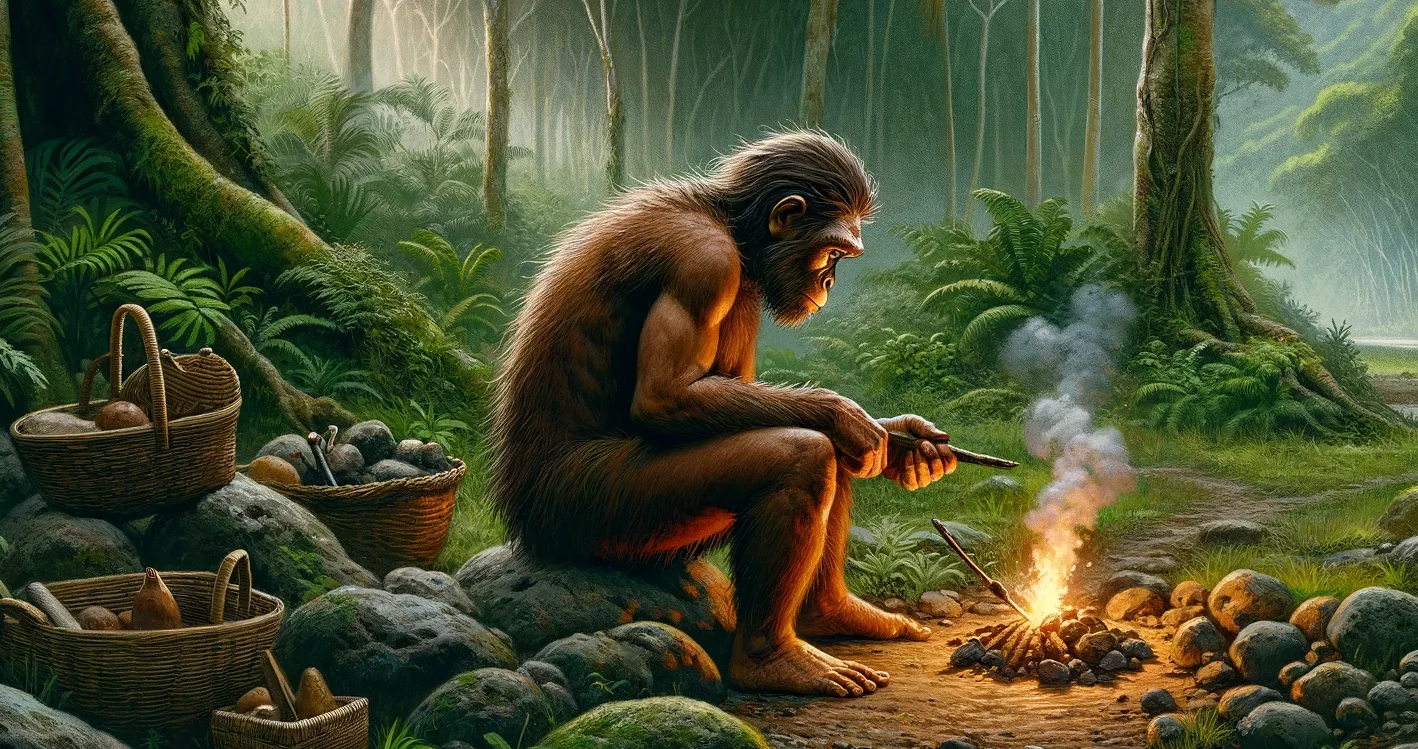
Imagined image of the last of the Homo erectus, circa 50,000 BCE. By this time, Homo erectus had lived in many parts of Africa, the Middle East, Europe, and Asia. Now, as their numbers keep dwindling, they are mostly in just a few spots in Asia.
112,000 Years (+/- 3000 years)
Blombos Cave Engravings
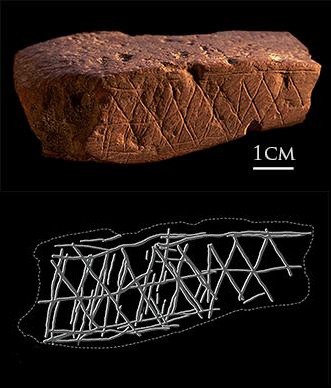
"<a href="https://commons.wikimedia.org/w/index.php?curid=110908714" target="_blank" rel="noopener noreferrer">Blombo</a>" by Chris S. Henshilwood is licensed under <a href="https://creativecommons.org/licenses/by-sa/4.0/" target="_blank" rel="noopener noreferrer">CC BY-SA 4.0</a>
75,000 BCE
“The” Human DNA

Spiral strands of DNA on the dark background
70,000 BCE
2,800 Generations Ago
Successful Out of Africa Migration
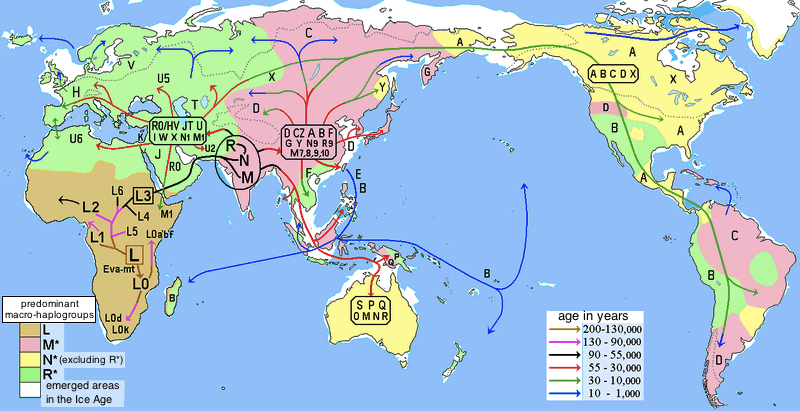
70,000 BCE
Starting by 70,000 BCE
Oldest Known Bracelet
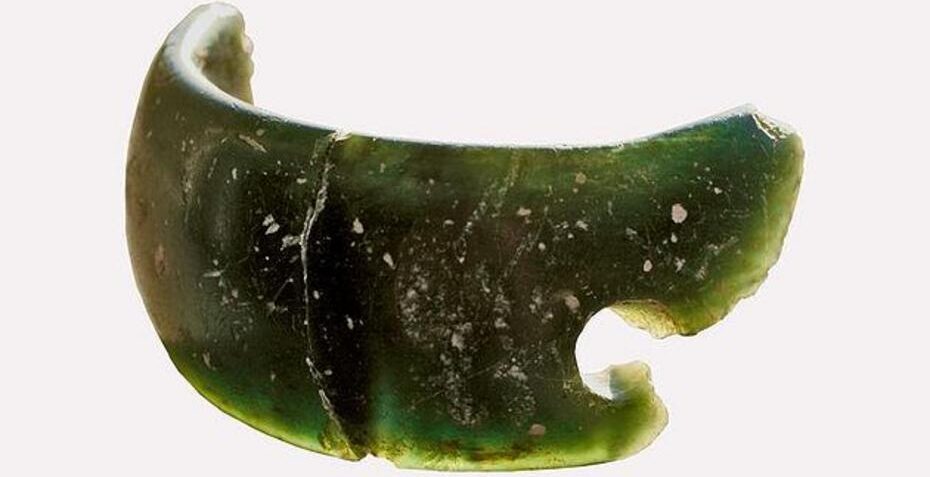
70,000 BCE
2,880 Generations Ago
World Population: 1.5 Million
By 70,000 BCE
The Sentinelese people on North Sentinel Island

The Sentinelese show that the modern human brain was fully evolved by at least 50,000 years ago.
70,000 BCE
circa 60 to 70 thousand BCE
The Settlement of Australia
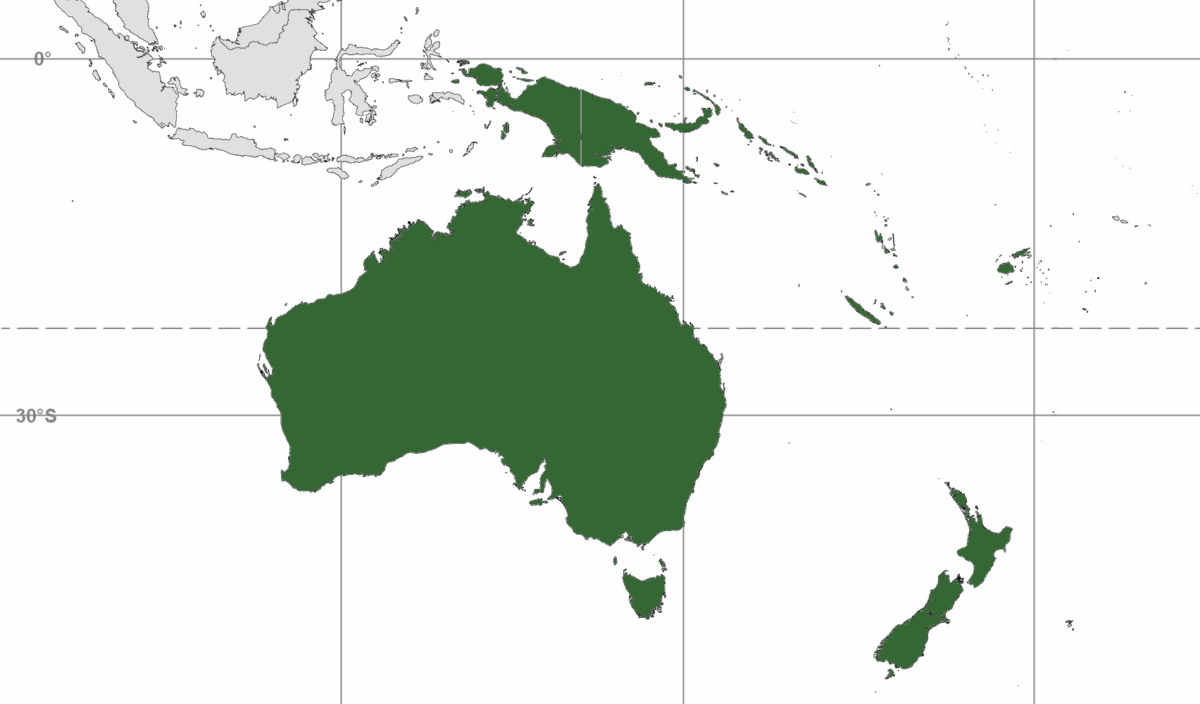
"<a href="https://commons.wikimedia.org/w/index.php?curid=80962081" target="_blank" rel="noopener noreferrer">Location Australasia cylindrical</a>" by <a href="https://commons.wikimedia.org/w/index.php?title=User:Emok&action=edit&redlink=1" target="_blank" rel="noopener noreferrer">(a) Blank map: Emok (b) Map content adapted from CIA World Fact Book via User:E Pluribus Anthony~commonswiki. That image is in the public domain because it contains materials that originally came from the United States Central Intelligence Agency's World Factbook.</a> is licensed under <a href="https://creativecommons.org/licenses/by-sa/3.0/" target="_blank" rel="noopener noreferrer">CC BY-SA 3.0</a>
65,000 BCE
Homo sapiens or an earlier Homo species
Extinction: Homo luzonensis
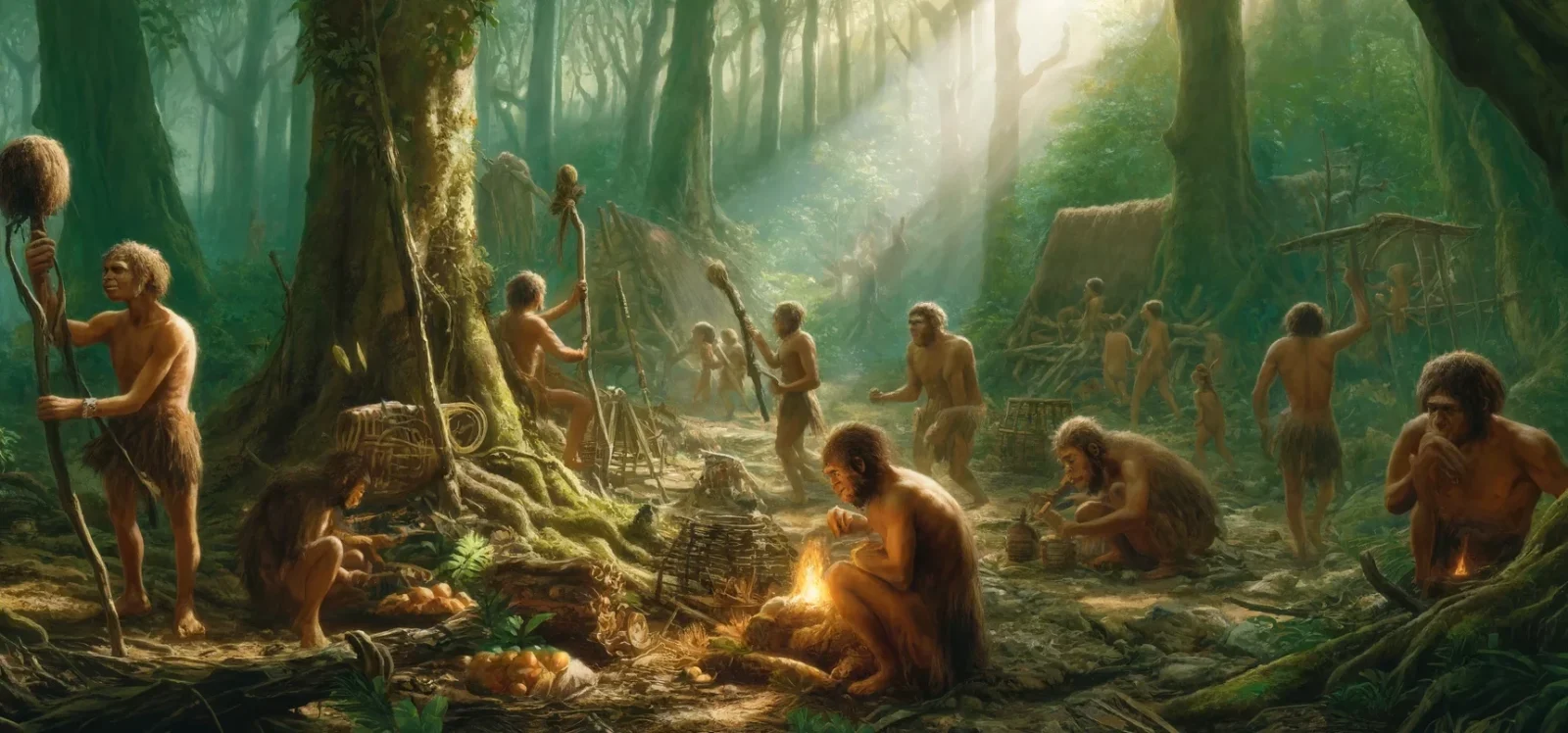
Imagined image: the last of the Homo luzonensis in the philippines circa 67,000 BCE. This is about 15,000 years before Homo sapiens arrive in the area.
65,000 BCE
Divje Babe Flute

50 to 60 Thousand BCE
Extinction: Homo floresiensis
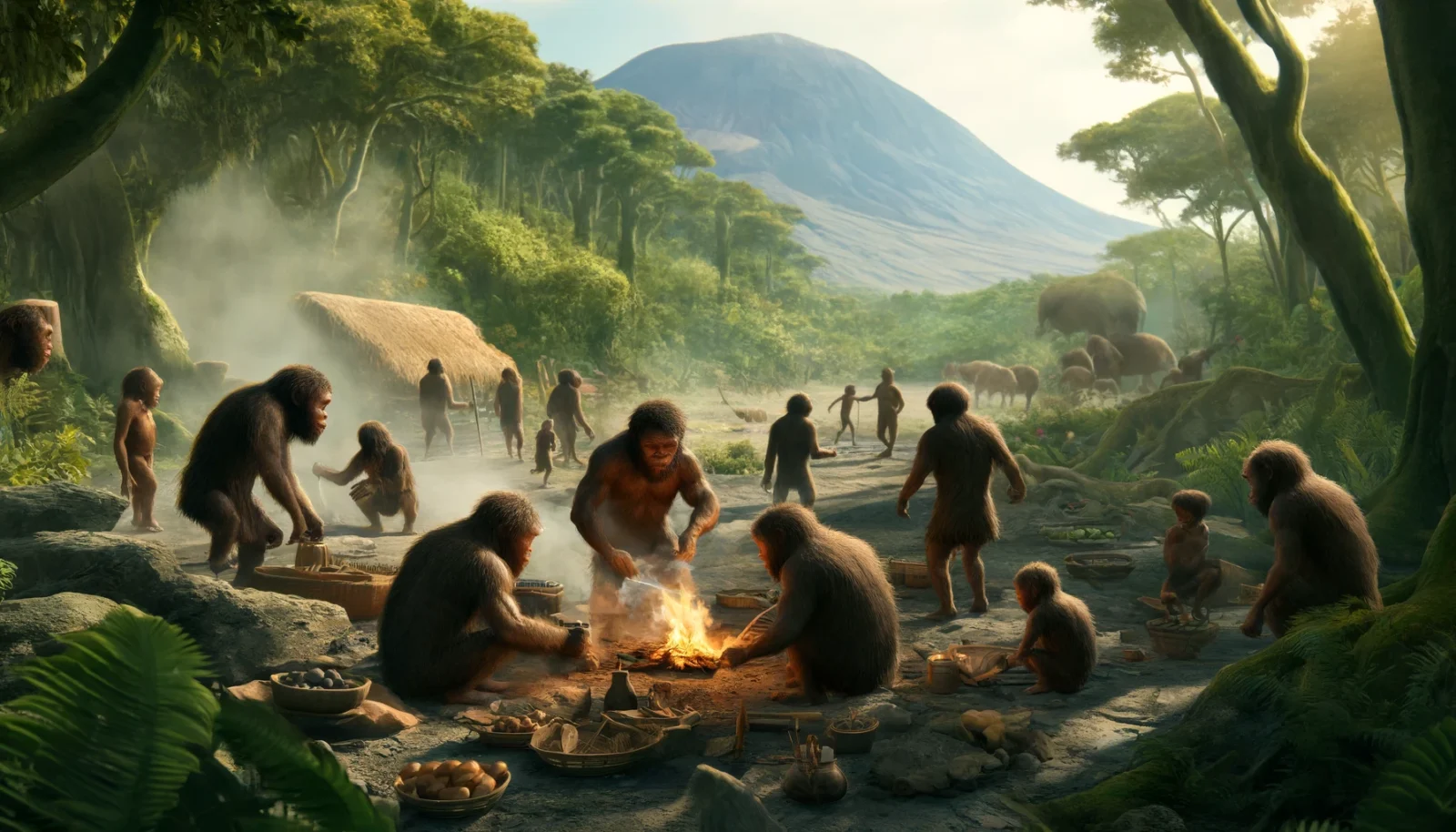
Imagined image: the last of the Homo floresiensis. This intriguing human species might have been the last descendents of Homo habilis or the Asian Homo erectus: the famed Dmanisi people.
48,000 BCE
58,000 to 48,000 BCE
Neanderthal Rope!

Neanderthals made rope by 48,000 BCE indicating the raw cognitive abilities likely evolved on our common ancestor 440,000 years ago.
48,000 BCE (+/- 2,000 years)
Phenotype Variation: Eye Shape and the Epicanthic Fold

circa 40,000 BCE
Extinction: Denisovans
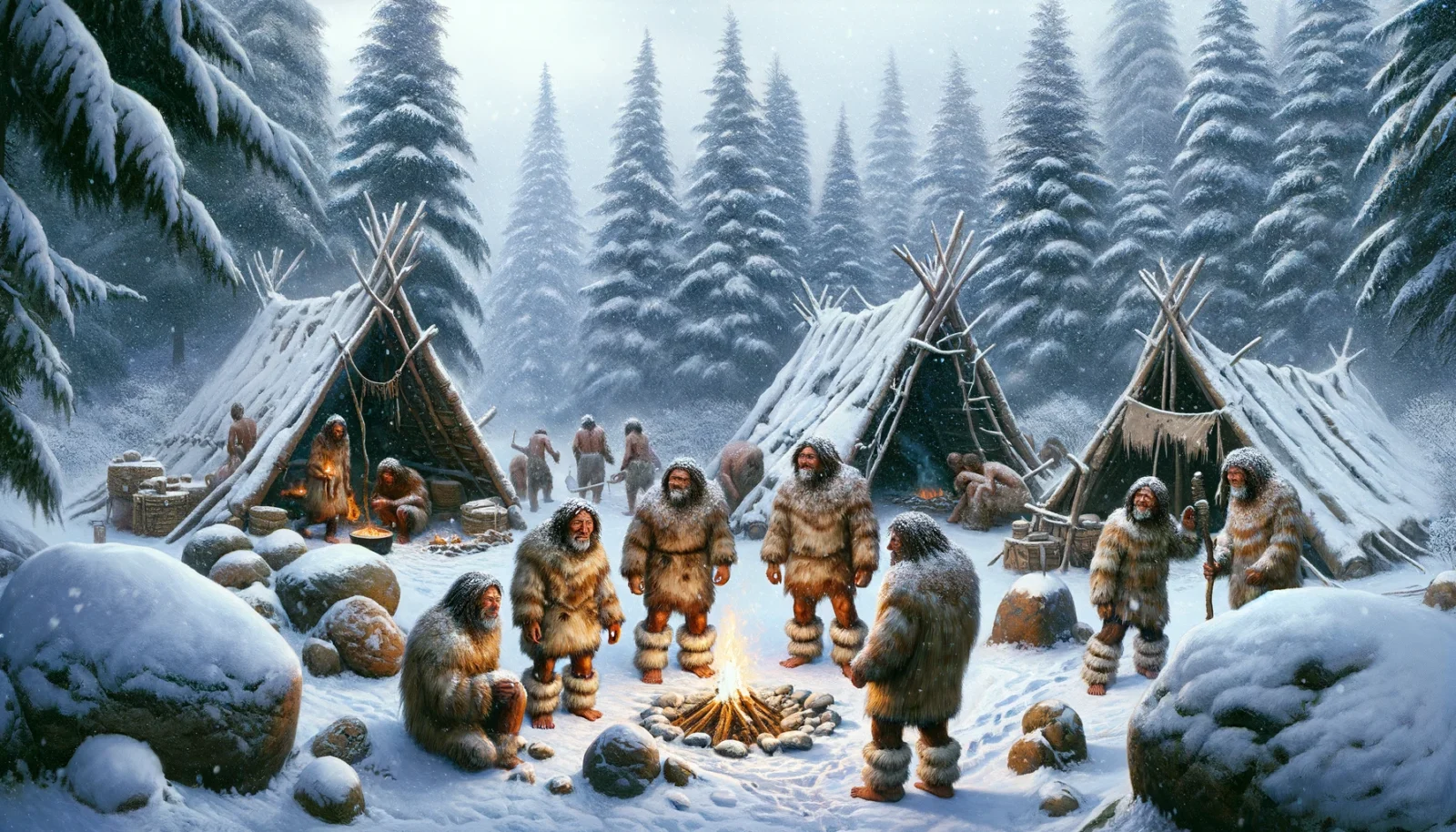
Imagined image of the last of the denisovans in Siberia, circa 40,000 BCE.
40,000
Extinction: Neanderthals
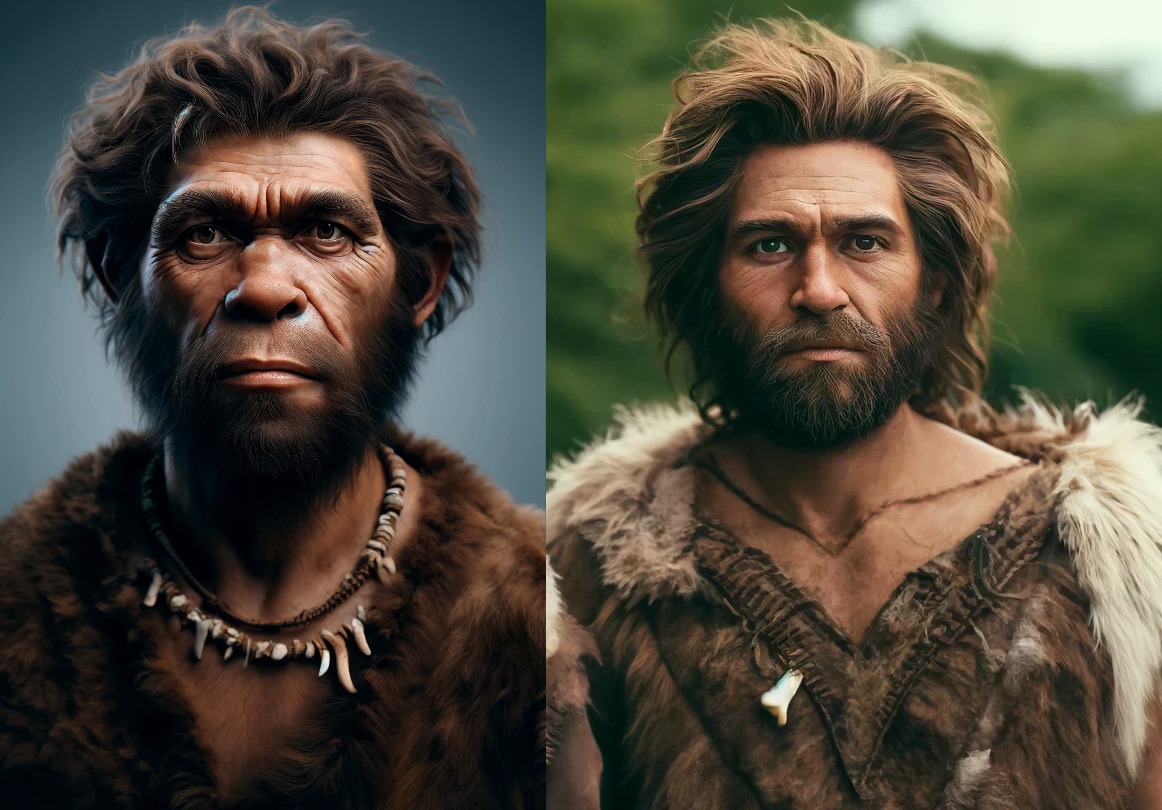
Imagined image, circa 29,000 BCE. Left is a neanderthal; right is a Homo sapien.
38,000 BCE
Extinction range: 38,000 BCE to 22,000 BCE
Czeck: Dolní Věstonice Community

Around 30,000 years ago, the Dolní Věstonice community in the Czech Republic thrived. They built huts from mammoth bones and animal hides, crafted ceramic figurines, and engaged in hunting and daily activities.
30,000 BCE
29 to 32 thousand years ago.
Advanced Sewing Needles
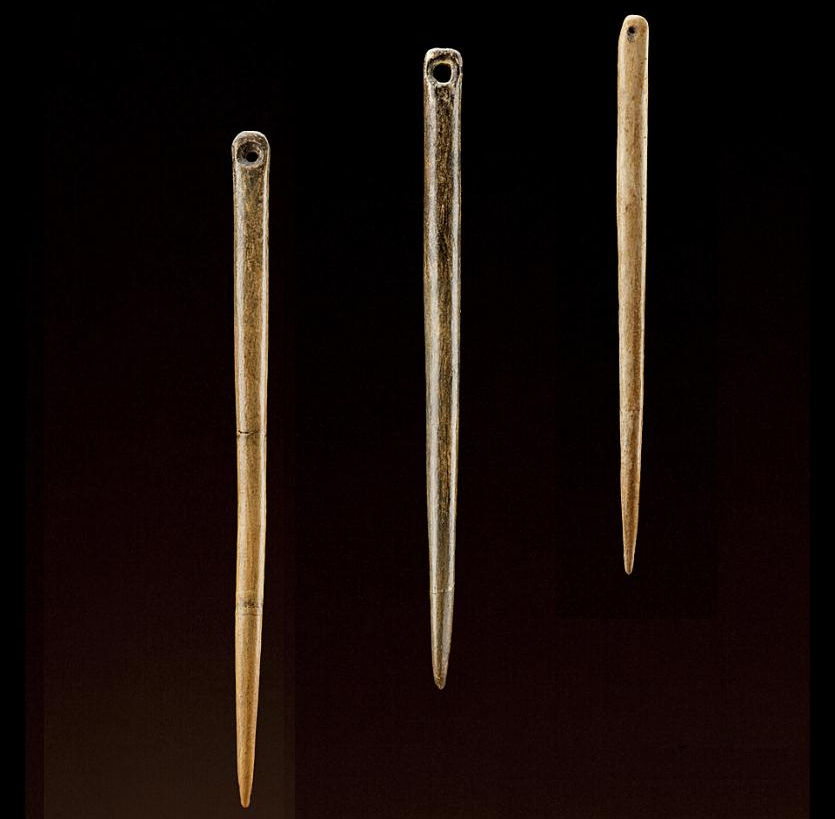
28,000 BCE
28,000 to 21,000 BCE
Modern Skin Color Variety Emerges

By 25,000 Years Ago (+/- 10,000 years)
Ukraine: Mezhyrich Community

Mezhyrich archaeological site, 15 to 20 thousand years ago.
18,000 BCE
15 to 20 Thousand Years Agao
Phenotype Variation: Blue Eyes

Photo by <a href="https://www.pexels.com/@valeriya?utm_source=instant-images&utm_medium=referral" target="_blank" rel="noopener noreferrer">Valeria Boltneva</a> on <a href="https://pexels.com" target="_blank" rel="noopener noreferrer">Pexels</a>
8000 BCE
Genetic Mutation from the Neolithic Era
Phenotype Variation: Lactose Tollerance

7500 BCE